2026 Audi RS e-tron GT Redesign, Price, Specs – In keeping with the brand’s concept of fusing state-of-the-art electricity with classic motorsport-inspired style, the 2026 Audi RS e-tron GT is a daring progression of Audi’s flagship electric performance sedan. To make sure it stays a true RS product, engineers have carefully redesigned the model, concentrating on improved dynamics, a more effective battery platform, and sharper aerodynamics. Subtle changes offer the 2026 model a firmer posture and increased performance credentials, even if the fundamental profile keeps its streamlined grand tourer shape.
Audi made an investment in cutting-edge materials to reduce the weight of the RS e-tron GT’s frame without sacrificing stiffness. High-strength aluminum alloys and carbon fiber-reinforced polymers are often used to improve weight distribution and reduce total bulk. Sharper side skirts, a redesigned diffuser for more downforce, and a reshaped hood are all features of the updated design. The car maintains its competitiveness in the rapidly expanding electric sports sedan market by striking a balance between visual aggression and practical economy when combined with active aero features. 2026 Audi RS e-tron GT Redesign
2026 Audi RS e-tron GT Redesign and Update Plan
Exterior & Interior
The 2026 Audi RS e-tron GT’s bodywork is a masterpiece of how to combine sportiness and style. Illuminated RS accents and useful cooling components recreate the iconic Singleframe grille at the front. Standard headlights are matrix LEDs, but for better visibility, optional Digital Laser Light technology projects more precise, adjustable patterns. With flush-fitting door handles, new air curtains, and a slimmer roofline, aerodynamic efficiency is more important than ever. The drag coefficient is 0.22, which is among the lowest in its class. Performance-focused lightweight alloys reduce unsprung mass, and new wheel styles up to 22 inches offer an unmistakable RS presence.
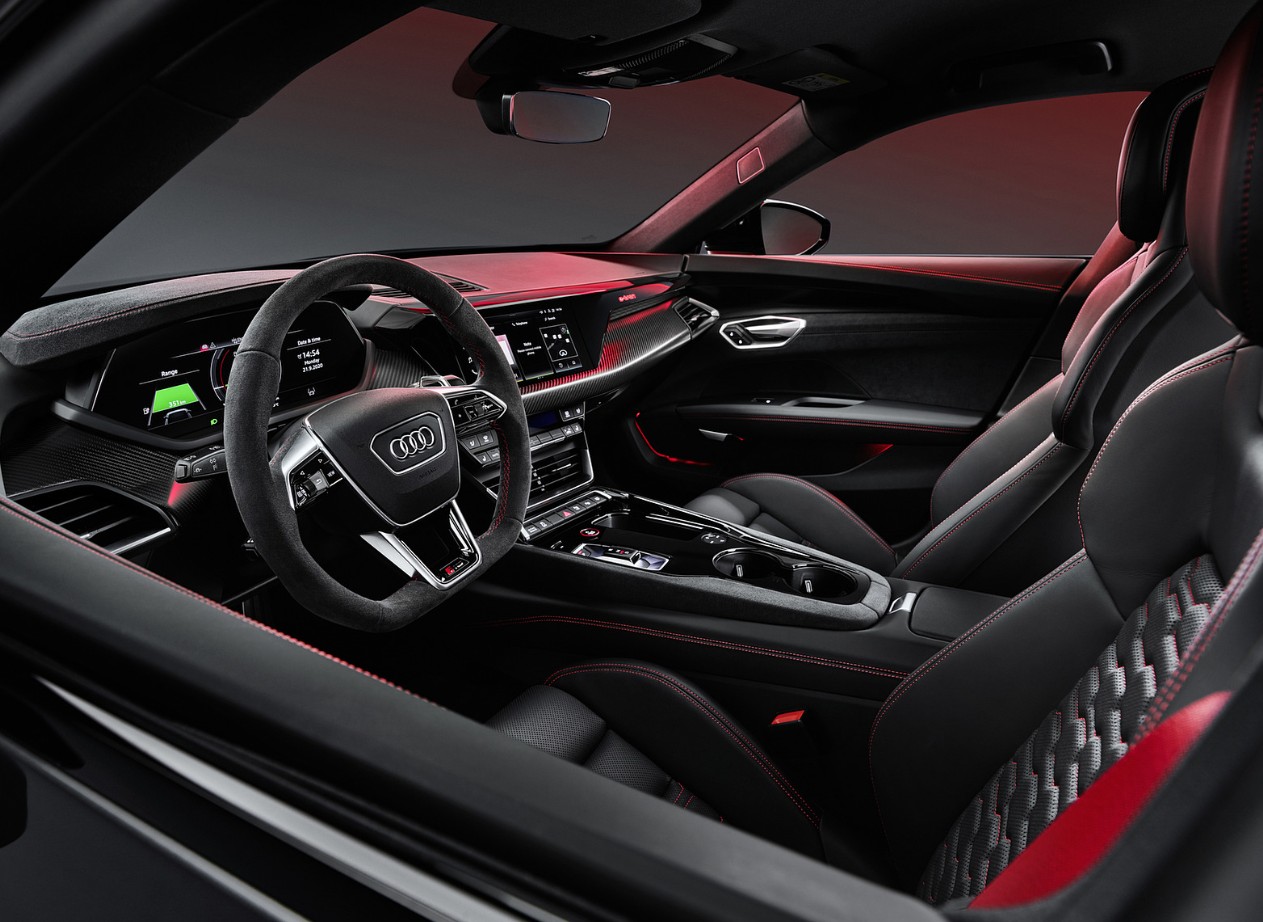
Inside, the interior strikes a mix between contemporary elegance and ergonomics that prioritize performance. A panoramic curved OLED display that is smoothly incorporated into the dashboard of the 2026 RS e-tron GT offers clear resolution and user-friendly functionality. With alternatives for leather-free upholstery, recycled carbon composites, and Dinamica microfiber, Audi’s designers have prioritized environmentally friendly materials. Fine Valcona leather is still offered in custom trims for individuals who favor classic luxury. With the addition of additional color zones to ambient lighting, drivers can now fine-tune the ambiance of the cabin.
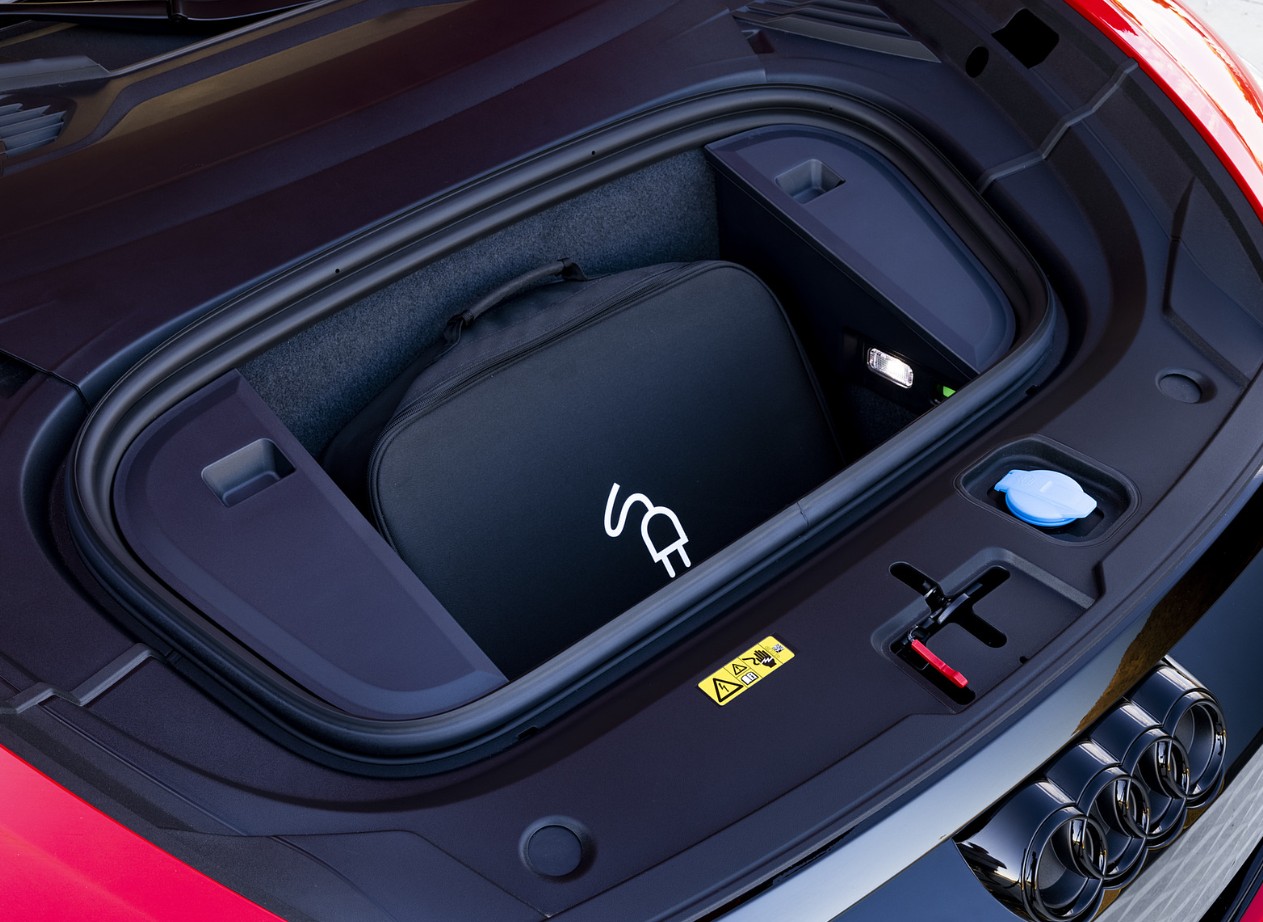
The new battery packs are surrounded by rearranged floor packaging, which gives rear passengers more legroom. Both rows have heating, ventilation, and massage features, and the seats are engineered with deeper bolstering to improve comfort during energetic journeys. Audi has also increased storage options, such as a bigger back trunk and front storage compartment, without detracting from the coupe-like cabin feel. In addition to its sophisticated yet simple interior design, the RS e-tron GT provides a modern and driver-focused environment.
The revamp plan also places a strong emphasis on user experience and digital technology. Audi incorporates the most recent iteration of its E3 electronics architecture for 2026, which enables greater integration with driver assistance technologies, faster processing, and smooth over-the-air updates. Adaptive suspension tuning, charging optimization, and energy management are further software improvements. Audi has made sure that the RS e-tron GT not only keeps up with its competitors but also establishes a new standard for electric grand tourers by concentrating on these important areas.
2026 Audi RS e-tron GT Specs
Engine & Performance
Every RS vehicle is built on performance, and the 2026 Audi RS e-tron GT raises the bar even further. With its conventional dual-motor arrangement, the vehicle can accelerate from 0 to 60 miles per hour in just 3.0 seconds thanks to its projected 710 horsepower and 750 lb-ft of torque. For those looking for the best performance, Audi has unveiled a new tri-motor model that boosts output above 850 horsepower and incorporates torque vectoring at all four wheels for uncompromising handling. Recalibrated cooling systems that sustain power constancy over prolonged high-performance driving are advantageous to both configurations.
One of the main highlights of the 2026 upgrade is battery technology. Advanced solid-state chemistry in a new 105 kWh battery provides enhanced thermal stability, faster charging, and a higher energy density. The dual-motor model’s estimated range exceeds 330 miles, while the tri-motor setup still manages to reach over 300 miles in spite of its higher performance requirements. The 800-volt architecture of the RS e-tron GT allows for ultra-fast DC charging of up to 350 kW, which can recharge 80% of the battery in less than 18 minutes. Drivers can also adjust regeneration levels for a more efficient and enjoyable driving experience with Audi’s variable energy recuperation technology.
Active roll stabilization and a recalibrated adaptive air suspension system have improved driving characteristics. The quattro all-wheel-drive software was adjusted by Audi engineers to provide more responsive handling while maintaining long-distance comfort. Rear-wheel steering and variable ratios are combined in the RS e-tron GT’s steering system to improve stability at greater speeds and facilitate tight urban maneuvers. In order to provide the most immersive driving experience possible in an electric grand tourer, drivers can also activate RS Performance Mode, which adjusts throttle mapping, suspension damping, and artificial sound augmentation.
2026 Audi RS e-tron GT Fuel Economy
Despite being a high-performance EV, the 2026 RS e-tron GT prioritizes efficiency. With a range of about 3.2 miles per kWh, the dual-motor variant offers significant long-distance capabilities without sacrificing efficiency. Even with its lower efficiency, the tri-motor arrangement manages to get about 2.9 miles per kWh, which is competitive for its output class. In order to maximize battery system efficiency and give drivers performance and range in one package, Audi has enhanced aerodynamics, thermal management, and regenerative braking. 2026 Audi RS e-tron GT Redesign
2026 Audi RS e-tron GT Safety Features
With its abundance of the newest safety features, the 2026 Audi RS e-tron GT demonstrates Audi’s commitment to cutting-edge driver protection. Predictive emergency braking, adaptive cruise assistance, lane-centering technology, and blind-spot monitoring are all standard features. The model incorporates new lidar sensors in addition to cameras and radar, allowing for more accurate identification of bicycles, pedestrians, and erratic road conditions. Audi’s pre-sense system has been improved to predict crashes earlier, providing a more proactive safety net for the vehicle.
The 2026 RS e-tron GT is another step forward in Audi’s transition to semi-autonomous driving. Conditional hands-free driving on authorized routes is now possible thanks to the new Highway Pilot technology, which now offers better traffic merging and lane changes. Additionally, drivers can benefit from automated valet parking, which allows the vehicle to park or retrieve itself via a smartphone app. Audi guarantees that these driver assistance systems advance over the course of the vehicle’s life with regular software updates that are distributed via the air.
Inside the cabin, occupant well-being is just as important as driver assistance. A reinforced passenger cell with strategically placed crumple zones designed for electric vehicles is part of the structure. All passengers are further protected by sophisticated airbag systems, such as those located on the back of seats. With enhanced cybersecurity safeguards, Audi has further demonstrated its commitment to digital safety by making sure that the iDrive systems are impervious to hacker attempts. This combination of digital and physical safety emphasizes Audi’s all-encompassing strategy for contemporary car security.
2026 Audi RS e-tron GT Release Date & Price
The 2026 RS e-tron GT’s price reflects its top spot in Audi’s electric lineup. Depending on customisation, the high-output tri-motor model is predicted to cost close to $175,000, while the base dual-motor variation is anticipated to start at about $145,000. Through its Audi Exclusive program, Audi provides customers with a wide range of custom choices, allowing them to customize everything from exterior paint jobs to handcrafted interior trimmings. Audi makes sure that its flagship RS electric car offers unmatched value for individuals looking for both speed and luxury, despite the fierce competition in the electric performance sector.

The 2026 Audi RS e-tron GT is expected to go on sale in Europe in late 2025, with deliveries to North America starting in the first quarter of 2026. To guarantee that owners can fully utilize its rapid-charging capabilities, Audi is coordinating its introduction with the development of high-speed charging infrastructure in strategic markets. With its blend of futuristic appearance, uncompromising performance, and cutting-edge technology, the RS e-tron GT stands as a symbol of where the RS division is heading in the electrified era. 2026 Audi RS e-tron GT Redesign, Price, Specs
Note: The details included in this blog post are derived from pre-release material that was accessible when the article was written. If you want the latest information, you should check official sources or call your nearest dealership.
Read Also:
- 2026 Audi RS 5 Coupe Redesign, Specs, Interior
- 2026 Audi A6 Hybrid Specs, Price, Dimensions
- 2026 Audi A3 Sportback TFSI Redesign, Specs, Price
- 2027 Audi RS 6 Avant Price, Specs, Redesign
- 2026 Audi A3 Sportback Specs, Interior, Dimensions
Gallery :