2026 Porsche 718 Spyder Redesign, Specs, Dimensions – One of the most eagerly awaited developments in Porsche’s history of lightweight sports cars is the 2026 Porsche 718 Spyder. The Spyder has long held a unique position in Porsche’s range and is renowned for fusing modern engineering with classic mechanical purity. The car returns for the 2026 model year with improved mechanical parts, reengineered aerodynamics, a sharper attitude, and a new cockpit that puts the driver’s involvement first in every way. This new generation is Porsche’s statement that, despite the world’s fast transition to electrification, open-top performance vehicles are still very important.
The 2026 Spyder will instantly resonate to enthusiasts looking for a vehicle that offers tactile steering, a naturally aspirated soundscape, and the distinct sensation of a roadster built for the twisting mountain pass. With significant upgrades, the model improves on everything that made the previous iteration a cult classic. With more aggressive tuning, lighter parts, and aerodynamic improvements that make the new model sharper without compromising its forgiving, balanced nature, Porsche strengthens the Spyder’s ties to motorsport history.
The 718 Spyder is still proudly combustion-powered in 2026, despite the possibility of electrified versions arriving on other Porsche platforms. This makes it one of the last vehicles to carry on Porsche’s legendary flat-six experience, but it does so in a way that complies with contemporary emissions regulations while providing performance metrics that surpass those of its predecessor. Before the mid-engine lineup fully moves into hybrid or electric vehicle area, Porsche wants to provide purists with something truly memorable. 2026 Porsche 718 Spyder Redesign
2026 Porsche 718 Spyder Redesign and Update Plan
Exterior & Interior
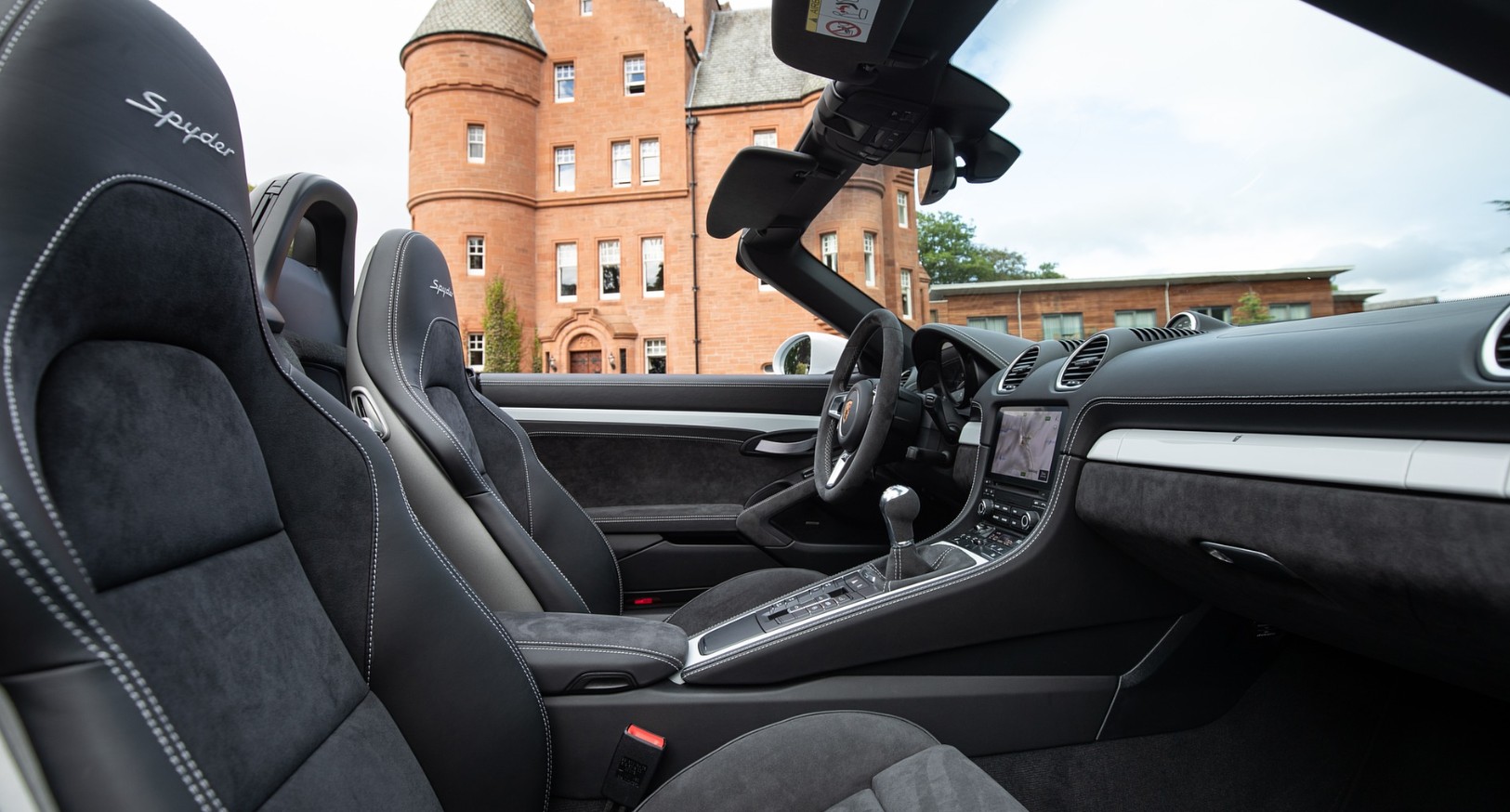
Porsche adds additional contemporary elegance and understated luxury to the 2026 Spyder’s purposefully simple cabin. A lowered sitting position that enhances center of gravity and gives the impression of a cockpit greets drivers. Excellent lateral support is provided by high-back sport seats with built-in bolsters, giving the vehicle a sense of security during hard cornering. For enthusiasts looking for decreased weight and optimum performance, Porsche provides lightweight bucket seats.
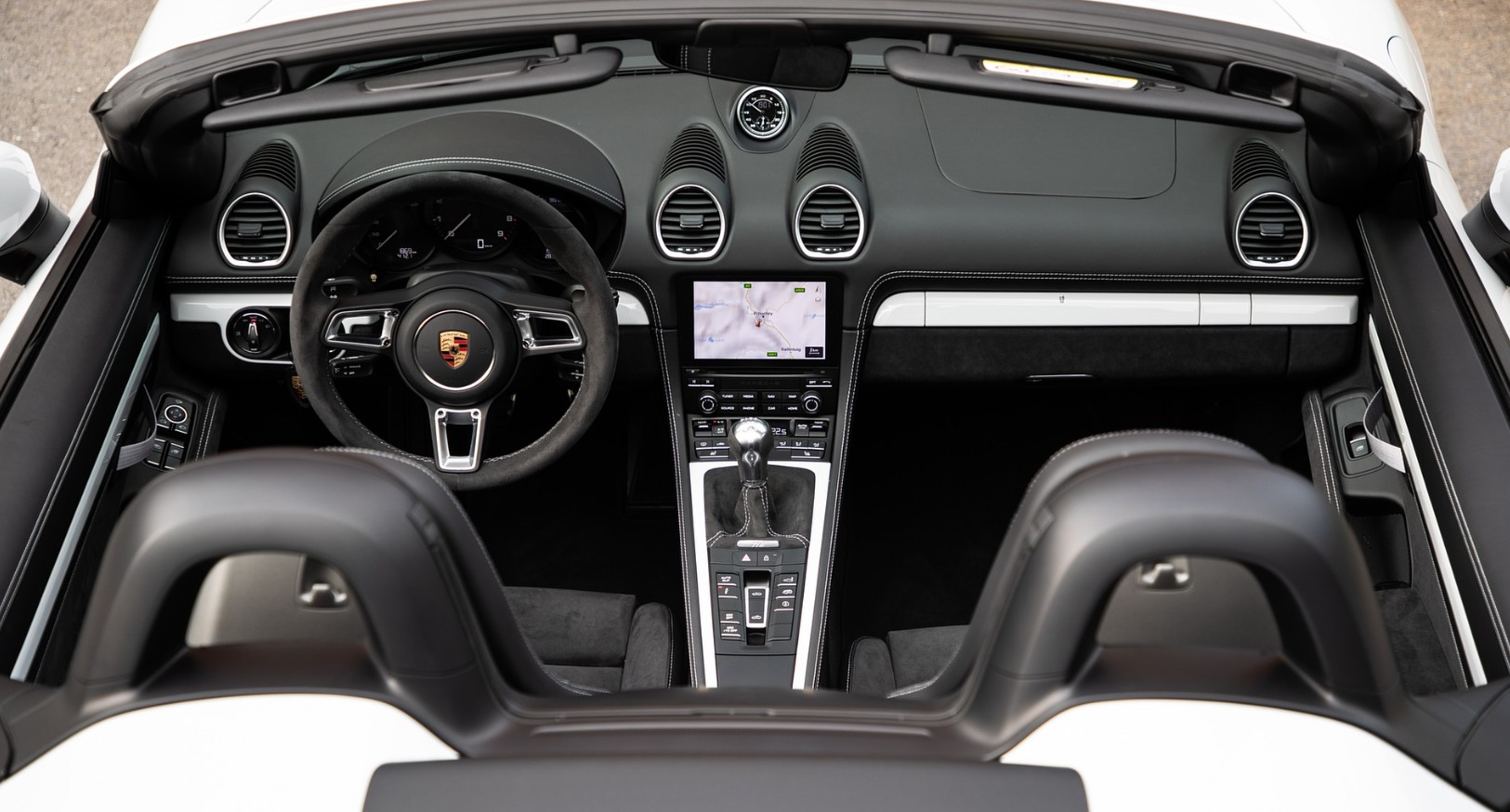
Porsche employs Alcantara, soft-touch materials, and, depending on model level, optional genuine leather upholstery throughout the cabin. The inside doesn’t feel antiquated or spartan, even if it is still performance-oriented. Porsche’s most recent entertainment system is elegantly integrated into the center stack of the dashboard, which also includes a small digital display with race-style graphics. The system is kept functional without interfering with the Spyder’s mechanical nature thanks to Apple CarPlay, Android Auto, and new navigation algorithms.
The 2026 model has significant comfort improvements despite its purist ideology. Top-down driving becomes more enjoyable at higher speeds because to improved interior insulation, quicker response times from climate control systems, and materials that reduce noise. The cabin cleverly balances comfort and athletic minimalism because Porsche understands that the Spyder must function in both daily situations and weekend canyon runs.
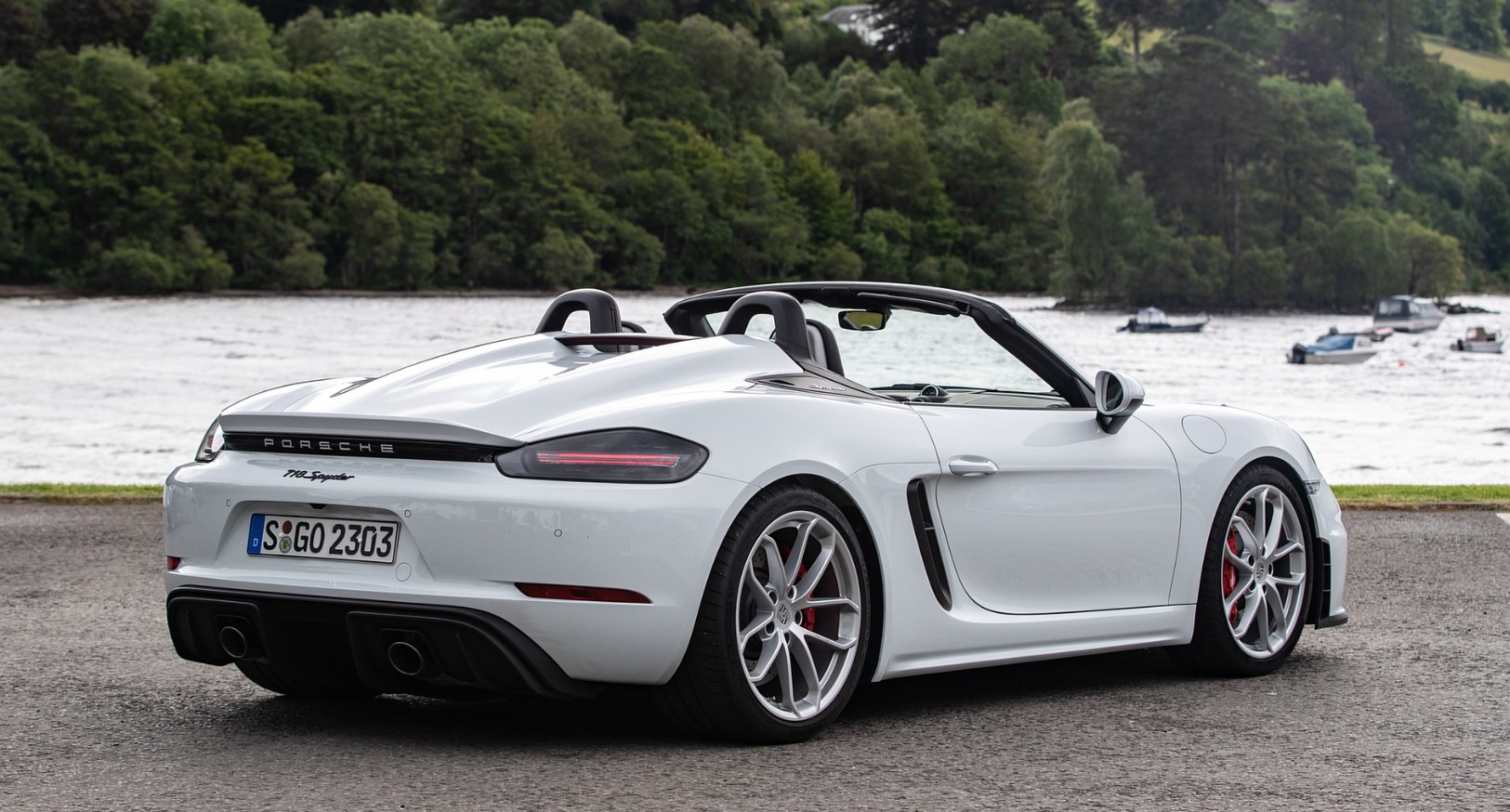
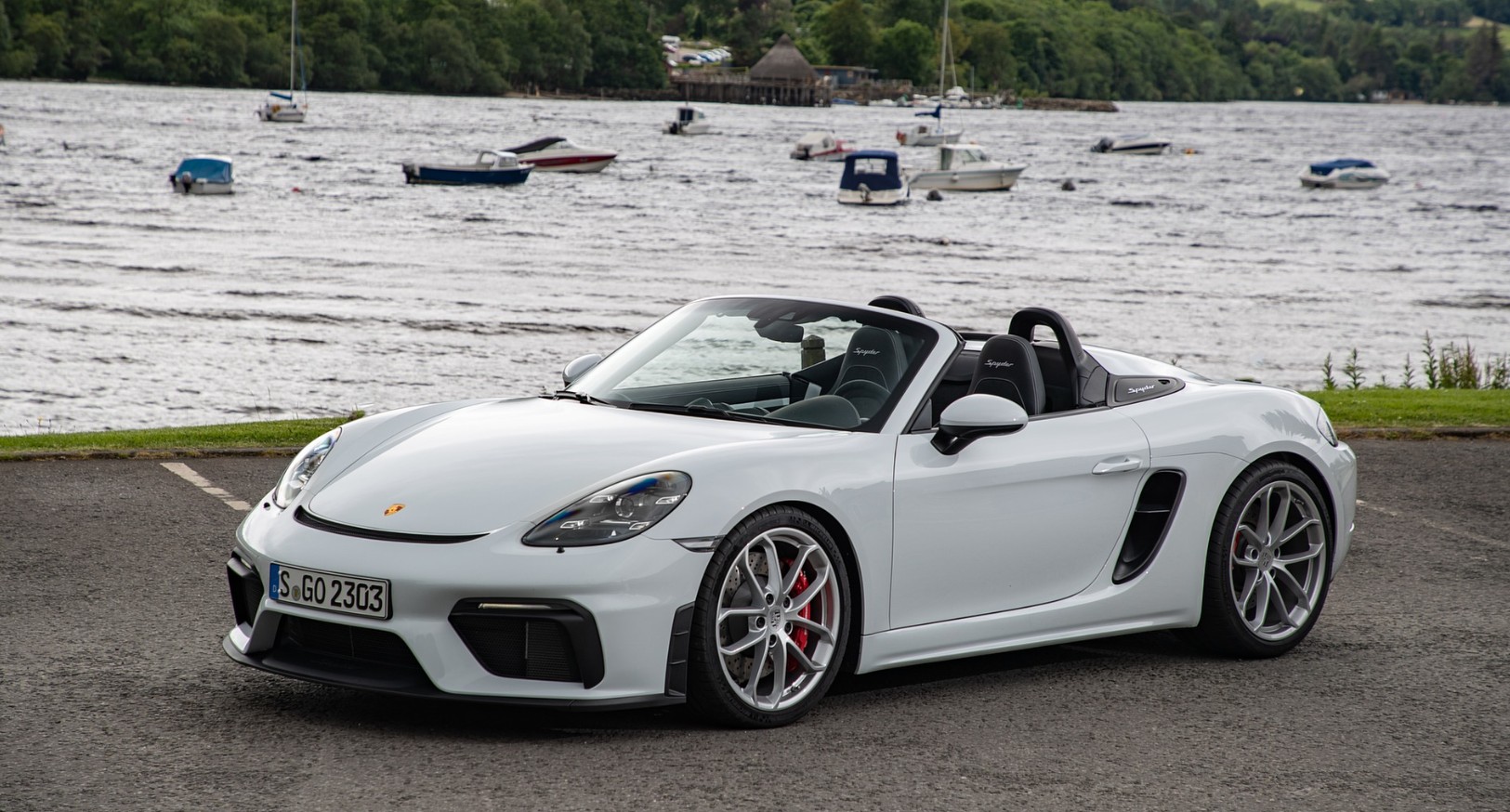
The 2026 Porsche 718 Spyder’s external design is the perfect fusion of classic roadster charm and motorsport ferocity. Sleeker LED matrix headlamps, built-in air curtains, and a broader grille area that optically anchors the vehicle to the road are all aspects of the front end. The mid-engine configuration concealed behind the cockpit is highlighted by the tall, sculpted cowl, which nonetheless has a strong appearance. Porsche’s designers improve the Spyder’s iconic double-bubble rear deck by sharpening its curves, which enhance airflow and give the vehicle a more agile posture.
Deeper rocker panels and prominent wheel arches around the sides increase structural stiffness while adding visual weight. New aero-optimized mirrors and lightweight forged-alloy wheel options increase the Spyder’s performance credibility while maintaining its tiny, taut proportions. Redesigned LED taillights, a lighter rear spoiler system, and an updated diffuser that blends in perfectly with the new quad exhaust outlets are all improvements to the back end. The entire style conveys speed and accuracy without being unduly ostentatious.
New motorsport-inspired finishes, such as high-gloss primaries and matte tones inspired by races, increase the range of color options. Additionally, Porsche allows customers to personalize each Spyder with performance-focused external upgrades and bespoke stripe kits. Porsche makes sure the 2026 is instantly identifiable, even at a look, as the outdoor manifestation of its mid-engine performance pedigree, even while the design is obviously grounded in utility.
A major adjustment to the suspension calibration of the Spyder is part of the upgrade plan. Porsche combines road comfort with track-capable rigidity by incorporating features from the GT4 program. Updates to the software of the Porsche Active Suspension Management (PASM) system enable faster adjustment intervals and more intuitive responses to driving conditions. The 718 Spyder’s reduced ride height increases turn-in sharpness, decreases body roll, and creates a planted posture.
Porsche incorporates modernized bushings and ball joints that are intended to minimize flex and preserve accuracy during abrupt direction changes to go along with the chassis improvements. In response to comments from enthusiasts who always want the Spyder to prioritize driver participation, the electronic steering system has been adjusted to give more road feel. The 2026 model feels closer to the road because to these upgrades, which also improve control and confidence by providing modest feedback through the steering wheel.
Additionally, braking performance gets better. Lighter composite brake parts and an optional carbon-ceramic package with improved heat resistance are now available for the Spyder. Porsche maintains steady stopping power by optimizing brake-cooling channels, particularly when driving at high loads. When combined, these improvements guarantee that the 2026 Spyder feels not just faster but also more reliable, stable, and pleasurable at all speeds.
The 2026 718 Spyder’s facelift is a thoughtful development rather than a drastic makeover. Porsche decides to preserve the distinctive shape of the car while altering important aerodynamic components to increase downforce without adding extra weight. A deeper splitter, additional air-channeling ducts, and side aero blades that improve stability at higher speeds give the front fascia a notably more aggressive appearance. These improvements are not just aesthetically pleasing; they also assist the Spyder stay planted while cornering at performance limits by lowering lift.
Porsche makes changes to the Spyder’s underbody behind the scenes, including a reprofiled rear diffuser and smoother airflow channels. Improved aerodynamic balance is made possible by these modifications, which is particularly significant for an open-top vehicle whose roofless design usually increases turbulence. By maximizing the larger air intakes for more effective air pressure distribution, engineers also improve the cooling system. With these improvements, the engine can perform at its best even while driving aggressively in the canyon or during long track sessions.
Reducing weight is still essential to the makeover. Porsche uses an upgraded magnesium-reinforced canvas canopy system that is lighter and easier to operate, adds more aluminum to the chassis framework, and lightens suspension parts. In the hands of expert drivers, the 2026 Spyder feels even more alive and intuitive since every gram reduced contributes to sharper handling and faster responsiveness at the limits. 2026 Porsche 718 Spyder Redesign
2026 Porsche 718 Spyder Specs
Engine & Performance
The 2026 Spyder delivers better performance all around because to its refined flat-six engine, adjusted suspension, and increased aerodynamics. With PDK installed, acceleration is anticipated to be faster, with 0–60 mph timings getting close to the low-3 second range. Although it is still a little slower, the manual version offers a level of involvement that automatic setups cannot match. Excellent speed stability is guaranteed by the Spyder’s mid-engine balance, which gives the vehicle a neutral, self-assured sense when driving at high speeds.
Revised roll-stabilization components and adjusted spring rates increase cornering performance. Over uneven road surfaces, the vehicle feels more composed and sharper when making mid-corner adjustments. Wider tire options and better rubber compounds created especially for the dynamic capabilities of the 2026 Spyder increase grip levels. The Spyder reacts with accuracy and zeal whether negotiating tight switchbacks or sweeping canyon curves.
Updated traction control logic and brake-based torque vectoring, which operate quietly in the background to preserve optimal driving lines, improve track performance. Electronic systems only step in when absolutely essential since the Spyder nevertheless places a high priority on driving purity. Porsche gives the 2026 model the kind of analog thrill that is becoming more and more uncommon by allowing the driver to crank out aids for complete manual control.
The 4.0-liter flat-six naturally aspirated engine that powers the 2026 718 Spyder has been tweaked for increased airflow, decreased friction, and throttle response. With peak power arriving close to redline and a sound signature that is still distinctively Porsche, Porsche maintains the high-revving character that devotees love. Depending on final calibration, output rises somewhat from the previous model to about 425 horsepower. Software mapping and modified intake geometry boost torque delivery in the mid-range.
Redesigned exhaust manifolds and a dual-mode exhaust system that boosts the soundscape when driving in Sport mode allow the engine to breathe. Porsche engineers put in endless effort to maintain the engine’s “mechanical purity” while guaranteeing adherence to international emissions regulations. The end product is a powerplant that, in the more electrified modern market, feels alive, visceral, and closely related to the driver’s inputs.
For purists, there is a six-speed manual transmission; for drivers seeking maximal acceleration, there is a lightning-fast dual-clutch PDK. Each shift feels accurate and fulfilling thanks to the manual gearbox’s enhanced engagement mechanisms and shorter shift throws. The PDK version maximizes the Spyder’s track performance with aggressive shift logic and launch control.
2026 Porsche 718 Spyder Fuel Economy
Porsche uses efficiency upgrades to lower overall fuel consumption, while the 2026 Spyder places more emphasis on performance. To cut emissions, the engine makes use of modernized injection technologies and decreased internal friction. Aerodynamic improvements improve highway efficiency by lowering drag, particularly when the top is closed. Because of improved airflow control and engine refinement, combined fuel efficiency figures should show slight improvements over the previous generation.
Porsche has sophisticated thermal management systems and enhanced start-stop technology that more effectively control engine heat. The flat-six can now warm up more quickly and run cleaner under normal driving circumstances thanks to these upgrades. Although the Spyder’s fuel efficiency will never be its main selling point, owners will value the minor upgrades that make long trips easier.
2026 Porsche 718 Spyder Safety Features
The 2026 718 Spyder upholds a performance-first concept while including cutting-edge safety technologies. Multiple airbags, enhanced side-impact safety, and better crash structures are examples of standard equipment. In order to maintain high torsional rigidity despite the open-top design, the body is reinforced further. Porsche’s new composite roll-bar architecture, which is stronger and lighter than earlier models, improves rollover protection.
Adaptive cruise control, lane-keeping assistance, forward collision warning, automated emergency braking, and traffic sign recognition are examples of driver aid features. Porsche provides rear cross-traffic monitoring and blind-spot recognition as optional features. These technologies offer useful additional protection during daily driving, lengthy commutes, and touring situations, all while keeping the vehicle enthusiast-oriented.
The braking system incorporates sophisticated ABS algorithms and stability-control features that are tailored to enhance rather than contradict the dynamic aspect of the Spyder. Porsche takes care to make sure that technological assistance improves safety without detracting from the unique driving experience of the Spyder. 2026 Porsche 718 Spyder Redesign
2026 Porsche 718 Spyder Release Date & Price
Depending on location and market positioning, the 2026 Porsche 718 Spyder is anticipated to start at between $112,000 and $125,000. For aficionados who desire a fully customized Spyder, the cost will be considerably increased by optional performance packages, carbon-ceramic brakes, unique interior materials, and custom exterior colors. For customers looking for uniqueness, Porsche’s Exclusive Manufaktur program will probably be crucial in providing custom touches.
Customer deliveries are scheduled to start in mid-2026, with the worldwide reveal anticipated in late 2025. The 2026 Spyder will be among the most sought-after vehicles in Porsche’s lineup because to the high demand and restricted manufacturing. Naturally aspirated mid-engine roadster enthusiasts will need to reserve build slots in advance.
Conclusion
Sharpened for the present era without losing its pristine roots, the 2026 Porsche 718 Spyder is a celebration of the joy of outside mechanical driving. It embodies Porsche’s steadfast dedication to creating sports vehicles that make every drive feel exceptional with its sophisticated flat-six engine, redesigned aerodynamics, enhanced chassis, and exquisitely balanced interior.
Note: The details included in this blog post are derived from pre-release material that was accessible when the article was written. If you want the latest information, you should check official sources or call your nearest dealership.
Read Also:
- 2026 Porsche 911 S Redesign, Specs, Price
- 2026 Porsche Cayenne Electric Specs, Performance, Configurations
- 2026 Porsche Macan GTS Review, Price, Configurations
- 2026 Porsche Macan GTS Price, Specs, Dimensions
- 2026 Porsche Panamera Turbo S E-Hybrid Sport Turismo Specs, Price, Interior
Gallery :