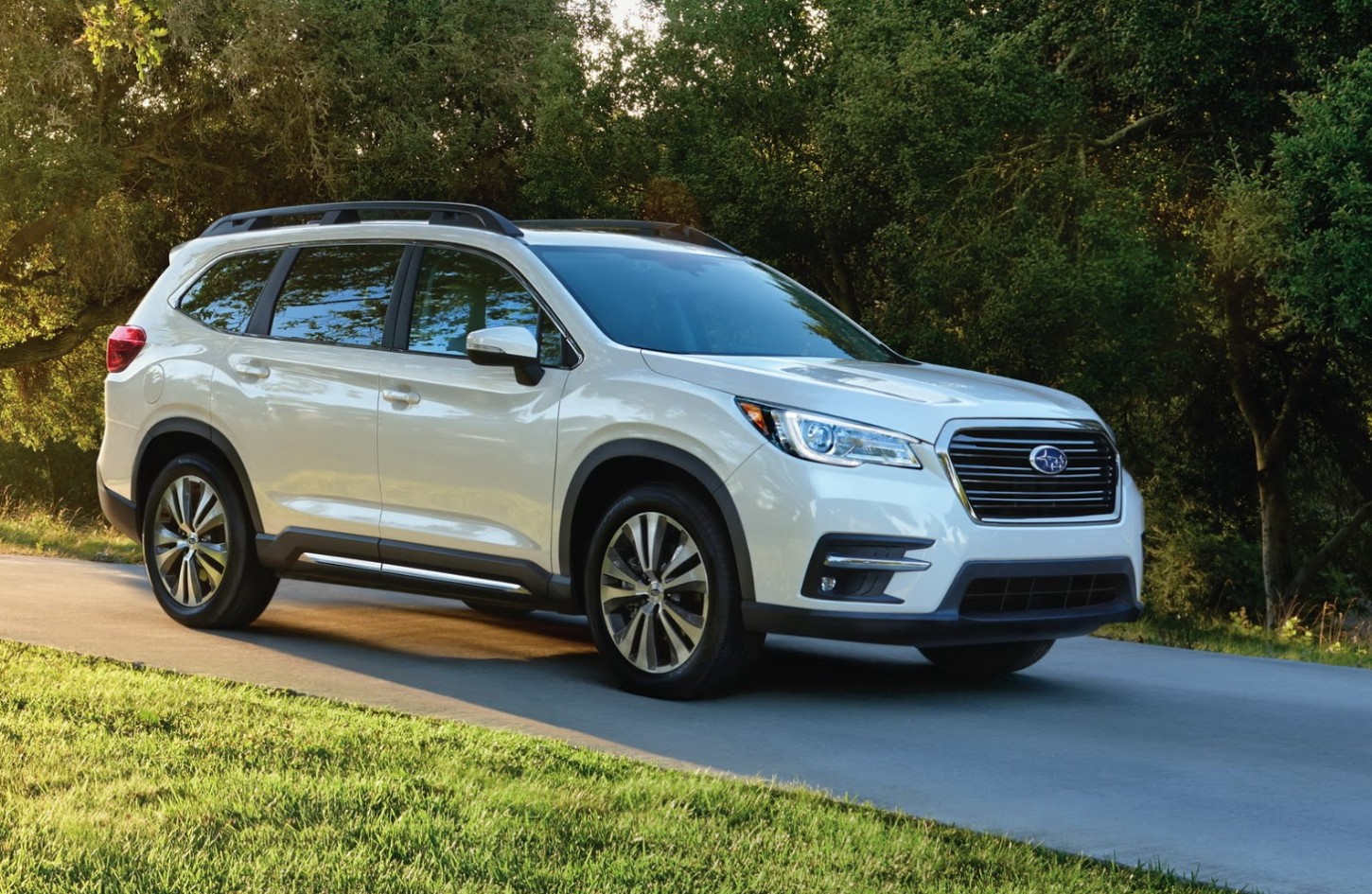
2028 Subaru Ascent Redesign, Price, Configurations – The 2028 Subaru Ascent could introduce a significant evolution of Subaru’s largest family SUV, combining rugged styling, a spacious three-row interior, advanced safety technology, and the dependable all-wheel-drive capability that defines the brand. Since its introduction, the Ascent has appealed to families seeking a practical alternative to traditional minivans and larger body-on-frame SUVs. Its combination of flexible seating, useful cargo space, and confident handling in challenging weather makes it particularly attractive to drivers who need a versatile vehicle for everyday transportation and long-distance adventures. A future 2028 model could strengthen those qualities through improved efficiency, more refined technology, and a substantially updated exterior design.
The current Subaru Ascent provides a solid foundation for understanding the direction of the next generation. Existing U.S.-market models use a 2.4-liter turbocharged SUBARU BOXER four-cylinder engine producing 260 horsepower and 277 lb-ft of torque, paired with a continuously variable transmission and standard Symmetrical All-Wheel Drive. The SUV offers seating for up to eight passengers, depending on configuration, and provides a maximum towing capacity of 5,000 pounds when properly equipped. These established specifications highlight the Ascent’s focus on family practicality and all-weather performance. For 2028, Subaru could refine this formula through improved engine efficiency, advanced electrification, and more sophisticated chassis engineering.
A major 2028 Subaru Ascent redesign would provide an opportunity to address changing expectations in the competitive three-row SUV market. Buyers increasingly prioritize hybrid fuel economy, intuitive digital technology, comfortable third-row seating, and comprehensive driver-assistance features. Subaru could respond with a more aerodynamic body, improved interior packaging, and updated powertrain technology. A hybrid option would be especially interesting because competitors have demonstrated strong demand for fuel-efficient family SUVs. However, Subaru has not released a complete official 2028 Ascent specification or confirmed a particular redesign and powertrain schedule. The future developments discussed here are informed projections based on the existing model and broader industry direction.
The next Ascent would need to compete with established family SUVs such as the Toyota Grand Highlander, Honda Pilot, Hyundai Palisade, Kia Telluride, and Mazda CX-90. Each competitor offers a different combination of interior space, powertrain technology, premium equipment, and driving character. Subaru’s strongest advantage remains its ability to combine standard all-wheel drive with practical dimensions and a reputation for outdoor versatility. A carefully developed 2028 Ascent could become more refined without losing the rugged personality that attracts existing Subaru customers. The ideal result would be a spacious, efficient, and comfortable family SUV designed for school runs, highway travel, and challenging weather conditions. 2028 Subaru Ascent Redesign
2028 Subaru Ascent Redesign and Update Plan
Exterior & Interior
The 2028 Subaru Ascent interior could receive substantial improvements in material quality, dashboard design, and passenger comfort. A redesigned cabin might feature a wider digital instrument display, a larger central touchscreen, and more intuitive controls for frequently used functions. Subaru could introduce improved soft-touch surfaces, upgraded seat upholstery, and additional sound insulation to create a quieter environment during highway travel. The dashboard would benefit from a clean layout that preserves physical access to essential climate and audio functions. Families often prioritize ease of use over complicated interfaces, making intuitive technology an important part of the Ascent’s future appeal.
Seating flexibility would remain one of the SUV’s strongest advantages. A future Ascent could continue offering seven-passenger and eight-passenger configurations, with second-row captain’s chairs available on selected trims and a conventional bench seat offered for maximum capacity. Subaru might improve second-row sliding mechanisms to provide easier third-row access, particularly for children and passengers with limited mobility. Additional cushioning, improved seatback support, and more generous legroom could make long journeys more comfortable. A redesigned third row would be particularly valuable because family buyers increasingly compare SUVs according to how comfortably adults and teenagers can occupy the rearmost seats.
Technology could include wireless Apple CarPlay and Android Auto, multiple USB-C charging ports, wireless smartphone charging, and improved voice recognition. A future Subaru multimedia system might provide faster processing, more responsive navigation, and personalized driver profiles. Rear-seat passengers could benefit from additional charging connections, improved climate controls, and optional entertainment equipment. A premium audio system could be available on higher trims, while over-the-air software updates might simplify future improvements to vehicle functions. Subaru could also introduce a more sophisticated digital rearview mirror, helping drivers maintain visibility when the cargo area is filled with luggage or passengers obstruct the rear window.
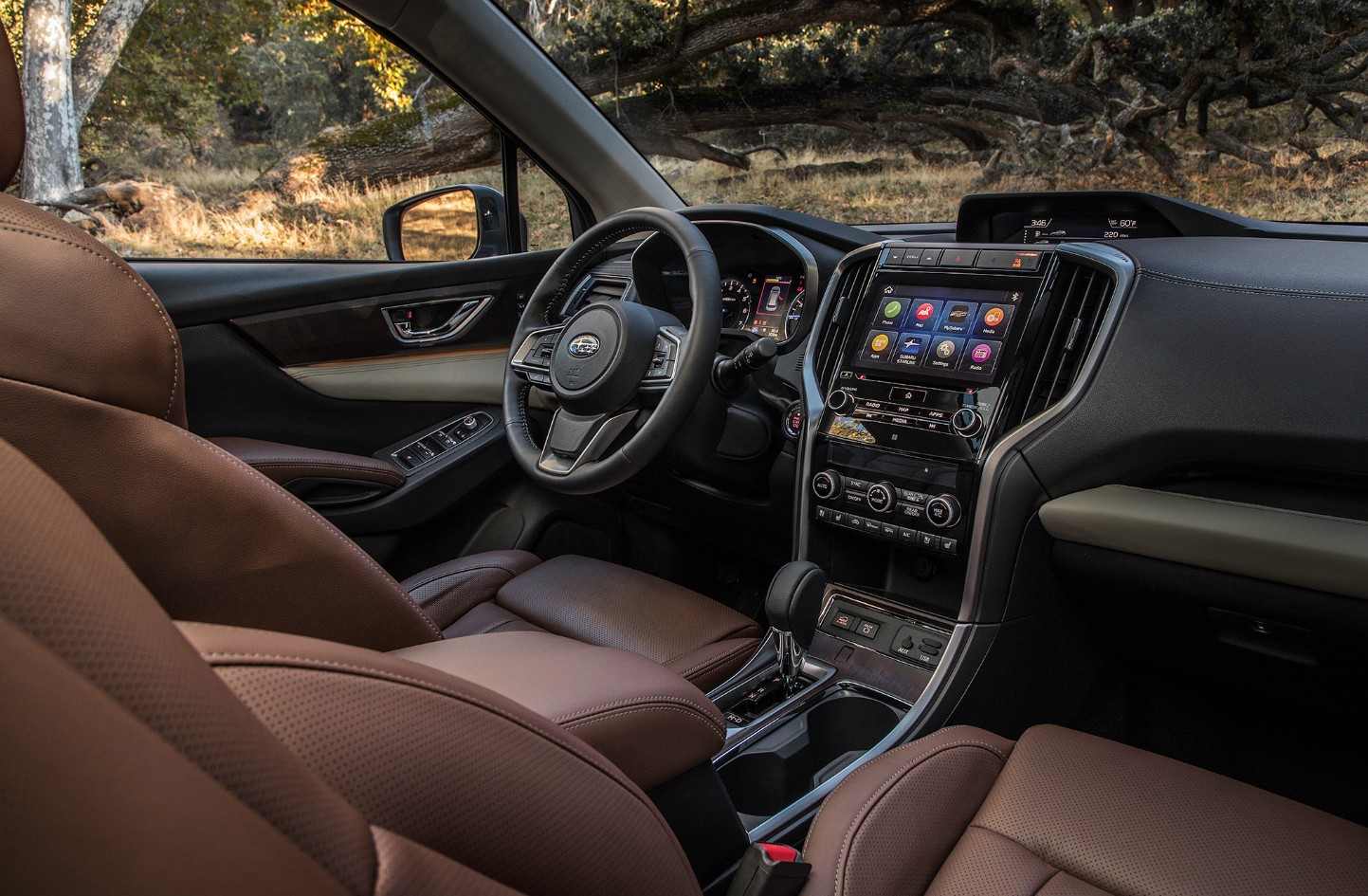
Cargo versatility would be especially important for a three-row family SUV. The current Ascent provides flexible folding seats and useful storage compartments, and a future model could improve these features through a flatter cargo floor and more convenient seat-folding mechanisms. Subaru might introduce additional underfloor storage, adjustable cargo dividers, and improved tie-down points. Families could benefit from more cupholders, larger door pockets, and dedicated spaces for smartphones and tablets. Better cabin insulation would also help reduce tire and wind noise during long trips. The ideal 2028 Subaru Ascent interior would combine premium comfort with durable materials and practical features designed for everyday family life.
The 2028 Subaru Ascent exterior could feature a more assertive interpretation of Subaru’s contemporary design language, combining a larger front grille, sharper LED headlights, and more pronounced body contours. A redesigned front bumper might incorporate functional air intakes and protective lower trim, reinforcing the SUV’s rugged character while improving aerodynamic efficiency. Subaru could introduce a more distinctive daytime running light signature and revised hood sculpting to give the vehicle a stronger visual identity. The challenge would be creating a modern appearance without making the Ascent unnecessarily bulky. A balanced design would preserve good outward visibility and manageable dimensions while giving the SUV a commanding road presence.
The side profile could retain the Ascent’s upright roofline and generous passenger compartment, both essential for accommodating three rows of seating. Subaru might extend the wheelbase slightly or optimize interior packaging to provide additional second- and third-row legroom. More sculpted door panels, pronounced wheel arches, and redesigned alloy wheels could create a more sophisticated appearance. Depending on trim level, wheel sizes might range from approximately 18 to 20 inches, balancing ride comfort, tire durability, and visual appeal. A future Ascent would benefit from maintaining practical door openings and a relatively accessible step-in height, particularly for families with children and older passengers.
Aerodynamic development could play a larger role in the next generation. Subaru might introduce revised air deflectors, carefully shaped mirror housings, and improved underbody panels to reduce drag at highway speeds. A more efficient exterior would be particularly valuable if the company introduces a hybrid powertrain, where reduced aerodynamic resistance can improve real-world fuel economy. However, Subaru would need to preserve adequate ground clearance and underbody durability for gravel roads and snowy conditions. Roof rails could remain available for outdoor equipment, while carefully integrated crossbar designs might help minimize wind noise. The strongest exterior updates would combine measurable efficiency improvements with the practical features expected from a family-oriented Subaru.
At the rear, the 2028 Subaru Ascent redesign could introduce slimmer LED taillights, a revised tailgate, and a more integrated roof spoiler. Subaru might improve the power-operated liftgate with faster operation, hands-free access, and more convenient loading controls. A lower cargo-loading lip could make it easier to handle groceries, luggage, and sports equipment. Revised rear bumper protection would be useful for owners who regularly transport outdoor gear. Subaru could also introduce new exterior colors and contrasting trim packages to distinguish premium and adventure-oriented models. These improvements would give the Ascent a more contemporary appearance while maintaining the practical versatility that remains central to its identity. 2028 Subaru Ascent Redesign
2028 Subaru Ascent Specs
Engine & Performance
The 2028 Subaru Ascent engine could continue using an updated version of the established 2.4-liter turbocharged BOXER four-cylinder powertrain. In existing U.S.-market configurations, this engine produces 260 horsepower and 277 lb-ft of torque, delivering useful low-speed acceleration and sufficient power for a fully loaded family SUV. Subaru could refine turbocharger response, combustion efficiency, and engine calibration to improve performance and fuel consumption. An updated continuously variable transmission might provide smoother acceleration and more natural response during passing maneuvers. Alternatively, Subaru could introduce a different transmission strategy as part of a broader platform update, although preserving reliable towing and all-wheel-drive performance would remain essential.
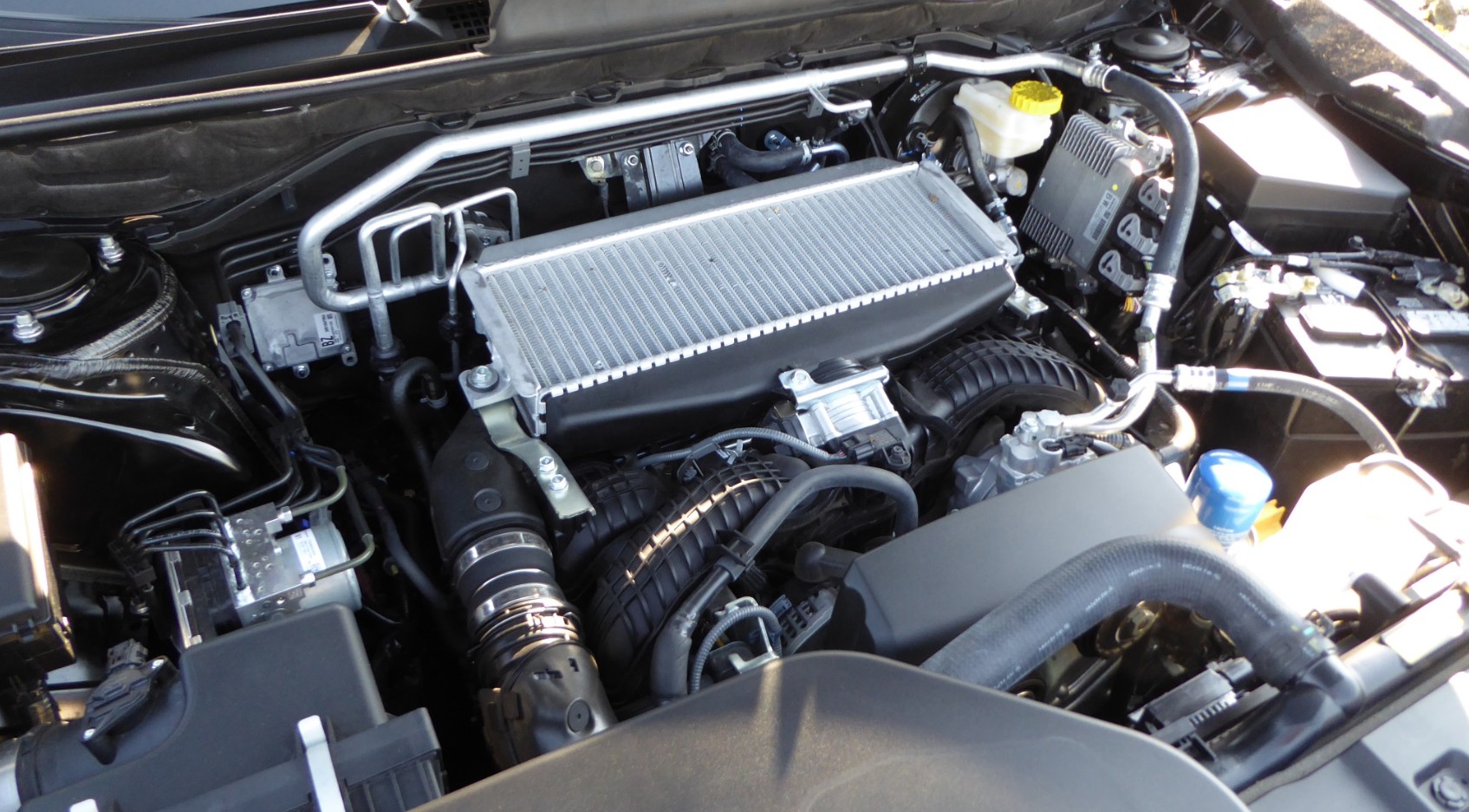
A 2028 Subaru Ascent Hybrid would be an appealing addition to the lineup, particularly as demand for fuel-efficient three-row SUVs continues to grow. Subaru has already expanded its electrification efforts across other models, creating opportunities to apply hybrid technology to a larger family vehicle. A hypothetical Ascent hybrid could combine a gasoline engine with electric-motor assistance to improve low-speed torque, reduce fuel consumption in traffic, and deliver smoother acceleration. Depending on the final architecture, combined output could plausibly fall between approximately 270 and 320 horsepower. Such a configuration would need careful engineering to accommodate battery components without compromising passenger space, cargo capacity, or towing capability.
Standard Symmetrical All-Wheel Drive would likely remain central to the Ascent’s identity. Subaru could refine torque distribution and traction management to improve stability on wet roads, snow-covered highways, and loose gravel surfaces. An updated X-MODE system might provide more precise wheel-slip control, while revised suspension geometry could improve ride comfort and steering response. The current Ascent’s ground clearance of approximately 8.7 inches provides a useful reference for its outdoor-oriented character. A future model could retain similar clearance while introducing improved dampers and suspension bushings. Engineers would need to balance confident handling with the smooth ride expected from a large family SUV.
2028 Subaru Ascent Fuel Economy
Fuel economy could become one of the most significant areas of improvement. Existing gasoline-powered Ascent models generally deliver EPA combined fuel economy in the low-20s mpg range, depending on configuration. A hypothetical 2028 Subaru Ascent fuel economy target of approximately 22 to 25 mpg combined for a refined gasoline version could be achievable through improved efficiency and aerodynamics. A hybrid configuration might target around 28 to 34 mpg combined, depending on vehicle weight, battery capacity, and drivetrain design. These figures are estimates rather than official EPA ratings. Improved efficiency would be particularly valuable for families who regularly travel long distances or use the vehicle for daily commuting.
2028 Subaru Ascent Safety Features
The 2028 Subaru Ascent safety features could build upon the company’s established EyeSight driver-assistance technology, which has become a defining feature of Subaru’s modern lineup. A future system might include improved automatic emergency braking, adaptive cruise control, lane-centering assistance, and more sophisticated pedestrian and cyclist detection. Enhanced camera processing could improve recognition of vehicles and obstacles in challenging conditions. Subaru might also introduce more advanced intersection assistance, helping drivers respond to certain crossing-traffic situations. These systems would support everyday safety while preserving the driver’s responsibility for vehicle control.
Additional safety equipment could include blind-spot detection, rear cross-traffic alert, reverse automatic braking, and a panoramic-view camera system. Such features would be especially useful in a large SUV where rear visibility can be restricted by passengers, headrests, or cargo. Subaru could also refine driver-attention monitoring to identify signs of distraction or fatigue. Improved parking sensors and camera views would make maneuvering in crowded parking lots easier. Families might particularly appreciate automatic emergency steering assistance and more comprehensive rear-seat reminders. The strongest safety package would combine reliable detection technology with clear alerts that do not overwhelm the driver.
Passive safety would remain an essential engineering priority. A future Ascent could use a reinforced passenger compartment with strategically placed high-strength steel, energy-absorbing crash structures, and comprehensive airbag coverage. Improved seatbelt pretensioners and child-seat mounting arrangements could enhance family usability. Subaru would also need to consider the structural requirements of a possible hybrid battery system, including protection during collisions and appropriate electrical isolation. Revised suspension and steering systems would need to preserve predictable handling during emergency maneuvers. Electronic stability control, traction management, and anti-lock braking would remain essential components of the vehicle’s overall safety strategy.
The 2028 Subaru Ascent trim levels could continue offering a range of family-oriented configurations, building upon established names such as Premium, Onyx Edition, Limited, and Touring. A future Premium model could emphasize value, standard all-wheel drive, and essential technology. Onyx Edition might retain its darker exterior accents and more adventurous appearance, while Limited could introduce upgraded upholstery, larger wheels, and additional comfort equipment. Touring would likely remain the most luxurious configuration, featuring premium materials, advanced technology, and enhanced passenger amenities. Subaru might also introduce a dedicated hybrid trim or expand electrified powertrains across several versions, depending on its future product strategy. 2028 Subaru Ascent Redesign
2028 Subaru Ascent Release Date & Price
The 2028 Subaru Ascent price could reflect the additional technology and refinement expected from a redesigned three-row SUV. A hypothetical starting MSRP of approximately $42,000 to $46,000 would position an entry-level Ascent competitively against other midsize family SUVs with three rows of seating. This estimate assumes standard all-wheel drive, a comprehensive driver-assistance package, modern infotainment, and a turbocharged gasoline engine. Actual pricing would depend on production costs, equipment levels, and the extent of any redesign. Subaru would need to maintain a strong value proposition because family buyers often compare vehicles according to total ownership costs rather than purchase price alone.
Higher trims could occupy a broader price range. A hypothetical Onyx Edition might start around $46,000 to $49,000, while Limited could approach $49,000 to $53,000 with additional luxury and convenience features. A fully equipped Touring version might reach approximately $54,000 to $59,000, particularly if Subaru introduces a more sophisticated interior and advanced driver-assistance technology. A potential hybrid powertrain could add several thousand dollars depending on battery technology and standard equipment. These estimates represent possible market positioning rather than confirmed Subaru prices. Buyers would also need to consider destination charges, taxes, financing, insurance, and maintenance expenses.
The 2028 Subaru Ascent release date could follow Subaru’s conventional model-year schedule. If the company introduces a redesigned Ascent for 2028, a reveal during 2027 followed by dealership availability in late 2027 or during 2028 would be a plausible timeline. A major platform update or new hybrid powertrain could influence the final schedule because additional engineering validation and manufacturing preparation would be required. Subaru might also choose to introduce technology and equipment improvements incrementally rather than launching every change simultaneously. Official timing would ultimately depend on production planning, supplier readiness, and regional market priorities.
The United States would likely remain the Ascent’s primary market because the vehicle was developed around the needs of North American families. Demand for spacious three-row SUVs remains significant, particularly among buyers seeking versatile seating and dependable all-weather transportation. The 2028 Ascent would compete directly with established alternatives from Toyota, Honda, Hyundai, Kia, Mazda, and Volkswagen. A competitive hybrid option, improved third-row comfort, and comprehensive standard safety equipment could strengthen Subaru’s position. If the company delivers meaningful improvements while maintaining reasonable pricing, the Ascent could remain a compelling choice for families who want practicality, comfort, and confident all-wheel-drive performance.
Conclusion
The 2028 Subaru Ascent has the potential to become a more refined and capable version of Subaru’s largest family vehicle. A modern exterior redesign, improved interior materials, advanced connectivity, and updated safety technology could make the SUV more competitive in a demanding segment. The Ascent’s established strengths, including standard all-wheel drive, flexible seating, and useful towing capability, provide a strong foundation for continued development. Preserving those characteristics would be essential as Subaru responds to changing expectations for comfort, efficiency, and digital technology.
Powertrain improvements could be particularly important to the next generation. The existing turbocharged BOXER engine delivers capable performance, but a hybrid option could attract buyers seeking lower fuel consumption without sacrificing practicality. More sophisticated traction management, refined suspension tuning, and improved aerodynamic efficiency could enhance both highway comfort and everyday driving confidence. Subaru would need to ensure that any electrification strategy preserves adequate passenger space, cargo capacity, and towing performance. A carefully balanced approach could make the Ascent more versatile while maintaining the driving character associated with the brand.
Interior comfort and family convenience would also influence the vehicle’s success. More spacious rear seating, improved third-row access, flexible cargo arrangements, and intuitive technology could make the Ascent easier to live with. Advanced EyeSight safety systems, comprehensive camera coverage, and improved driver assistance would support the vehicle’s family-oriented mission. Premium materials and additional convenience features could help higher trims compete with more expensive SUVs, while accessible entry-level configurations would remain important for buyers focused on value.
The 2028 Subaru Ascent could become a particularly attractive three-row SUV if Subaru combines meaningful design improvements with better efficiency, modern technology, and its established all-wheel-drive capability. A well-executed redesign would strengthen the vehicle’s appeal to families who need comfortable transportation for daily routines and longer adventures. With competitive pricing, a practical interior, and the possibility of hybrid performance, the next Ascent could offer a compelling balance of capability, comfort, and long-term usability.
Note: The details included in this blog post are derived from pre-release material that was accessible when the article was written. If you want the latest information, you should check official sources or call your nearest dealership.
Read Also:
- 2028 Subaru Uncharted Release Date, Specs, Configurations
- 2027 Subaru Crosstrek Plug-in Hybrid Review, Performance, Interior
- 2027 Subaru Outback Release Date, Specs, Performance
- 2027 Subaru Impreza WRX Release Date, Specs, Interior
- 2027 Subaru Legacy Review, Specs, Interior
Frequently Asked Questions
2028 Subaru Ascent Redesign, Price, Configurations - The 2028 Subaru Ascent could introduce a significant evolution of Subaru's largest family SUV, combining rugged styling, a spacious three-row interior, advanced safety technology, and the dependable all-wheel-drive capability that defines the brand. Since its introduction, the Ascent has appealed to…
The current Subaru Ascent provides a solid foundation for understanding the direction of the next generation. Existing U.S.-market models use a 2.4-liter turbocharged SUBARU BOXER four-cylinder engine producing 260 horsepower and 277 lb-ft of torque, paired with a continuously variable transmission and standard Symmetrical All-Wheel Drive. The SUV…
A major 2028 Subaru Ascent redesign would provide an opportunity to address changing expectations in the competitive three-row SUV market. Buyers increasingly prioritize hybrid fuel economy, intuitive digital technology, comfortable third-row seating, and comprehensive driver-assistance features. Subaru could respond with a more aerodynamic body, improved interior packaging, and…
The next Ascent would need to compete with established family SUVs such as the Toyota Grand Highlander, Honda Pilot, Hyundai Palisade, Kia Telluride, and Mazda CX-90. Each competitor offers a different combination of interior space, powertrain technology, premium equipment, and driving character. Subaru's strongest advantage remains its ability…
2028 Subaru Ascent Redesign and Update Plan Exterior & Interior The 2028 Subaru Ascent interior could receive substantial improvements in material quality, dashboard design, and passenger comfort. A redesigned cabin might feature a wider digital instrument display, a larger central touchscreen, and more intuitive controls for frequently used…