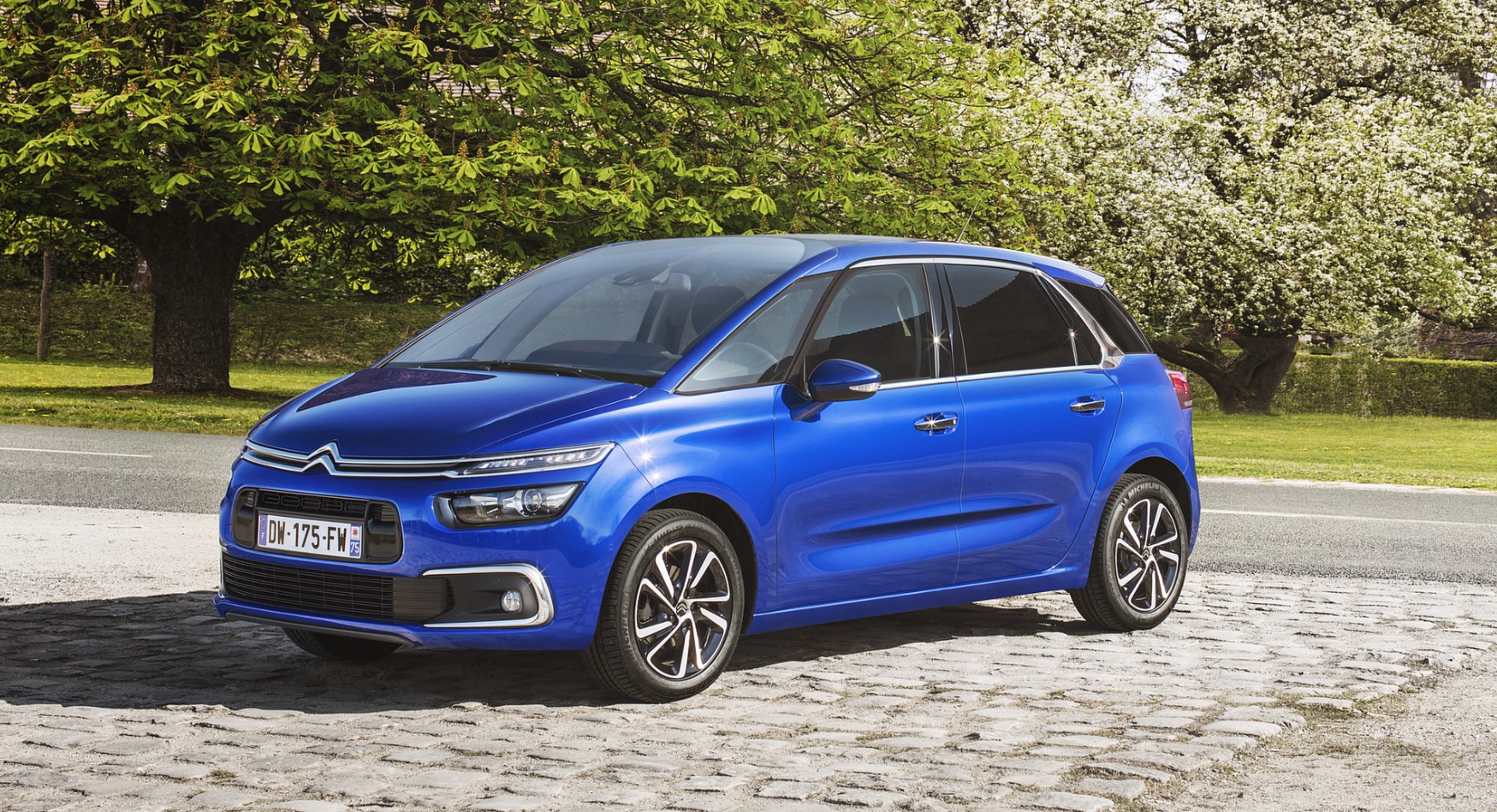
2027 Citroen C4 Picasso Review, Performance, Interior – The 2027 Citroën C4 Picasso is one of those names that immediately brings a distinctive European family-car formula to mind: generous cabin space, clever seating, exceptional visibility, unusual styling, and a strong emphasis on passenger comfort. Citroën retired the C4 Picasso name several years ago and continued the model under the C4 SpaceTourer badge, but the demand for practical family vehicles has not disappeared. If Citroën decided to revive the name for 2027, the result could be a radically different MPV designed around electrification, digital technology, and modern European urban mobility.
A potential 2027 C4 Picasso would need to occupy an interesting position within Citroën’s current range. The modern market has moved heavily toward SUVs and crossovers, yet families still need the flexibility that a conventional MPV provides. A new C4 Picasso could exploit that gap with a tall body, sliding or highly flexible rear seating, a low loading floor, excellent cabin visibility, and a more aerodynamic profile than traditional vans. Rather than returning as a simple continuation of the old model, the new vehicle could become a technology-rich family mover with a distinctly French personality.
The design opportunity is particularly interesting because Citroën has developed a much more expressive visual identity in recent years. A future C4 Picasso could combine the brand’s split-level lighting signature with a smoother body, aerodynamic wheels, a high glasshouse, and a highly efficient electric architecture. The cabin could similarly move beyond the conventional dashboard layout, using wide digital displays, voice controls, connected navigation, advanced climate management, and comfortable lounge-style seating. The result would be a family vehicle that feels substantially more contemporary than the MPVs of the previous generation.
At this stage, specifications, pricing, trim names, power outputs, battery capacity, and release timing for a 2027 Citroën C4 Picasso should be considered unconfirmed. No official 2027 C4 Picasso production program has been announced. Any figures discussed here therefore represent a realistic projection based on Citroën’s current technology, the Stellantis platform strategy, and the direction of the European family-car market. If the Picasso name does return, however, the opportunity to create a distinctive electrified MPV could be considerable. 2027 Citroen C4 Picasso Review
2027 Citroen C4 Picasso Redesign and Update Plan
Exterior & Interior
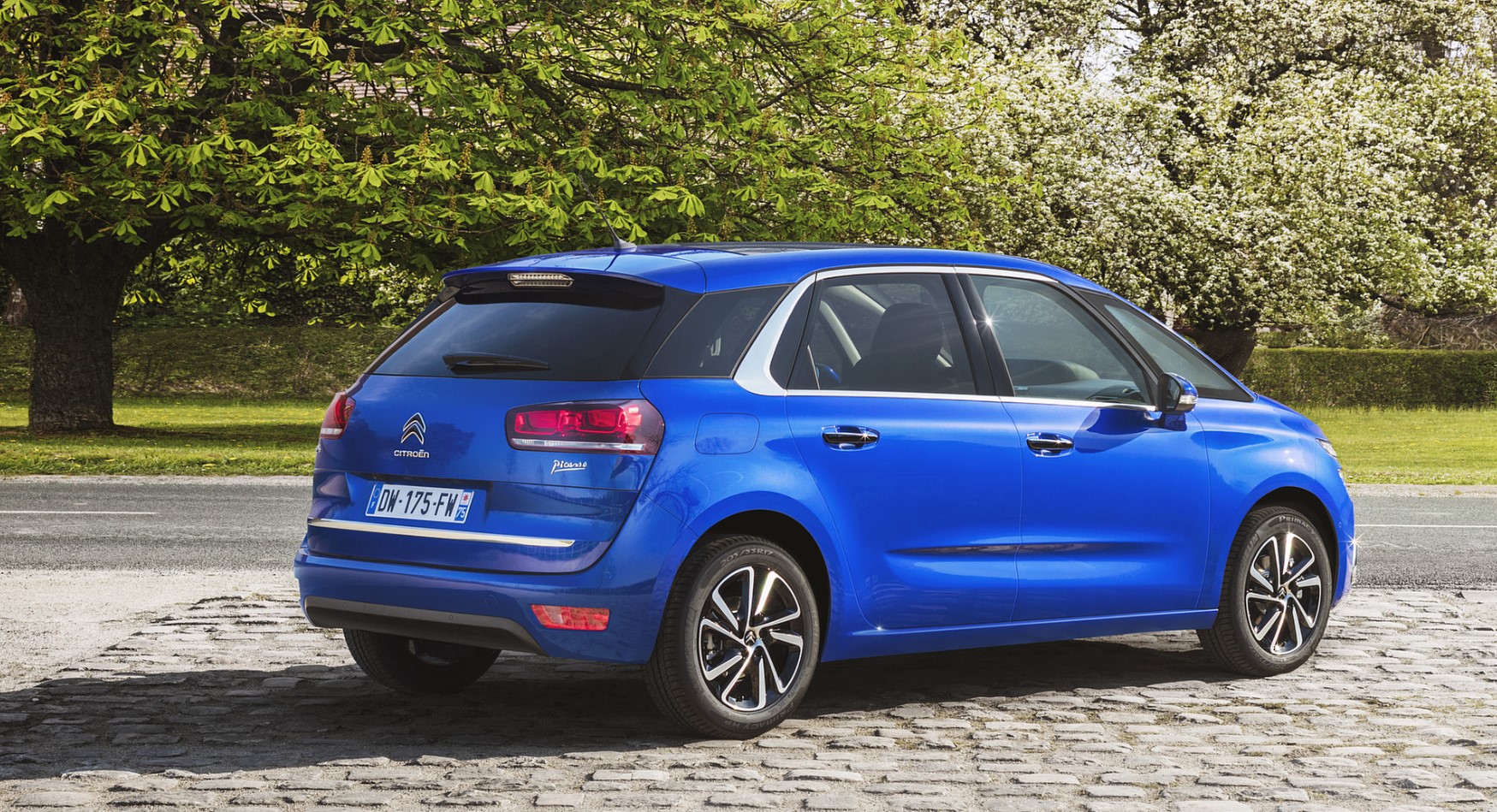
The exterior of the 2027 Citroën C4 Picasso could become considerably more aerodynamic than its predecessor while retaining the upright proportions required for family practicality. A thin front grille, modern Citroën lighting signature, sculpted hood, and carefully shaped bumper would give the vehicle a recognizable face. The roofline could remain relatively tall toward the rear, preserving headroom while tapering subtly toward the back to reduce aerodynamic drag. Large wheels positioned close to the corners would create a planted stance without making the vehicle unnecessarily aggressive.
Lighting could become one of the defining exterior features. Citroën’s modern design language allows designers to create highly recognizable LED signatures without relying on oversized grilles or excessive decorative elements. A future Picasso could use slim daytime running lights connected visually to the front badge, with vertically positioned lighting elements providing additional character. The rear could receive full-width LED illumination, sculpted bodywork, and an electrically operated tailgate on higher trims. Aerodynamic wheel designs could also be offered on hybrid and electric variants.
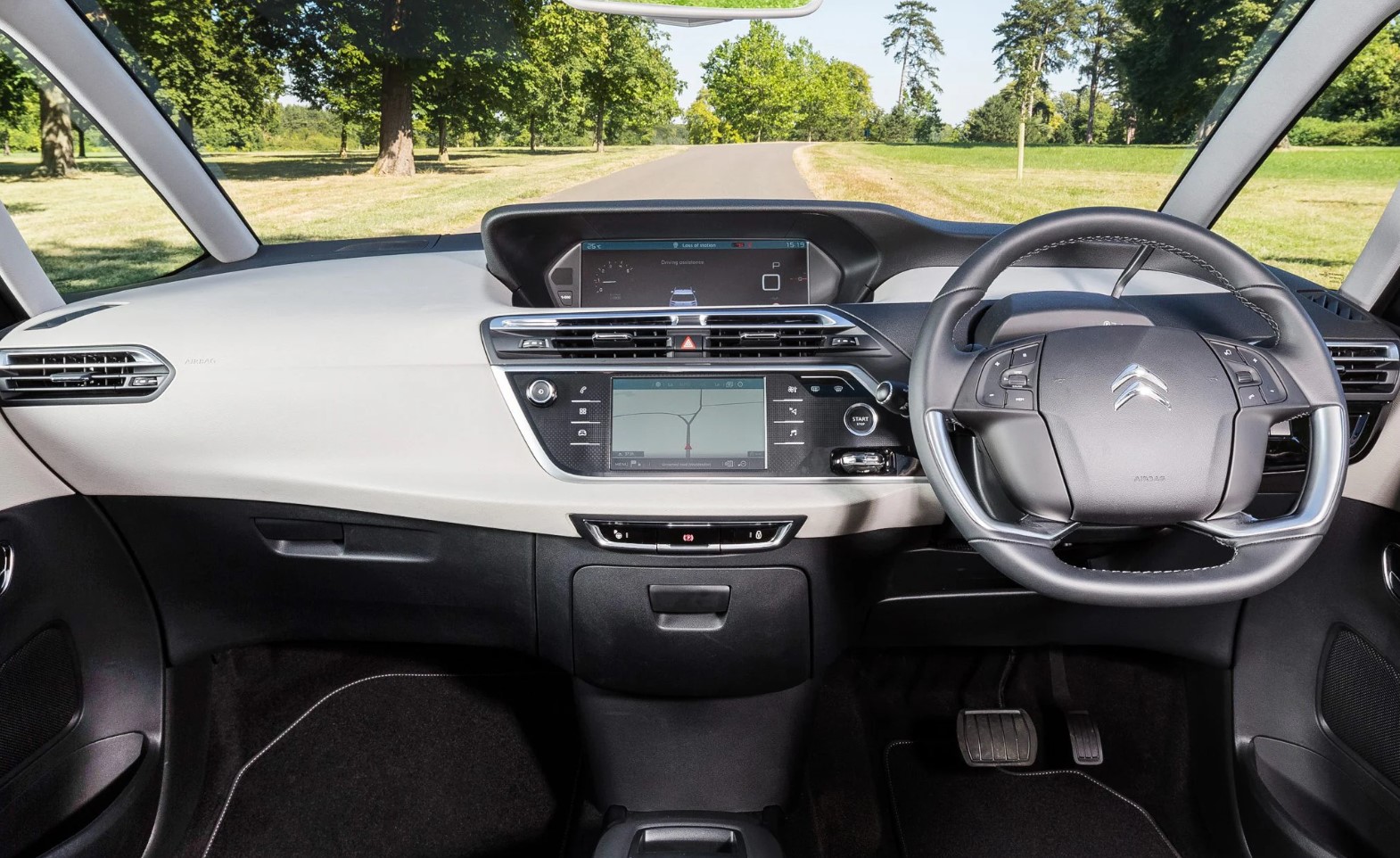
Inside, the biggest priority would be usable space. The 2027 C4 Picasso could feature three individual rear seats or an alternative configuration with a highly adjustable second row, allowing owners to prioritize either passenger comfort or cargo capacity. A flat floor would improve movement between seating positions, while large door openings would make loading children into rear seats considerably easier. The high roof would provide excellent headroom, and the large glass area could preserve the panoramic visibility that made earlier Picasso models so distinctive.
The dashboard could adopt a minimalist architecture with fewer physical controls and a greater reliance on digital interfaces. A wide screen could provide navigation, media, vehicle settings, and connected services, while physical controls would remain for essential functions such as climate adjustment. Citroën could also offer exceptionally comfortable front seats with multiple adjustment functions and optional massage capability on premium versions. Practical storage would be another strength, with deep door pockets, central compartments, rear-seat storage, and a large luggage area designed around everyday family use rather than purely visual appeal.
A hypothetical 2027 Citroën C4 Picasso would require a completely new approach to the traditional MPV formula. The previous C4 Picasso was successful because it prioritized space and visibility, but modern buyers increasingly expect SUVs to deliver those characteristics. The next-generation model would therefore need a more dynamic silhouette without compromising the interior volume that defines the Picasso concept. A longer wheelbase, short overhangs, a relatively tall roof, and carefully optimized packaging could produce a vehicle that remains compact externally while offering substantial passenger room inside.
Citroën could potentially use one of Stellantis’ modular platforms to develop the vehicle, allowing several propulsion systems to share the same basic architecture. That strategy would make gasoline, hybrid, and fully electric versions technically possible, although the exact platform and powertrain combination would depend on Citroën’s future product plan. An electric-focused version would benefit from packaging advantages because the battery could sit beneath the floor, leaving a flat cabin and freeing additional space for passengers and luggage.
The update plan would likely concentrate heavily on comfort. Citroën has long differentiated itself from rivals through suspension tuning, seat design, cabin ergonomics, and a relaxed driving character. A modern C4 Picasso could build on those strengths with advanced suspension calibration, improved acoustic insulation, specially developed comfort seats, and extensive use of soft-touch materials. The objective would not necessarily be outright performance; instead, the vehicle would aim to make long family journeys exceptionally easy and relaxing.
Technology would become another major part of the redesign. A future C4 Picasso could feature a large central infotainment display combined with a digital instrument cluster and a configurable head-up display. Wireless smartphone connectivity, cloud-based navigation, connected vehicle services, remote climate control, over-the-air software updates, and smartphone-based vehicle access could all become available. Advanced parking assistance would be particularly useful for a family MPV, while intelligent route planning could help electric versions manage charging stops automatically. 2027 Citroen C4 Picasso Review
2027 Citroen C4 Picasso Specs
Engine & Performance
The most logical powertrain strategy for a future C4 Picasso would revolve around electrification. A hybrid model could appeal to buyers who want excellent fuel economy without depending on charging infrastructure, particularly in regions where long-distance driving remains common. Stellantis has already expanded hybrid technology across numerous European vehicles, making a modern hybrid system a plausible direction for a future Citroën family vehicle. The system could combine a compact turbocharged gasoline engine with an electric motor and automated transmission.
A hybrid C4 Picasso would prioritize smoothness rather than aggressive acceleration. Electric assistance could provide immediate torque during urban driving, while the gasoline engine would take over during higher-speed cruising or when the battery requires additional energy. Regenerative braking would recover energy during deceleration, reducing fuel consumption in stop-and-go traffic. With appropriate calibration, the system could provide a quiet electric-assisted launch and seamless transitions between propulsion modes.
A fully electric version would offer an even more natural fit with the Picasso concept. An electric motor mounted at the front or rear could provide instant torque, while a large underfloor battery would allow Citroën to create a spacious and relatively flat passenger compartment. Depending on the final battery technology, a projected driving range of approximately 250 to 350 miles could be realistic for an efficient long-range configuration, although no official specifications currently exist for a 2027 C4 Picasso.
Performance would likely emphasize comfort and stability rather than sports-car acceleration. An electric model could potentially produce somewhere around 150 to 200 horsepower in mainstream configurations, with higher-output versions possible if Citroën chooses to offer them. The key advantage would be effortless urban response, quiet highway operation, and predictable power delivery. A well-tuned suspension would complement the powertrain by prioritizing ride comfort over sharp cornering.
2027 Citroen C4 Picasso Fuel Economy
Fuel economy would depend heavily on the propulsion system. A hybrid version could potentially deliver fuel consumption in the neighborhood of 5 to 6 liters per 100 km under favorable European testing conditions, although official figures would depend on final engineering and homologation. A gasoline-only version, if offered, would likely consume more. The electric model would eliminate gasoline consumption entirely and could provide competitive efficiency through aerodynamic bodywork, regenerative braking, and optimized battery management.
2027 Citroen C4 Picasso Safety Features
Safety would be essential for any new C4 Picasso, particularly because the vehicle would target families. A future model could feature automatic emergency braking, pedestrian and cyclist detection, lane departure warning, lane keeping assistance, blind-spot monitoring, rear cross-traffic alert, traffic-sign recognition, adaptive cruise control, and driver-attention monitoring. Higher specifications could add a 360-degree camera, semi-automated parking, highway assistance, and enhanced collision avoidance technology. 2027 Citroen C4 Picasso Review
2027 Citroen C4 Picasso Release Date & Price
A reasonable projected trim structure could include You, Plus, and Max versions, although these names are speculative rather than confirmed. An entry-level version could focus on essential comfort and safety equipment, while the middle trim could add larger wheels, upgraded infotainment, enhanced driver assistance, and additional interior features. A high-end version could feature premium upholstery, panoramic glass, advanced lighting, upgraded audio, electrically adjustable seats, and the most comprehensive technology package.
Pricing would ultimately depend on the platform, battery size, equipment, and European market conditions. If introduced, a gasoline or hybrid C4 Picasso could potentially start in the region of €30,000–€35,000, with better-equipped versions reaching approximately €40,000. A fully electric version could begin around €38,000–€42,000, with long-range and premium models potentially exceeding €50,000. These numbers are projections only and should not be interpreted as official Citroën pricing.
The release date remains the biggest unknown. Citroën has not officially confirmed a 2027 C4 Picasso, meaning there is currently no verified launch schedule or dealer availability date. If the Picasso name were revived for the 2027 model year, a reveal during 2026 followed by European deliveries in late 2026 or 2027 would be a plausible industry timeline. However, without an official announcement, buyers should treat the rumored model, specifications, prices, and release timing as speculative rather than confirmed production information.
Conclusion
The 2027 Citroën C4 Picasso remains an intriguing possibility rather than a confirmed production vehicle. Citroën has not announced a new model carrying the Picasso name for 2027, but the concept makes sense in a market where families continue to demand spacious, comfortable, efficient transportation while manufacturers increasingly move toward electrification.
A modern Picasso could stand apart from conventional SUVs by offering superior cabin flexibility, exceptional visibility, comfortable seating, intelligent storage, and a practical body shape. Hybrid and electric powertrains could make the concept significantly more efficient than the older generation, while modern connectivity and advanced safety technology would bring the vehicle firmly into the next generation.
If Citroën eventually revives the name, the strongest formula would be a stylish but practical MPV with hybrid and electric choices, a highly flexible interior, sophisticated suspension, strong standard safety equipment, and competitive European pricing. That combination would give the 2027 Citroën C4 Picasso a clear identity rather than simply turning it into another crossover.
For now, the most accurate expectation is that the 2027 Citroën C4 Picasso is speculative. Any confirmed engine specifications, battery range, trim levels, pricing, and release date will ultimately need to come from Citroën.
Note: The details included in this blog post are derived from pre-release material that was accessible when the article was written. If you want the latest information, you should check official sources or call your nearest dealership.
Read Also:
- 2027 Citroen E-MEHARI Redesign, Engine, Performance
- 2027 Citroen C5 Aircross Hybrid Specs, Price, Dimensions
- 2027 Citroen DS 4 Review, Specs, Changes
- 2027 Citroen Numero 9 Redesign, Specs, Price
- 2026 Citroen C5 X Price, Specs, Interior
Frequently Asked Questions
2027 Citroen C4 Picasso Review, Performance, Interior - The 2027 Citroën C4 Picasso is one of those names that immediately brings a distinctive European family-car formula to mind: generous cabin space, clever seating, exceptional visibility, unusual styling, and a strong emphasis on passenger comfort. Citroën retired the C4…
A potential 2027 C4 Picasso would need to occupy an interesting position within Citroën’s current range. The modern market has moved heavily toward SUVs and crossovers, yet families still need the flexibility that a conventional MPV provides. A new C4 Picasso could exploit that gap with a tall…
The design opportunity is particularly interesting because Citroën has developed a much more expressive visual identity in recent years. A future C4 Picasso could combine the brand’s split-level lighting signature with a smoother body, aerodynamic wheels, a high glasshouse, and a highly efficient electric architecture. The cabin could…
At this stage, specifications, pricing, trim names, power outputs, battery capacity, and release timing for a 2027 Citroën C4 Picasso should be considered unconfirmed. No official 2027 C4 Picasso production program has been announced. Any figures discussed here therefore represent a realistic projection based on Citroën’s current technology,…
Fuel economy would depend heavily on the propulsion system. A hybrid version could potentially deliver fuel consumption in the neighborhood of 5 to 6 liters per 100 km under favorable European testing conditions, although official figures would depend on final engineering and homologation. A gasoline-only version, if offered, would likely consume more. The electric model would eliminate gasoline consumption entirely and could provide competitive efficiency through aerodynamic bodywork, regenerative braking, and optimized battery management.