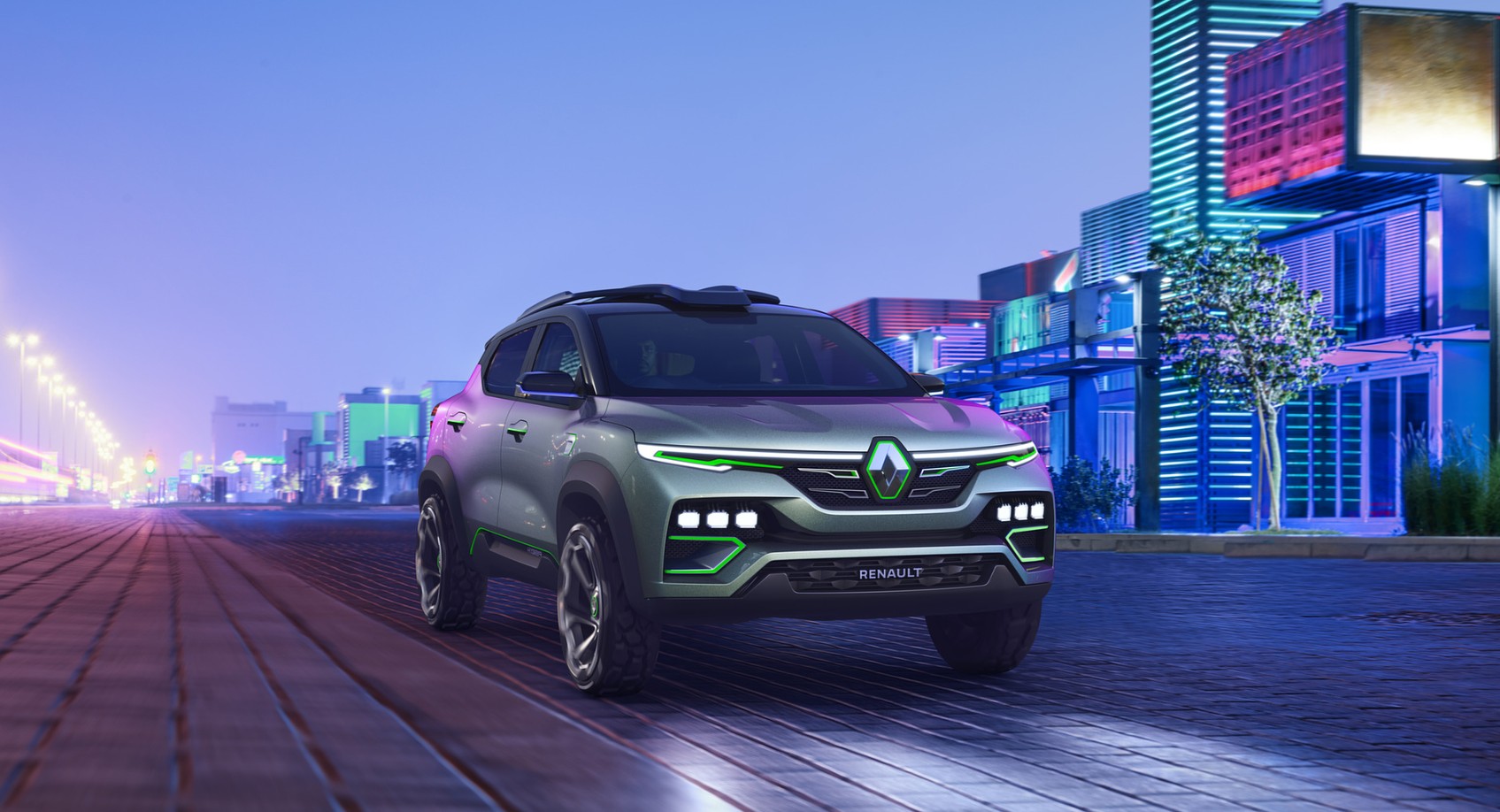
2027 Renault Kiger Review, Price, Specs – The 2027 Renault Kiger is expected to remain one of Renault India’s most important compact SUVs, combining a small footprint with a relatively spacious cabin, high ground clearance and a choice of naturally aspirated and turbocharged petrol engines. Renault currently lists the Kiger from ₹5.81 lakh ex-showroom, with five versions in its present range and a 100 PS turbo-petrol engine positioned as the performance-focused option. The latest Kiger also offers three drive modes, 205 mm of ground clearance and a 405-liter boot, giving the compact SUV a practical advantage for urban buyers and small families.
The important point for the 2027 model year is that Renault has not yet confirmed an all-new Kiger generation. The current Kiger received a significant facelift in August 2025, bringing revised bumpers, lighting details, a new Renault logo, new alloy wheels, updated interior finishes and six airbags as standard. Renault subsequently expanded the lineup in June 2026 with the Evolution+ Turbo manual and a manual gearbox for the Techno Turbo. That recent product activity suggests the Kiger is still being actively developed rather than immediately replaced.
For 2027, the most sensible expectation is therefore a carefully managed continuation of the existing model, potentially with additional equipment, updated software, revised color choices and further improvements to the powertrain lineup. Renault has also been transitioning its entry-level Indian products to the Renault Group Entry Platform, an updated and rebranded development of the architecture currently used by the Kiger, Triber and Kwid. That platform strategy could eventually lead to a deeper Kiger update, although Renault has not announced that a completely new 2027 Kiger will arrive.
The Kiger’s position in the market remains highly competitive. It faces products such as the Nissan Magnite, Tata Punch, Maruti Suzuki Fronx, Hyundai Venue and Mahindra XUV 3XO, depending on version and price. Its strongest selling points are the combination of a compact exterior, 1.0-liter turbocharged performance, automatic transmission availability, high ground clearance and a relatively accessible entry price. A successful 2027 update should preserve those advantages while improving refinement, cabin technology and perceived quality without pushing the Kiger too far away from its value-oriented positioning. 2027 Renault Kiger Review
2027 Renault Kiger Redesign and Update Plan
Exterior & Interior
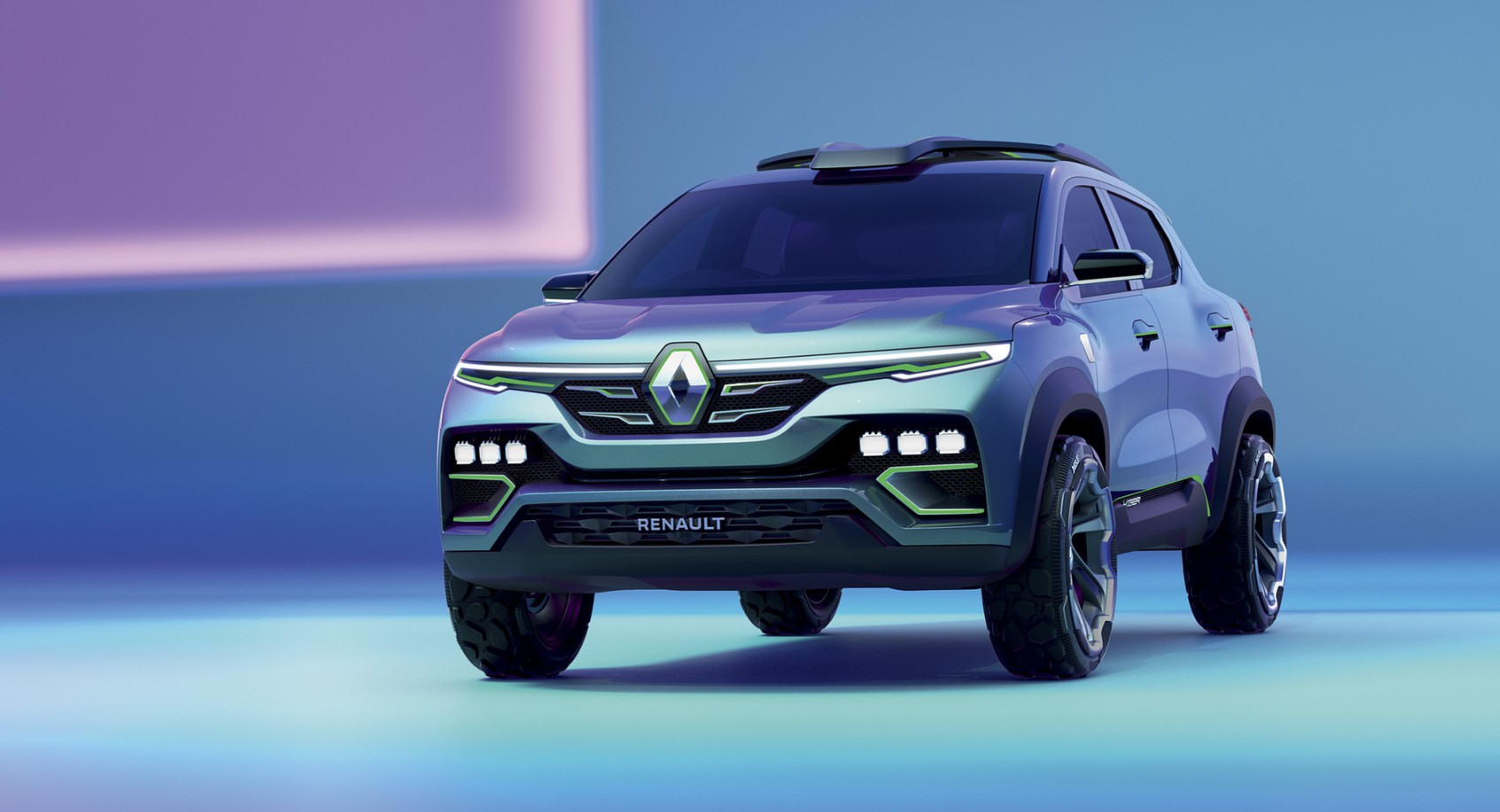
The exterior of the 2027 Renault Kiger should continue to build on the visual changes introduced with the 2025 facelift. Renault revised the front and rear bumpers, redesigned the headlight and fog-light areas, introduced the newer Renault logo and added new 16-inch dual-tone alloy wheels. The facelift also introduced fresh graphic details around the C-pillar and a smoked treatment around the reverse-light section. These changes gave the Kiger a more contemporary appearance without requiring a complete body redesign, and they provide a solid foundation for further 2027 refinements.
A future update could make the Kiger look wider and more sophisticated without significantly increasing its dimensions. Renault could sharpen the LED lighting signature, introduce a revised grille texture and integrate the latest brand design language more closely with the Duster and other newer Renault products. The roofline and side profile would likely remain familiar because the Kiger’s compact dimensions are central to its urban usability. At 205 mm, its current ground clearance also gives the vehicle a useful visual SUV stance while providing additional confidence over broken roads and speed bumps.
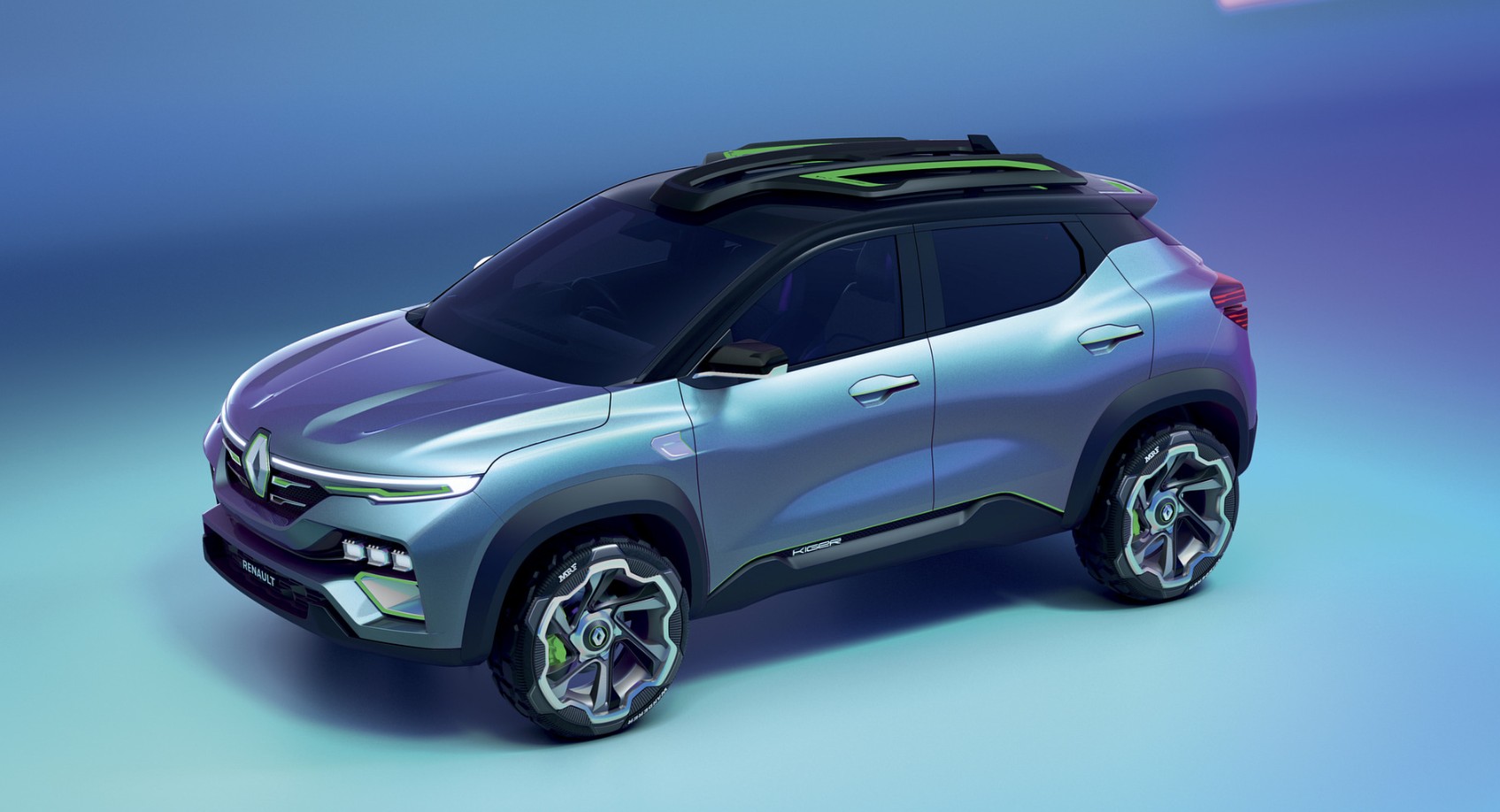
The side profile could receive new alloy-wheel designs, additional color combinations and subtle aerodynamic changes. Renault currently offers functional roof rails capable of carrying up to 50 kg, so retaining that equipment would preserve an important practical feature for owners who use the Kiger for weekend trips. A 2027 model could also expand the dual-tone color strategy, especially on higher trims, while introducing one or two new exterior colors to distinguish the latest model from earlier versions. The most effective redesign would be evolutionary rather than excessive, keeping the Kiger recognizable while making it look newer beside increasingly modern competitors.
Inside, the Kiger should focus on improving perceived quality and technology rather than radically changing the existing cabin architecture. The latest model already uses a black-and-light-grey dashboard treatment and offers an 8-inch touchscreen on higher variants, along with wireless smartphone replication, automatic climate control and other convenience equipment. The top-spec Emotion adds ventilated front seats, a multi-view camera, wireless charging and other premium features. A 2027 update could expand these technologies to more affordable versions and potentially introduce a larger, sharper touchscreen and a more sophisticated digital instrument display.
Cabin practicality should remain a major priority. The current Kiger provides 405 liters of boot space and multiple storage areas throughout the cabin, making it more versatile than its small exterior dimensions might suggest. Renault’s emphasis on compact urban SUVs means rear-seat usability, easy ingress and egress, useful storage and a manageable turning footprint are likely to remain central to the vehicle’s identity. A future 2027 version could add better rear USB-C charging, improved seat cushioning, additional soft-touch materials and stronger noise insulation, addressing some of the refinement concerns that become more noticeable as compact SUVs move increasingly upmarket.
2027 Renault Kiger Specs
Engine & Performance
The current Renault Kiger uses two 1.0-liter three-cylinder petrol engines, giving buyers a choice between simplicity and stronger performance. The naturally aspirated engine produces 72 PS, while the turbocharged version produces 100 PS and 160 Nm according to Renault’s current specifications. Transmission choices include a five-speed manual, five-speed AMT and CVT depending on the engine and trim. This broad combination allows the Kiger to serve buyers who prioritize low purchase cost as well as those who want more responsive acceleration without moving into a larger SUV.
For the 2027 model, the 1.0-liter turbo-petrol engine is likely to remain the key performance option unless Renault announces a major powertrain revision. The engine’s 160 Nm of torque gives the Kiger considerably stronger mid-range performance than the naturally aspirated unit, particularly when overtaking or climbing inclines with passengers. The addition of the Evolution+ Turbo manual in 2026 also shows that Renault is actively expanding access to the turbo engine rather than restricting it to the most expensive trim. That makes a major replacement of the engine less likely in the immediate future.
The 2027 Kiger could nevertheless receive software calibration changes designed to improve throttle response, transmission behavior and refinement. Renault already provides three drive modes—Eco, Normal and Sport—on the current Kiger. These modes allow the vehicle to change its response according to driving conditions and driver preference. A future version could make the modes more clearly differentiated, particularly with the turbo engine, while improving the AMT and CVT’s low-speed behavior. Such refinements would be more useful in everyday traffic than a small increase in peak horsepower. 2027 Renault Kiger Review
2027 Renault Kiger Fuel Economy
Fuel economy should remain one of the Kiger’s strongest arguments. Current published figures place the range around 17.63 kmpl to 20.38 kmpl depending on engine and transmission, although actual consumption will naturally vary with traffic, driving style, passenger load and air-conditioning use. A 2027 model could potentially improve real-world efficiency through engine-management calibration, lower rolling resistance and transmission refinements. However, official 2027 mileage figures are not available yet, so any specific number beyond current published specifications would be speculative.
The Kiger’s chassis also contributes to its performance character. Renault describes the current SUV as using a lightweight, reinforced body, while the vehicle’s 205 mm ground clearance gives it useful clearance for rough urban roads and uneven surfaces. The turbo model is unlikely to become a true performance SUV, but its compact dimensions and relatively responsive powertrain can make it enjoyable in city traffic. For 2027, better steering calibration, suspension tuning and brake feel would likely provide greater benefits than a dramatic horsepower increase.
2027 Renault Kiger Safety Features
Safety has become one of the most important areas for compact SUVs, and the Kiger has already made a significant step forward. The current facelift brought six airbags as standard across the range, along with electronic stability program, tire-pressure monitoring and hill-start assistance. The top version also offers a 360-degree camera, giving drivers a much clearer view when maneuvering in tight parking spaces. A 2027 version should retain this equipment as a minimum and could add more advanced electronic driver-assistance systems if Renault decides to move the Kiger further upmarket.
The potential safety upgrades could include improved camera resolution, front parking sensors, blind-spot monitoring and more sophisticated autonomous emergency braking. However, these features should not be presented as confirmed 2027 Kiger equipment because Renault has not announced such a package. The current safety specification is the reliable baseline. Renault’s decision to make six airbags standard is already significant because it means even entry-level buyers receive a more comprehensive passive-safety package rather than having to move to the most expensive version.
Technology will probably become another focus of the next update. The current Kiger offers an 8-inch touchscreen, wireless smartphone replication on selected variants, smart access, push-button start, automatic climate control and a multi-view camera on the top version. Renault could introduce a larger display, wireless Apple CarPlay and Android Auto across more trims, connected-car functionality and USB-C charging. A more advanced digital driver’s display would also help modernize the cabin without changing the underlying dashboard architecture.
The 2027 trim structure will probably evolve from the current Authentic, Evolution, Evolution+, Techno and Emotion hierarchy rather than returning to the previous RXE, RXL, RXT(O) and RXZ names. Renault’s latest naming strategy already uses these five versions on its current website. The Evolution+ addition has also allowed Renault to position the turbo engine at a substantially lower price than the previous Emotion Turbo manual, giving buyers more choice in the middle of the lineup.
2027 Renault Kiger Release Date & Price
The Authentic should remain the entry point, emphasizing affordability while retaining important safety equipment. The current version starts at ₹5.81 lakh and includes side airbags, curtain airbags, remote keyless entry and rear power windows according to Renault’s configurator. The Evolution would continue as the value-focused middle trim, adding equipment such as the touchscreen, rear camera and rear air-conditioning vents. The Evolution+ could remain the sweet spot for buyers who want more convenience without paying for the top-level equipment.
The Techno would likely remain the technology-focused option, while the Emotion would serve as the range-topping version with ventilated front seats, larger alloy wheels, multi-view camera and more convenience features. Renault’s current Kiger already demonstrates this structure clearly. For 2027, Renault could add more premium equipment to these trims while maintaining a clear distinction between them. The Turbo engine could also become available across more versions, especially after Renault’s 2026 decision to introduce the Evolution+ Turbo and Techno Turbo manual.
The Kiger’s release strategy will ultimately depend on Renault’s wider Indian product plan. The company is simultaneously expanding its SUV range with the new Duster, while the Kiger and Triber remain important lower-priced products. Renault’s official Indian lineup currently positions the Kiger as a lightweight SUV with a reinforced body, 100 PS turbo engine and three drive modes, while the Duster occupies a larger and more expensive position. That positioning makes a radical increase in Kiger size or price less likely because it could interfere with the role of the Duster.
The strongest 2027 strategy would therefore be to make the Kiger better rather than dramatically bigger. Improved interior materials, a modern infotainment system, stronger connectivity, refined CVT and AMT calibration, additional safety technology and carefully revised exterior details could keep the model competitive without destroying its value proposition. The 1.0-liter turbo engine already provides enough performance for the segment, while the naturally aspirated engine remains important for buyers focused primarily on affordability and running costs.
Pricing is one of the strongest reasons the Kiger remains relevant in India’s compact-SUV market. Renault currently lists the Kiger from ₹5.81 lakh ex-showroom, although individual variants and equipment combinations carry higher prices. Renault’s website also states that prices can change and that local taxes may apply depending on location. The current range has therefore become considerably more accessible at the lower end than the facelift’s original launch pricing, while additional variants have broadened the model’s appeal.
For reference, the June 2026 Kiger lineup listed by Autocar India starts at ₹5.81 lakh for the Authentic manual and extends to ₹10.35 lakh for the Emotion Turbo CVT. The newly introduced Evolution+ Turbo manual costs ₹7.89 lakh, while the Techno Turbo manual is priced at ₹8.45 lakh. These figures provide a useful indication of where the 2027 Kiger could be positioned, although Renault could change pricing, variant availability or equipment before the next model year officially launches.
If Renault introduces a 2027 update without a major mechanical redesign, an estimated price range of approximately ₹6 lakh to ₹11 lakh ex-showroom would be reasonable. A deeper redesign, additional safety technology or new-generation infotainment could push the upper versions beyond that range. This remains an estimate rather than an official Renault price. The company explicitly states that listed prices are subject to change, so buyers should use the official configurator and dealer quotation for the final transaction price.
The release date is also not officially confirmed as a distinct 2027 model launch. The current Kiger was comprehensively facelifted in August 2025, and Renault added the Evolution+ Turbo and Techno Turbo manual versions in June 2026. Those updates indicate that Renault is still extending the current Kiger’s commercial life. A minor 2027 model-year update could therefore arrive without a dramatic launch event, while a genuinely new-generation Kiger would likely require a much more substantial announcement.
Conclusion
The 2027 Renault Kiger has the potential to remain one of India’s most interesting value-focused compact SUVs, but there is currently no official confirmation of an all-new 2027 generation. Renault has already given the Kiger a major facelift, renamed its variants and expanded its turbo-petrol lineup. The June 2026 introduction of the Evolution+ Turbo and Techno Turbo manual demonstrates that the company is still actively adjusting the product to meet changing customer demand.
The current formula is strong: a compact body, 205 mm ground clearance, 405-liter boot, 72 PS naturally aspirated engine, 100 PS turbo-petrol option, manual, AMT and CVT transmissions, three drive modes and six airbags across the range. A future update does not need to abandon those strengths. The smarter approach would be to add refinement, technology and convenience while keeping the Kiger’s accessible price structure intact.
For buyers interested in performance, the turbocharged Kiger is likely to remain the most attractive version. The 100 PS engine and 160 Nm of torque give the compact SUV a useful balance of responsiveness and efficiency, while the 2026 expansion of turbo availability makes that engine accessible at lower prices than before. For urban-focused buyers, the naturally aspirated version remains the more affordable route, while the CVT provides a smoother automatic driving experience for congested city traffic.
The 2027 Renault Kiger price and release date remain unconfirmed, so projected figures should be treated as estimates rather than official specifications. Renault currently sells the Kiger from ₹5.81 lakh ex-showroom, and the current model continues to receive active updates. If Renault carries this momentum into 2027 with sharper styling, improved cabin technology, more advanced safety equipment and further refinement to the turbo powertrain, the Kiger should remain a compelling alternative to the increasingly crowded Indian compact-SUV market.
Note: The details included in this blog post are derived from pre-release material that was accessible when the article was written. If you want the latest information, you should check official sources or call your nearest dealership.
Read Also:
- 2027 Renault Alaskan Redesign, Price, Specs
- 2027 Renault Twingo GT Price, Specs, Interior
- 2027 Renault Kiger Release Date, Specs, Configurations
- 2027 Renault Scenic Redesign, Price, Configurations
- 2026 Renault Captur Specs, Features, Review
Frequently Asked Questions
2027 Renault Kiger Review, Price, Specs - The 2027 Renault Kiger is expected to remain one of Renault India's most important compact SUVs, combining a small footprint with a relatively spacious cabin, high ground clearance and a choice of naturally aspirated and turbocharged petrol engines. Renault currently lists…
The important point for the 2027 model year is that Renault has not yet confirmed an all-new Kiger generation. The current Kiger received a significant facelift in August 2025, bringing revised bumpers, lighting details, a new Renault logo, new alloy wheels, updated interior finishes and six airbags as…
For 2027, the most sensible expectation is therefore a carefully managed continuation of the existing model, potentially with additional equipment, updated software, revised color choices and further improvements to the powertrain lineup. Renault has also been transitioning its entry-level Indian products to the Renault Group Entry Platform, an…
The Kiger's position in the market remains highly competitive. It faces products such as the Nissan Magnite, Tata Punch, Maruti Suzuki Fronx, Hyundai Venue and Mahindra XUV 3XO, depending on version and price. Its strongest selling points are the combination of a compact exterior, 1.0-liter turbocharged performance, automatic…
2027 Renault Kiger Redesign and Update Plan Exterior & Interior The exterior of the 2027 Renault Kiger should continue to build on the visual changes introduced with the 2025 facelift. Renault revised the front and rear bumpers, redesigned the headlight and fog-light areas, introduced the newer Renault logo…