2027 Renault Twingo GT Release Date, Specs, Interior – The 2027 Renault Twingo GT is shaping up as one of the most intriguing potential performance cars in Renault’s future small-car lineup, although an important distinction needs to be made at the outset: Renault has not officially confirmed a Twingo GT for the 2027 model year. The production Twingo E-Tech electric is already established as Renault’s new-generation city car, with an 82-hp electric motor, a 27.5-kWh LFP battery and up to 263 km of WLTP range. Renault has also positioned the new Twingo around lightweight construction, compact dimensions, clever packaging and genuinely engaging urban driving. Those characteristics create an unusually strong foundation for a hotter GT derivative.
A potential Twingo GT would also have a meaningful historical connection to Renault’s previous performance-oriented city car. The earlier Twingo GT used a turbocharged petrol engine, rear-wheel drive and a chassis developed to make a tiny car considerably more entertaining than its modest dimensions suggested. Renault’s historical Twingo GT produced up to 110 hp and offered a choice of manual or EDC automatic transmissions, with a top speed around 182–183 km/h. Its 0–100 km/h performance was not supercar territory, but the car’s appeal came from agility, character and the sense that every corner could become an event.
The electric Twingo changes that formula dramatically. Rather than simply adding a larger combustion engine, Renault could use a more powerful electric motor, sharper steering calibration, stronger brakes, sportier suspension and a revised electronic torque strategy. The result could be a lightweight urban EV with substantially stronger acceleration while retaining the compact footprint that makes the Twingo so useful in European cities. Renault already says the production Twingo benefits from the AmpR Small platform, a 2.49-meter wheelbase, a low-weight philosophy and suspension components derived from larger Renault models.
For now, therefore, the 2027 Renault Twingo GT should be viewed as a highly plausible performance concept rather than a confirmed production model. The strongest clues come from the Twingo’s existing architecture rather than an official GT announcement. Renault has already demonstrated that the new car can combine affordability with modern EV technology, while its relationship with the Renault 4 and Renault 5 performance philosophy provides a potential pathway toward a sportier version. If Renault decides to revive the GT badge, the formula could be remarkably simple: keep the Twingo small, keep the battery relatively compact, add considerably more power, sharpen the chassis and make the car genuinely fun. 2027 Renault Twingo GT Release Date
2027 Renault Twingo GT Redesign and Update Plan
Exterior & Interior
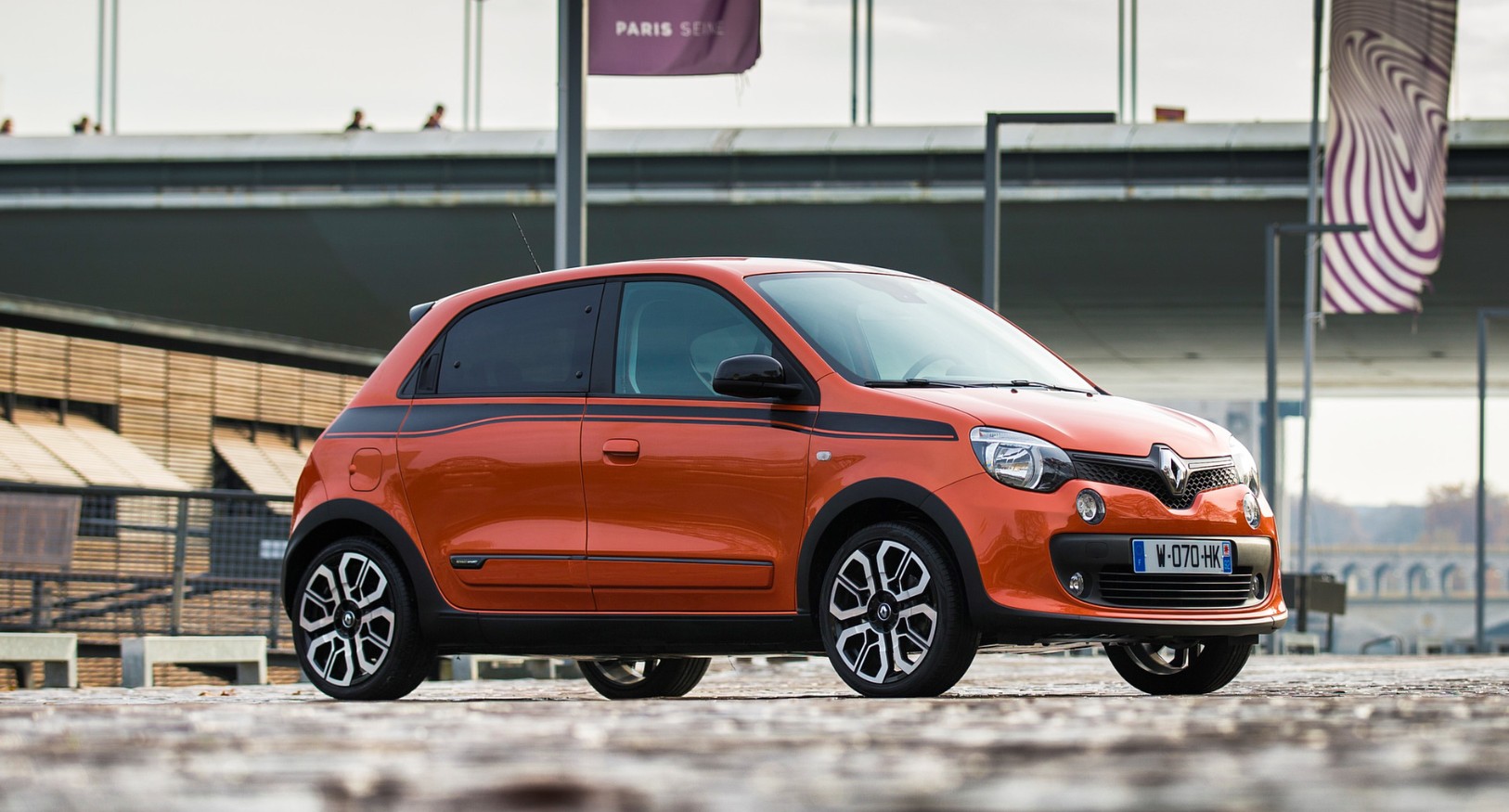
The exterior of the production Twingo E-Tech already draws heavily from the first-generation model. Renault describes the new car as a modern reinterpretation of the original, with rounded forms, expressive headlights and a compact “bubble” shape. A 2027 Twingo GT could preserve those recognizable characteristics while giving them a considerably more aggressive treatment. The headlights would likely remain one of the car’s visual signatures, but a darker internal finish, sharper LED detailing and a more purposeful front bumper could immediately separate the GT from ordinary versions.
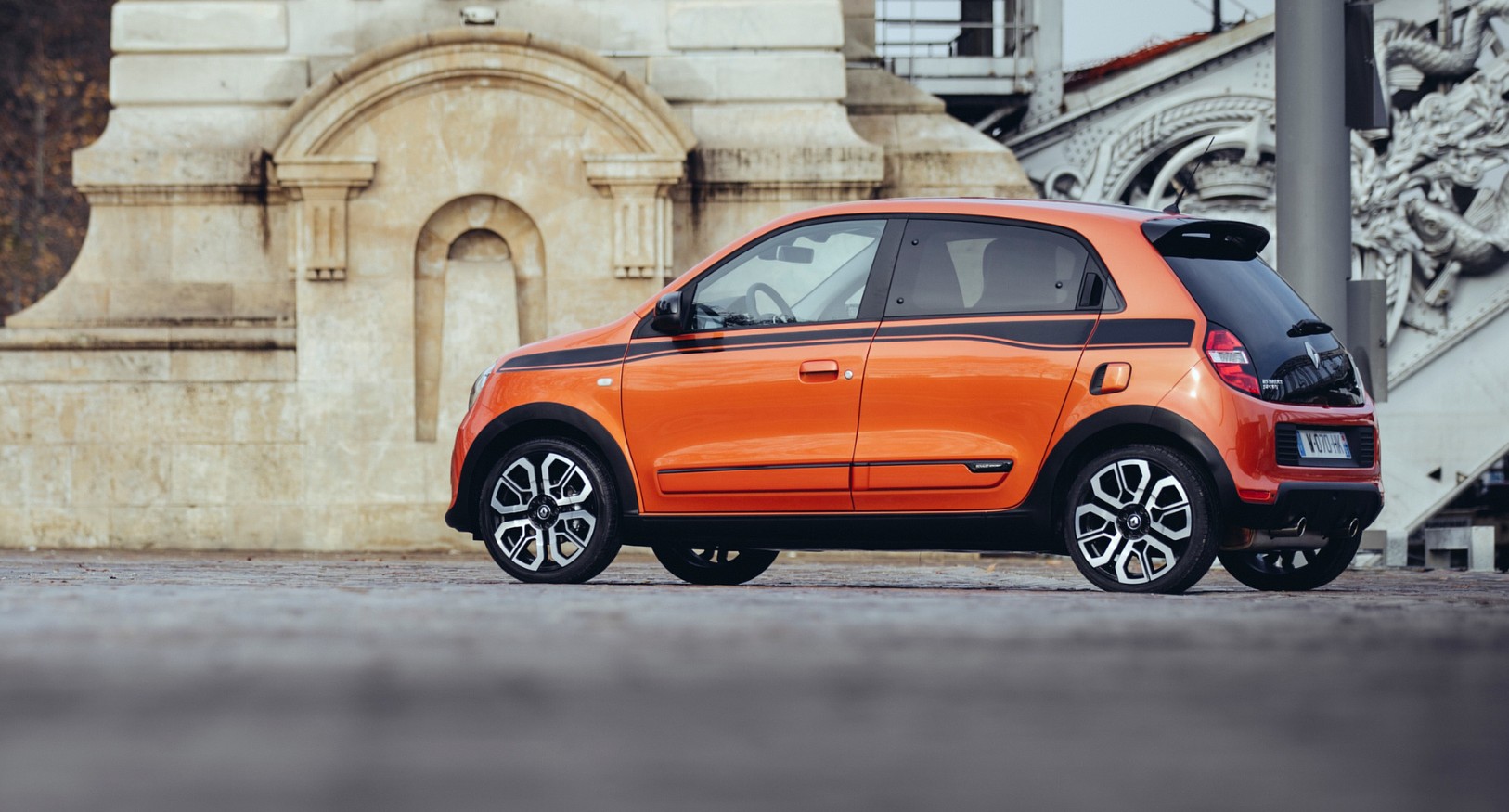
Wheel design would probably become one of the most visible upgrades. The standard Twingo can already be fitted with 18-inch wheels, which is substantial for a car in the European A segment. A GT could use lightweight 18-inch alloys as standard, possibly with a unique multi-spoke pattern and performance-oriented tires. Renault would need to balance appearance with ride comfort, however. Oversized wheels and ultra-low-profile tires could undermine the city-car character. A slightly wider tire combined with a carefully selected sidewall would make more sense, providing additional grip without turning every pothole into a suspension event.
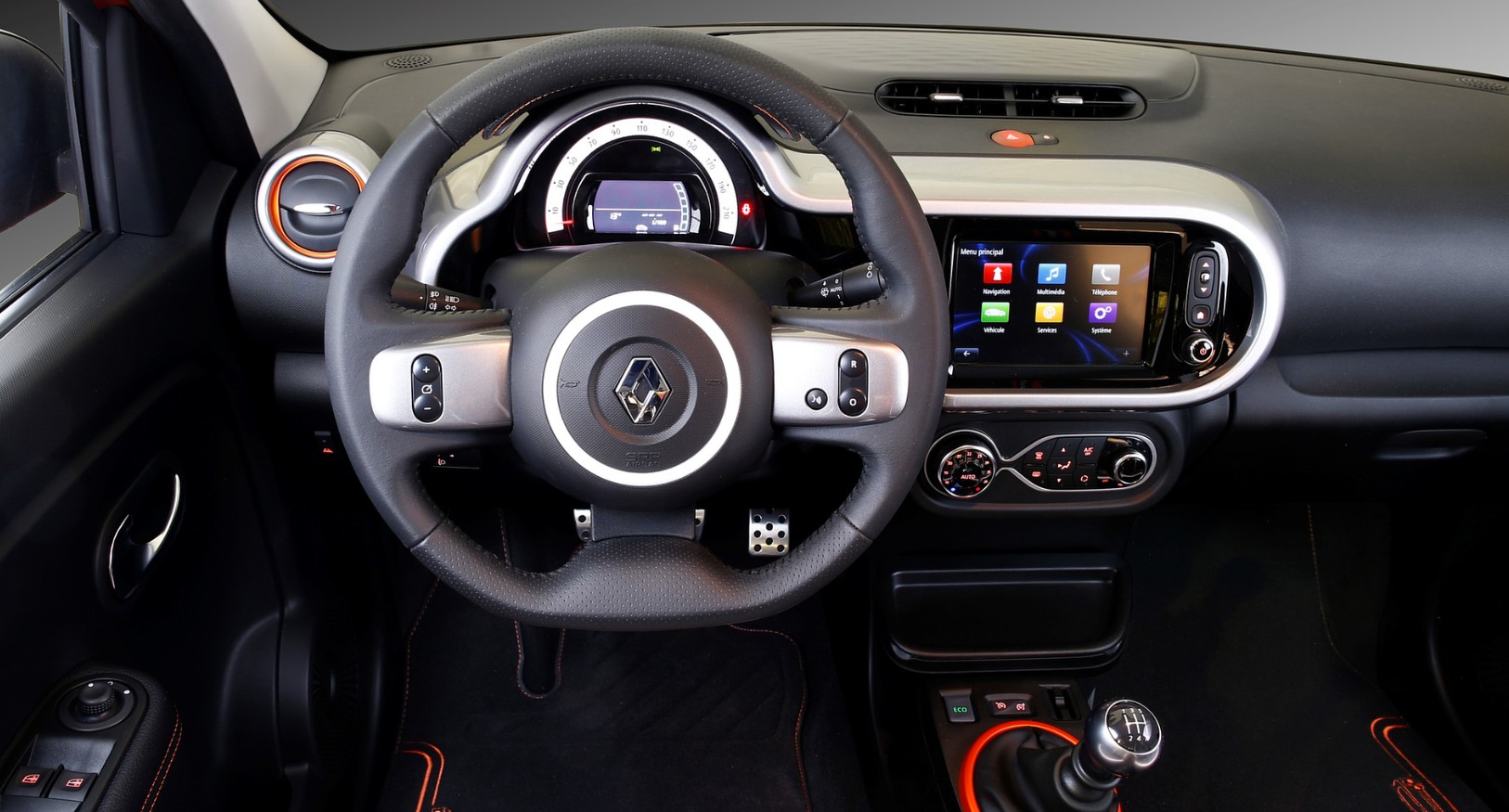
Inside, the GT should feel more focused without becoming uncomfortable. The standard Twingo already offers a 7-inch digital instrument display and a 10-inch multimedia screen, while the Techno version adds OpenR Link with Google built-in, adaptive cruise control with Stop & Go, automatic climate control, one-pedal driving and a folding front-passenger seatback. A GT could build on that equipment with sport seats, stronger side bolsters, contrast stitching, aluminum-style pedals and a dedicated performance display. A flat-bottom steering wheel with a GT marker at the top would be an obvious visual upgrade.
Practicality should remain one of the Twingo’s defining strengths. Renault has engineered the new car with two independently sliding rear seats, allowing passengers to prioritize legroom or luggage capacity. The rear bench can provide up to 160 mm of knee room, while maximum luggage capacity reaches 360 liters according to Renault’s published specifications. A GT should not sacrifice that flexibility simply for a sportier image. Four adults may still find the car surprisingly usable, and the compact exterior would retain the tight maneuverability expected from a modern city car. That combination could make a Twingo GT much more appealing than a conventional small hot hatch.
The most logical approach for the 2027 Renault Twingo GT would be to build directly on the existing Twingo E-Tech electric rather than create a completely separate model. The standard car already measures approximately 3.789 meters long, uses a 2.493-meter wheelbase and provides four seats and five doors. Its rounded proportions deliberately echo the original Twingo while incorporating modern aerodynamic and packaging solutions. A GT version could retain those dimensions but receive a lower ride height, wider-looking bodywork, revised bumpers and more aggressive aerodynamic details.
The visual redesign would probably concentrate on making the small Renault look faster without destroying its playful personality. A deeper front bumper could incorporate larger air openings for cooling and visual impact, while a gloss-black grille treatment and sharper LED lighting signature would give the car a more serious face. At the rear, a compact roof spoiler, redesigned diffuser-style lower bumper and darker lamp graphics could distinguish the GT from Evolution and Techno models. Renault could also introduce exclusive colors, contrasting roof options and discreet GT badges rather than covering the car in oversized performance graphics.
Underneath the body, the more important changes would involve the chassis. The standard Twingo already uses an AmpR Small platform engineered around compact electric vehicles, while Renault says its front axle is related to the Renault 4 and Renault 5 and the rear axle is adapted from the Captur. That hardware offers an interesting starting point for a sportier derivative. A GT version could receive firmer springs, revised dampers, thicker anti-roll bars, recalibrated steering assistance and stronger brakes. The goal would not necessarily be maximum track performance; instead, the car could become more responsive and controlled without losing its ability to absorb rough city streets.
Weight management would be especially important. The current Twingo’s 27.5-kWh LFP battery is deliberately compact, helping Renault avoid the excessive mass associated with many larger electric vehicles. A GT could therefore benefit from a relatively modest battery rather than adding a huge pack. Keeping the battery close to the existing capacity would help preserve the Twingo’s agile character. Lightweight wheels, performance tires and possibly aluminum components could further reduce unsprung mass. A successful Twingo GT would be more convincing as a lightweight electric hot hatch than as a miniature high-power grand tourer. 2027 Renault Twingo GT Release Date
2027 Renault Twingo GT Specs
Engine & Performance
The biggest question surrounding the 2027 Renault Twingo GT is its powertrain. The confirmed Twingo E-Tech electric currently uses a 60-kW motor producing 82 hp, paired with a 27.5-kWh LFP battery. Renault quotes up to 263 km of WLTP range, while official technical information lists 175 Nm of maximum torque, a 130-km/h top speed and a 0–100 km/h time of approximately 12.1 seconds. Those numbers are perfectly appropriate for an economical urban EV, but a GT would need considerably more output.
A reasonable target for a hypothetical Twingo GT would be somewhere around 110–130 kW, equivalent to approximately 150–177 hp. Renault has not confirmed such a motor, so these figures should be regarded strictly as a projection rather than factory specifications. Even a 150-hp version could transform the Twingo because the car is so compact. Stronger instant torque would produce much quicker launches from traffic lights, while improved mid-range response would make merging and overtaking significantly easier. A performance-oriented electric motor would also eliminate the need for a conventional multi-speed transmission.
Acceleration could potentially fall into the seven-second range from 0–100 km/h if Renault manages power, traction and weight effectively. Again, that is an estimate, not an announced specification. More important than the headline number would be how the power is delivered. The Twingo GT should ideally have a progressive accelerator calibration, allowing smooth urban driving when desired while providing an aggressive response in a Sport mode. A more sophisticated traction-control strategy could also reduce wheelspin on wet roads, particularly if the performance version remains front-wheel drive.
Battery capacity is another area where Renault could make an intelligent decision. The standard 27.5-kWh LFP pack provides up to 263 km WLTP, and Renault calls it an ideally sized battery for the car’s intended urban mission. A GT might use a slightly larger pack to support higher power output, perhaps around 30–35 kWh, but going much larger could compromise the lightness that gives the Twingo its appeal. The existing 11-kW bidirectional AC option and 50-kW DC charging capability could potentially be retained, with faster charging becoming desirable if the GT receives a higher-output motor. Renault currently estimates 10–80% DC charging at around 30 minutes with the optional Advanced Charge package.
2027 Renault Twingo GT Fuel Economy
The fuel-economy question is slightly different because the Twingo GT would be electric. Instead of liters per 100 km, efficiency would be measured in kWh/100 km. Renault currently quotes consumption of around 12.2 kWh/100 km for the Twingo E-Tech electric in its current European communications, alongside its 263-km WLTP range. A more powerful GT would inevitably consume more energy under aggressive driving, but aerodynamic improvements, regenerative braking and a relatively small battery could keep everyday efficiency competitive. An estimated 14–16 kWh/100 km in mixed use would be plausible for a performance-oriented version, although Renault has not published any GT consumption figure.
2027 Renault Twingo GT Safety Features
Safety would be another area where the Twingo GT could benefit from the extensive technology already available on the standard model. Renault says the new Twingo can offer up to 24 driver-assistance systems, including features such as rear automatic emergency braking, occupant safe-exit alert and hands-free parking. The current range also includes automatic emergency braking, lane-keeping assistance and advanced driver monitoring as standard equipment from the Evolution grade. A GT would be expected to retain these systems while potentially adding blind-spot monitoring, rear cross-traffic detection and more sophisticated parking assistance.
2027 Renault Twingo GT Release Date & Price
If Renault introduces the GT, the trim hierarchy could remain straightforward. Evolution would continue as the affordable entry point, while Techno would provide the higher equipment level. The hypothetical GT could sit above Techno as a dedicated performance derivative rather than becoming a complicated collection of packages. That approach would allow Renault to keep production relatively simple while giving buyers a clearly identifiable flagship. Equipment could include 18-inch alloy wheels, sport suspension, upgraded brakes, sport seats, exclusive exterior colors, GT-specific software calibration, enhanced infotainment graphics and the full available driver-assistance package.
Pricing is impossible to state as an official figure because Renault has not announced the model. The current Twingo E-Tech electric starts at €19,490 in Renault’s published European pricing, while the Techno version is listed at €21,090 before government grants in the referenced Renault global announcement. A performance GT could reasonably sit several thousand euros above Techno. A hypothetical launch price around €25,000–€28,000 would position it below larger electric performance models while leaving enough room for upgraded hardware. As for timing, Renault launched the current Twingo E-Tech electric in early 2026, so a 2027 GT would be a logical future derivative, but there is currently no confirmed GT release date. 2027 Renault Twingo GT Release Date
Conclusion
The 2027 Renault Twingo GT could become an unusually compelling performance EV if Renault chooses to bring back the badge. The ingredients are already present: a lightweight city-car architecture, compact dimensions, a modern electric powertrain, strong packaging and a chassis that Renault has specifically engineered to deliver more driving enjoyment than its segment normally provides. The existing Twingo E-Tech electric is not designed as a hot hatch, but its fundamental character makes it a surprisingly good candidate for one.
The biggest challenge would be maintaining the balance between performance, affordability and efficiency. A huge battery and excessive motor output would work against the Twingo’s identity. A smarter approach would involve moderate power, low weight, strong brakes, sharper suspension and carefully tuned software. That could produce a car that feels fast without requiring the hardware normally associated with expensive performance EVs.
A successful Twingo GT would also have a different mission from a Renault 5-based performance model. The Twingo would be smaller, lighter and more urban-focused, making its strengths particularly relevant on narrow European streets and winding secondary roads. Instead of chasing enormous horsepower figures, the GT could focus on instant response, precise steering and playful handling—the same qualities that made earlier Twingo performance models memorable.
For now, the 2027 Renault Twingo GT remains unconfirmed, and none of the projected GT power, range, pricing or performance figures should be mistaken for official Renault specifications. What is confirmed is far more interesting than a rumor alone: Renault has already created a modern Twingo E-Tech electric with a compact 27.5-kWh battery, 82-hp motor, up to 263 km of WLTP range, AmpR Small architecture, advanced driver assistance and a starting price below €20,000 in several European markets. If Renault turns that foundation into a genuine GT, the result could be one of Europe’s most entertaining affordable electric city cars.
Note: The details included in this blog post are derived from pre-release material that was accessible when the article was written. If you want the latest information, you should check official sources or call your nearest dealership.
Read Also:
- 2027 Renault Kiger Review, Price, Specs
- 2027 Renault Alaskan Redesign, Price, Specs
- 2027 Renault Twingo GT Price, Specs, Interior
- 2027 Renault Kiger Release Date, Specs, Configurations
- 2027 Renault Scenic Redesign, Price, Configurations
Frequently Asked Questions
2027 Renault Twingo GT Release Date, Specs, Interior - The 2027 Renault Twingo GT is shaping up as one of the most intriguing potential performance cars in Renault’s future small-car lineup, although an important distinction needs to be made at the outset: Renault has not officially confirmed a…
A potential Twingo GT would also have a meaningful historical connection to Renault’s previous performance-oriented city car. The earlier Twingo GT used a turbocharged petrol engine, rear-wheel drive and a chassis developed to make a tiny car considerably more entertaining than its modest dimensions suggested. Renault’s historical Twingo…
The electric Twingo changes that formula dramatically. Rather than simply adding a larger combustion engine, Renault could use a more powerful electric motor, sharper steering calibration, stronger brakes, sportier suspension and a revised electronic torque strategy. The result could be a lightweight urban EV with substantially stronger acceleration…
For now, therefore, the 2027 Renault Twingo GT should be viewed as a highly plausible performance concept rather than a confirmed production model. The strongest clues come from the Twingo’s existing architecture rather than an official GT announcement. Renault has already demonstrated that the new car can combine…
2027 Renault Twingo GT Redesign and Update Plan Exterior & Interior The exterior of the production Twingo E-Tech already draws heavily from the first-generation model. Renault describes the new car as a modern reinterpretation of the original, with rounded forms, expressive headlights and a compact “bubble” shape. A…