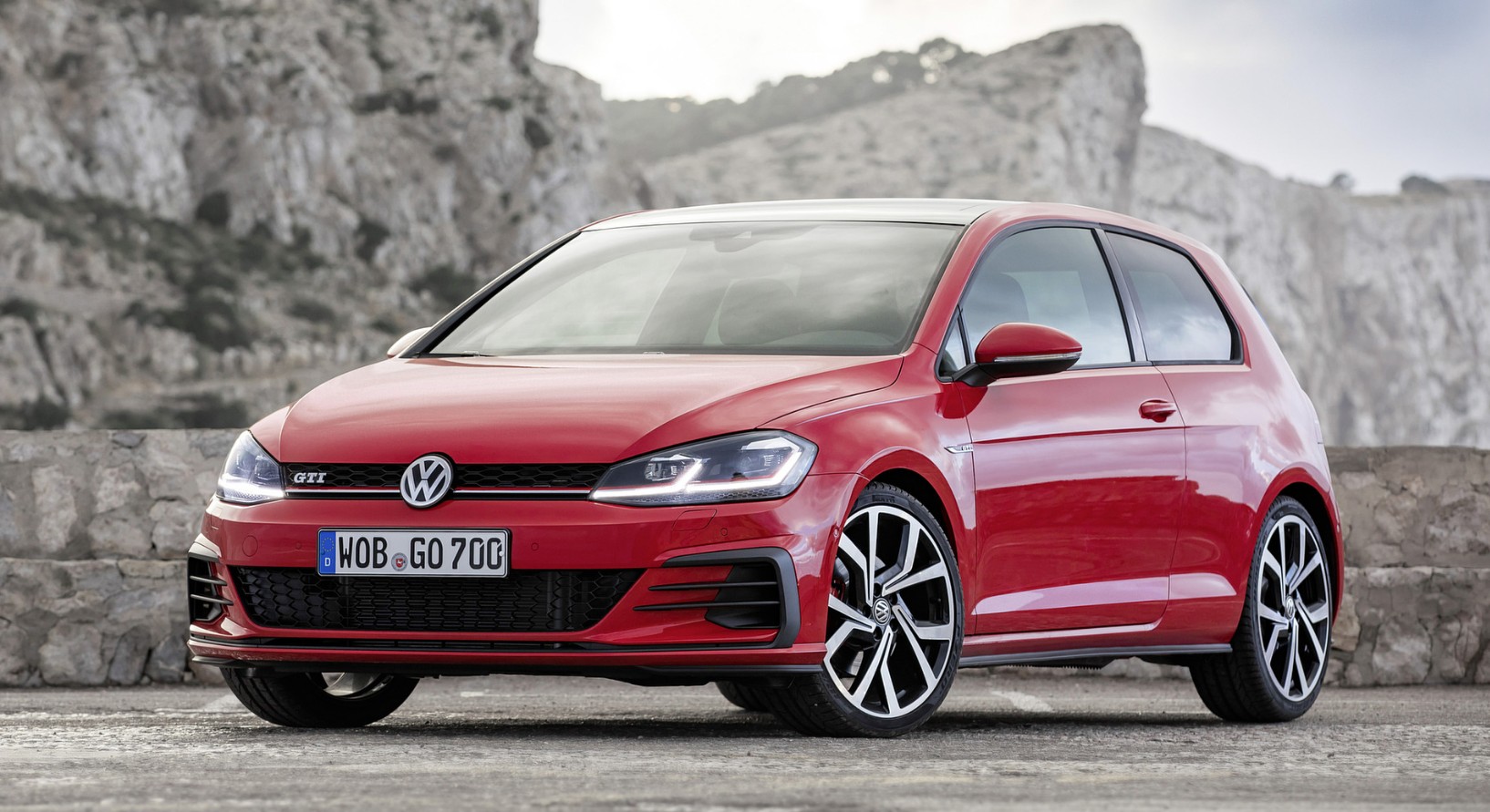
2027 Volkswagen Golf 7 Facelift Release Date, Specs, Performance – The 2027 Volkswagen Golf 7 Facelift is an intriguing search term for anyone following the future of Volkswagen’s compact-car strategy, but the reality needs to be established clearly from the beginning: Volkswagen has not announced a new 2027 Golf based on the seventh-generation Golf. The original Golf 7, officially known as Golf VII, was produced from 2012 through 2019, while production of its combustion-engine hatchback ended as Volkswagen introduced the eighth-generation Golf. Volkswagen’s own historical records confirm that approximately 6.3 million Golf VII vehicles were produced. Therefore, a genuine 2027 Golf 7 Facelift would represent a major and unexpected reversal rather than a normal model-year update.
The confusion becomes understandable when looking at the current Golf. Volkswagen substantially refreshed the eighth-generation Golf for its 50th anniversary, introducing revised exterior styling, a new infotainment system, improved efficiency and updated plug-in-hybrid technology. That car is sometimes described informally as a facelifted Golf, but it is still the eighth-generation model rather than Golf 7. Volkswagen began series production of the updated Golf in Wolfsburg in April 2024, describing it as a technically and visually revamped version of the eighth generation. Consequently, there is no official evidence that Volkswagen intends to resurrect the Mk7 designation for 2027.
Still, the idea of a New 2027 Volkswagen Golf 7 Facelift has considerable appeal because the seventh-generation Golf remains one of the most respected versions of the nameplate. Its MQB platform delivered a combination of low weight, efficient packaging, strong driving dynamics and an unusually broad powertrain selection. Volkswagen offered the Mk7 with petrol, diesel, plug-in-hybrid and fully electric variants, while performance derivatives such as the GTI and Golf R gave the platform a particularly broad personality. A hypothetical 2027 revival could therefore reinterpret the best qualities of the Mk7 rather than simply reproduce its old mechanical package.
If Volkswagen ever considered such a project, the most logical approach would be an extensive modernization rather than a simple cosmetic facelift. A future Golf based stylistically or conceptually on the Mk7 would need modern electrification, contemporary driver-assistance technology, a completely updated cabin and substantially improved connectivity. The classic Golf proportions could remain recognizable while the engineering underneath moved forward. That would give Volkswagen an opportunity to blend the clean design and lightweight character of the Mk7 with the technology expected from a 2027 European compact hatchback. For now, however, the 2027 Golf 7 Facelift should be treated as a speculative concept rather than a confirmed Volkswagen production model. 2027 Volkswagen Golf 7 Facelift Release Date
2027 Volkswagen Golf 7 Facelift Redesign and Update Plan
Exterior & Interior
A hypothetical 2027 Golf 7 Facelift would probably succeed only if Volkswagen resisted the temptation to make the car excessively complicated. One of the strongest qualities of the original Mk7 was its clean, precise design. The proportions were familiar, but the surfacing was tighter and more sophisticated than the outgoing Golf generation. Volkswagen described the Mk7 as being built around a dynamic interpretation of traditional Golf proportions, with the characteristic C-pillar remaining an important visual signature. A modern interpretation could preserve that recognizable silhouette while introducing thinner LED lighting, a cleaner grille treatment and more sculpted aerodynamic surfaces.
At the front, a 2027-inspired Mk7 facelift could feature narrow matrix LED headlights connected visually by a slim illuminated strip. A redesigned Volkswagen emblem could sit centrally between the lamps, while a lower intake would provide the cooling required by hybrid or combustion powertrains. The bumper could become more aerodynamic without losing the Golf’s understated character. A sporty R-Line version could receive a more aggressive front fascia, larger lower openings and dark exterior trim, while a hypothetical GTI-inspired derivative could add red detailing and performance-oriented aerodynamic elements. The objective would be to create a car that looks unmistakably Golf without turning it into a small crossover.
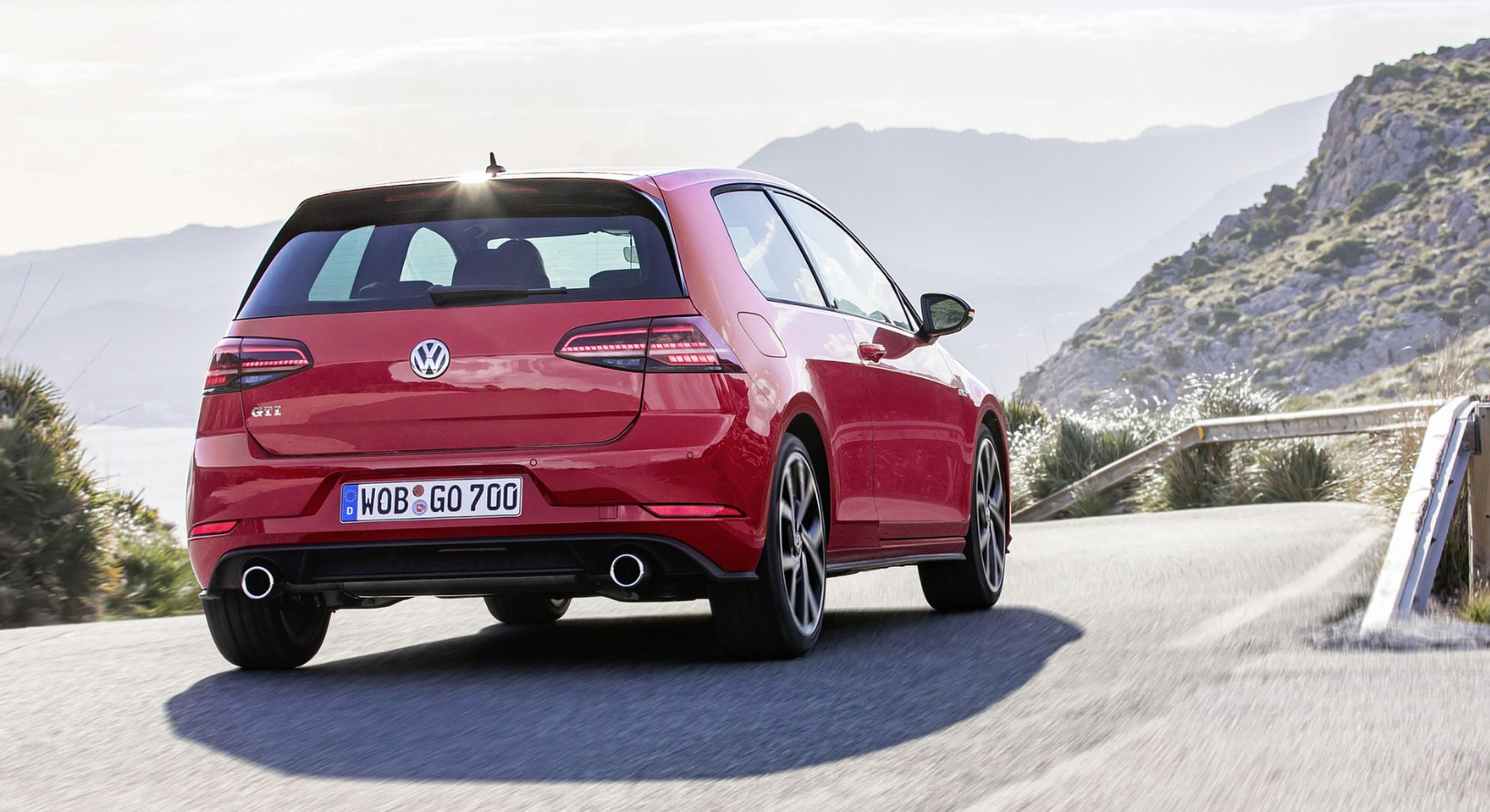
The side profile could remain almost deliberately familiar. A strong shoulder line, short overhangs, a relatively upright cabin and the traditional C-pillar would preserve the Mk7’s identity. Larger 18- or 19-inch wheels could be offered on upper trims, although Volkswagen would need to balance visual appeal against rolling resistance and ride comfort. A redesigned rear end could introduce slimmer LED taillights, a sharper hatch spoiler and a cleaner bumper. The result could resemble an evolutionary continuation rather than an entirely new design. This approach would be consistent with the Golf tradition, where each generation normally changes substantially underneath while retaining recognizable proportions.
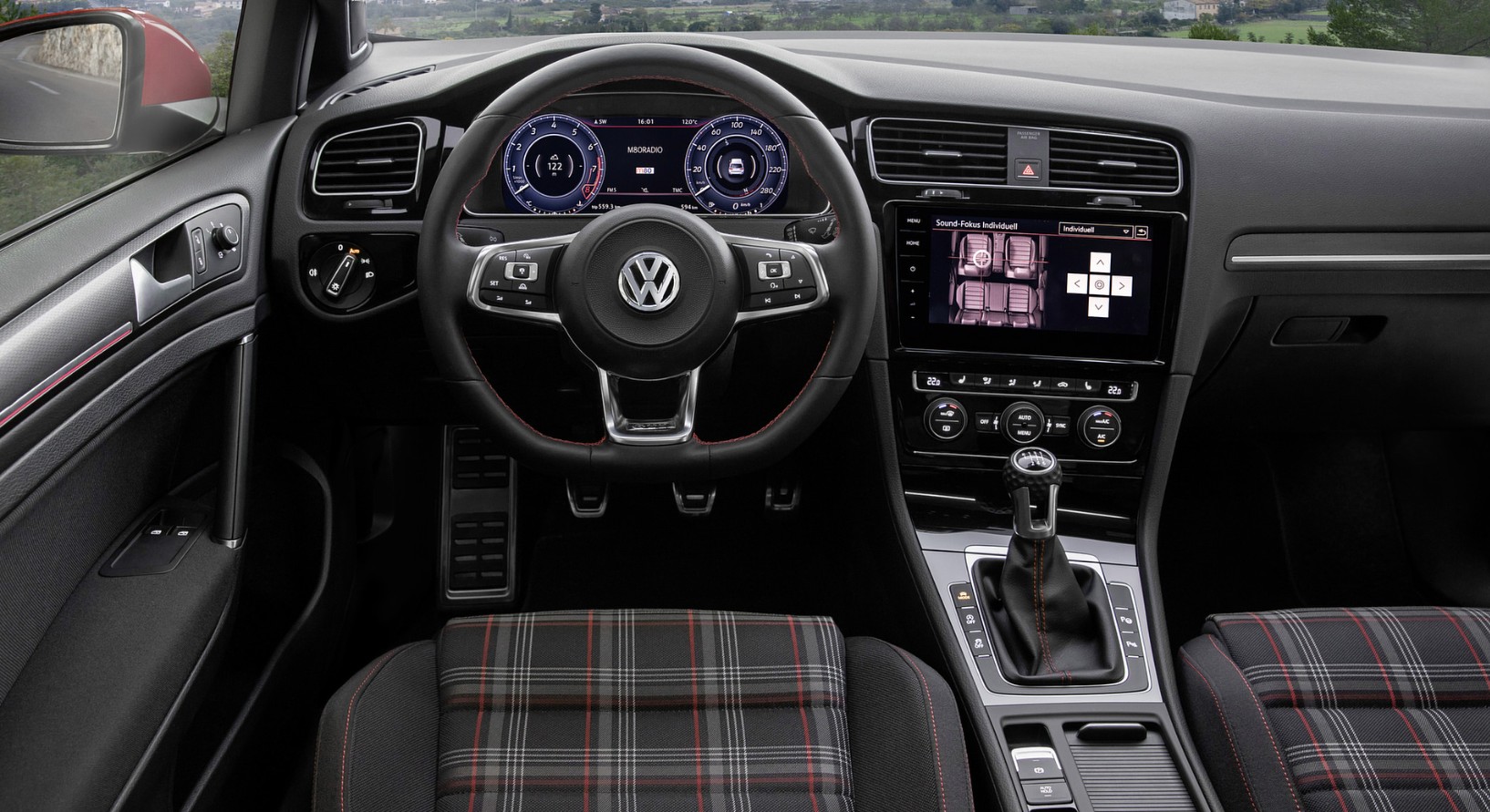
The cabin would require a much larger transformation. The original Mk7 interior was praised for its driver-oriented layout and practical ergonomics, but a 2027 vehicle would need far more digital functionality. A hypothetical facelift could use a large central touchscreen, a fully digital instrument cluster, wireless smartphone integration, voice control and connected navigation. Physical controls for critical functions would be particularly welcome because Volkswagen’s more recent Golf updates have focused on improving the usability of the infotainment and operating concept. The 2024 Golf refresh introduced a new-generation infotainment system with a faster processor and a more intuitive interface, providing an obvious technology foundation for any future Golf concept.
2027 Volkswagen Golf 7 Facelift Specs
Engine & Performance
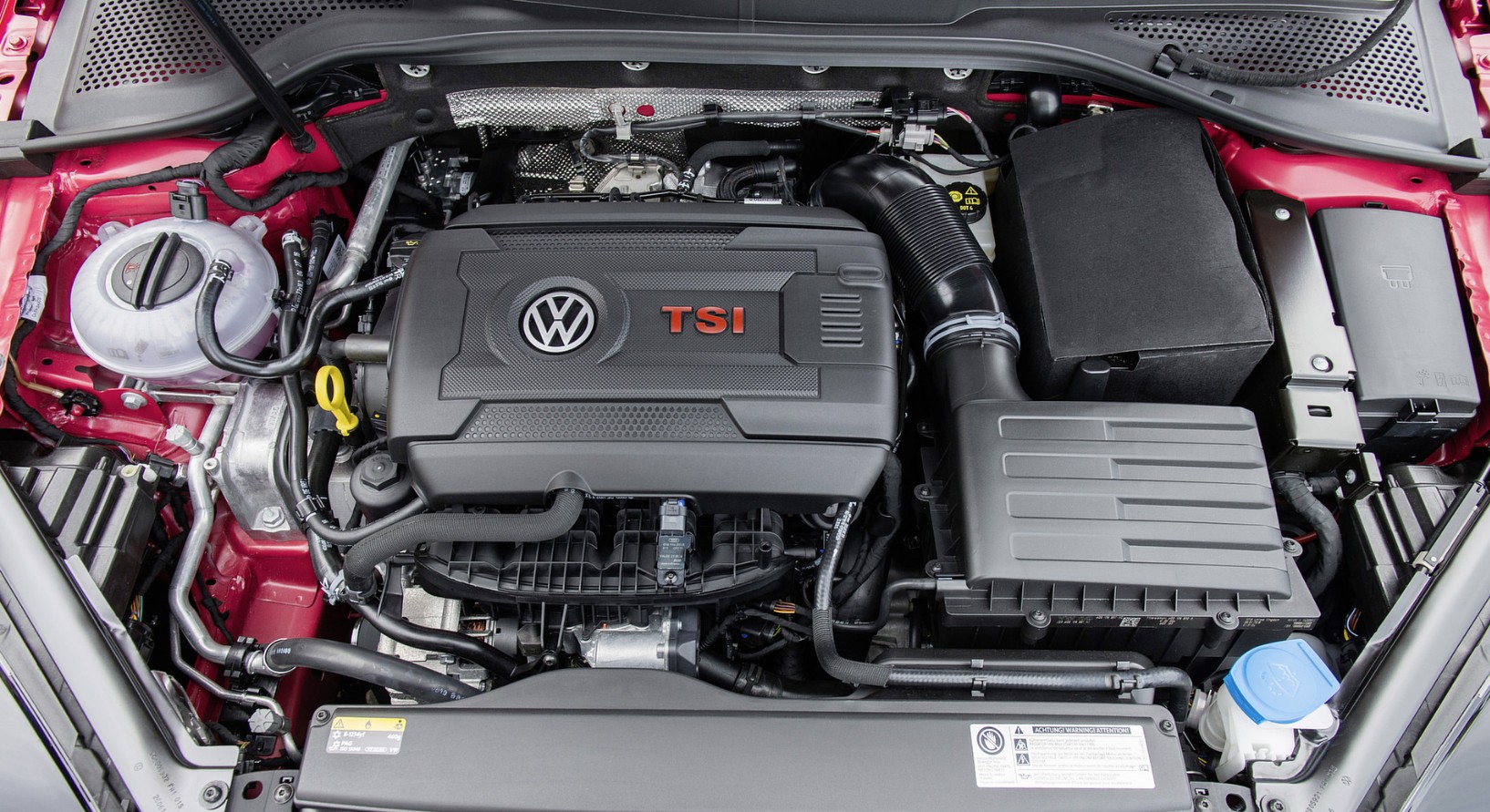
Powertrain strategy would determine whether a hypothetical 2027 Golf 7 Facelift could actually compete in the modern compact segment. The original Mk7 offered an unusually wide range of engines, including 1.0-, 1.2-, 1.4- and 1.5-liter TSI petrol engines, 1.6- and 2.0-liter TDI diesels, the GTE plug-in hybrid, the e-Golf and performance versions such as the GTI and R. Volkswagen’s official vehicle data confirms how extensive the Mk7 portfolio became over its production life. A modern replacement would almost certainly simplify that range while putting greater emphasis on electrification.
A mild-hybrid 1.5-liter turbocharged petrol engine would be a logical starting point for a modernized Golf concept. Volkswagen already uses 48-volt eTSI technology in the current eighth-generation Golf, and this type of system provides an effective compromise between traditional internal-combustion driving and electrification. An electric motor integrated into the powertrain can assist during acceleration, improve stop-start operation and recover energy during deceleration. For buyers who do not want to charge a car externally, this arrangement could preserve the convenience of a conventional petrol vehicle while delivering improved efficiency in urban driving.
A plug-in-hybrid version could become the more ambitious option. Volkswagen’s current enhanced Golf introduced next-generation plug-in-hybrid technology with an electric range of around 100 kilometers under the relevant test-cycle conditions, significantly increasing its ability to handle daily commuting on electricity alone. A hypothetical 2027 Golf derived from Mk7 design principles could use an even more refined PHEV system, pairing a turbocharged petrol engine with a larger battery and electric motor. Performance could also become stronger because electric torque would fill the gap before the petrol engine reaches its strongest operating range.
A performance version would be essential to maintaining the Golf’s enthusiast appeal. A modern GTI could continue using a turbocharged four-cylinder engine with front-wheel drive, while a Golf R could combine a more powerful engine with Volkswagen’s sophisticated all-wheel-drive system. Volkswagen has already confirmed that Golf R development remains important for 2027, announcing plans for an all-wheel-drive Golf R race car for the 2027 Nürburgring 24 Hours as part of the 25th anniversary of Volkswagen R. That does not confirm a 2027 Golf 7 facelift, but it does demonstrate that the Golf performance story remains active. 2027 Volkswagen Golf 7 Facelift Release Date
2027 Volkswagen Golf 7 Facelift Fuel Economy
Fuel economy would naturally vary according to engine, transmission, body style, wheel size and market-specific testing procedures. A mild-hybrid petrol Golf should focus on efficient highway cruising and low consumption in stop-and-go traffic, while a plug-in hybrid could achieve extremely low official fuel-consumption figures when charged regularly. The key advantage of electrification would be flexibility: short trips could rely heavily on electric power, while longer journeys could use the combustion engine. Volkswagen’s current Golf already demonstrates this direction, with the company emphasizing improved efficiency as one of the main objectives of its latest evolutionary update.
2027 Volkswagen Golf 7 Facelift Safety Features
Safety would need to be one of the biggest improvements over the original Mk7. The seventh-generation Golf was already technologically advanced for its era, offering systems such as Front Assist, City Emergency Braking, adaptive cruise control, lane-departure warning, parking assistance and other driver aids. Volkswagen’s historical documentation specifically highlights how the Mk7 brought sophisticated assistance technologies into the compact segment. A 2027 interpretation would need to move considerably further with improved camera and radar processing, more capable lane-centering technology, enhanced automatic emergency braking and broader active collision avoidance.
A modern safety package could potentially include adaptive cruise control with traffic-jam assistance, lane-keeping assistance, blind-spot monitoring, rear cross-traffic alert, traffic-sign recognition, front and rear parking sensors, a surround-view camera and automatic parking. A more sophisticated travel-assistance system could combine multiple sensors to maintain distance, steering position and speed on supported roads. Volkswagen’s development of connected-car technology could also allow the Golf to communicate warnings about traffic conditions or hazards ahead. Such systems would make a future Golf considerably more capable during long-distance travel while reducing driver workload without replacing the driver’s responsibility.
2027 Volkswagen Golf 7 Facelift Release Date & Price
There is currently no confirmed release date for the 2027 Volkswagen Golf 7 Facelift because Volkswagen has not announced such a vehicle. The original Golf VII ended production as the eighth-generation Golf arrived, and Volkswagen’s current product strategy is centered on developing the existing Golf rather than returning to the previous generation. The company has nevertheless made an important production decision for the future: Golf and Golf Estate production is planned to move to Puebla, Mexico, from 2027, while Wolfsburg is expected to prepare for the introduction of an electric Golf based on Volkswagen’s future SSP architecture later in the decade.
That production strategy is particularly important because it suggests Volkswagen sees the Golf name continuing well beyond the current combustion-focused generation. Instead of literally bringing back Golf VII, Volkswagen appears to be preparing the nameplate for another technological phase. The company’s future electric Golf will eventually sit on a new architecture, while the existing Golf continues serving customers during the transition. This makes a literal 2027 Golf 7 Facelift unlikely, even though the idea of a Mk7-inspired design remains attractive. A modern Golf could borrow the Mk7’s clean proportions and visual restraint without actually using its old platform.
The strongest opportunity for a future Golf inspired by the seventh generation would therefore be a special edition or design-focused derivative rather than a full return to the old model. Volkswagen could create a limited Golf celebrating the Mk7’s legacy, using familiar exterior cues, lightweight wheels, upgraded suspension and a carefully designed interior. Such a car could appeal to enthusiasts who remember the Mk7 GTI, Golf R and GTE as particularly important chapters in the Golf story. It could also serve as a bridge between Volkswagen’s heritage and the increasingly electrified future of the Golf nameplate.
Trim levels would probably follow a familiar Volkswagen hierarchy. An entry Golf could focus on value, efficiency and standard safety equipment, while Life could provide additional convenience features. Style could emphasize premium interior materials, upgraded lighting and larger wheels, with R-Line offering a sportier exterior and chassis character. GTI and Golf R would remain performance-focused derivatives if Volkswagen continued them. This general structure is already visible in the current eighth-generation Golf, where Volkswagen offers Golf, Life, Style and R-Line grades alongside independently positioned GTI and GTE models, with Golf R and other performance derivatives occupying the upper end of the range.
Pricing is impossible to state accurately because Volkswagen has not announced a 2027 Golf 7 Facelift. A real new Golf based on the Mk7 would almost certainly cost substantially more than the original Mk7 did because modern emissions equipment, electronics, safety systems, infotainment and electrification add considerable engineering and manufacturing costs. A basic petrol version could target the mainstream European compact segment, while mild-hybrid, plug-in-hybrid, GTI and Golf R versions would command increasingly higher prices. A limited-production version inspired directly by the Mk7 could also carry a premium if Volkswagen marketed it as a special anniversary or heritage model. Any precise MSRP circulating today should therefore be regarded as speculative. 2027 Volkswagen Golf 7 Facelift Release Date
Conclusion
The 2027 Volkswagen Golf 7 Facelift is not currently an officially confirmed Volkswagen model, and the distinction matters because Golf VII production ended years earlier. The seventh-generation Golf was produced from 2012 to 2019, followed by the Golf VIII, which Volkswagen has since substantially refreshed with sharper styling, improved infotainment and updated electrified powertrains. If Volkswagen ever revisits the Mk7 formula, the most compelling version would combine its clean design and lightweight character with 48-volt mild-hybrid technology, plug-in-hybrid capability, advanced safety systems, modern digital interfaces and stronger performance options. For 2027, however, the confirmed direction points toward the continued evolution of the current Golf and the longer-term arrival of an electric Golf rather than a literal seventh-generation facelift.
Note: The details included in this blog post are derived from pre-release material that was accessible when the article was written. If you want the latest information, you should check official sources or call your nearest dealership.
Read Also:
- 2027 Volkswagen Taigo Price, Specs, Configurations
- 2027 Volkswagen Polo GTI Edition 25 Price, Specs, Interior
- 2027 Volkswagen Polo Features, Specs, Redesign
- 2027 Volkswagen Atlas Peak Edition Price, Review, Features
- 2027 Volkswagen Atlas Cross Sport Redesign, Specs, Performance
Frequently Asked Questions
2027 Volkswagen Golf 7 Facelift Release Date, Specs, Performance - The 2027 Volkswagen Golf 7 Facelift is an intriguing search term for anyone following the future of Volkswagen’s compact-car strategy, but the reality needs to be established clearly from the beginning: Volkswagen has not announced a new 2027…
The confusion becomes understandable when looking at the current Golf. Volkswagen substantially refreshed the eighth-generation Golf for its 50th anniversary, introducing revised exterior styling, a new infotainment system, improved efficiency and updated plug-in-hybrid technology. That car is sometimes described informally as a facelifted Golf, but it is still…
Still, the idea of a New 2027 Volkswagen Golf 7 Facelift has considerable appeal because the seventh-generation Golf remains one of the most respected versions of the nameplate. Its MQB platform delivered a combination of low weight, efficient packaging, strong driving dynamics and an unusually broad powertrain selection.…
If Volkswagen ever considered such a project, the most logical approach would be an extensive modernization rather than a simple cosmetic facelift. A future Golf based stylistically or conceptually on the Mk7 would need modern electrification, contemporary driver-assistance technology, a completely updated cabin and substantially improved connectivity. The…
2027 Volkswagen Golf 7 Facelift Redesign and Update Plan Exterior & Interior A hypothetical 2027 Golf 7 Facelift would probably succeed only if Volkswagen resisted the temptation to make the car excessively complicated. One of the strongest qualities of the original Mk7 was its clean, precise design. The…