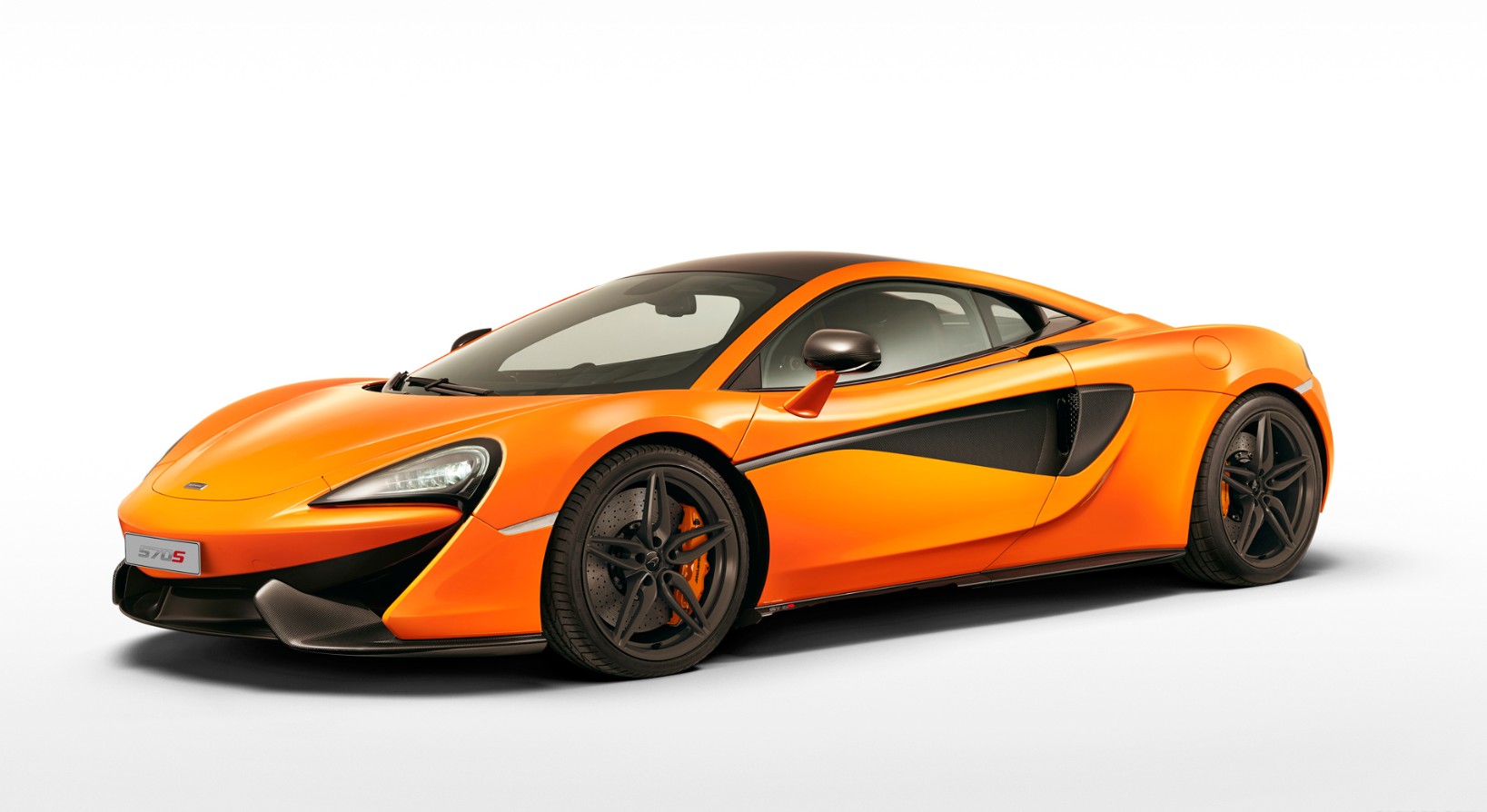
2028 McLaren 570S Coupe Release Date, Specs, Interior – The 2028 McLaren 570S Coupe represents an intriguing possibility for McLaren enthusiasts because the original 570S established itself as one of the most important models in the company’s modern Sports Series. McLaren officially described the 570S as the first model in its Sports Series, combining a 3.8-liter twin-turbocharged V8 with a lightweight carbon-fibre structure and race-inspired chassis engineering. The original car produced 570 PS, or 562 bhp, and could accelerate from 0 to 62 mph in 3.2 seconds before reaching a claimed 204 mph. For 2028, a revived 570S Coupe would have to reinterpret that formula for a very different performance-car market, potentially combining lightweight construction, advanced electrification and even sharper aerodynamic efficiency.
There is currently no official production announcement for a 2028 McLaren 570S Coupe. The original 570S Coupe completed production as McLaren transitioned its portfolio toward newer models, with McLaren’s 2019 results presentation confirming that 570S Coupe and Spider production had been completed. McLaren’s current road-car lineup instead includes the 750S, Artura Spider and GTS, while the company’s product strategy places these vehicles in different performance and market positions. Therefore, specifications for a hypothetical 2028 model should be treated as forward-looking expectations rather than confirmed factory information.
A future 570S Coupe could nevertheless make sense as a nameplate because the original model represented a particularly focused interpretation of the McLaren philosophy. Its carbon-fibre MonoCell II chassis, mid-mounted engine, low weight and compact dimensions gave it the kind of direct response normally associated with far more expensive exotic machinery. McLaren’s official technical information lists the original 570S with a dry weight as low as 1,313 kg in one specification, along with a 90-degree 3.8-liter V8, twin turbochargers, dry-sump lubrication and a seven-speed dual-clutch SSG transmission. A 2028 successor could preserve that technical character while using a newer carbon architecture, smarter electronics and potentially a compact hybrid system.
The redesign strategy would likely concentrate on making the 570S concept faster without making it unnecessarily heavier. That balance is increasingly important as performance manufacturers add electric motors, larger batteries, sophisticated driver assistance and more complex aerodynamic systems. McLaren’s current 750S demonstrates that the company continues to emphasize lightness, response and long-distance usability, describing the car as lighter, more powerful and more engaging while retaining genuine road usability. A future 570S Coupe could therefore sit beneath the 750S in the hierarchy while emphasizing a smaller footprint, accessible performance and a purer connection between driver, chassis and road. 2028 McLaren 570S Coupe Release Date
2028 McLaren 570S Coupe Redesign and Update Plan
Exterior & Interior
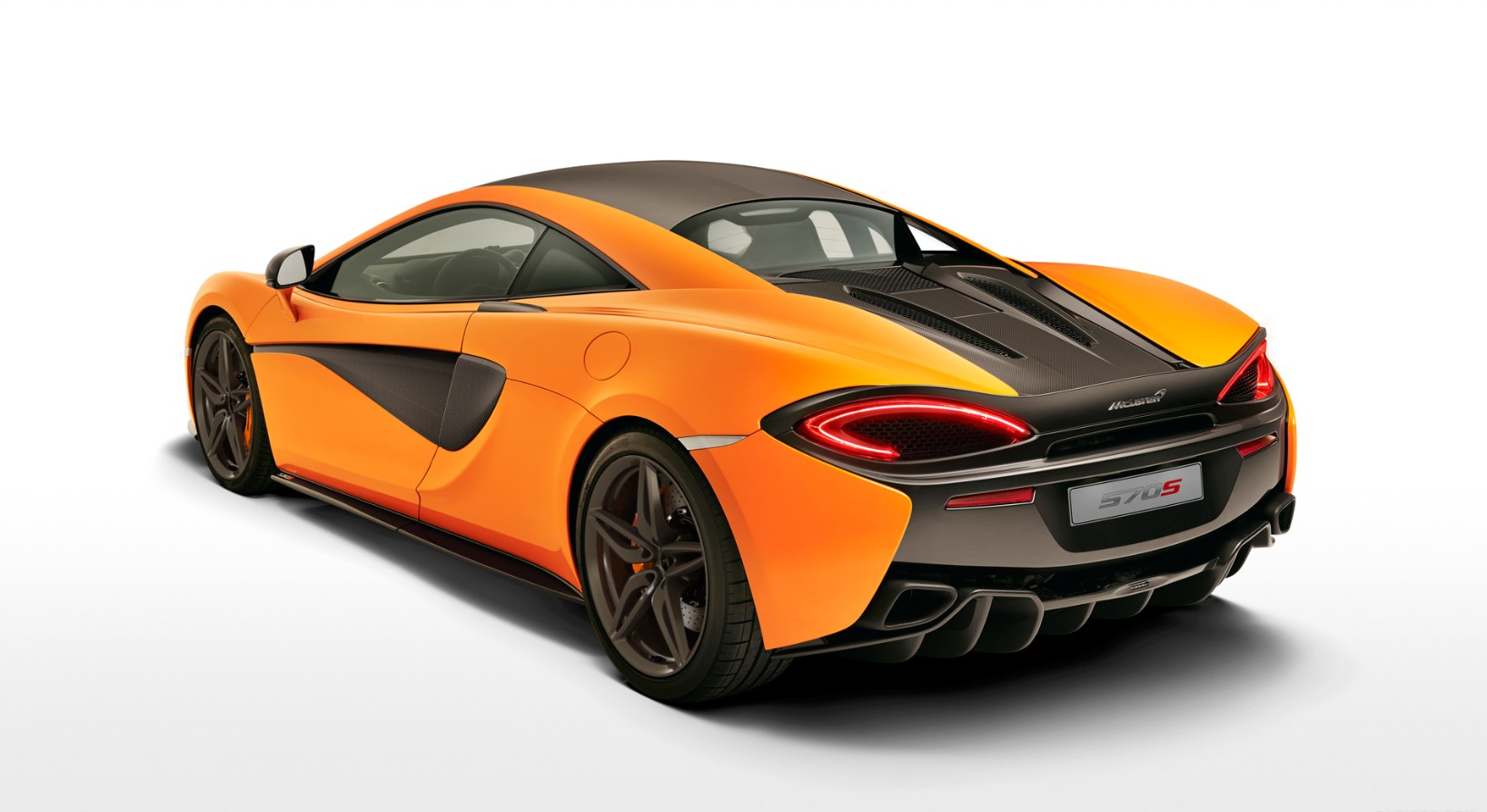
The exterior of the 2028 McLaren 570S Coupe could retain the unmistakable proportions of a mid-engine McLaren while introducing a considerably more advanced aerodynamic package. The original 570S already used a teardrop-shaped cockpit, shrink-wrapped aluminum body panels and carefully shaped aerodynamic surfaces to reduce drag. McLaren also incorporated slim LED light blades at the rear and large open mesh sections designed to support engine cooling. A modern interpretation could take those principles much further with narrower lighting elements, smoother body transitions, active front aero, optimized underbody airflow and a larger rear diffuser. The design would remain clean rather than excessively decorated, with every major surface serving an aerodynamic or cooling purpose.
The front fascia could become lower and more technical, with slim adaptive LED or matrix lighting integrated into deep aerodynamic channels. A larger lower intake could feed cooling air toward the front brakes and heat exchangers, while small active shutters could close at cruising speeds to reduce aerodynamic resistance. The bonnet might feature carefully controlled air-extraction channels rather than oversized vents, helping maintain the low nose that has always been central to McLaren’s visual identity. Carbon-fibre front bodywork could be available as a weight-saving option, while lightweight forged wheels and carbon-ceramic brakes would visually reinforce the car’s performance credentials. The overall shape could be more dramatic than the original without becoming visually complicated.
The side profile would remain one of the strongest design elements. The original 570S used its dihedral doors not simply as a visual signature but as part of an aerodynamic strategy, with the doors directing air toward the side-mounted cooling system. McLaren’s official 570S Spider information also describes the dihedral-door design as an iconic feature that guides air into the side intakes feeding the radiators. A 2028 Coupe could develop this concept with even deeper sculpted channels, cleaner door surfaces and more aggressive airflow management around the rear wheels. A compact glasshouse and low roof would preserve the supercar stance while potentially improving outward visibility through thinner structural pillars.
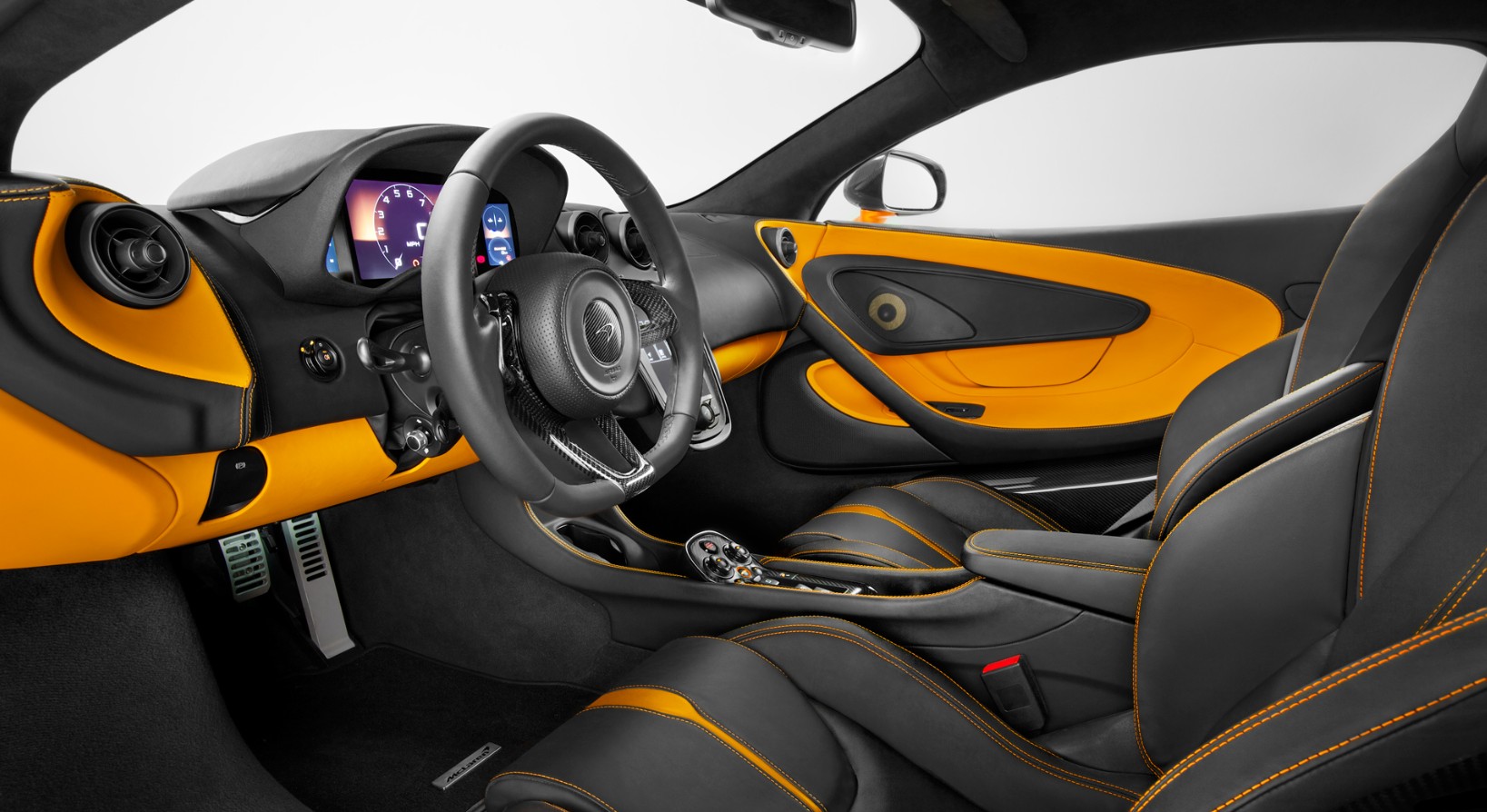
Inside, the 2028 570S Coupe could combine a minimalist McLaren cockpit with substantially more advanced digital equipment. The original car was designed around the driver, with a compact cabin and performance-focused controls rather than the heavily ornamented interiors common in some luxury grand tourers. A future version could introduce a high-resolution configurable instrument display, a larger central touchscreen, wireless smartphone connectivity, intelligent navigation and improved voice controls without allowing screens to dominate the dashboard. Carbon-fibre structural elements could remain visible, while lightweight sports seats would provide greater lateral support. Alcantara, leather and technical textile combinations could create a premium environment without adding unnecessary mass.
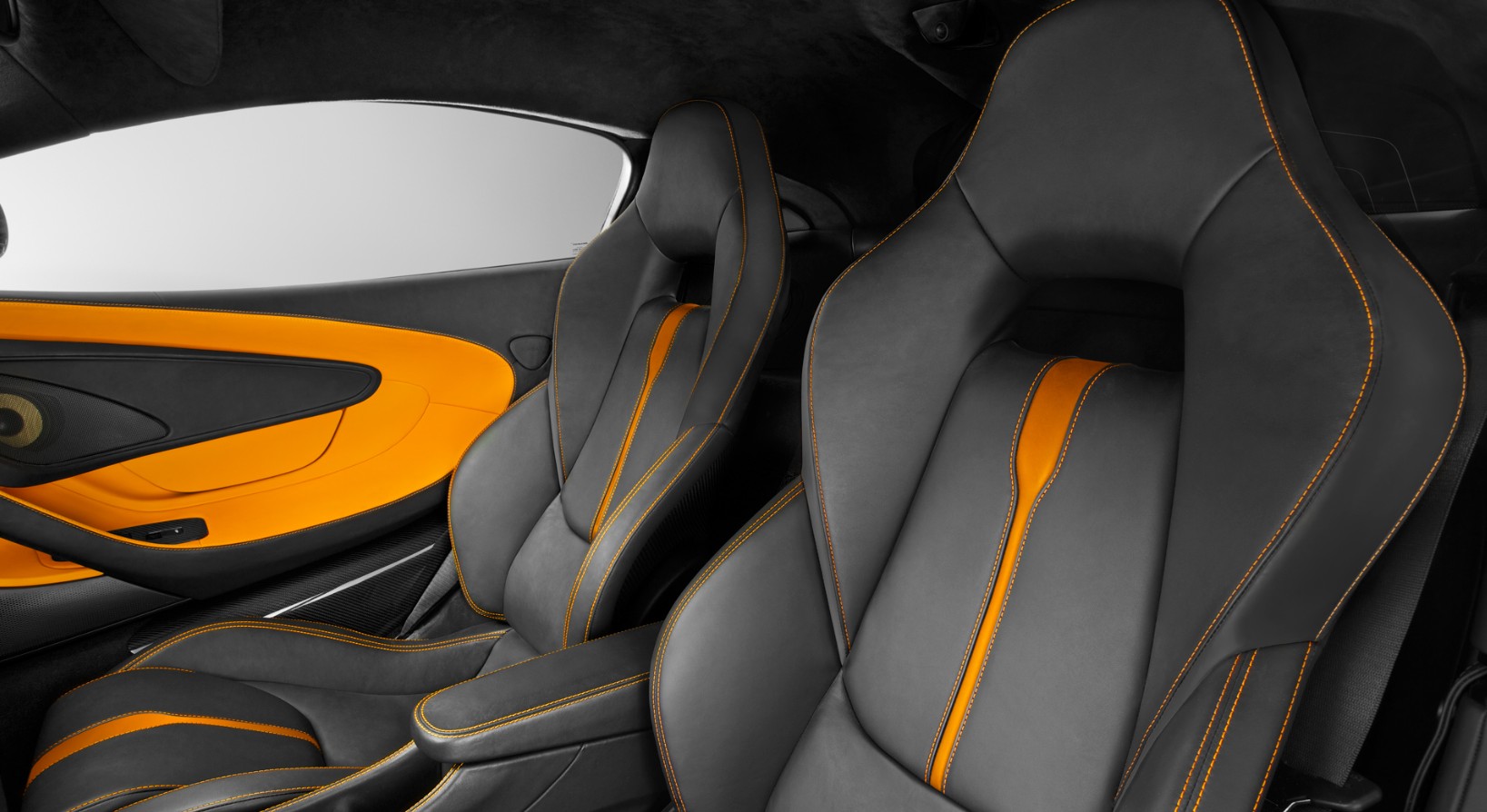
The cabin could also benefit from better ergonomics and everyday usability. A new 570S Coupe should retain the low seating position and strong connection with the chassis, but modern technology could make long-distance driving considerably easier than in the original model. A configurable driving display could show engine or electric-motor output, temperatures, tire information, navigation and performance data according to the selected driving mode. The center console could retain physical controls for important functions so the driver does not need to operate every system through a touchscreen. McLaren Special Operations could provide extensive personalization, as the company continues to offer bespoke finishes and highly customized themes through MSO on its current vehicles.
2028 McLaren 570S Coupe Specs
Engine & Performance
The powertrain would determine whether the 2028 McLaren 570S Coupe could truly live up to its name. The original 570S relied on McLaren’s 3.8-liter M838TE twin-turbocharged V8, producing 570 PS at 7,500 rpm and 600 Nm of torque between 5,000 and 6,500 rpm. The engine used a dry-sump lubrication system and was paired with a seven-speed dual-clutch SSG transmission. McLaren’s published specifications list 562 bhp, 204 mph, 0–60 mph in 3.1 seconds and 0–100 km/h in 3.2 seconds. Those figures provide an important benchmark for any successor, but a 2028 model could achieve significantly stronger acceleration without relying solely on a larger combustion engine.
A compact hybrid system is one plausible direction, although McLaren has not confirmed such a powertrain for a future 570S. The company’s Artura demonstrates that McLaren has already adopted high-performance hybrid technology in a road car, while its newer products show continued development of lightweight performance engineering. McLaren’s current product information positions Artura as its high-performance hybrid supercar, while the 750S remains the V8-focused supercar within the current range. A future 570S could theoretically use electric assistance to improve launch performance, throttle response and low-speed drivability while allowing a smaller combustion engine to deliver the high-rpm character expected from a McLaren.
If McLaren chose to retain a purely combustion-powered V8, the 570S name could instead represent a lighter, less powerful alternative to the current 750S. That would allow the company to focus on chassis balance rather than headline horsepower. The 750S currently demonstrates McLaren’s ability to extract substantial performance from its V8 architecture, while the 570S historically occupied a lower position within the Sports Series. A future 570S might therefore target an output comfortably above the original 562 bhp while preserving rear-wheel drive, a fast dual-clutch transmission and a relatively low curb weight. Exact horsepower, torque and acceleration figures remain unconfirmed.
Chassis development could be even more important than engine output. The original 570S was built around a carbon-fibre MonoCell II structure, and its engineering emphasized low mass, rigidity and immediate driver response. A 2028 version could employ a more advanced carbon-fibre passenger cell combined with lightweight aluminum or composite substructures. Adaptive dampers could offer a broader range between comfortable road driving and track-focused settings, while electronically controlled differential management could improve traction on corner exit. Carbon-ceramic brakes would provide strong repeated stopping performance, and a new generation of high-performance tires could allow the chassis to exploit the additional power without turning the car into an overly difficult machine to drive quickly. 2028 McLaren 570S Coupe Release Date
2028 McLaren 570S Coupe Fuel Economy
Fuel economy is impossible to confirm for a future 2028 570S Coupe because there is no official engine, hybrid system or certification data. The historical 570S was designed primarily around performance and low mass rather than economy. McLaren’s published 570S data lists combined fuel consumption of 12.2 liters per 100 km and combined CO2 emissions of 276 g/km in the cited specification. Those historical figures should not be presented as estimates for a future 2028 model. A hybridized successor could potentially improve low-load and urban efficiency by allowing electric assistance and regenerative braking, but high-speed driving would still consume substantially more energy than normal passenger-car operation.
Technology could provide a significant improvement in how the car communicates with its driver. A 2028 570S could use a customizable digital cockpit capable of presenting performance information in several layouts. Track mode might prioritize lap timing, tire temperatures, brake temperatures and power delivery, while road mode could emphasize navigation, range and driver-assistance information. A sophisticated telemetry system could potentially record acceleration, braking and cornering data for later review. Wireless software updates could also reduce the need for dealer visits for selected electronic functions. The objective should remain clear: technology supports the driving experience rather than becoming the primary attraction inside the cabin.
2028 McLaren 570S Coupe Safety Features
Safety equipment would be far more sophisticated in a 2028 McLaren than it was when the original 570S was introduced. A future 570S Coupe could be expected to offer technologies such as forward-collision warning, automatic emergency braking, blind-spot monitoring, lane-departure warning, rear cross-traffic alert and adaptive cruise control, although McLaren has not confirmed equipment for such a model. The key challenge would be integrating these systems without interfering with the driver’s control of the car. Sensor hardware could be positioned behind the front bodywork, grille openings and windshield areas, allowing the exterior to remain clean while providing the electronic coverage expected from a modern premium vehicle.
Advanced chassis electronics could also play a major role in active safety. A high-performance McLaren operates at speeds where small changes in tire grip, braking load or road surface can have significant consequences, so electronic stability management would need to work closely with the suspension, braking and powertrain systems. Multiple stability settings could allow the driver to select progressively more permissive levels for controlled performance driving. The system could continuously monitor wheel speeds, steering angle, yaw rate, acceleration and braking pressure before applying corrections. Such technology would not replace the driver’s involvement; instead, it could provide an additional safety layer when conditions change unexpectedly.
2028 McLaren 570S Coupe Release Date & Price
A revived 2028 McLaren 570S Coupe would probably use a relatively simple model structure rather than a conventional lineup filled with numerous trim grades. McLaren has historically relied heavily on performance derivatives and bespoke customization rather than the traditional entry, mid-level and luxury trim approach used by mass-market manufacturers. A theoretical 2028 range could include a standard 570S Coupe, a lighter 570S Performance and a limited MSO specification. These names are not confirmed production trims. The standard car could emphasize the balance between road comfort and performance, while a Performance model could add carbon-fibre components, lighter wheels, upgraded brakes and more aggressive suspension tuning.
An MSO version could take personalization significantly further. McLaren Special Operations already provides bespoke design and customization services, with current projects demonstrating elaborate paint schemes, special materials and individualized specifications. For a future 570S Coupe, MSO could offer exposed carbon-fibre bodywork, custom paint, unique wheel finishes, personalized seat designs, contrast stitching and specially commissioned interior details. Buyers could also choose between understated luxury themes and much more aggressive motorsport-inspired configurations. This approach would allow McLaren to keep the standard production model relatively focused while giving customers a route to extremely exclusive specifications.
Pricing remains completely unconfirmed because McLaren has not announced a 2028 570S Coupe. The original 570S occupied a lower price position than McLaren’s higher-performance Super Series cars, but today’s market is substantially different. McLaren’s investor presentation has previously positioned the GT range from around £160,000+, Artura from around £185,000+ and the 750S around £200,000–£400,000 depending on specification and derivatives. A future 570S would therefore need to fit into McLaren’s evolving hierarchy rather than simply use the historical 570S price as a reference. Advanced carbon construction, electrification and inflation could all push a new model considerably higher.
The release date is also unknown. There is no official announcement confirming that McLaren intends to bring back the 570S name for the 2028 model year. The current McLaren road-car lineup features the 750S, Artura Spider and GTS, while the company’s previous corporate material identifies the GTS as the grand-touring model and the Artura and 750S as core supercar offerings. If McLaren eventually approves a 570S revival, a reveal during 2027 followed by 2028 deliveries would be one possible industry timeline, but it should not be treated as confirmed. Production timing would depend on platform development, powertrain engineering, regulatory certification and manufacturing capacity. 2028 McLaren 570S Coupe Release Date
Conclusion
The 2028 McLaren 570S Coupe remains a future possibility rather than an officially confirmed McLaren production model, but the original 570S gives the name considerable technical credibility. Its 3.8-liter twin-turbocharged V8, 562-bhp output, 600-Nm torque, carbon-fibre MonoCell II structure and 204-mph top speed established the model as a serious lightweight supercar.
A modern successor would need to respect that character while adapting to new performance and emissions requirements. A lighter carbon-fibre structure, more sophisticated aerodynamics, advanced driver assistance, improved digital technology and potentially a compact hybrid system could give the 570S concept a completely new interpretation. The result could be positioned below the current 750S while maintaining the sharp response and compact dimensions that made the original model so distinctive.
For now, there is no confirmed 2028 MSRP, official horsepower figure, production specification, trim lineup or release date. McLaren’s current range instead consists of newer generations such as the 750S, Artura Spider and GTS. If the 570S badge eventually returns, the strongest interpretation would preserve its original mission: an uncompromising driver’s car built around low weight, rapid response, exotic performance and a level of engineering that makes every component serve the driving experience.
Note: The details included in this blog post are derived from pre-release material that was accessible when the article was written. If you want the latest information, you should check official sources or call your nearest dealership.
Read Also:
- 2028 McLaren 570GT Release Date, Specs, Dimensions
- 2027 McLaren Artura Spider MCL39 Championship Edition Specs, Price, Review
- 2027 McLaren W1 Redesign, Price, Dimensions
- 2026 McLaren Artura Price, Specs, Dimensions
- 2026 McLaren P1 Specs, Release Date, Performance
Frequently Asked Questions
2028 McLaren 570S Coupe Release Date, Specs, Interior - The 2028 McLaren 570S Coupe represents an intriguing possibility for McLaren enthusiasts because the original 570S established itself as one of the most important models in the company's modern Sports Series. McLaren officially described the 570S as the first…
There is currently no official production announcement for a 2028 McLaren 570S Coupe. The original 570S Coupe completed production as McLaren transitioned its portfolio toward newer models, with McLaren's 2019 results presentation confirming that 570S Coupe and Spider production had been completed. McLaren's current road-car lineup instead includes…
A future 570S Coupe could nevertheless make sense as a nameplate because the original model represented a particularly focused interpretation of the McLaren philosophy. Its carbon-fibre MonoCell II chassis, mid-mounted engine, low weight and compact dimensions gave it the kind of direct response normally associated with far more…
The redesign strategy would likely concentrate on making the 570S concept faster without making it unnecessarily heavier. That balance is increasingly important as performance manufacturers add electric motors, larger batteries, sophisticated driver assistance and more complex aerodynamic systems. McLaren's current 750S demonstrates that the company continues to emphasize…
2028 McLaren 570S Coupe Redesign and Update Plan Exterior & Interior The exterior of the 2028 McLaren 570S Coupe could retain the unmistakable proportions of a mid-engine McLaren while introducing a considerably more advanced aerodynamic package. The original 570S already used a teardrop-shaped cockpit, shrink-wrapped aluminum body panels…