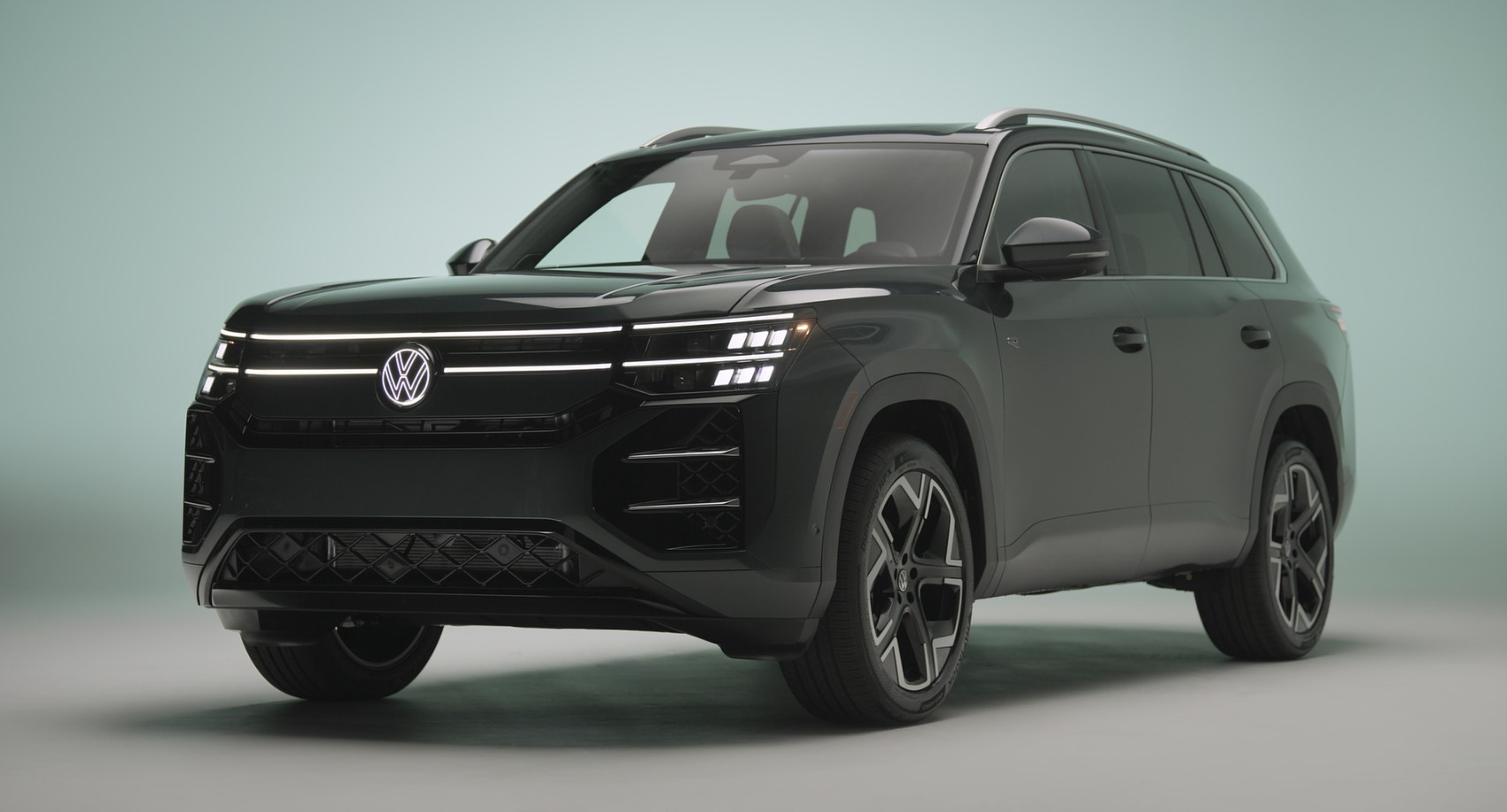
2028 Volkswagen Atlas Price, Features, Performance – The 2028 Volkswagen Atlas could become one of the most attractive family SUVs in the midsize three-row segment, combining bold German-inspired styling, spacious passenger accommodation, advanced technology, and refined driving performance. Since its introduction, the Volkswagen Atlas has established a strong reputation for delivering generous interior dimensions and practical versatility without moving into the luxury SUV price category. Its upright proportions, comfortable seating, and useful cargo space have made it especially appealing to families who need a vehicle capable of handling daily commuting, school transportation, and long-distance travel. A future 2028 model could build upon these strengths with more sophisticated design, improved efficiency, and additional premium features.
Volkswagen introduced the Atlas specifically for the North American market, emphasizing the interior space and everyday usability that American families often prioritize. The SUV has evolved through several updates, including a substantial refresh for the 2024 model year that introduced revised styling, upgraded cabin materials, and a standard 2.0-liter turbocharged four-cylinder engine producing 269 horsepower and 273 lb-ft of torque. That powertrain replaced the previous V6 option and became an important part of the Atlas’s modern identity. A future 2028 version could continue developing Volkswagen’s turbocharged engine technology while introducing additional electrification and more advanced digital systems.
The 2028 Volkswagen Atlas redesign could represent a major step forward in exterior styling, cabin sophistication, and overall driving refinement. Volkswagen has been developing its next generation of SUVs around cleaner design, improved connectivity, and more efficient powertrains. The Atlas could benefit from a more aerodynamic body, a redesigned dashboard, and improved seating comfort across all three rows. A hybrid powertrain would be particularly interesting because fuel efficiency has become a major consideration for buyers of larger family vehicles. Although complete 2028 specifications and pricing have not been established, the Atlas’s existing platform and competitive position provide a useful foundation for evaluating its future development.
Competition in the three-row SUV segment continues to intensify, with vehicles such as the Toyota Grand Highlander, Honda Pilot, Hyundai Palisade, Kia Telluride, Subaru Ascent, and Mazda CX-90 offering compelling alternatives. The Atlas’s strongest advantage has traditionally been its combination of generous passenger space, straightforward functionality, and composed highway driving. To remain competitive, a future model would need to improve efficiency and technology without sacrificing the spacious interior that distinguishes it from smaller crossovers. The ideal 2028 Volkswagen Atlas would deliver a refined family driving experience, practical cargo versatility, and enough performance to handle highway travel with a full passenger load. 2028 Volkswagen Atlas Price
2028 Volkswagen Atlas Redesign and Update Plan
Exterior & Interior
The 2028 Volkswagen Atlas interior could receive significant improvements in dashboard design, material quality, and digital technology. Volkswagen might introduce a larger central touchscreen, a more sophisticated digital instrument cluster, and an updated infotainment interface with faster processing. The current Atlas already emphasizes a modern cabin environment, but a future model could improve the usability of frequently accessed controls. More intuitive climate settings, clearer menu structures, and better integration of physical controls would be particularly valuable for families. A successful interior would combine advanced technology with straightforward operation rather than relying on complicated touchscreen functions for every adjustment.
Seating comfort would remain a defining characteristic of the Atlas. The SUV has traditionally offered generous space for seven passengers, with available second-row captain’s chairs reducing seating capacity to six. A future model could refine seat cushioning, increase adjustment ranges, and improve third-row access through redesigned sliding and folding mechanisms. Heated and ventilated front seats, heated second-row seats, and upgraded upholstery could be available on higher trims. Volkswagen might also introduce improved acoustic insulation to reduce road and wind noise. These refinements would help create a more relaxing environment for long-distance family travel.
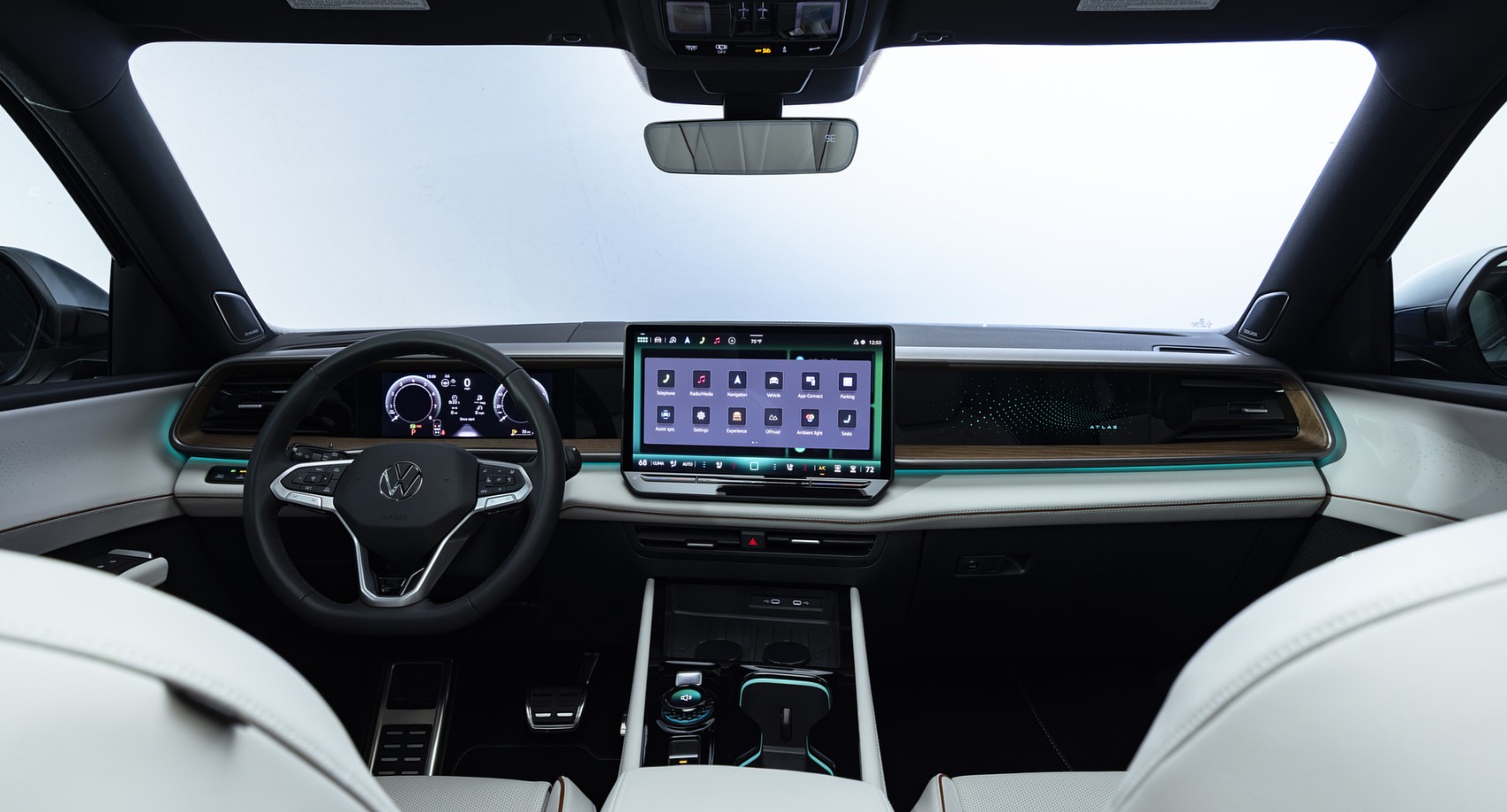
Connectivity could include wireless Apple CarPlay and Android Auto, multiple USB-C charging ports, wireless smartphone charging, and improved voice recognition. A future Volkswagen infotainment system might offer more sophisticated navigation, personalized driver profiles, and over-the-air software updates. Families could benefit from additional charging connections for rear-seat passengers and more convenient storage for tablets and smartphones. A premium audio system could be offered on higher trims, while improved ambient lighting might create a more upscale atmosphere. Volkswagen would need to ensure that these features remain easy to use while driving, particularly when passengers frequently adjust climate or entertainment settings.
Cargo practicality would continue to be one of the Atlas’s strongest selling points. A future model could preserve its spacious luggage area while introducing improved seat-folding mechanisms and additional storage compartments. Families would benefit from a flatter cargo floor, more convenient tie-down points, and better organization for smaller items. A redesigned center console could provide additional storage without reducing front-seat comfort. The third row would ideally fold easily to create a larger loading area for travel equipment, groceries, and bulky household items. The strongest 2028 Volkswagen Atlas interior would combine modern technology, premium comfort, and the everyday practicality expected from a large three-row SUV.
The 2028 Volkswagen Atlas exterior could feature a more sophisticated interpretation of Volkswagen’s contemporary SUV design language, combining a broad front fascia, slimmer LED headlights, and a cleaner grille arrangement. A redesigned bumper might incorporate carefully shaped air intakes and distinctive lighting elements to create a more premium appearance. Volkswagen could also introduce a full-width front lighting signature on selected trims, reinforcing the vehicle’s wide proportions. The hood might receive more pronounced sculpting, while revised body surfaces could create a stronger visual identity. The goal would be to modernize the Atlas without sacrificing the upright design that contributes to its spacious cabin.
The side profile would likely preserve the Atlas’s long wheelbase and substantial passenger compartment. These proportions are particularly important because families often choose the Atlas for its accessible third row and generous second-row legroom. Volkswagen might introduce more pronounced shoulder lines, redesigned wheel arches, and new alloy wheel designs ranging from approximately 18 to 21 inches, depending on trim level. Larger wheels could enhance appearance, although they might also increase tire replacement costs and reduce ride comfort on rough roads. A carefully balanced suspension and wheel package would help the Atlas maintain its reputation as a comfortable long-distance family SUV.
Aerodynamic efficiency could receive greater attention in the next generation. Volkswagen might refine the shape of the front bumper, side mirrors, underbody panels, and rear spoiler to reduce drag at highway speeds. Improved aerodynamics would be especially valuable if the company introduces a hybrid powertrain or further optimizes the existing turbocharged engine. A more efficient exterior could also help reduce wind noise, contributing to a quieter cabin during long journeys. However, the Atlas’s tall roofline and substantial body dimensions would remain important for interior practicality. Volkswagen would need to balance efficiency improvements with passenger comfort and cargo capacity.
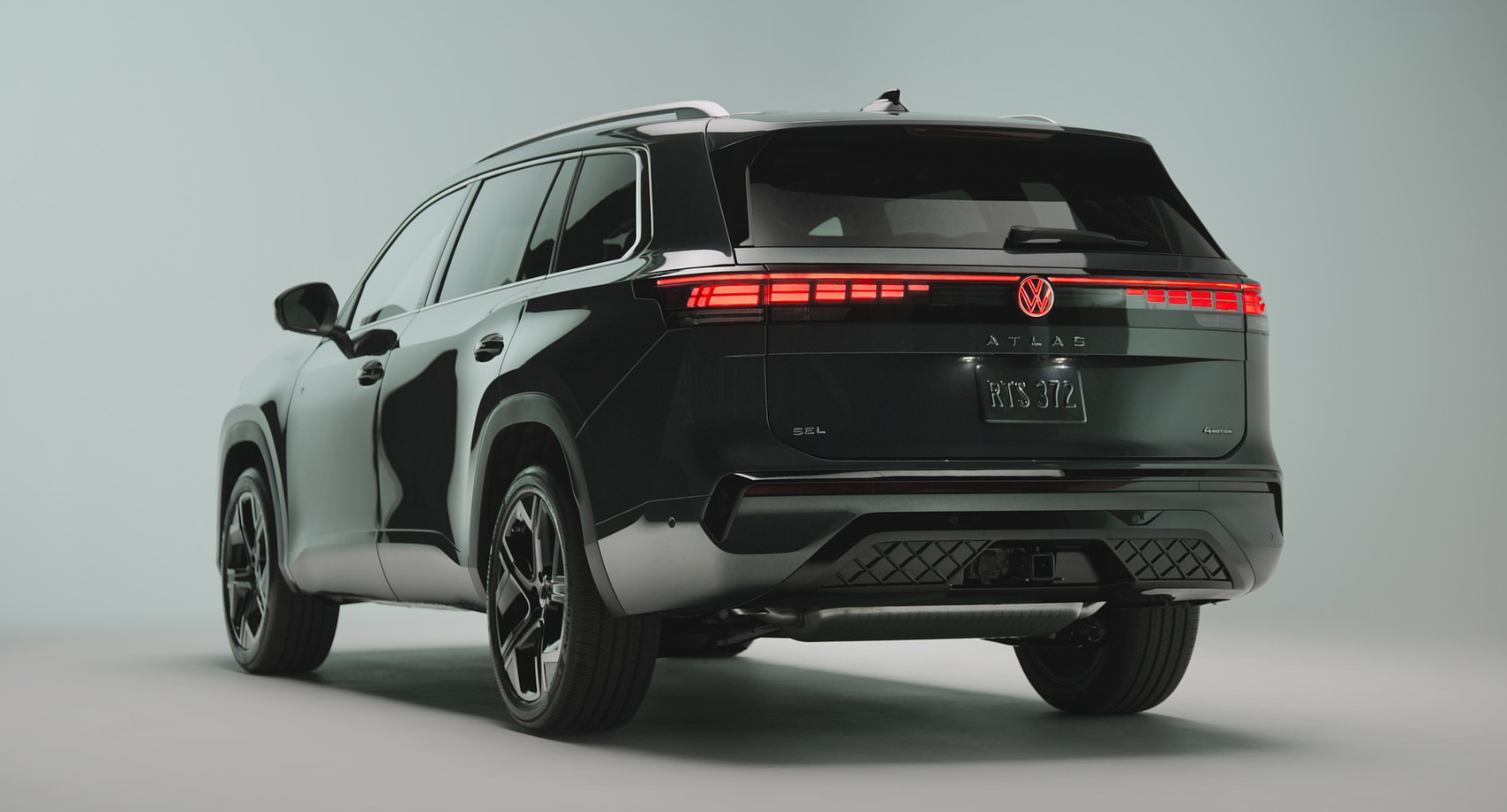
At the rear, the 2028 Volkswagen Atlas redesign could introduce a revised LED taillight signature, a cleaner tailgate design, and more integrated bumper detailing. A full-width rear lighting element could strengthen the SUV’s modern appearance, while a revised roof spoiler might improve airflow. Volkswagen could also refine the power-operated liftgate with faster operation and more convenient hands-free access. A lower cargo-loading height would make it easier to handle luggage, strollers, and sports equipment. Additional exterior colors, dark appearance packages, and premium wheel finishes could help distinguish different trims. The strongest redesign would combine recognizable Atlas proportions with a more refined and contemporary visual identity.
2028 Volkswagen Atlas Specs
Engine & Performance
The 2028 Volkswagen Atlas engine could continue developing the turbocharged four-cylinder architecture used in the established model. The current-generation Atlas’s 2.0-liter turbocharged engine produces 269 horsepower and 273 lb-ft of torque in familiar U.S.-market specifications, paired with an eight-speed automatic transmission. This combination provides useful acceleration and strong midrange torque for a family-oriented SUV. A future version could introduce improved turbocharger response, more efficient combustion, and revised transmission calibration to deliver smoother performance. Volkswagen might also refine engine noise and vibration to create a more premium driving experience, particularly during highway acceleration and towing.
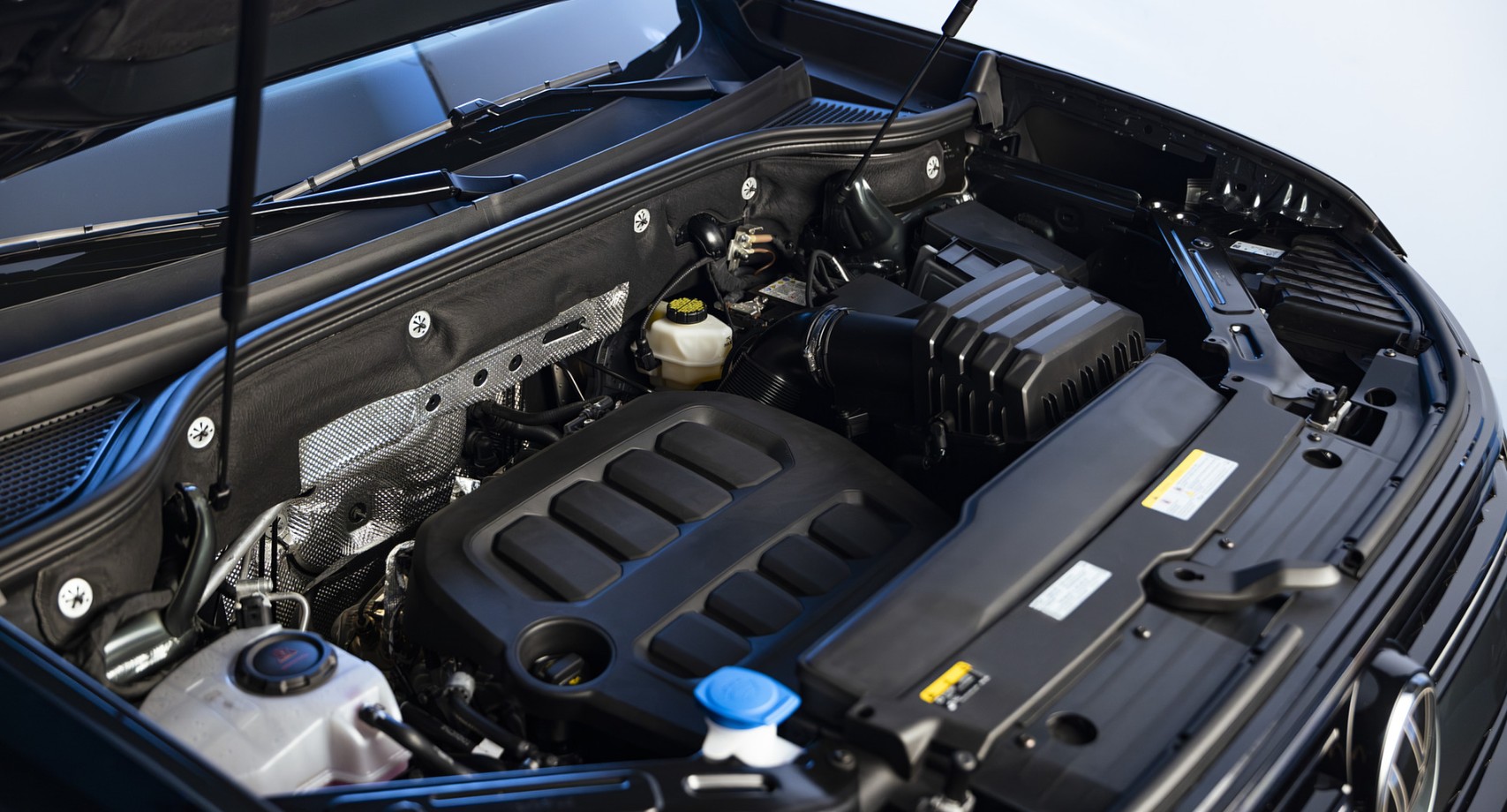
A 2028 Volkswagen Atlas Hybrid could become an important addition if Volkswagen expands electrification within its North American SUV lineup. A hybrid system might combine a turbocharged gasoline engine with an electric motor to improve low-speed response and reduce fuel consumption in urban driving. Depending on the architecture, a hypothetical hybrid Atlas could produce approximately 280 to 330 combined horsepower, providing strong acceleration while improving efficiency. A plug-in hybrid configuration would offer additional possibilities, including limited electric-only driving for short daily trips. However, packaging a battery within a spacious three-row SUV would require careful engineering to preserve passenger accommodation and cargo capacity.
Front-wheel drive could remain the standard configuration, while Volkswagen’s 4MOTION all-wheel-drive system would continue providing additional traction in challenging weather conditions. A future Atlas might introduce more sophisticated torque distribution, improved traction-control calibration, and refined driving modes for snow, rain, and uneven surfaces. Suspension engineering could also receive attention through revised dampers, improved bushings, and more precise steering calibration. The Atlas is primarily a road-oriented family SUV rather than a dedicated off-road vehicle, so comfort and stability would remain more important than extreme trail capability. A carefully tuned chassis could improve cornering confidence without making the ride unnecessarily firm. 2028 Volkswagen Atlas Price
2028 Volkswagen Atlas Fuel Economy
Fuel economy would be an important area of development. Established gasoline-powered Atlas models generally achieve EPA combined ratings around the low-20s mpg range, depending on drivetrain and equipment. A hypothetical 2028 Volkswagen Atlas fuel economy target of approximately 22 to 26 mpg combined for a refined gasoline version could be conceivable through improved engine efficiency and aerodynamics. A future hybrid configuration might target approximately 28 to 34 mpg combined, depending on battery size, vehicle weight, and drivetrain design. These figures are estimates rather than official EPA ratings. Improved efficiency would help reduce operating costs for families who frequently travel long distances or spend substantial time in city traffic.
2028 Volkswagen Atlas Safety Features
The 2028 Volkswagen Atlas safety features could build upon Volkswagen’s IQ.DRIVE driver-assistance technology, incorporating improved automatic emergency braking, adaptive cruise control, lane-keeping assistance, and blind-spot monitoring. More sophisticated camera and radar processing could enhance the detection of vehicles, pedestrians, and cyclists in complex traffic situations. Volkswagen might also refine lane-centering assistance and adaptive cruise behavior to provide smoother responses during highway travel. These systems would support everyday driving while preserving the driver’s responsibility for maintaining control. The strongest safety package would combine reliable detection technology with clear alerts and intuitive controls.
Additional equipment could include rear cross-traffic alert, parking sensors, a panoramic-view camera system, and improved driver-attention monitoring. Such features would be particularly useful because the Atlas’s substantial dimensions can make parking and maneuvering in crowded environments challenging. Volkswagen might also introduce more sophisticated emergency steering assistance and intersection collision mitigation. A digital rearview mirror could improve visibility when the third row is occupied or the cargo area is heavily loaded. These technologies would make the SUV more convenient for family use while helping drivers navigate urban environments with greater confidence.
Passive safety would remain a major engineering priority. A future Atlas could use a reinforced passenger compartment with high-strength steel, carefully designed crash zones, comprehensive airbags, and advanced seatbelt systems. Improved child-seat mounting arrangements could make the vehicle more practical for families with young children. Volkswagen would also need to ensure that any hybrid battery system includes appropriate structural protection and electrical isolation technology. Revised suspension and steering components would need to preserve predictable handling during emergency maneuvers. Electronic stability control, traction management, and anti-lock braking would remain essential elements of the vehicle’s overall safety strategy.
The 2028 Volkswagen Atlas trim levels could continue using familiar names such as SE, SE with Technology, Peak Edition, SEL, and SEL Premium R-Line, depending on Volkswagen’s future equipment strategy. An entry-level SE could emphasize value, practical seating, and comprehensive standard safety technology. SE with Technology might introduce additional convenience features, while Peak Edition could retain a more rugged appearance with distinctive exterior accents. SEL could focus on premium comfort and advanced connectivity, while SEL Premium R-Line might feature larger wheels, upscale materials, and sportier styling. A hybrid powertrain could be offered across selected trims if Volkswagen expands the lineup.
2028 Volkswagen Atlas Release Date & Price
The 2028 Volkswagen Atlas price could reflect the additional technology and refinement expected from a modern three-row family SUV. A hypothetical starting MSRP around $41,000 to $45,000 would position an entry-level Atlas competitively against established midsize SUV rivals. This estimate assumes a turbocharged gasoline engine, comprehensive driver-assistance technology, a modern infotainment system, and generous standard equipment. Actual pricing would depend on manufacturing costs, standard features, powertrain availability, and broader market conditions. Volkswagen would need to maintain competitive pricing because families often evaluate vehicles according to overall ownership costs rather than purchase price alone.
Higher trims could occupy a broader price range. A hypothetical SE with Technology might cost approximately $44,000 to $48,000, while Peak Edition could approach $47,000 to $51,000 with additional styling and convenience equipment. SEL might range from approximately $49,000 to $54,000, while a fully equipped SEL Premium R-Line could approach $55,000 to $60,000. A future hybrid version might carry a premium over comparable gasoline configurations, depending on battery technology and standard equipment. These estimates are projections rather than confirmed Volkswagen MSRP figures. Buyers would also need to consider destination charges, taxes, insurance, financing, and maintenance expenses.
The 2028 Volkswagen Atlas release date could follow a conventional North American model-year schedule. If Volkswagen introduces a substantially updated Atlas for 2028, a reveal during 2027 followed by dealership availability in late 2027 or during 2028 would be a plausible timeline. A major redesign or new hybrid powertrain could influence the schedule because additional engineering validation and manufacturing preparation would be required. Volkswagen might also introduce equipment updates and technology improvements incrementally rather than launching every change simultaneously. Production planning, supplier readiness, and regional demand would ultimately determine the final timing.
The United States would likely remain the Atlas’s primary market because the SUV was developed around North American customer preferences. Volkswagen has produced the Atlas at its Chattanooga, Tennessee, manufacturing facility, highlighting the model’s importance within the company’s regional strategy. Competition from Toyota, Honda, Hyundai, Kia, Subaru, Mazda, and other manufacturers would continue shaping buyer expectations. A more refined interior, improved fuel economy, and competitive pricing could strengthen the Atlas’s position. If Volkswagen combines these improvements with the vehicle’s established spaciousness and practical design, the 2028 Atlas could remain a compelling choice for families seeking a comfortable and versatile three-row SUV. 2028 Volkswagen Atlas Price
Conclusion
The 2028 Volkswagen Atlas could strengthen its position in the midsize three-row SUV segment through modern styling, improved technology, and more refined driving performance. The Atlas has traditionally appealed to families who value generous passenger space, comfortable seating, and practical cargo capacity. A future redesign could build upon those strengths while introducing a more sophisticated exterior, improved cabin materials, and advanced digital features. Preserving the vehicle’s straightforward functionality would be essential because its spacious and family-friendly design remains one of its strongest advantages.
Powertrain development could become an important part of the Atlas’s future. The established turbocharged four-cylinder engine provides useful performance, but improved efficiency and the possibility of hybrid technology could make the SUV more attractive to buyers concerned about fuel costs. Refined suspension tuning, smoother transmission behavior, and more sophisticated all-wheel-drive control could also enhance everyday driving comfort. Volkswagen would need to balance these improvements with competitive pricing and dependable long-term operation. A well-developed hybrid option could provide an especially compelling alternative to conventional gasoline-powered three-row SUVs.
Interior comfort and safety technology would also influence the model’s success. More supportive seating, easier third-row access, improved cargo versatility, and intuitive infotainment could make the Atlas more convenient for daily family transportation. Advanced IQ.DRIVE assistance systems, comprehensive camera coverage, and improved occupant protection would support its family-oriented mission. Premium trim options could provide additional comfort and sophistication without forcing buyers into the luxury SUV segment. The most successful Atlas would offer meaningful improvements that owners notice during ordinary driving rather than relying solely on dramatic styling changes.
The 2028 Volkswagen Atlas could become an even more competitive family SUV if Volkswagen combines its established interior spaciousness with improved efficiency, modern technology, and refined performance. A thoughtful redesign would strengthen the vehicle’s appeal to buyers who need comfortable transportation for commuting, school activities, and long-distance travel. With competitive pricing, practical seating arrangements, and the potential introduction of hybrid technology, the next Atlas could deliver an attractive balance of versatility, comfort, and everyday usability.
Note: The details included in this blog post are derived from pre-release material that was accessible when the article was written. If you want the latest information, you should check official sources or call your nearest dealership.
Read Also:
- 2028 Volkswagen ID.7 Tourer Redesign, Specs, Price
- 2028 Volkswagen Atlas Redesign, Price, Dimensions
- 2027 Volkswagen Golf 7 Facelift Release Date, Specs, Performance
- 2027 Volkswagen Taigo Price, Specs, Configurations
- 2027 Volkswagen Polo GTI Edition 25 Price, Specs, Interior
Frequently Asked Questions
2028 Volkswagen Atlas Price, Features, Performance - The 2028 Volkswagen Atlas could become one of the most attractive family SUVs in the midsize three-row segment, combining bold German-inspired styling, spacious passenger accommodation, advanced technology, and refined driving performance. Since its introduction, the Volkswagen Atlas has established a strong…
Volkswagen introduced the Atlas specifically for the North American market, emphasizing the interior space and everyday usability that American families often prioritize. The SUV has evolved through several updates, including a substantial refresh for the 2024 model year that introduced revised styling, upgraded cabin materials, and a standard…
The 2028 Volkswagen Atlas redesign could represent a major step forward in exterior styling, cabin sophistication, and overall driving refinement. Volkswagen has been developing its next generation of SUVs around cleaner design, improved connectivity, and more efficient powertrains. The Atlas could benefit from a more aerodynamic body, a…
Competition in the three-row SUV segment continues to intensify, with vehicles such as the Toyota Grand Highlander, Honda Pilot, Hyundai Palisade, Kia Telluride, Subaru Ascent, and Mazda CX-90 offering compelling alternatives. The Atlas's strongest advantage has traditionally been its combination of generous passenger space, straightforward functionality, and composed…
2028 Volkswagen Atlas Redesign and Update Plan Exterior & Interior The 2028 Volkswagen Atlas interior could receive significant improvements in dashboard design, material quality, and digital technology. Volkswagen might introduce a larger central touchscreen, a more sophisticated digital instrument cluster, and an updated infotainment interface with faster processing.…