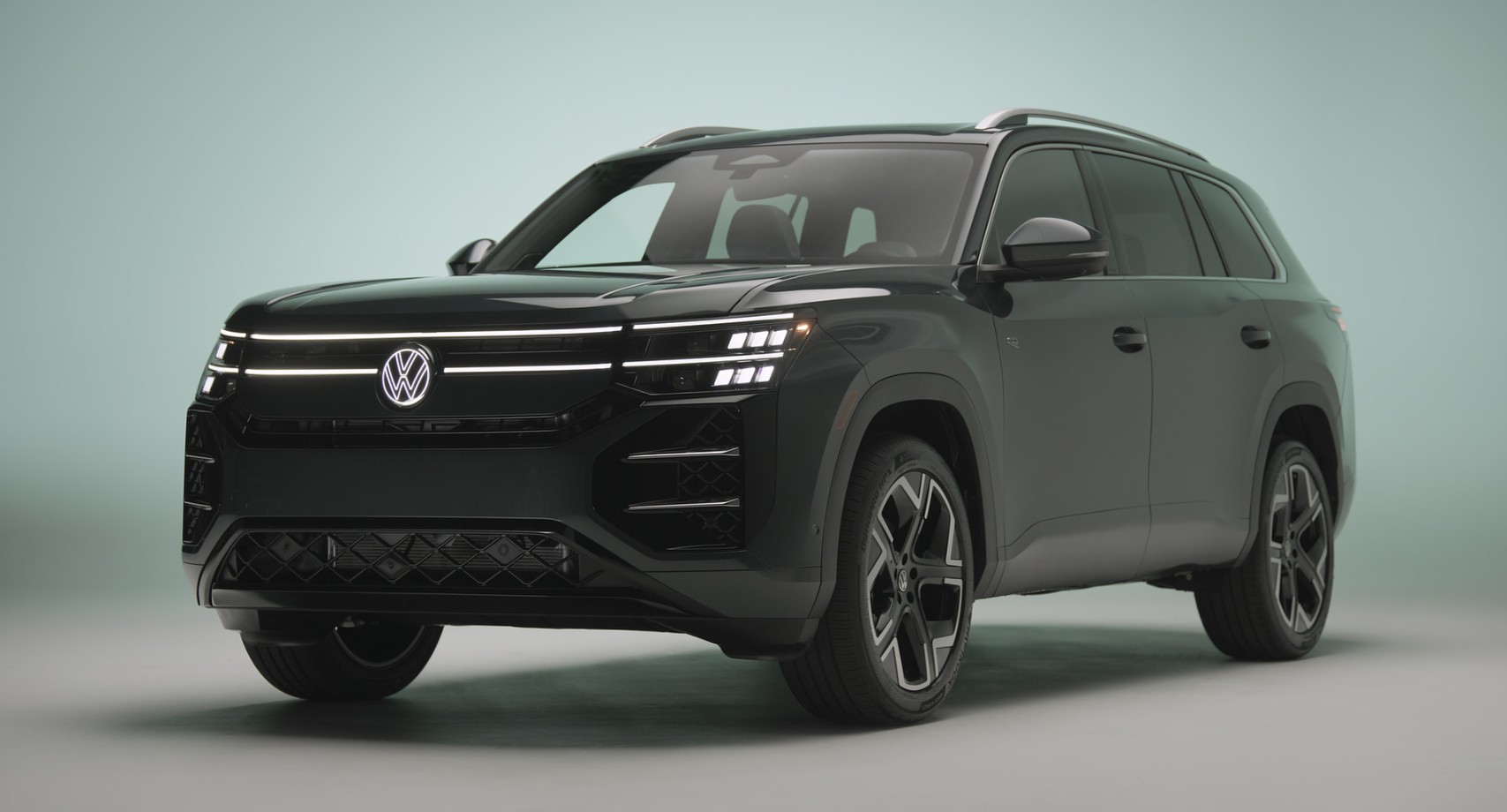
2028 Volkswagen Atlas Redesign, Price, Dimensions – The 2028 Volkswagen Atlas could become a particularly important model for Volkswagen as the brand continues reshaping its SUV lineup for the North American market. The current Atlas is already one of Volkswagen’s largest and most family-focused vehicles, offering three-row seating, generous cargo capacity, available all-wheel drive, and a turbocharged four-cylinder engine. For 2028, however, the biggest question is whether Volkswagen will introduce another evolutionary update or move the Atlas into a substantially new generation. Volkswagen has not yet published a complete official 2028 Atlas specification, so exact horsepower, fuel economy, trim pricing, and release timing should not be treated as confirmed. The latest 2026 Atlas provides the most reliable starting point for understanding the next model.
The current Atlas has increasingly moved toward a simplified powertrain strategy. For the 2026 model year, Volkswagen’s U.S. Atlas uses a 2.0-liter turbocharged four-cylinder engine producing 269 horsepower and 273 lb-ft of torque, paired with an eight-speed automatic transmission. Front-wheel drive is standard on selected configurations, while Volkswagen’s 4MOTION all-wheel-drive system remains available or standard depending on trim. (vw.com) This engine replaced the previous V6 in the modern Atlas lineup, giving Volkswagen a more consistent balance between performance, packaging, and efficiency. A future 2028 model could continue this engine, adopt an updated version, or introduce hybrid assistance as Volkswagen expands electrification across its broader product portfolio.
The Atlas also occupies an unusual position within Volkswagen’s global strategy because the model is particularly important to North American buyers. Volkswagen developed the Atlas around the expectations of American families, with a spacious three-row interior, large cargo area, substantial exterior dimensions, and towing capability. The current Atlas can tow up to 5,000 pounds when properly equipped, giving it enough capacity for a small camper, boat, utility trailer, or recreational equipment. (vw.com) A future 2028 model therefore has to preserve practicality while improving technology, efficiency, comfort, and driving refinement. Simply adding more power would not necessarily address what matters most to the Atlas buyer.
The strongest potential change for 2028 could therefore involve electrification and connectivity rather than a dramatic visual transformation. Volkswagen has been expanding its hybrid and electric technology in different markets, while the U.S. Atlas remains a gasoline-powered family SUV. If Volkswagen decides to introduce a hybrid Atlas, the system would need to deliver meaningful fuel savings without reducing third-row space or towing capability. If the company instead keeps the turbocharged gasoline engine, software, suspension tuning, infotainment, and driver-assistance technology could receive substantial updates. Either way, the 2028 Volkswagen Atlas will need to remain a practical three-row SUV first, while adding the efficiency and technology expected from a newer generation. 2028 Volkswagen Atlas Redesign
2028 Volkswagen Atlas Redesign and Update Plan
Exterior & Interior
The exterior of the 2028 Volkswagen Atlas could adopt a sharper interpretation of Volkswagen’s latest SUV design language. The front fascia could receive a narrower grille, more distinctive LED daytime-running lights, and a cleaner bumper design. Volkswagen could also use a light signature that connects visually with the brand’s newer electric and hybrid products. A full-width light bar would be possible, although whether Volkswagen chooses that direction would depend on how strongly it wants to differentiate the Atlas from its electric SUV range. The overall design should remain practical, with a high hood and upright windshield that preserve the commanding driving position expected from a three-row SUV.
Wheel design would likely become another area of differentiation between trims. Lower and mid-level versions could use 18- or 19-inch wheels with relatively tall sidewalls to prioritize ride comfort, while upper trims could receive larger 20- or 21-inch designs. A future Atlas R-Line could use more aggressively styled wheels and body trim, while a potential off-road-oriented version could use darker finishes and all-terrain tires. Volkswagen already uses R-Line styling to give certain Atlas grades a sportier appearance, so that formula could continue into 2028 even if the trim names change.
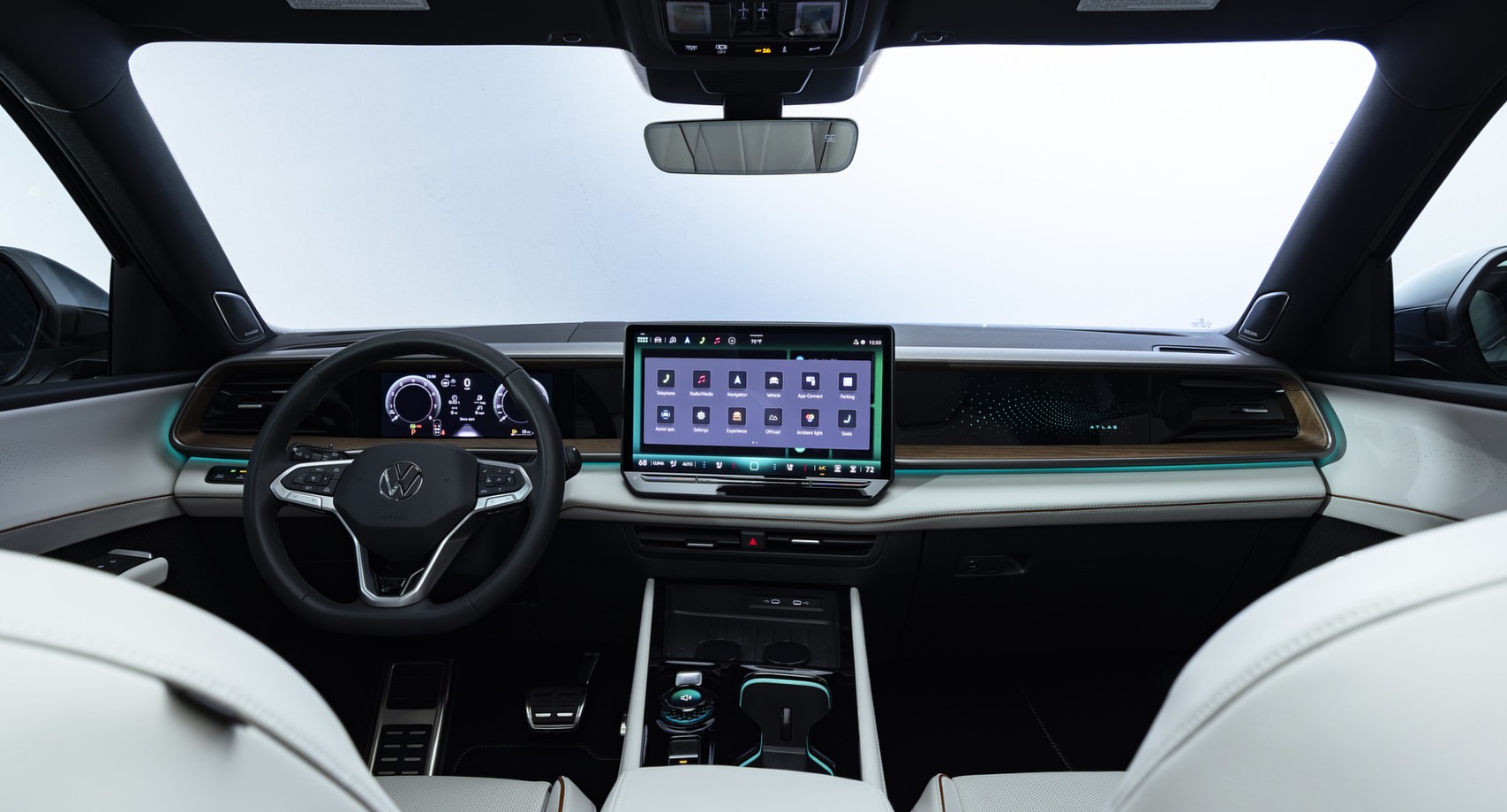
The interior would remain the Atlas’s most important selling point. A successful redesign would need to preserve comfortable seating for three rows while improving materials, storage, and technology. The current Atlas provides seating for up to seven passengers with a second-row bench, while some configurations use second-row captain’s chairs. (vw.com) A future model could continue that flexibility, allowing buyers to choose between maximum passenger capacity and easier third-row access. Heated and ventilated front seats, heated second-row seating, a heated steering wheel, tri-zone or four-zone climate control, and premium upholstery could become increasingly common higher in the range.
Cargo flexibility would also remain central to the Atlas formula. A three-row SUV is useful only if the third row does not completely eliminate cargo capacity. The Atlas has traditionally provided substantial room behind the third row and significantly more space when the rear seats are folded. A future model could improve this further through a flatter load floor, underfloor storage, power-folding rear seats, additional small-item compartments, and a more convenient hands-free liftgate. The cabin could also feature redesigned cupholders and door pockets capable of accommodating larger bottles and family equipment. These details may sound simple, but they matter considerably during long trips with multiple passengers.
A potential 2028 Volkswagen Atlas redesign would likely focus on refining the vehicle’s proportions rather than completely abandoning the familiar Atlas shape. The current model has a broad body, relatively upright greenhouse, long wheelbase, and squared rear section designed to maximize interior space. Those proportions are useful for a three-row SUV and are unlikely to disappear. Instead, Volkswagen could introduce slimmer LED lighting, a revised grille, cleaner body surfaces, redesigned bumpers, and more aerodynamic details. The result could look more modern without sacrificing the substantial road presence that makes the Atlas recognizable.
Aerodynamics could become more important if Volkswagen introduces hybrid assistance. The Atlas is a large vehicle, so even small reductions in aerodynamic drag can have an effect on highway efficiency. A future model could use active grille shutters, smoother underbody panels, carefully shaped roof rails, optimized wheels, and a revised rear spoiler. These changes would not necessarily be obvious to the driver, but they could reduce wind resistance while also lowering cabin wind noise. A redesigned Atlas could therefore feel quieter and more efficient without requiring an entirely different body structure. Volkswagen could also improve acoustic insulation around the windshield, doors, and wheel wells to create a more premium long-distance driving experience.
The chassis would be another important area of development. The current Atlas already provides a relatively comfortable ride, but a new generation could use revised dampers, updated steering calibration, and additional suspension technology to improve body control. An adaptive suspension system would be particularly useful for a large three-row vehicle because it could provide a softer setting for family trips and a firmer setting when the driver wants greater control on winding roads. Volkswagen could also improve the calibration of the 4MOTION system so that traction management responds more quickly to snow, gravel, wet pavement, and slippery surfaces.
The interior technology architecture could receive the most visible redesign. Volkswagen has increasingly adopted larger digital displays and more connected interfaces across its newer products, so a future Atlas could feature a wide digital cockpit with a high-resolution instrument cluster and larger central infotainment display. Wireless smartphone connectivity, integrated navigation, wireless charging, multiple USB-C ports, voice assistance, and over-the-air software updates would be expected in a modern premium family SUV. The challenge would be keeping the interface easy to use. The best version of a future Atlas would combine advanced technology with physical controls or clearly accessible shortcuts for frequently used functions such as climate control and volume adjustment. 2028 Volkswagen Atlas Redesign
2028 Volkswagen Atlas Specs
Engine & Performance
The most likely baseline for the 2028 Volkswagen Atlas powertrain is an evolution of the current 2.0-liter turbocharged four-cylinder. The current Atlas produces 269 horsepower and 273 lb-ft of torque, giving the large SUV enough output for everyday acceleration and highway merging. (vw.com) An updated version could receive revised turbocharger calibration, improved thermal management, and more efficient combustion technology. Volkswagen could also modify the eight-speed automatic transmission software to deliver smoother low-speed operation and quicker responses when additional acceleration is requested.
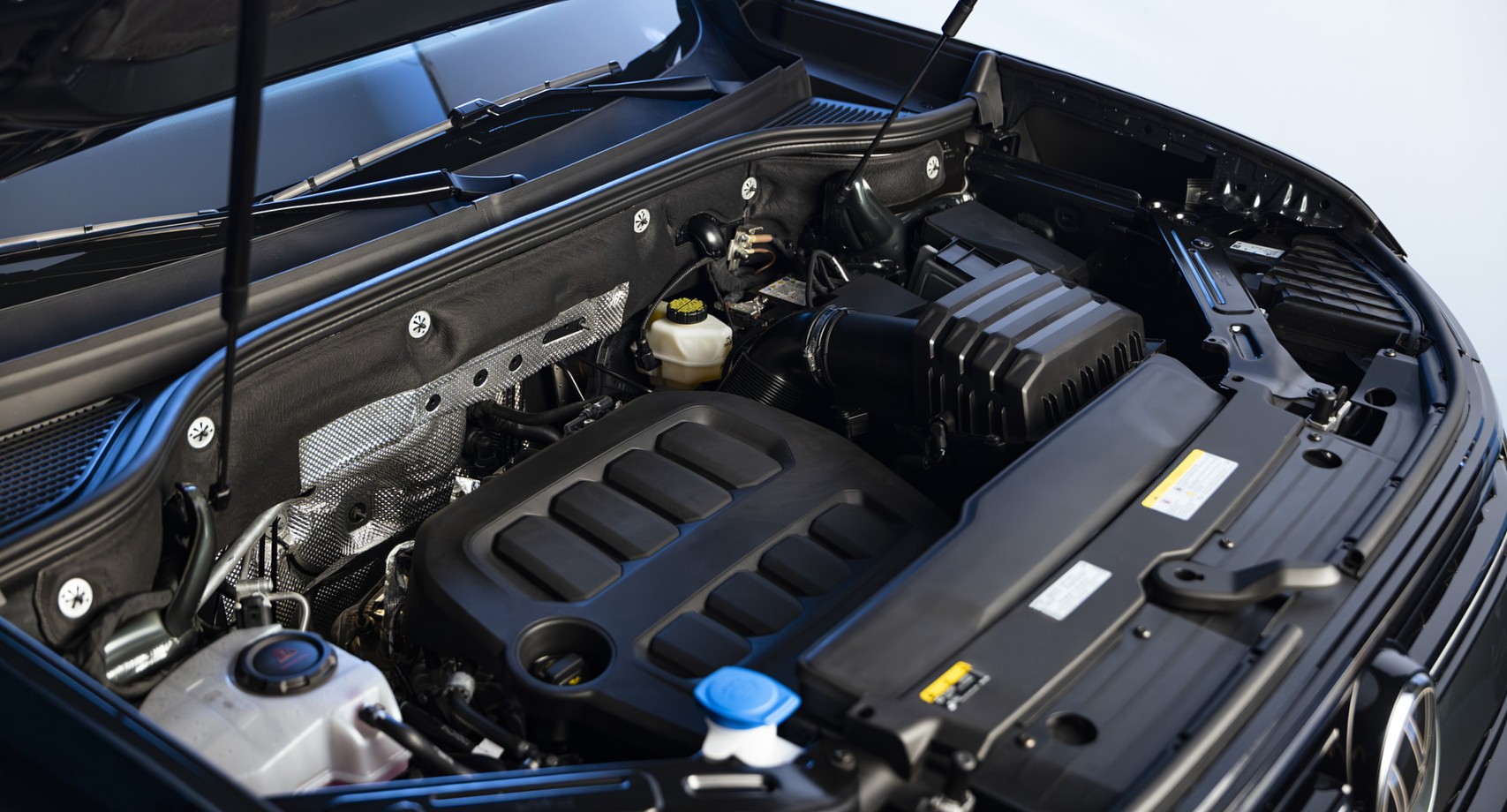
Hybrid assistance is the more interesting possibility. Volkswagen could potentially introduce a hybrid system that uses a compact electric motor to supplement the turbocharged gasoline engine during acceleration and low-speed driving. Such a setup could improve city efficiency while reducing the engine’s workload during everyday driving. A stronger plug-in-hybrid system would provide even more electric capability, although packaging a larger battery without sacrificing third-row space would be challenging. The current Atlas is a large vehicle, but its interior is specifically designed around passenger and cargo capacity, so Volkswagen would need to carefully integrate any battery system beneath the floor or within other structural areas.
All-wheel drive would remain important for buyers in regions with snow, heavy rain, or unpaved roads. Volkswagen’s 4MOTION system has historically provided the Atlas with additional traction and stability, while the current model can be configured with all-wheel drive depending on trim. A future system could incorporate more sophisticated electronic torque management and predictive traction control. If hybrid technology is added, Volkswagen could potentially use electric torque to assist the rear axle, creating a more responsive all-wheel-drive system while simplifying some mechanical components. Such a system would be technically attractive, although it has not been announced for the 2028 Atlas.
Performance would ultimately depend on the final powertrain. The current 269-hp engine provides a sensible balance for a family SUV, but a hybrid version could offer stronger low-speed torque and smoother acceleration. A future Atlas could potentially accelerate more quickly while consuming less fuel in urban conditions. Towing would remain a major consideration, however. The current Atlas can tow up to 5,000 pounds when properly equipped, so any electrified powertrain would need to maintain adequate cooling and sustained torque under load. A hybrid system that saves fuel but significantly reduces towing capability would not necessarily suit the Atlas’s traditional role.
2028 Volkswagen Atlas Fuel Economy
Fuel economy is less certain because Volkswagen has not announced official 2028 Atlas ratings. The current gasoline Atlas is not designed primarily as a fuel-saving vehicle; its large body and three-row configuration naturally create greater aerodynamic and weight demands than a compact SUV. A hybrid version could potentially improve city efficiency substantially by allowing the gasoline engine to shut off more frequently and using regenerative braking to recover energy. If Volkswagen retains the conventional 2.0-liter turbo, efficiency improvements would likely come from engine calibration, transmission optimization, aerodynamic changes, and weight management. Official EPA figures should be used once Volkswagen publishes them. 2028 Volkswagen Atlas Redesign
2028 Volkswagen Atlas Safety Features
Safety technology should receive a major upgrade in any future 2028 Volkswagen Atlas. The current Atlas offers Volkswagen IQ.DRIVE driver-assistance technology, which includes features such as adaptive cruise control, lane-keeping assistance, active blind-spot monitoring, rear traffic alert, and emergency assistance depending on configuration. (vw.com) A future model could introduce more advanced versions of these systems, including improved automatic emergency braking, pedestrian and cyclist recognition, intersection assistance, lane-change support, traffic-jam assistance, and enhanced parking automation. The most advanced technology could be reserved for higher trims, while core collision-avoidance features should remain widely available.
The cabin could also use cameras and sensors to improve family safety. Rear-seat reminder technology could help prevent children or pets from being left inside the vehicle, while improved rear cross-traffic detection could make backing out of crowded parking spaces safer. A 360-degree camera would be useful on a large SUV, especially when navigating narrow parking structures or loading areas. Trailer-assistance technology could also be expanded because Atlas buyers often use the SUV for towing. A future system could help with trailer alignment, monitor blind spots around the trailer, and provide more precise steering guidance during reversing maneuvers.
2028 Volkswagen Atlas Release Date & Price
Trim levels could continue to include mainstream family grades followed by increasingly premium and sport-oriented versions. The current Atlas has been offered in trims such as SE, SE with Technology, SEL, SEL R-Line, and SEL Premium R-Line depending on model year. A 2028 model could simplify that structure or introduce new naming. A likely strategy would include a competitively priced base trim, a technology-focused mid-grade, a premium SEL-type model, and an R-Line flagship emphasizing sportier styling. If hybrid technology is introduced, Volkswagen could also designate a separate hybrid grade or offer the hybrid system across several trims. Exact 2028 configurations have not been announced.
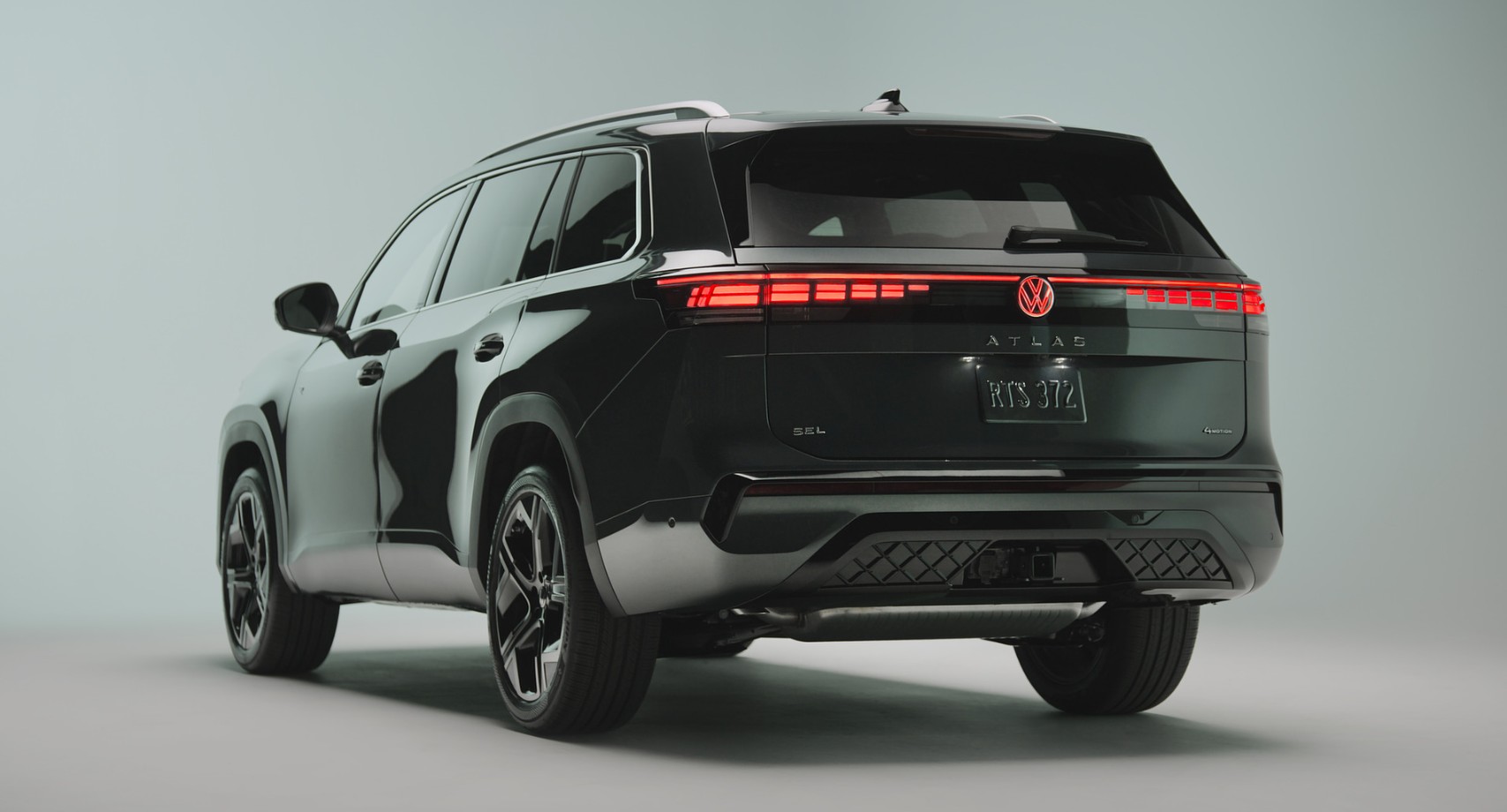
Pricing is also unconfirmed, but the current Atlas establishes the market position. Volkswagen’s U.S. Atlas sits above compact SUVs such as the Tiguan and competes with three-row family vehicles including the Honda Pilot, Toyota Grand Highlander, Hyundai Palisade, Kia Telluride, and Nissan Pathfinder. A future Atlas would likely remain positioned as a premium mainstream family SUV rather than moving into luxury-SUV pricing. A hybrid system, upgraded infotainment, advanced safety equipment, and more sophisticated suspension could raise transaction prices. The 2028 Volkswagen Atlas release date has not been officially announced either. If Volkswagen follows a conventional model-year cycle, a 2028 version could appear during the second half of 2027 or later, but that timing is only a reasonable industry expectation rather than a confirmed launch schedule.
Conclusion
The 2028 Volkswagen Atlas has the potential to become one of Volkswagen’s most important family vehicles if the company uses the next update to combine its proven three-row practicality with stronger electrification, improved connectivity, and more sophisticated driver assistance. The current Atlas already provides a strong foundation through its spacious cabin, 269-horsepower turbocharged engine, available 4MOTION all-wheel drive, and 5,000-pound towing capability. (vw.com) The next generation or major update would need to preserve those strengths while responding to changing expectations around fuel economy and technology.
A hybrid powertrain would be particularly significant. Electrification could improve low-speed response, reduce gasoline consumption during urban driving, and give the Atlas a more modern drivetrain without sacrificing the benefits of a gasoline engine for long-distance travel. The challenge would be integrating the battery and electric hardware without compromising third-row comfort, cargo volume, towing ability, or overall affordability. If Volkswagen solves that packaging equation, the Atlas could gain a meaningful advantage in an increasingly competitive three-row SUV market.
The design should remain practical rather than becoming overly dramatic. The Atlas works because its proportions prioritize people and cargo, so a future redesign should maintain the long wheelbase, wide cabin, useful rear doors, and generous cargo area. Sharper lighting, improved aerodynamics, a more sophisticated digital cockpit, higher-quality materials, and additional storage would be enough to make the vehicle feel substantially newer without compromising its family-oriented character.
For now, specific 2028 Volkswagen Atlas horsepower, MPG, trim levels, MSRP, and release date remain unconfirmed. Those details should be treated as future information until Volkswagen publishes official specifications. The current Atlas nevertheless provides a clear starting point: a spacious three-row SUV with a turbocharged four-cylinder engine, available 4MOTION, strong towing capability, modern driver assistance, and a cabin designed for large families. If Volkswagen adds a carefully engineered hybrid system and a more advanced interior while preserving those practical strengths, the next Atlas could remain a compelling choice for buyers seeking a large family SUV without moving into full luxury pricing.
Note: The details included in this blog post are derived from pre-release material that was accessible when the article was written. If you want the latest information, you should check official sources or call your nearest dealership.
Read Also:
- 2026 Nissan Sentra Review, Specs, Release Date
- 2026 Volkswagen Polo Specs, Price, Release Date
- 2026 Chrysler Airflow Price, Specs, Release Date
- Toyo H19 Review & Rating
- 2025 Jeep Recon EV Specs, Price, Range
Frequently Asked Questions
2028 Volkswagen Atlas Redesign, Price, Dimensions - The 2028 Volkswagen Atlas could become a particularly important model for Volkswagen as the brand continues reshaping its SUV lineup for the North American market. The current Atlas is already one of Volkswagen's largest and most family-focused vehicles, offering three-row seating,…
The current Atlas has increasingly moved toward a simplified powertrain strategy. For the 2026 model year, Volkswagen's U.S. Atlas uses a 2.0-liter turbocharged four-cylinder engine producing 269 horsepower and 273 lb-ft of torque, paired with an eight-speed automatic transmission. Front-wheel drive is standard on selected configurations, while Volkswagen's…
The Atlas also occupies an unusual position within Volkswagen's global strategy because the model is particularly important to North American buyers. Volkswagen developed the Atlas around the expectations of American families, with a spacious three-row interior, large cargo area, substantial exterior dimensions, and towing capability. The current Atlas…
The strongest potential change for 2028 could therefore involve electrification and connectivity rather than a dramatic visual transformation. Volkswagen has been expanding its hybrid and electric technology in different markets, while the U.S. Atlas remains a gasoline-powered family SUV. If Volkswagen decides to introduce a hybrid Atlas, the…
2028 Volkswagen Atlas Redesign and Update Plan Exterior & Interior The exterior of the 2028 Volkswagen Atlas could adopt a sharper interpretation of Volkswagen's latest SUV design language. The front fascia could receive a narrower grille, more distinctive LED daytime-running lights, and a cleaner bumper design. Volkswagen could…