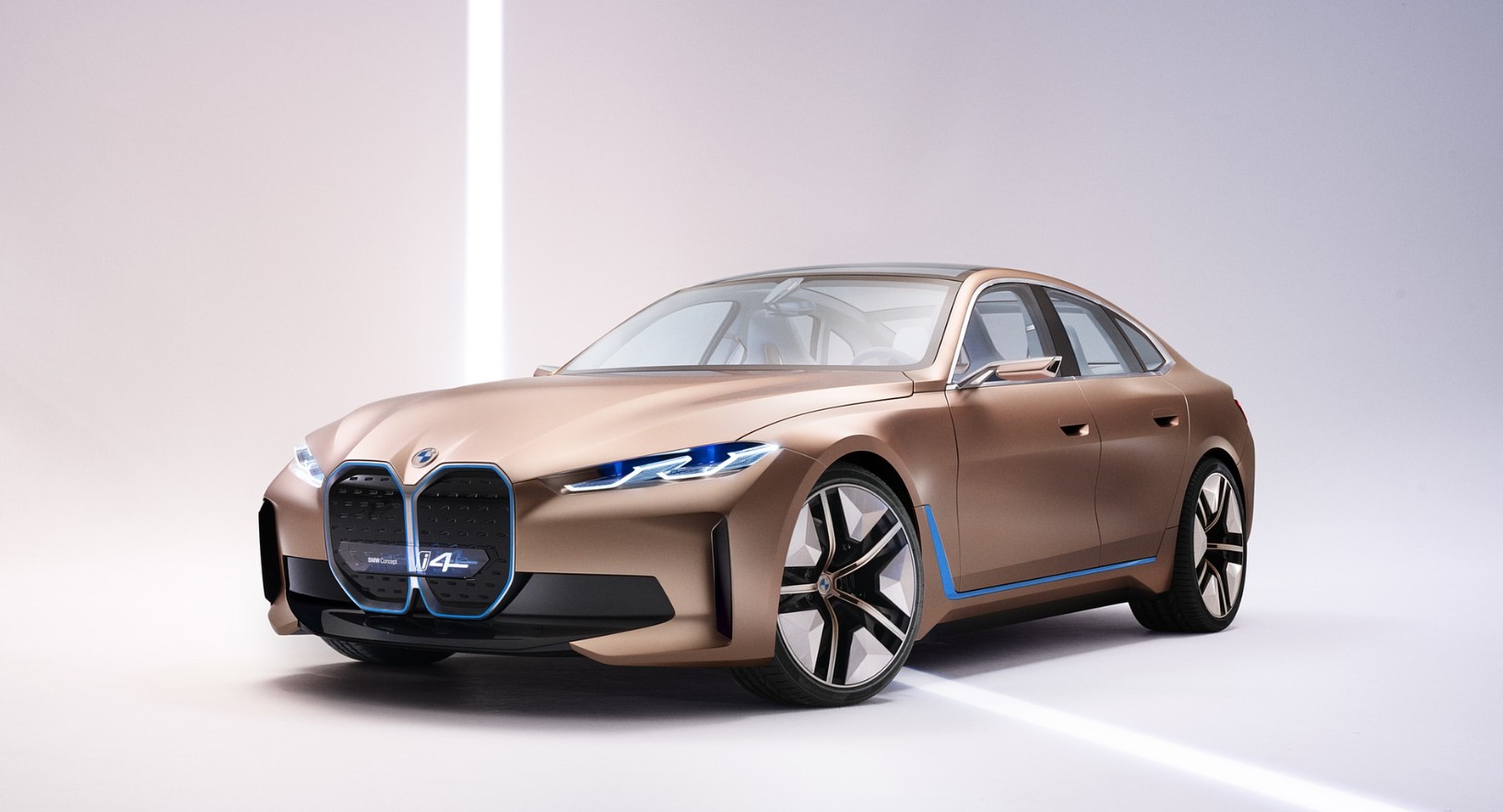
2028 BMW i4 Redesign, Price, Specs – The 2028 BMW i4 is an anticipated electric luxury Gran Coupé that could appeal to drivers seeking a combination of premium comfort, responsive acceleration, advanced technology, and everyday practicality. The i4 has established its identity by combining BMW’s familiar driving character with a fully electric powertrain and a sleek four-door body. Unlike electric vehicles designed exclusively around minimalist styling or maximum straight-line acceleration, the i4 emphasizes a balance between driver engagement, cabin refinement, and useful cargo space. Although BMW has not confirmed the complete specifications of the 2028 model, the existing i4 provides a strong reference for understanding what prospective buyers may want from the next model year.
The current BMW i4 lineup demonstrates the flexibility of electric performance. Rear-wheel-drive models prioritize efficiency and balanced handling, while dual-motor configurations deliver all-wheel-drive traction and quicker acceleration. The high-performance M60 version adds substantial power for drivers who want sports-sedan performance without a conventional gasoline engine. The 2026 model also benefits from more efficient power electronics and improvements to selected range figures, demonstrating how engineering refinements can improve an electric car without requiring an entirely new generation. Whether BMW introduces similar efficiency improvements for 2028 remains unknown, but battery management, charging performance, and software development will remain important factors in the model’s competitiveness.
The luxury EV market is becoming more demanding as buyers compare driving range, charging speed, interior technology, ownership costs, and performance across several premium brands. The BMW i4 competes with vehicles such as the Tesla Model 3 and Polestar 2, as well as other electric luxury sedans and fastback-style models. Its distinctive advantage is the combination of a premium cabin, a traditional BMW driving position, and a liftback body that provides practical access to the cargo area. For customers upgrading from a gasoline-powered BMW, the i4 can offer a familiar driving environment while eliminating routine engine-related maintenance and the need to purchase gasoline. The overall ownership experience, however, still depends on charging access, electricity prices, insurance, and battery warranty coverage.
One important consideration for the 2028 BMW i4 is the direction of BMW’s wider electric-vehicle strategy. The company’s Neue Klasse architecture introduces a new approach to battery technology, electric motors, vehicle electronics, and software. These developments may influence future BMW electric vehicles, but they do not automatically confirm that the i4 will receive a new platform or a complete redesign for 2028. The model could continue with its existing engineering foundation while receiving equipment and software revisions, or BMW could introduce more substantial changes later in its life cycle. Until official information becomes available, the most accurate assessment separates established i4 specifications from potential future developments. 2028 BMW i4 Redesign
2028 BMW i4 Redesign and Update Plan
Exterior & Interior
The exterior design of the BMW i4 combines the proportions of a sporty Gran Coupé with the distinctive visual identity of BMW’s electric lineup. Its broad front end, kidney grille treatment, sculpted hood, and sloping roofline create a recognizable silhouette without adopting the tall proportions of an SUV. The four-door layout maintains practical access for passengers, while the rear liftback provides a wide opening for loading luggage. For 2028, BMW could introduce revised lighting graphics, updated bumper detailing, fresh paint colors, or new alloy-wheel designs. However, no official exterior redesign has been confirmed, and any concept images suggesting a completely different production car should be treated as speculative.
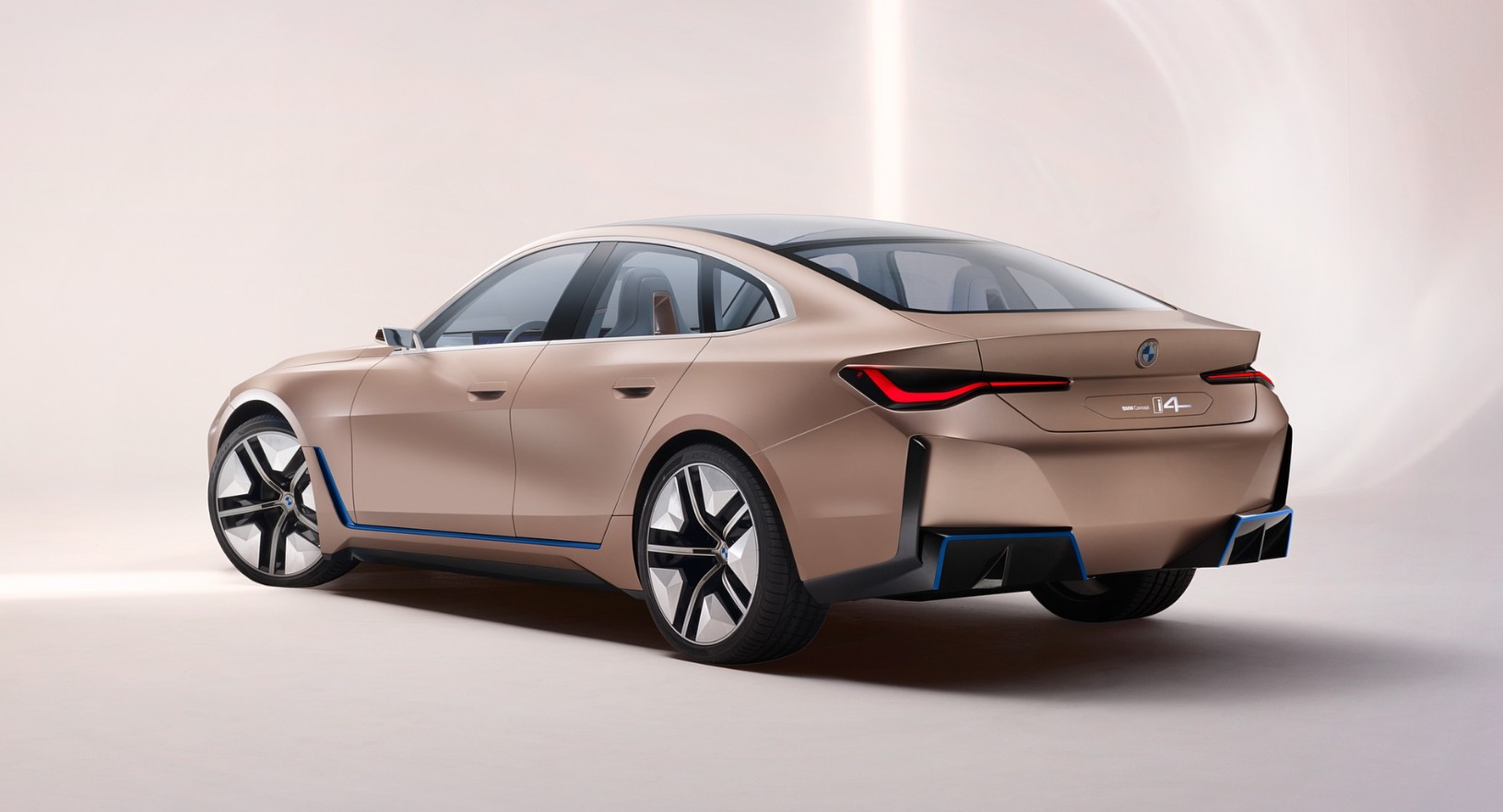
Aerodynamic efficiency will continue to influence the i4’s exterior development. At highway speeds, air resistance becomes a major source of energy consumption, so details such as the front air intakes, underbody panels, wheel design, mirrors, and rear bodywork can affect driving range. BMW could refine these areas to improve airflow and reduce turbulence while maintaining the model’s established appearance. Carefully designed wheels can contribute to both efficiency and visual character, although larger or wider performance-oriented wheels may increase energy consumption. A future styling update could also introduce additional exterior personalization options, allowing buyers to choose a more understated luxury appearance or a more aggressive M Sport-inspired look. The availability of specific design packages for 2028 remains unknown.
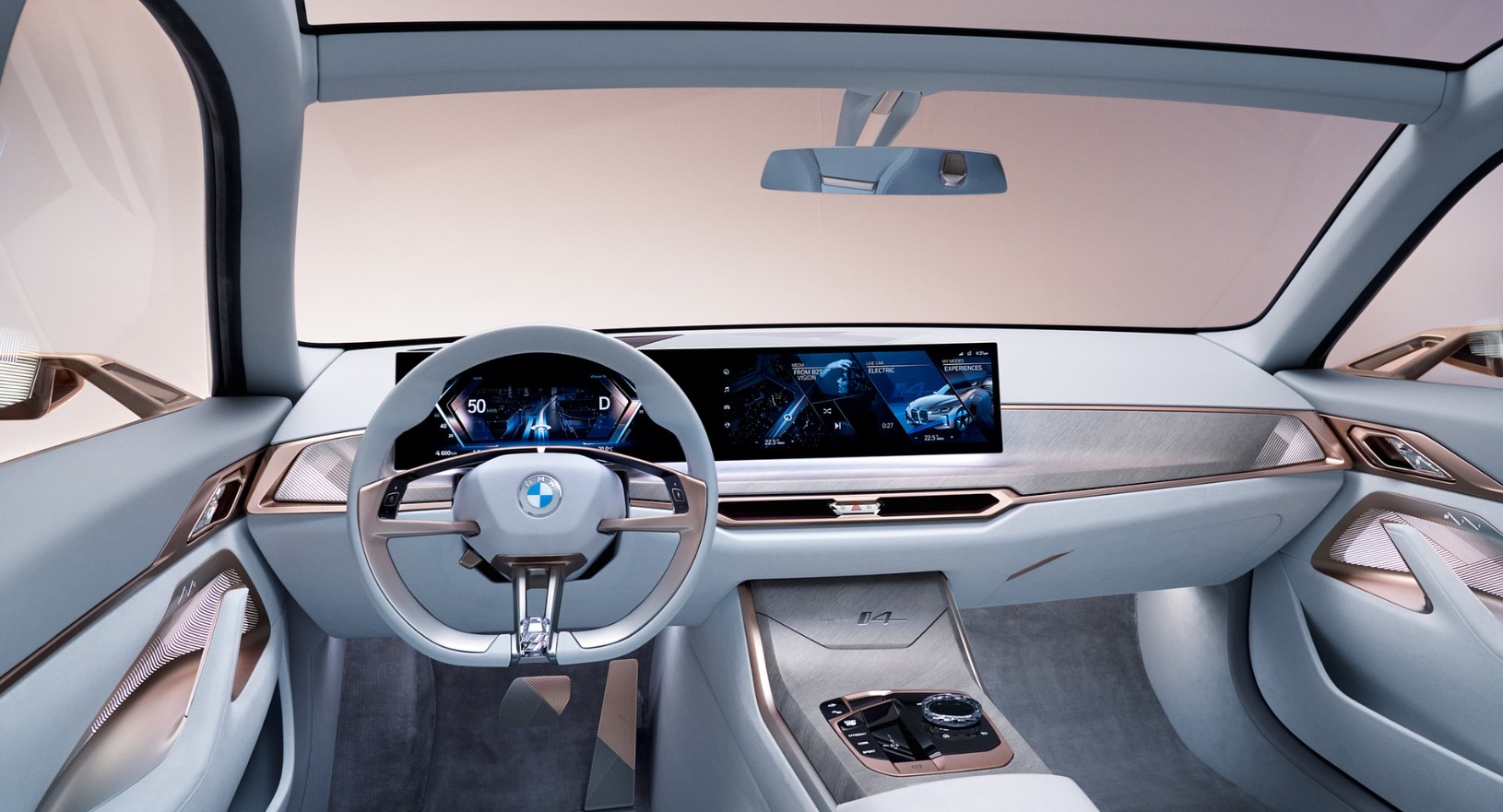
Inside, the BMW i4 offers a driver-focused cabin built around digital instrumentation and the central infotainment display. Recent models feature BMW’s Curved Display, integrating the instrument cluster and central screen into a sweeping dashboard arrangement. The system provides access to navigation, entertainment, vehicle settings, charging information, and connected services. Its layout gives the cabin a contemporary appearance while retaining a recognizable BMW driving environment. For the 2028 model, software refinements, improved responsiveness, and updated connectivity features could be more important than simply increasing screen size. BMW has not announced the final display specifications or operating-system changes for the upcoming model year.
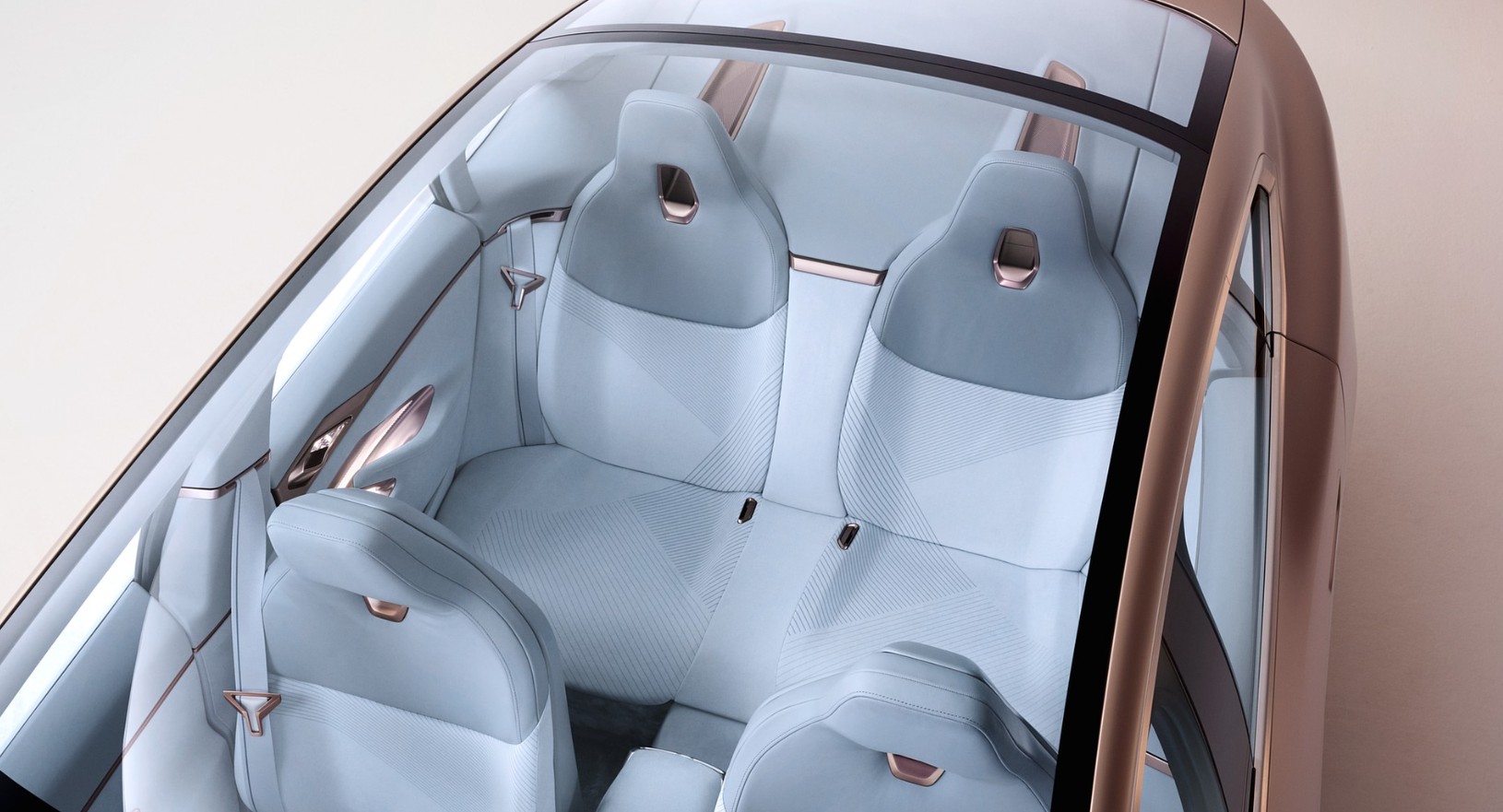
Comfort and practicality are equally important in a premium electric vehicle. The i4’s front seats and driving position are designed to support longer journeys, while available upholstery, trim finishes, ambient lighting, and seat-adjustment options help create a more luxurious atmosphere. The sloping roofline gives the car a coupé-like appearance, although taller rear passengers should assess headroom and entry space in person. The liftback body is a practical advantage because the large rear opening makes it easier to load bulky items than a conventional sedan trunk would. BMW could update seat materials, storage details, and cabin equipment for 2028, but the exact interior configuration has not been confirmed.
A complete redesign is one of the biggest questions surrounding the 2028 BMW i4. The current generation uses BMW’s CLAR-based architecture, which has been adapted to support an all-electric powertrain alongside related combustion-powered vehicles. This approach allows BMW to combine familiar exterior proportions with an underfloor battery and electric drive components. A future redesign could introduce a dedicated electric platform, revised packaging, or updated structural engineering, but BMW has not confirmed such a change for the 2028 model. A continuation of the existing generation with targeted refinements is also possible, particularly given the recent updates introduced for the 2026 model year.
Battery efficiency could be a major development area regardless of whether the i4 receives a new platform. BMW has already demonstrated the value of improved power electronics through the introduction of silicon-carbide inverters in selected versions. These components reduce electrical conversion losses and help the vehicle use battery energy more efficiently. For a future i4, further advances in inverter technology, motor design, battery thermal management, and regenerative braking could help increase usable range without requiring a dramatic increase in battery capacity. Nevertheless, no specific 2028 battery size, energy-consumption figure, or driving-range improvement has been announced. Buyers should wait for official test ratings instead of relying on speculative range estimates.
Software and connected technology could also influence the next i4’s appeal. Electric vehicles benefit from navigation systems that can account for charging stops, battery temperature, and predicted energy consumption along a route. BMW could refine these functions, improve charging-station information, and make battery preconditioning easier to manage. Updates to the infotainment interface, voice assistant, smartphone connectivity, and driver profiles could further improve daily convenience. These developments would be particularly valuable for owners who frequently travel beyond their local area, where accurate charging estimates and reliable route planning matter more than the headline range figure alone. The actual 2028 software package remains unconfirmed, and availability may differ between markets.
Chassis engineering will remain essential to the i4’s identity. Battery-electric vehicles carry considerable mass, making suspension tuning, steering calibration, tire selection, and brake integration especially important. BMW could refine the balance between ride comfort and cornering control, improve regenerative braking transitions, or revise traction-management software to provide more consistent responses on different road surfaces. High-performance models may also receive adjustments to cooling systems or power delivery to support repeated acceleration. These are potential engineering directions rather than confirmed updates. The most meaningful improvements would be those that make the car feel composed during ordinary commuting while preserving the responsive handling expected from a BMW Gran Coupé. 2028 BMW i4 Redesign
2028 BMW i4 Specs
Engine & Performance
The BMW i4’s powertrain range has traditionally offered different levels of performance and traction. The eDrive40 uses a single electric motor driving the rear wheels, creating a setup that suits drivers who prioritize balanced handling and efficient daily transportation. The xDrive40 adds a second motor and all-wheel drive, delivering additional traction and stronger acceleration. At the top of the current U.S. lineup, the i4 M60 combines dual-motor performance with BMW M engineering. The 2028 model names, motor configurations, and outputs have not been announced, so the current lineup should be used as a reference rather than treated as a confirmed future range.
The current eDrive40 produces approximately 335 horsepower and can accelerate from zero to 60 mph in around 5.5 seconds, according to BMW’s published figures. Electric motors deliver power smoothly, without the gear changes or engine-speed buildup associated with a conventional combustion engine. This makes acceleration predictable during highway merging and overtaking, while rear-wheel drive preserves a traditional BMW-style layout. For 2028, improvements to motor efficiency, inverter technology, or software calibration could enhance performance and energy use. However, no official acceleration time or power output has been released for the upcoming model, and real-world performance will depend on the final vehicle configuration and driving conditions.
For buyers who want more traction, the xDrive40 uses two electric motors to power both axles. This arrangement can improve acceleration from a standstill and provide additional control when driving on wet or slippery roads. The current version produces approximately 396 horsepower and has a manufacturer-quoted zero-to-60-mph time of about 4.9 seconds. Dual-motor systems can also adjust torque delivery between the axles according to traction requirements. The trade-off is that all-wheel-drive hardware can add weight and affect energy consumption compared with a single-motor vehicle. The 2028 xDrive configuration, if offered, will require its own confirmed performance and range ratings.
The performance-focused i4 M60 takes electric acceleration to a higher level. The 2026 U.S. model produces up to 593 horsepower in Sport mode and can reach 60 mph in approximately 3.6 seconds, according to BMW’s published estimates. Its dual-motor all-wheel-drive system provides strong traction, while the performance-oriented chassis and braking equipment support more demanding driving. Buyers should recognize that maximum acceleration is only one part of the ownership experience: tire wear, insurance, charging costs, and reduced range on performance-oriented configurations can all affect running expenses. BMW has not confirmed whether the M60 designation, power output, or acceleration figures will carry over unchanged to 2028. 2028 BMW i4 Redesign
2028 BMW i4 Fuel Economy
Electric range and energy consumption will be key factors when choosing between i4 configurations. The 2026 eDrive40 has a published estimated range of 307 to 333 miles, depending on wheel and tire configuration. The xDrive40 offers an estimated 268 to 287 miles, while the M60 is rated for approximately 232 to 278 miles under BMW’s stated test conditions. These are reference figures for the current U.S. lineup, not official 2028 ratings. Real-world range can fall in cold weather, during sustained high-speed driving, or when the cabin heating system consumes additional energy. Wheel size, tire choice, road conditions, driving style, and battery temperature can also influence the distance available between charging stops.
Charging convenience is another essential part of the ownership equation. The current BMW i4 supports AC charging for home and workplace use and DC fast charging for longer journeys. BMW estimates that the 2026 eDrive40 can charge from 10 to 80 percent in approximately 34 minutes under suitable DC fast-charging conditions, while the xDrive40 is listed at approximately 30 minutes. These estimates assume appropriate charging equipment and conditions; actual times depend on charger output, battery temperature, battery state of charge, and the vehicle’s accepted charging power. A future i4 could improve charging efficiency or battery preconditioning, but no 2028 charging specification has been confirmed.
2028 BMW i4 Safety Features
Safety will remain an important consideration for the 2028 BMW i4, particularly as driver-assistance technology becomes more sophisticated across the luxury EV segment. Recent i4 models offer a range of active safety features depending on market and equipment, potentially including forward-collision warning, automatic emergency braking, lane-departure warning, blind-spot monitoring, and parking assistance. Adaptive cruise control and additional highway-assistance functions may be available through selected packages. The exact standard and optional equipment for 2028 has not been announced. Buyers should verify the final specification for their market and distinguish driver-assistance features from the vehicle’s passive crash-protection systems.
2028 BMW i4 Release Date & Price
BMW has not announced an official reveal date, production schedule, or dealership arrival date for the 2028 i4. The 2026 model received efficiency improvements and a new high-performance M60 designation, so the next model year could continue the current generation with further equipment or software updates. A more substantial redesign is also possible, but there is no confirmed information establishing that it will happen in 2028.
For U.S. buyers, the official BMW USA model page and BMW Group PressClub are the most appropriate places to monitor confirmed specifications, pricing, and availability. Buyers in Indonesia should also consult their local BMW distributor because vehicle configurations, warranty coverage, import duties, taxes, and delivery schedules can differ substantially from those in the United States.
Prospective owners should compare the confirmed range, charging speed, equipment, and warranty coverage before deciding whether to wait for the 2028 model. If the next version introduces meaningful improvements, those changes may justify waiting. If the updates are limited, a current i4 with a competitive dealer offer may provide a more attractive purchase opportunity. The decision should be based on verified specifications and the total cost of ownership rather than an unconfirmed launch date.
The 2028 trim lineup, pricing, and release date remain unannounced. Current U.S. configurations include the eDrive40, xDrive40, and M60, with equipment and appearance packages varying according to model and market. The eDrive40 provides a range-focused rear-wheel-drive option, the xDrive40 adds all-wheel-drive traction, and the M60 emphasizes high performance. BMW could retain these distinctions or revise the lineup as its electric strategy develops. Pricing will depend on the final powertrain, optional equipment, destination charges, taxes, and regional distribution. Buyers should also account for insurance, charging equipment, electricity prices, tires, and servicing when comparing the total cost of ownership. No confirmed 2028 reveal date or dealership arrival schedule is currently available.
Conclusion
The 2028 BMW i4 could remain a compelling choice for drivers seeking an electric luxury car that combines premium comfort, practical packaging, responsive acceleration, and engaging handling. The current model already offers several distinct configurations, ranging from the range-focused eDrive40 to the all-wheel-drive xDrive40 and performance-oriented M60.
The biggest factors to watch will be battery efficiency, real-world range, charging performance, software usability, safety technology, and overall ownership costs. A future update that improves these areas without sacrificing the i4’s driving character could make the model more competitive in the premium EV market. However, BMW has not confirmed the 2028 model’s final design, specifications, pricing, or release schedule.
For buyers considering their next electric vehicle, the best approach is to monitor official announcements and compare the eventual 2028 specifications with the available i4 lineup. That comparison will reveal whether the new model offers meaningful advantages in range, performance, technology, or value.
Note: The details included in this blog post are derived from pre-release material that was accessible when the article was written. If you want the latest information, you should check official sources or call your nearest dealership.
Read Also:
- 2028 BMW iX4 Release Date, Specs, Interior
- 2028 BMW i5 Release Date, Price, Specs
- 2028 BMW i7 M70 Specs, Price, Release Date
- 2027 BMW 4 Series Convertible Review, Price, Specs
- 2027 BMW 1 Series Release Date, Specs, Features
Frequently Asked Questions
2028 BMW i4 Redesign, Price, Specs - The 2028 BMW i4 is an anticipated electric luxury Gran Coupé that could appeal to drivers seeking a combination of premium comfort, responsive acceleration, advanced technology, and everyday practicality. The i4 has established its identity by combining BMW's familiar driving character…
The current BMW i4 lineup demonstrates the flexibility of electric performance. Rear-wheel-drive models prioritize efficiency and balanced handling, while dual-motor configurations deliver all-wheel-drive traction and quicker acceleration. The high-performance M60 version adds substantial power for drivers who want sports-sedan performance without a conventional gasoline engine. The 2026 model…
The luxury EV market is becoming more demanding as buyers compare driving range, charging speed, interior technology, ownership costs, and performance across several premium brands. The BMW i4 competes with vehicles such as the Tesla Model 3 and Polestar 2, as well as other electric luxury sedans and…
One important consideration for the 2028 BMW i4 is the direction of BMW's wider electric-vehicle strategy. The company's Neue Klasse architecture introduces a new approach to battery technology, electric motors, vehicle electronics, and software. These developments may influence future BMW electric vehicles, but they do not automatically confirm…
2028 BMW i4 Redesign and Update Plan Exterior & Interior The exterior design of the BMW i4 combines the proportions of a sporty Gran Coupé with the distinctive visual identity of BMW's electric lineup. Its broad front end, kidney grille treatment, sculpted hood, and sloping roofline create a…