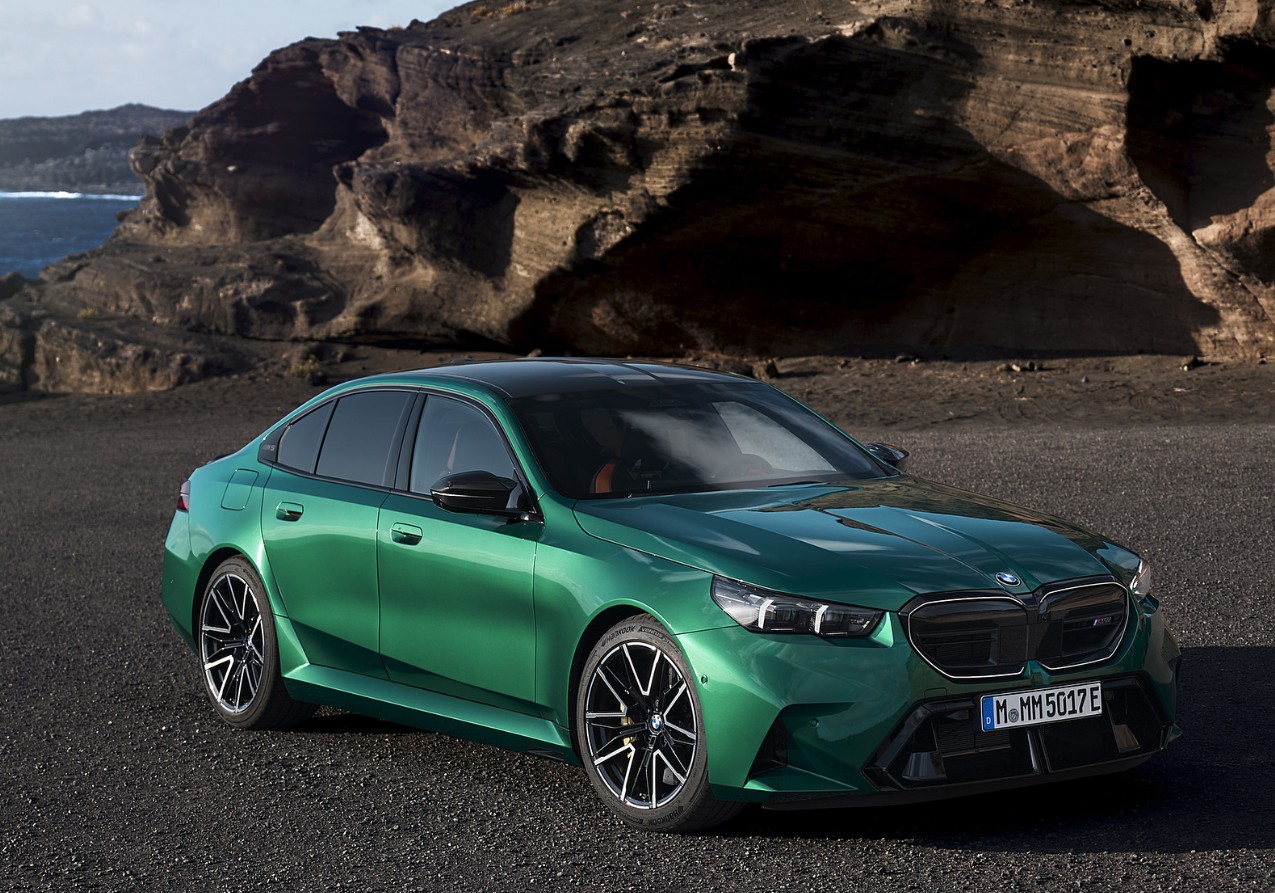
2028 BMW M5 Release Date, Price, Dimensions – The 2028 BMW M5 is shaping up to be one of the most exciting upcoming performance sedans, combining the muscle of a twin-turbocharged V8 with the instant response of an electric motor and the everyday comfort expected from a luxury BMW. The next update is expected to build on the current G90-generation M5, which introduced plug-in hybrid technology to the legendary nameplate. Rather than abandoning its traditional performance character, BMW appears to be preparing a mid-cycle refresh that could bring sharper styling, a significantly updated digital cabin, and refinements to an already powerful hybrid drivetrain. Prototypes spotted during testing suggest that the 2028 model will focus on making the existing formula more sophisticated rather than replacing it with an entirely new car.
The current BMW M5 has already changed expectations for what a high-performance executive sedan can deliver. Its combination of a 4.4-liter twin-turbocharged V8, an integrated electric motor, and an eight-speed automatic transmission produces a substantial amount of power while allowing the vehicle to travel short distances using electric energy alone. In U.S. specification, the current system delivers 717 horsepower and 738 lb-ft of torque, giving the sedan the ability to accelerate from zero to 60 mph in a manufacturer-estimated 3.4 seconds. The M xDrive all-wheel-drive system helps put that output onto the road, while configurable driving modes allow the car to shift between comfortable daily transportation and aggressive performance driving.
For 2028, the most significant changes are expected to involve exterior styling and interior technology. Camouflaged prototypes photographed during development testing indicate that BMW is revising the front end, including the headlight graphics, kidney grille treatment, and bumper design. The cabin is also expected to adopt newer BMW interface technology, potentially including a panoramic display projected across the lower windshield and a redesigned central touchscreen arrangement. These changes could make the M5 feel substantially more modern without requiring a completely new platform. However, final production specifications, equipment availability, and official pricing have not yet been fully confirmed by BMW.
The appeal of the 2028 BMW M5 extends beyond outright acceleration. Buyers in this segment expect a premium interior, long-distance comfort, advanced driver assistance, strong braking performance, and enough practicality for everyday use. The sedan must also justify its purchase price against alternatives from Mercedes-AMG, Audi Sport, and other high-performance luxury manufacturers. A successful update would preserve the M5’s dual personality: a refined executive car during ordinary commuting and a remarkably fast performance machine when the road opens up. This preview examines the expected redesign, exterior and interior changes, hybrid powertrain, safety technology, fuel economy, trim levels, pricing, and anticipated release schedule while distinguishing reported developments from specifications that remain unconfirmed. 2028 BMW M5 Release Date
2028 BMW M5 Redesign and Update Plan
Exterior & Interior
The 2028 BMW M5 is expected to receive a mid-cycle update, commonly described as a Life Cycle Impulse, rather than a completely new generation. Spy photographs published during 2026 show prototypes undergoing testing, suggesting BMW is working on revisions to the existing G90 platform. The overall sedan proportions are expected to remain familiar, including its long hood, broad shoulders, four-door body, and substantial rear section. These proportions are important because the M5 must accommodate a complex plug-in hybrid powertrain while maintaining the passenger space and structural strength required of a luxury performance sedan. The exact production design will become clear when BMW officially reveals the updated car.
The front fascia appears likely to receive the most visible exterior changes. Development vehicles have shown revised headlight shapes, a different interpretation of BMW’s signature kidney grilles, and a more carefully structured lower bumper with multiple air openings. The design direction appears to draw some inspiration from the company’s Neue Klasse styling language without necessarily adopting the same front-end treatment used by its newest electric vehicles. For an M5, the cooling requirements of the V8, electric drive components, and high-performance braking system remain important. The final design must balance aerodynamic efficiency, engine cooling, brake airflow, and a distinctive appearance that separates the M5 from the regular 5 Series.
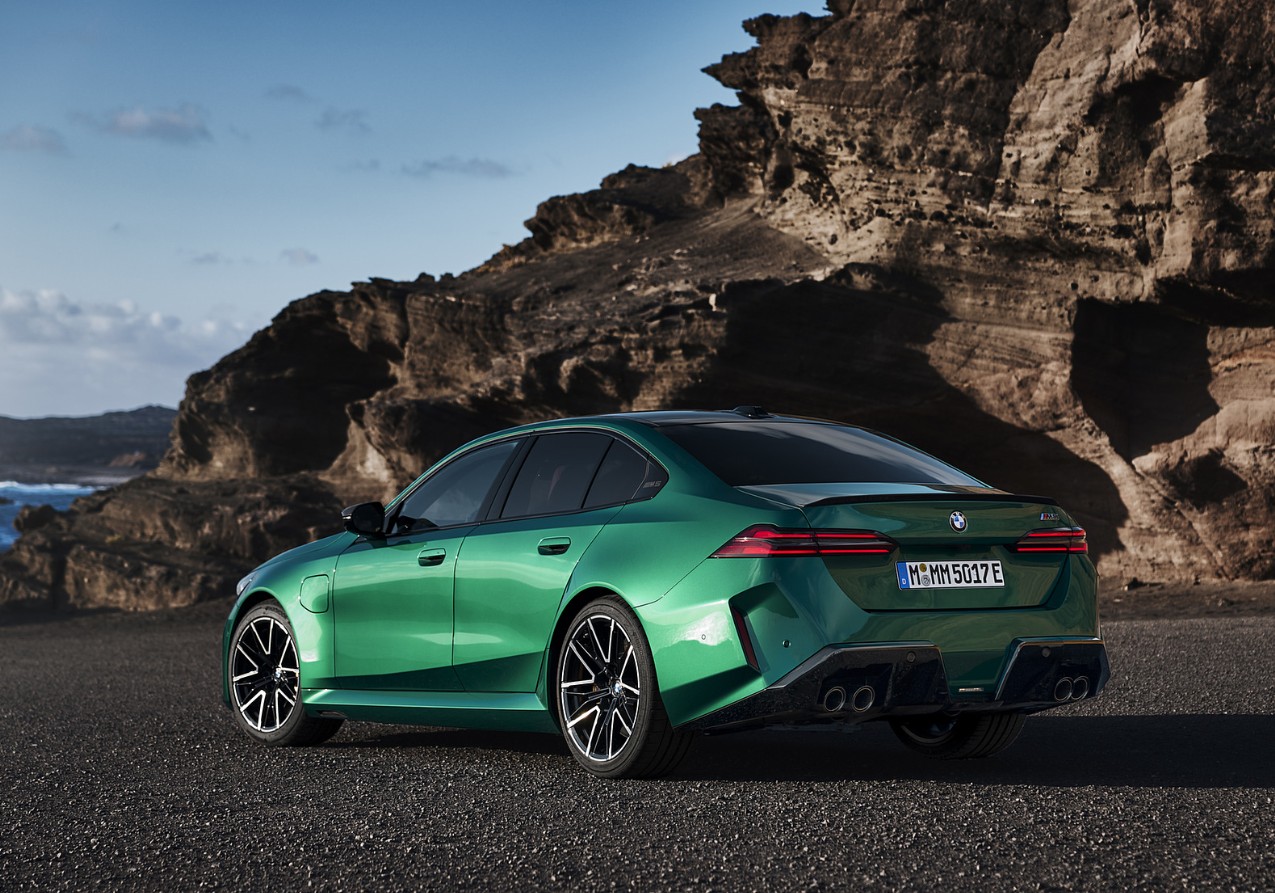
At the rear, the updated M5 is expected to retain its muscular stance while receiving revised lighting graphics and subtle bumper changes. The familiar quad-exhaust arrangement is likely to remain a defining feature if the current V8 powertrain carries over, reinforcing the sedan’s performance identity. A carefully shaped rear diffuser and restrained trunk spoiler can contribute to visual balance without making the car look excessively aggressive. BMW could also introduce new exterior paint colors, wheel designs, and optional styling packages to give buyers more opportunities to personalize their vehicles. Until the production car is revealed, however, the precise lighting shapes, body details, color selection, and wheel specifications should be regarded as provisional.
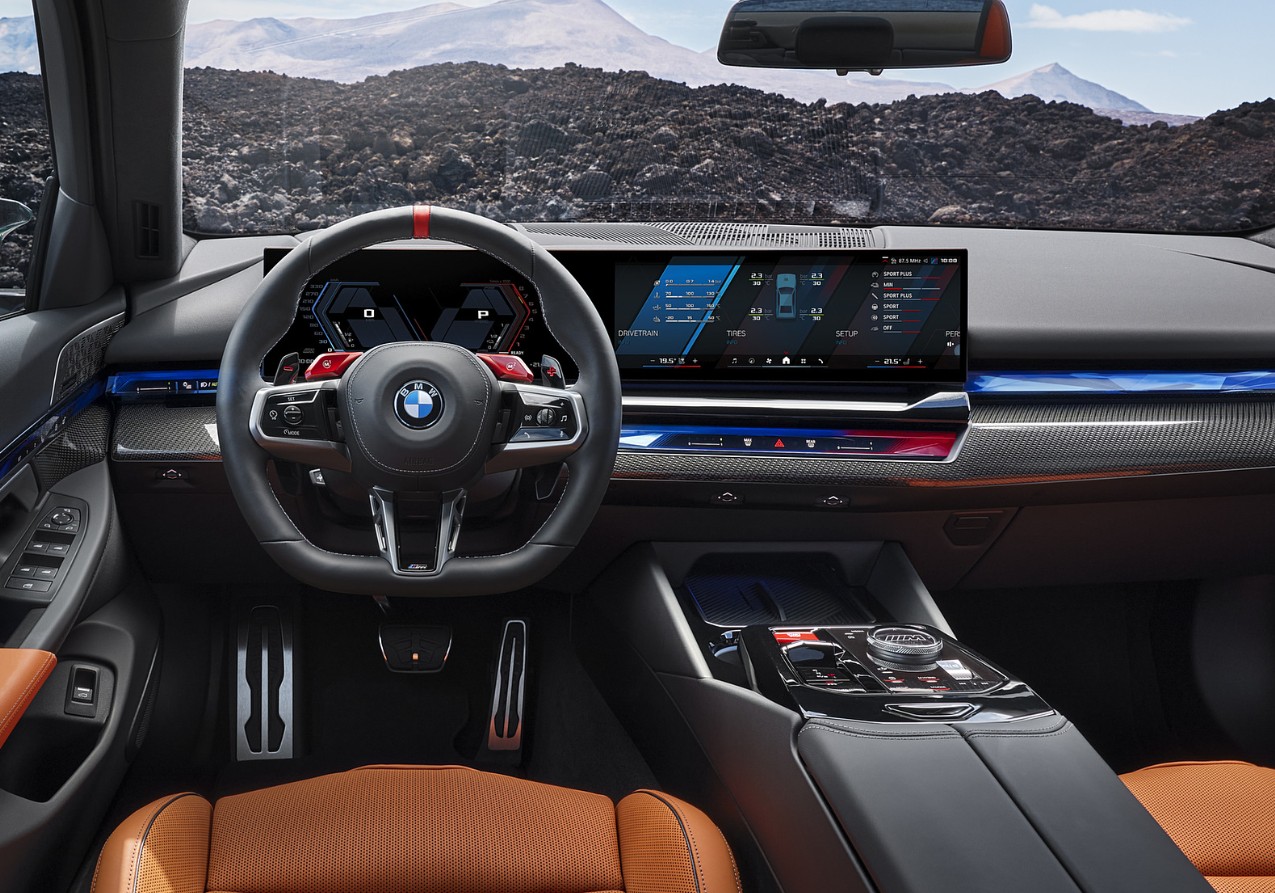
The interior could experience a more extensive transformation than the exterior. Recent reports about the facelift point toward BMW’s newer digital interface, including a wide panoramic information display positioned along the lower windshield and an updated central touchscreen. This approach is designed to place essential driving information closer to the driver’s line of sight while allowing the center display to handle navigation, media, vehicle settings, and connected services. BMW may also revise the steering wheel, dashboard surfaces, and control layout to match its latest design direction. These changes could make the M5 cabin feel noticeably newer, although the exact display sizes, standard equipment, and availability of a passenger screen have not been officially finalized.
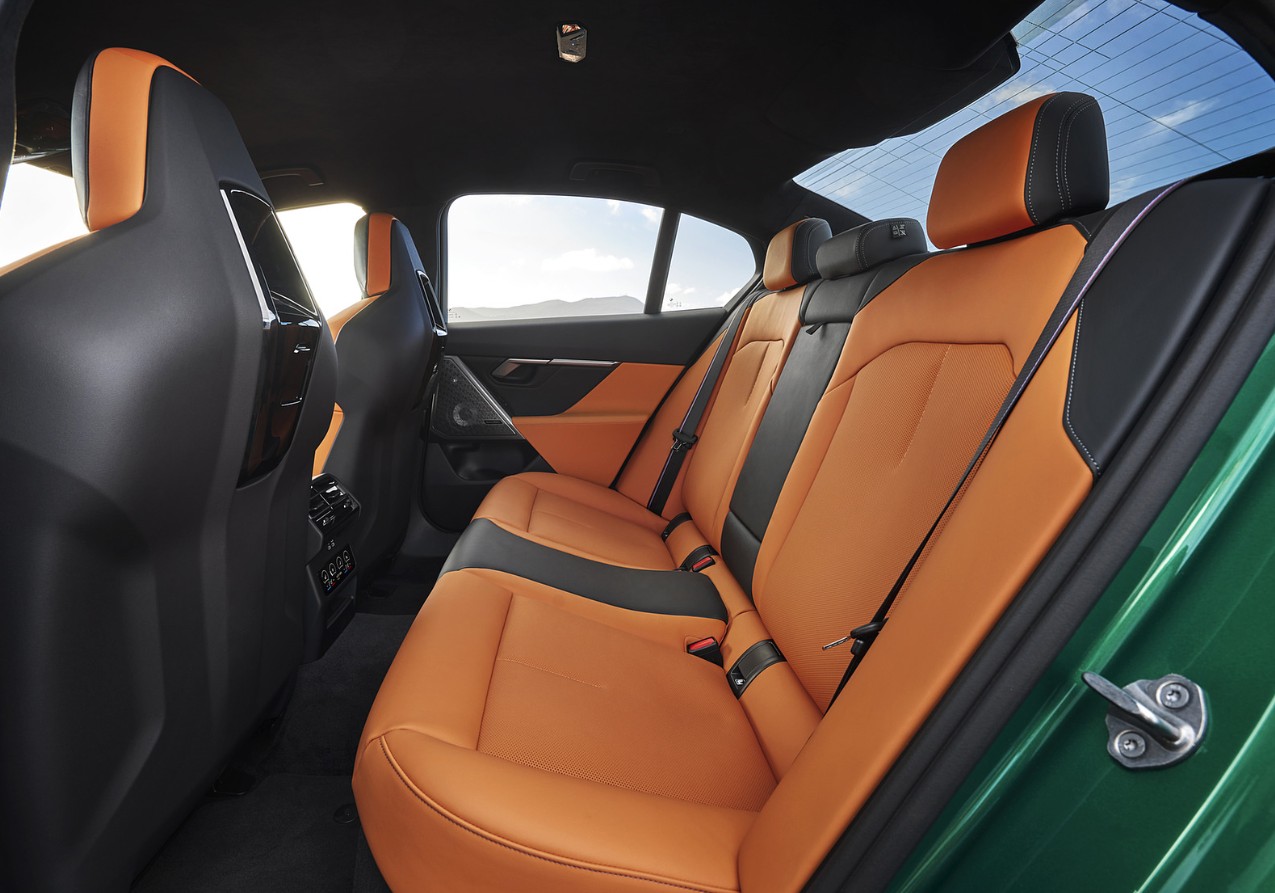
Premium materials should remain central to the M5’s interior. The current car combines a driver-focused cockpit with sports seats, M-specific details, digital instrumentation, and luxury-car comfort features. The facelift could introduce revised upholstery patterns, additional trim finishes, improved ambient lighting, and updated software while preserving the broad adjustment range needed for long-distance driving. Front occupants should continue to receive supportive seating suitable for spirited driving, while rear passengers benefit from the sedan’s substantial body dimensions. A future cabin must also accommodate practical storage, charging connections, climate controls, and convenient access to frequently used functions. The best outcome would be a more modern interface that adds capability without making routine driving unnecessarily complicated.
2028 BMW M5 Specs
Engine & Performance
The current M5’s defining mechanical feature is its plug-in hybrid powertrain, which combines a 4.4-liter BMW M TwinPower Turbo V8 with an electric motor integrated into the transmission system. In the U.S.-market car, the combined output is rated at 717 horsepower and 738 lb-ft of torque. An eight-speed M Steptronic automatic transmission sends power through the M xDrive all-wheel-drive system, which can distribute torque according to driving conditions and selected settings. This configuration allows the M5 to combine the broad power delivery of a twin-turbocharged V8 with the immediate response of electric propulsion. It also gives the sedan an electric-driving capability that earlier generations did not offer in the same way.
For the 2028 update, reports suggest that BMW is likely to retain the fundamental V8 plug-in hybrid architecture. That would allow the company to focus on software calibration, cooling management, transmission behavior, and the integration of electric and combustion power rather than engineering a completely new drivetrain. It remains possible that BMW will adjust the system for specific markets or revise individual components as emissions requirements evolve. European and North American specifications can differ, particularly in the power attributed to the combustion engine, even when the total system output remains similar. Until BMW publishes final technical data, the current U.S. figures provide the clearest reference point rather than a guarantee of unchanged 2028 specifications.
Acceleration should remain one of the M5’s strongest selling points. The current U.S. sedan is rated by BMW at approximately 3.4 seconds for the zero-to-60-mph sprint, a figure that places it firmly among the quickest luxury performance sedans. Electric torque helps the car respond rapidly from low speeds, while the twin-turbocharged V8 supplies sustained power as acceleration continues. The eight-speed automatic transmission manages the combined output, and the all-wheel-drive system helps maintain traction when launching or accelerating out of slower corners. A facelift could refine throttle response and gear selection, but no official 2028 acceleration time has been released. Performance will also depend on tires, road surface, weather, battery charge, and the selected drive mode.
The M xDrive system is important because the M5’s considerable output demands sophisticated traction management. Drivers can use all-wheel drive for maximum grip or select a more rear-biased setup when conditions and the driving environment allow. The current generation also offers configurable drive settings that influence powertrain response, steering, suspension behavior, and braking characteristics. A future update could refine these systems to make transitions between comfortable road driving and more aggressive settings feel more consistent. However, the sedan’s substantial weight remains a key engineering challenge. Battery hardware and structural components add mass, so suspension tuning, tire performance, brake cooling, and electronic chassis control all play important roles in keeping the car composed.
Ride quality and handling must work together in a vehicle designed for both executive travel and high-speed driving. Adaptive suspension technology allows the current M5 to balance body control with everyday comfort, while performance-oriented steering and braking systems support more demanding driving. The 2028 refresh could introduce revised calibration to improve responses over uneven pavement and reduce unwanted body movement during rapid changes of direction. Brake performance will be especially important because the car must repeatedly manage the energy generated by a powerful and heavy vehicle. Any changes to suspension hardware, brake specifications, steering feel, or available carbon-ceramic brakes remain subject to official confirmation. The target should be a car that feels controlled and predictable rather than merely powerful.
The plug-in hybrid system also gives the M5 a different character from a conventional V8 sedan. When the battery has sufficient charge and the appropriate mode is selected, electric driving can make short trips quieter and reduce local exhaust emissions during those journeys. On longer drives, the combustion engine can provide sustained performance without relying exclusively on battery energy. The electric motor can also assist acceleration and help smooth the transition between different operating conditions. Drivers should understand that electric range, fuel consumption, and performance can vary with battery charge, temperature, driving style, and selected settings. The 2028 model’s exact battery capacity and electric range will need to be confirmed by BMW. 2028 BMW M5 Release Date
2028 BMW M5 Fuel Economy
Fuel economy is more complicated in a high-performance plug-in hybrid than in a conventional petrol sedan. The M5 can use electric energy for short journeys when the battery is charged, potentially reducing petrol consumption during regular commuting. However, official plug-in hybrid fuel-economy ratings depend heavily on the test procedure and the assumed proportion of electric driving. Once the usable battery charge has been depleted, the V8 must provide a larger share of the energy, and consumption can rise significantly during high-speed travel or spirited driving. The 2028 model’s final EPA or WLTP figures have not been published, so current-generation ratings should be checked separately for the relevant country and model year.
Charging habits can make a meaningful difference to running costs. Owners who charge at home or at work and regularly drive within the vehicle’s real-world electric range may use less petrol than drivers who rarely connect the car to a charger. Electricity prices, charging losses, battery temperature, and the efficiency of the charging equipment all influence the result. Public charging can provide additional flexibility, but frequent use of expensive rapid-charging facilities may reduce the financial advantage compared with home charging. The M5’s plug-in hybrid system should therefore be evaluated according to an owner’s actual daily routes rather than a single advertised consumption figure. Its principal attraction remains the combination of electric capability and high performance, not maximum fuel economy.
Practicality remains part of the M5’s appeal despite its performance focus. The sedan offers four doors, usable rear seating, and a luggage compartment suitable for everyday shopping, business travel, or a weekend away. The hybrid battery and related hardware affect packaging, so buyers should check the actual cargo capacity and storage layout for the specific vehicle rather than assume it matches an ordinary 5 Series exactly. The available M5 Touring estate provides another option for buyers who need additional loading flexibility, although its pricing and equipment differ from those of the sedan. The 2028 update is expected to keep the M5 relevant as a performance car that can still handle daily responsibilities.
Ownership costs will extend beyond the initial purchase price. High-performance tires, premium fuel, insurance, scheduled maintenance, and potential brake replacement can make the M5 substantially more expensive to operate than an ordinary executive sedan. Plug-in hybrid components also require appropriate servicing, and warranty coverage for the high-voltage battery varies by market. Drivers should account for local electricity tariffs, charging equipment, taxes, and registration fees when calculating total cost of ownership. The updated model may bring improved software or more efficient energy management, but it should not be assumed to eliminate the costs associated with a powerful luxury vehicle. A realistic ownership budget should include both routine commuting and occasional performance driving.
2028 BMW M5 Safety Features
The 2028 BMW M5 is expected to continue offering a broad collection of active safety and driver-assistance technologies. The current 5 Series platform provides the foundation for systems that can include forward collision warning, automatic emergency braking, lane-departure warning, lane-keeping assistance, blind-spot monitoring, and adaptive cruise control, depending on market and equipment. A facelift may bring updated sensors, software, and interface improvements, but the availability of each function will depend on the final configuration. Buyers should distinguish between standard equipment, optional packages, and features restricted to particular countries. BMW has not published a complete, final 2028 M5 safety specification.
Adaptive cruise control can help maintain a selected distance from traffic ahead, making long motorway journeys less tiring when conditions permit. Lane assistance can provide steering support when the system detects suitable lane markings, while blind-spot alerts help drivers monitor areas that are difficult to see in the mirrors. Parking sensors and available camera systems can also help maneuver a large performance sedan in confined spaces. These technologies are particularly useful in a vehicle with a wide body and limited rear visibility compared with smaller cars. Nevertheless, driver assistance does not eliminate the need for attention, and the driver remains responsible for steering, braking, and monitoring surrounding traffic.
Passive safety will remain equally important. The M5 must protect its occupants through a reinforced passenger structure, airbags, seat-belt systems, and electronic stability control. The high-voltage battery adds additional design considerations, including electrical isolation, crash protection, and thermal management. A future facelift would need to preserve the current car’s fundamental safety engineering while meeting all applicable regulatory requirements in the markets where it is sold. Updated driver-monitoring or collision-avoidance functions are possible, but no 2028-specific crash-test results or independent safety ratings have been established. Prospective buyers should review the final equipment list and any published assessment results when the updated model becomes available. 2028 BMW M5 Release Date
2028 BMW M5 Release Date & Price
The 2028 BMW M5 lineup is expected to continue centering on the M5 Sedan, with the M5 Touring estate likely to receive corresponding updates. The sedan is designed for buyers who prioritize traditional executive-car proportions and high-performance driving, while the Touring combines similar mechanical capability with a more versatile cargo area. Both body styles are part of the current M5 generation, although equipment and pricing vary by market. BMW has not yet published a complete 2028 trim structure, and there is no confirmed indication that the facelift will introduce a separate standard, Competition, or CS version at launch. Any future performance derivative would require a separate official announcement.
The standard M5 should continue to focus on combining extensive luxury equipment with the core performance hardware expected from BMW M. Depending on the market, buyers may be able to choose optional paint finishes, wheel designs, interior materials, driver-assistance packages, and upgraded braking equipment. An M-specific exterior package or special interior treatment could provide additional personalization without changing the fundamental powertrain. BMW may also revise the standard equipment list as part of the facelift, potentially making some technology features more widely available. However, the exact package names, option prices, wheel sizes, upholstery choices, and standard features remain unconfirmed for the 2028 model.
A higher-performance M5 CS would be an appealing possibility for enthusiasts seeking sharper track-focused responses, reduced weight, and more aggressive chassis tuning. BMW has used the CS designation on other M models, making speculation about a future M5 version understandable. Nevertheless, there is no confirmed 2028 M5 CS specification or launch date. If such a variant were developed, it could feature distinctive seats, lighter components, revised suspension tuning, unique exterior details, and additional performance-oriented equipment. Those changes would depend on BMW’s product strategy and engineering priorities. Buyers should not assume that a CS model will arrive alongside the regular facelift simply because other BMW M vehicles have offered similar derivatives.
Pricing will be a major consideration for anyone evaluating the updated M5. BMW USA lists the 2027 M5 Sedan with a starting MSRP of $123,300, while the Touring carries a higher starting price. This provides a current U.S. benchmark, not an official price for the 2028 model. A facelift may bring a price adjustment reflecting updated technology, equipment changes, production costs, or broader market conditions. Optional paint, premium interior treatments, advanced driver assistance, and performance equipment can increase the final transaction price. Taxes, title, registration, destination charges, and dealer pricing should also be considered when comparing the M5 with rival performance sedans.
For buyers planning a purchase, the most useful approach is to budget around the current model’s price positioning while waiting for BMW to publish the updated car’s official MSRP. The final cost will differ between countries because of exchange rates, import duties, local taxes, emissions-related charges, and dealer pricing policies. Buyers should also compare financing terms, insurance premiums, tire replacement costs, and warranty coverage rather than focusing exclusively on the advertised starting price. The M5 occupies the premium end of the performance-sedan market, so ownership expenses can be significant even before optional equipment is added. An accurate comparison should use local quotations for similarly equipped vehicles.
The release schedule is expected to become clearer as BMW continues development testing. Automotive reports based on camouflaged prototypes suggest the facelifted 2028 M5 could be unveiled during 2027, with production potentially beginning around the middle of that year. These dates remain reported expectations rather than a confirmed public launch timetable. BMW has not provided a definitive worldwide showroom date, preorder opening, or market-by-market delivery schedule for the 2028 model. Production timing can also differ from the public reveal, and the sedan and Touring may not reach every market simultaneously. Prospective buyers should wait for an official BMW announcement before relying on a particular delivery month.
Availability will depend on regional distribution and the final product plan. North American buyers can monitor BMW USA for specifications, pricing, and ordering information, while customers in Europe and other markets should consult their national BMW websites and authorized dealers. Powertrain output, emissions figures, standard equipment, and driver-assistance features can differ across jurisdictions. The updated M5 Touring may also be offered in different markets according to local demand and regulatory requirements. Once BMW releases the final details, buyers will be able to compare the sedan and estate versions on price, performance, cargo capacity, and equipment before placing an order.
Conclusion
The 2028 BMW M5 is expected to refine an already ambitious performance sedan with updated styling, a more advanced digital cabin, and continued emphasis on the combination of V8 power and electric assistance. If the anticipated facelift follows the direction suggested by current prototypes, the biggest improvements may involve the front-end design, lighting, infotainment interface, and everyday usability rather than a complete mechanical transformation. The existing M5’s 717-horsepower U.S. powertrain provides a formidable foundation, while its all-wheel-drive system, adaptable chassis, and luxury-focused interior give it a broad range of capabilities.
For enthusiasts, the main attraction will be whether BMW can make the updated M5 feel more responsive and sophisticated without losing the character that defines the nameplate. For luxury-car buyers, improvements to connectivity, comfort, driver assistance, and interior usability could be just as important as acceleration. The Touring estate also remains a compelling alternative for customers who want high performance with additional cargo flexibility. Final specifications, equipment packages, and market availability will determine how much the updated range improves on the existing vehicle.
Anyone considering the 2028 BMW M5 should keep an eye on BMW’s official announcements during 2027, when the facelift is expected to make its public debut. Pricing, fuel economy, final powertrain figures, and delivery dates should be confirmed before making a purchase decision. Until then, the current M5 offers a reliable reference for performance and pricing, while the developing 2028 model promises an evolution of one of BMW’s most recognizable performance sedans.
Note: The details included in this blog post are derived from pre-release material that was accessible when the article was written. If you want the latest information, you should check official sources or call your nearest dealership.
Read Also:
- 2028 BMW i4 Redesign, Price, Specs
- 2028 BMW iX4 Release Date, Specs, Interior
- 2028 BMW i5 Release Date, Price, Specs
- 2028 BMW i7 M70 Specs, Price, Release Date
- 2027 BMW 4 Series Convertible Review, Price, Specs
Frequently Asked Questions
2028 BMW M5 Release Date, Price, Dimensions - The 2028 BMW M5 is shaping up to be one of the most exciting upcoming performance sedans, combining the muscle of a twin-turbocharged V8 with the instant response of an electric motor and the everyday comfort expected from a luxury…
The current BMW M5 has already changed expectations for what a high-performance executive sedan can deliver. Its combination of a 4.4-liter twin-turbocharged V8, an integrated electric motor, and an eight-speed automatic transmission produces a substantial amount of power while allowing the vehicle to travel short distances using electric…
For 2028, the most significant changes are expected to involve exterior styling and interior technology. Camouflaged prototypes photographed during development testing indicate that BMW is revising the front end, including the headlight graphics, kidney grille treatment, and bumper design. The cabin is also expected to adopt newer BMW…
The appeal of the 2028 BMW M5 extends beyond outright acceleration. Buyers in this segment expect a premium interior, long-distance comfort, advanced driver assistance, strong braking performance, and enough practicality for everyday use. The sedan must also justify its purchase price against alternatives from Mercedes-AMG, Audi Sport, and…
2028 BMW M5 Redesign and Update Plan Exterior & Interior The 2028 BMW M5 is expected to receive a mid-cycle update, commonly described as a Life Cycle Impulse, rather than a completely new generation. Spy photographs published during 2026 show prototypes undergoing testing, suggesting BMW is working on…