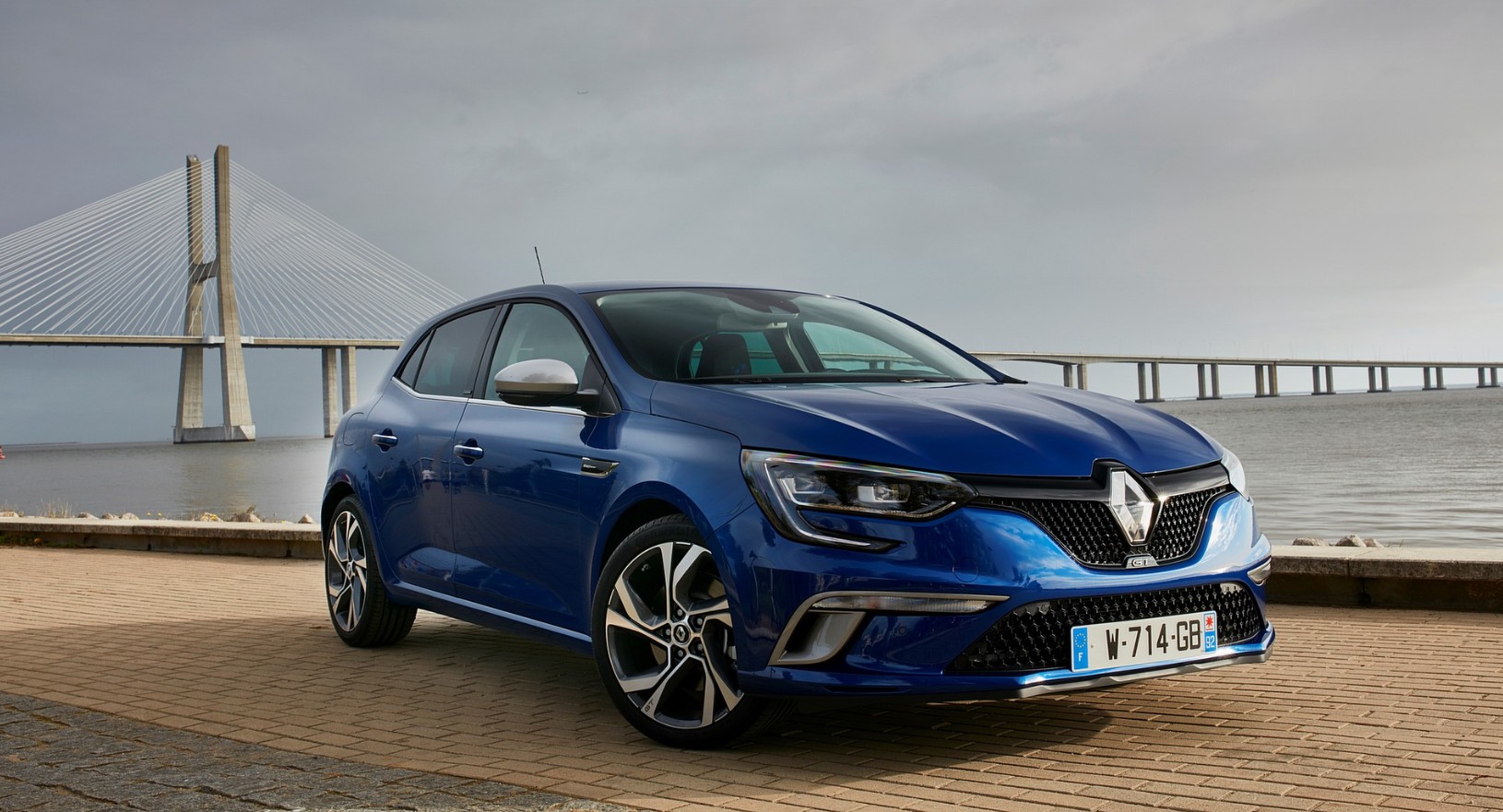
2028 Renault Megane Review, Price, Configurations – The 2028 Renault Megane is an interesting prospect for drivers who want an electric vehicle that feels modern without sacrificing comfort, practicality, or personality. Renault has already moved the Megane name into the electric era with the Megane E-Tech Electric, a compact crossover that combines the familiar identity of the Megane with the packaging advantages of a dedicated electric platform. Rather than relying exclusively on traditional hatchback proportions, the current electric model uses a raised stance, short overhangs, and a carefully shaped body to deliver a distinctive road presence. For 2028, further development could focus on improving the ownership experience through battery efficiency, software updates, interior refinements, and more useful driver-assistance technology. However, these possibilities should be treated as expectations rather than confirmed specifications for a new model year.
Renault’s most important recent development is the substantial update to the Megane E-Tech Electric announced in June 2026. The manufacturer introduced a redesigned front end, revised lighting details, a 67 kWh lithium iron phosphate battery, improved DC charging performance, and additional connected features. The updated vehicle demonstrates that Renault intends to keep the Megane competitive in a crowded electric-car market. Consequently, a 2028 version could build on these changes rather than introduce an entirely new generation. A further evolution might include improved energy management, more sophisticated software, revised equipment packages, and adjustments to the exterior design. Nevertheless, Renault has not officially confirmed a separate 2028 redesign, so it would be premature to describe any unannounced styling or engineering changes as final production features.
The broader market will also influence the direction of the next Megane. Electric-car buyers increasingly compare more than battery capacity or acceleration figures. They want reliable charging, intuitive navigation, comfortable seating, predictable winter performance, useful storage, and technology that does not make routine driving unnecessarily complicated. Renault’s recent Megane update addresses several of these priorities by improving charging capability, integrating Google services, and simplifying the range structure. A future model could continue this customer-focused approach while responding to developments from competitors such as the Volkswagen ID.3, Kia EV4, and other compact electric vehicles available in relevant markets. The central challenge will be to provide meaningful improvements without increasing the purchase price beyond what mainstream buyers consider reasonable.
The Megane also has an established identity that Renault can continue to develop. Earlier generations helped the nameplate become familiar to European drivers, while the E-Tech Electric transformed it into a more technology-focused product. The 2028 Renault Megane could therefore appeal to existing Renault owners considering their first electric car as well as drivers moving from another manufacturer. Its strongest potential advantage lies in combining manageable exterior dimensions with a refined cabin and sufficient driving range for daily commuting and longer journeys. Whether Renault chooses to make another major redesign or concentrate on incremental improvements remains unknown. Until the company publishes a model-year announcement, the most reliable approach is to use the officially announced 2026 update as a reference point while keeping all 2028-specific predictions clearly identified as unconfirmed. 2028 Renault Megane Review
2028 Renault Megane Redesign and Update Plan
Exterior & Interior
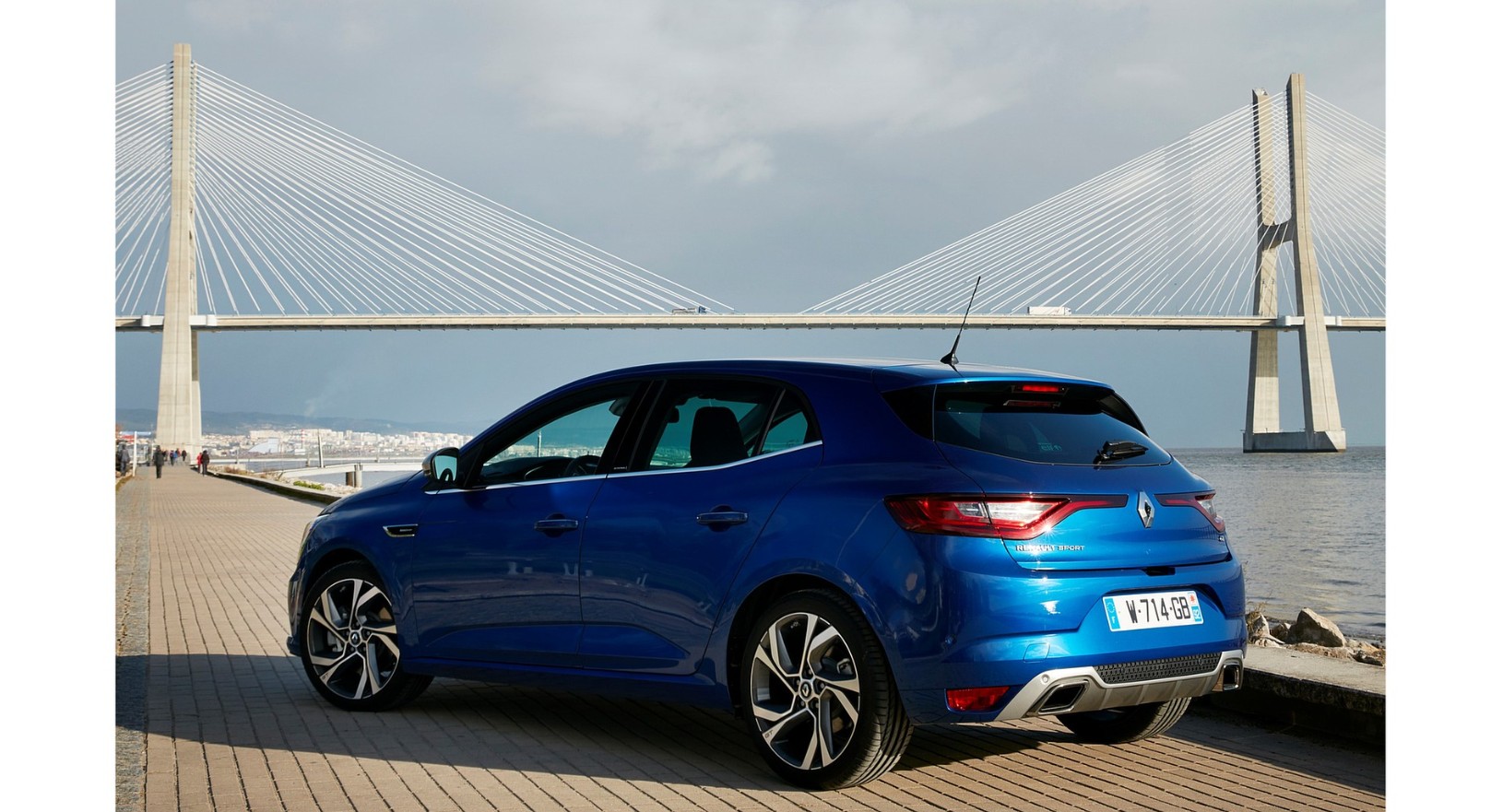
The latest Megane E-Tech Electric already has a recognizable exterior, with a compact crossover silhouette, muscular wheel arches, sculpted body panels, and a relatively short bonnet. Its proportions help distinguish it from conventional combustion-engine hatchbacks while preserving a size that is practical for European cities and suburban roads. The 2026 update introduced a redesigned front section and a more distinctive lighting signature, giving the car a fresher appearance without abandoning its original design language. If Renault continues refining the vehicle for 2028, likely areas of attention could include more detailed lighting graphics, updated wheel designs, revised bumper treatments, and additional exterior colour options. These changes would be consistent with a mid-cycle product strategy, but no specific 2028 exterior package has been confirmed by the manufacturer.
Lighting is an important part of the Megane’s visual identity because it helps the vehicle appear contemporary even when viewed from a distance. Modern LED technology can also support useful functions such as improved illumination, automatic high-beam control, and clear signalling, depending on the specification. A future model could receive further lighting refinements or additional functions, although the availability of particular features would depend on the market and equipment grade. The body design is equally important to aerodynamic performance. Smooth surfaces, carefully shaped bumpers, and appropriately designed wheels can help reduce air resistance, which is especially valuable in an electric vehicle because aerodynamic losses become increasingly significant at highway speeds. Renault has not published separate aerodynamic figures for a 2028 Megane, so any predicted improvement should remain speculative.
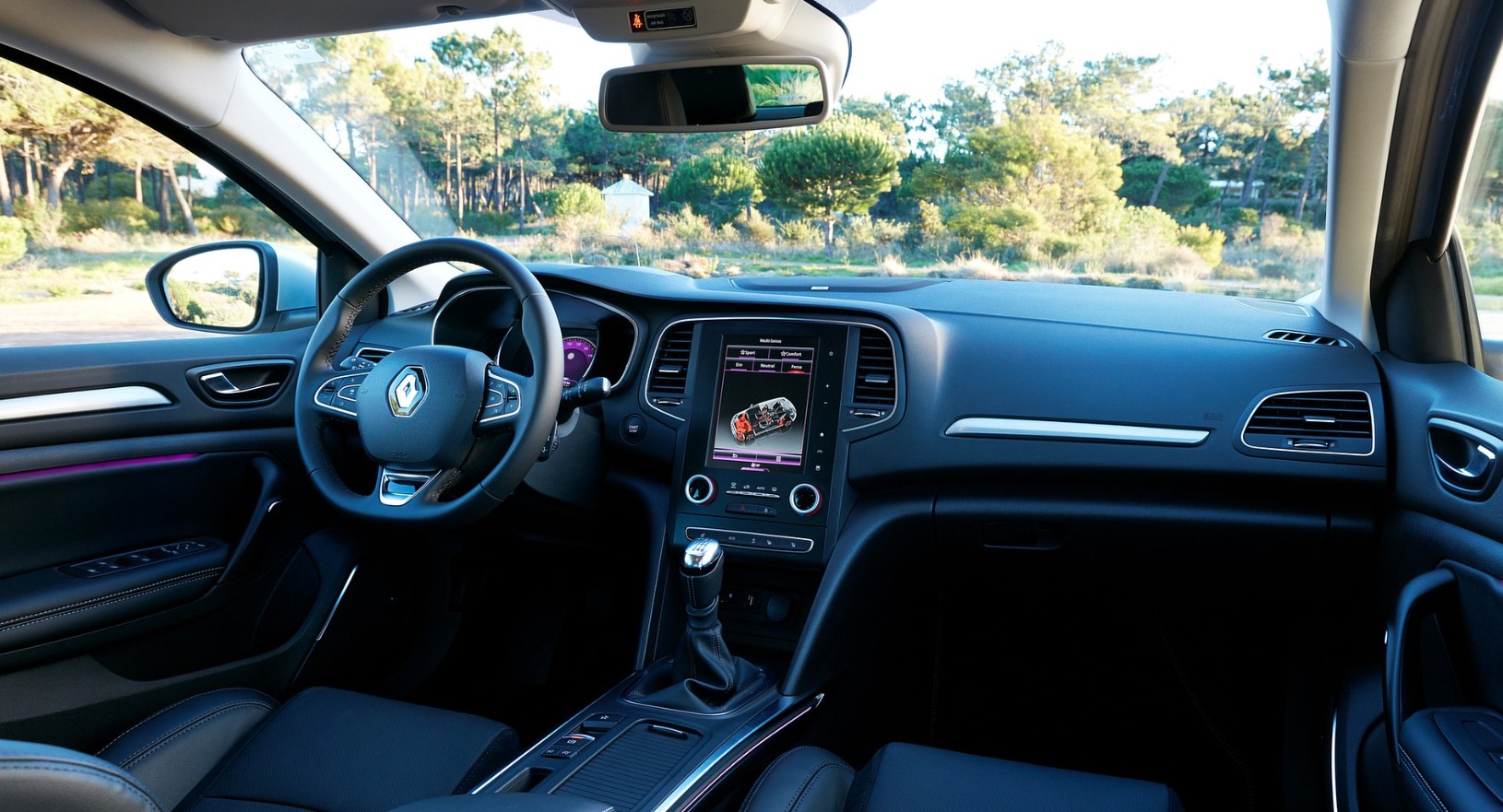
Inside, the Megane E-Tech Electric combines a modern dashboard layout with digital displays and a connected infotainment environment. The cabin is designed to make essential information accessible while reducing the visual clutter associated with older vehicle interiors. Renault’s openR link system, with Google built-in on equipped versions, supports features such as Google Maps, connected navigation, and compatible applications. The 2026 update also brings further digital development, including Google Gemini integration as announced by Renault. These technologies could remain important selling points for a 2028 model, particularly if the manufacturer continues improving voice interaction, route planning, and software functionality. The real value of a digital cabin, however, depends on how smoothly it works in everyday use, not simply on the number of functions listed in a brochure.
Passenger comfort and storage will remain essential considerations for anyone evaluating the next Megane. The compact electric platform allows Renault to package the battery beneath the floor, helping create a flat cabin layout and useful interior space relative to the vehicle’s exterior dimensions. Front occupants can benefit from a clean dashboard design, supportive seating, and a commanding view of the road, while rear passengers should consider available legroom and headroom in relation to their own needs. Luggage capacity, rear-seat folding arrangements, cabin storage, and charging-cable space are also important when comparing compact electric vehicles. Renault has not announced revised interior dimensions or luggage-capacity figures for a dedicated 2028 model. Buyers should therefore use specifications for the relevant production version rather than assume that a future vehicle will have a larger cabin or more cargo space.
2028 Renault Megane Specs
Engine & Performance
These figures provide a practical starting point for evaluating the Megane’s current direction, but they should not be presented as a final 2028 specification sheet. In particular, maximum driving range is a laboratory-rated figure measured under the WLTP procedure, not a promise that every driver will cover the same distance. Speed, outside temperature, road gradients, passenger load, heating or air-conditioning use, tyre selection, and driving style can all affect the distance available from a full battery. Charging performance also varies with battery temperature, charger output, battery state of charge, and the vehicle’s charging curve. For a meaningful comparison, buyers should assess the complete package rather than focus on a single headline number.
The 2028 Renault Megane is expected to remain closely associated with electric mobility, given Renault’s current product strategy and the latest development of the Megane E-Tech Electric. Nevertheless, the manufacturer has not confirmed the precise powertrain configuration for a 2028 model. The updated Megane announced in 2026 uses a 220 hp electric motor and a 67 kWh lithium iron phosphate battery in the specified Comfort Range configuration. This combination is designed to balance useful performance with everyday driving range rather than position the car as an outright performance vehicle. A future version could retain a similar single-motor layout or receive further improvements to motor efficiency and energy management. Until official specifications are released, there is no reliable basis for claiming a particular 2028 horsepower figure, acceleration time, top speed, or all-wheel-drive option.
Electric power delivery offers a distinct driving experience compared with a conventional petrol hatchback. The motor can provide torque immediately, allowing the Megane to respond promptly when pulling away from traffic lights or accelerating into a gap. The updated 220 hp configuration produces a strong level of power for a compact family-oriented electric car, while its front-wheel-drive arrangement helps keep the mechanical layout relatively straightforward. Steering response, suspension tuning, tyre choice, and weight distribution all contribute to how the vehicle behaves on winding roads and motorways. A 2028 model could benefit from further refinement in these areas, but such improvements should not be assumed without a manufacturer announcement or independent testing. The most useful benchmark is how the current production car balances responsive acceleration with predictable handling and everyday comfort.
Battery technology is one of the clearest areas where Renault has already made progress. The updated Megane E-Tech Electric introduced a 67 kWh lithium iron phosphate battery, replacing the previous nickel manganese cobalt chemistry in the announced configuration. LFP batteries are valued for their use of more widely available materials and their potential durability, although real-world efficiency and charging behaviour depend on the complete battery system, temperature, software, and driving conditions. Renault states that the updated Megane can achieve up to 500 km of WLTP driving range, with DC charging capability of up to 165 kW and a claimed 15-to-80-percent charging time of approximately 24 minutes under suitable conditions. These are figures for the announced updated vehicle, not confirmed specifications for a separate 2028 model. 2028 Renault Megane Review
2028 Renault Megane Fuel Economy
Because the Megane E-Tech Electric is a battery-electric vehicle, conventional petrol fuel-economy figures do not apply. Its efficiency is better assessed through electricity consumption, commonly expressed in kilowatt-hours per 100 kilometres or watt-hours per kilometre, together with the usable battery capacity and official driving range. Renault’s updated 67 kWh LFP configuration is advertised with a range of up to 500 km under the WLTP test procedure. That figure gives buyers a useful indication of the vehicle’s intended capability, but actual distance will vary with driving conditions. Motorway journeys at sustained high speeds typically consume more energy than slower urban driving, while cold weather can reduce range because the battery and cabin may require additional energy. Prospective owners should consider their usual journey length and access to charging rather than rely exclusively on the maximum published range.
Charging convenience is as important as battery size for many electric-car owners. The updated Megane’s stated ability to charge from 15% to 80% in approximately 24 minutes at a suitable DC fast charger can make longer trips more manageable. That time is not a universal charging guarantee: the vehicle must support the relevant power level, the charging station must deliver sufficient output, and battery conditions must be appropriate. Home charging can be more convenient for drivers with a dedicated parking space and suitable electrical installation, allowing them to replenish the battery while the car is parked overnight. Public AC chargers may also be useful at workplaces, shopping centres, and destinations. Before buying a future Megane, customers should verify charging connectors, supported AC power, charging cables, route-planning features, and any market-specific restrictions.
2028 Renault Megane Safety Features
Safety technology will also influence the Megane’s competitiveness. Renault has announced more than 30 driver-assistance systems available across the updated Megane’s equipment and market configurations, with exact availability depending on specification. Depending on the version, relevant functions may include automatic emergency braking, lane-support assistance, adaptive cruise control, traffic-sign recognition, parking assistance, and monitoring systems designed to help the driver identify potential hazards. These systems can reduce workload and provide additional support, but they do not replace attentive driving. For a future model, further development could focus on more consistent assistance, improved sensor integration, and clearer communication between the car and driver. No specific 2028 safety package or independent crash-test result has been confirmed. Buyers should check the safety equipment and applicable Euro NCAP rating of the exact vehicle being considered rather than assume that every feature is standard.
2028 Renault Megane Release Date & Price
Renault has not confirmed a dedicated release date for the 2028 Renault Megane, and no official order-opening schedule or country-by-country delivery timetable has been announced for such a model. The important development already on record is the updated Megane E-Tech Electric unveiled in 2026, with its revised design, 67 kWh LFP battery, longer advertised range, improved DC charging performance, and additional connected technology. The updated vehicle’s market introduction will not automatically establish the timing of a separate 2028 model-year version. Renault may communicate future changes through a product announcement, a regional launch, or a later model-year specification update, but assigning a particular month or quarter without confirmation would be misleading.
Availability will likely depend on the market, production schedule, local regulations, and Renault’s distribution strategy. The updated Megane E-Tech Electric is associated with Renault’s ElectriCity manufacturing operation in France, with vehicle assembly at Douai and motor production at Cléon. This European production arrangement is relevant to the vehicle’s supply chain, but it does not guarantee that a 2028 version will be offered in every country. Customers outside Europe should pay particular attention to official announcements from their local Renault distributor. Market availability can influence everything from trim selection and charging specifications to warranty coverage, servicing arrangements, and final price. In Indonesia and other markets where Renault’s electric-car range may differ from Europe’s, prospective buyers should not assume that European specifications or prices will apply locally.
Before placing an order for any future Megane, buyers should confirm the battery warranty, coverage for the electric motor and high-voltage components, scheduled maintenance requirements, charging compatibility, and access to qualified service facilities. It is also worth checking whether the vehicle supports the charging functions advertised in the market where it will be sold, as well as whether connected services require subscriptions or have regional limitations. A test drive can help determine whether the seating position, ride comfort, visibility, rear-seat space, luggage capacity, and driver-assistance systems suit daily needs. Electric-car buyers should also map their regular journeys against available charging points and assess whether home charging is practical. These checks will be more useful than making a decision based on unconfirmed 2028 equipment lists or speculative pricing.
A sensible purchase comparison should consider the total cost of ownership instead of the showroom price alone. Electricity costs, home-charger installation, public charging tariffs, insurance, tyres, maintenance, financing, depreciation, and any available government incentives can affect the real cost of running an electric car. Buyers who charge mostly at home may experience a different cost profile from drivers who rely on expensive rapid chargers. Equipment differences also deserve attention: a higher trim may offer additional comfort, technology, or styling features, but its value depends on whether those features are genuinely useful. For the 2028 Megane, the final price will only become meaningful when Renault confirms the specifications and local distributor pricing. Until then, the 2026 updated model provides a reference rather than a reliable forecast of the future vehicle’s retail cost.
Trim levels and standard equipment can significantly influence the overall value of a new Renault. For the updated Megane E-Tech Electric, Renault has moved toward a simplified range with two principal configurations in its announced European-market strategy. Official Italian information lists the Esprit Alpine 220 hp Comfort Range at €33,950 and the Techno 220 hp Comfort Range at €39,950, with the Techno version described as intended for company fleets. These are announced Italian-market prices for the updated model, not confirmed prices for the 2028 Renault Megane and not globally transferable figures. Trim names, equipment, tax treatment, incentives, and availability can vary by country. A future model-year range might retain a similar simplified structure, but any prediction about grade names or standard features remains provisional until Renault publishes its local price list. 2028 Renault Megane Review
Conclusion
Ultimately, the 2028 Renault Megane has the potential to build on a compelling electric-car foundation, but its final appeal will depend on what Renault actually announces. The updated Megane E-Tech Electric already demonstrates a clear direction: sharper exterior styling, an LFP battery, a claimed range of up to 500 km, faster DC charging, and a more connected cabin. Those developments make the current vehicle a useful reference for anyone considering a future Megane. However, a separate 2028 model’s specifications, trim levels, price, and release date remain unconfirmed. For buyers, the most practical strategy is to monitor official Renault announcements and compare the final production specification with real-world driving needs, charging access, warranty terms, and total ownership costs before making a purchase decision.
Note: The details included in this blog post are derived from pre-release material that was accessible when the article was written. If you want the latest information, you should check official sources or call your nearest dealership.
Read Also:
- 2028 Renault Megane Price, Specs, Interior
- 2027 Renault Twingo GT Release Date, Specs, Interior
- 2027 Renault Kiger Review, Price, Specs
- 2027 Renault Alaskan Redesign, Price, Specs
- 2027 Renault Twingo GT Price, Specs, Interior
Frequently Asked Questions
2028 Renault Megane Review, Price, Configurations - The 2028 Renault Megane is an interesting prospect for drivers who want an electric vehicle that feels modern without sacrificing comfort, practicality, or personality. Renault has already moved the Megane name into the electric era with the Megane E-Tech Electric, a…
Renault's most important recent development is the substantial update to the Megane E-Tech Electric announced in June 2026. The manufacturer introduced a redesigned front end, revised lighting details, a 67 kWh lithium iron phosphate battery, improved DC charging performance, and additional connected features. The updated vehicle demonstrates that…
The broader market will also influence the direction of the next Megane. Electric-car buyers increasingly compare more than battery capacity or acceleration figures. They want reliable charging, intuitive navigation, comfortable seating, predictable winter performance, useful storage, and technology that does not make routine driving unnecessarily complicated. Renault's recent…
The Megane also has an established identity that Renault can continue to develop. Earlier generations helped the nameplate become familiar to European drivers, while the E-Tech Electric transformed it into a more technology-focused product. The 2028 Renault Megane could therefore appeal to existing Renault owners considering their first…
2028 Renault Megane Redesign and Update Plan Exterior & Interior The latest Megane E-Tech Electric already has a recognizable exterior, with a compact crossover silhouette, muscular wheel arches, sculpted body panels, and a relatively short bonnet. Its proportions help distinguish it from conventional combustion-engine hatchbacks while preserving a…