2028 Nissan Rogue Hybrid Specs, Price, Redesign – The 2028 Nissan Rogue Hybrid is expected to build on one of the most significant developments in Nissan’s recent SUV lineup: the introduction of the all-new 2027 Rogue Hybrid with third-generation e-POWER technology. Rather than relying on a conventional hybrid arrangement in which an engine and electric motor both connect mechanically to the wheels, Nissan uses its gasoline engine primarily as an electricity generator. Two electric motors provide the driving force, creating an experience that feels closer to an electric vehicle while retaining the convenience of gasoline refueling. This approach gives the Rogue Hybrid a distinctive position in the competitive compact SUV market, where efficiency, smooth acceleration, all-weather capability, and everyday practicality are major purchasing considerations.
The 2027 Rogue Hybrid represents a substantial redesign, so the 2028 model is more likely to receive targeted refinements than an entirely new generation. Nissan has introduced a new exterior appearance, an upgraded cabin, improved driver-assistance technology, and a completely different hybrid powertrain for this version of the Rogue. These changes give the SUV a modern foundation that should remain relevant for several years. For 2028, potential improvements could focus on software updates, additional standard equipment, revised exterior colors, interior material choices, and refinements to the e-POWER system. Nissan has not announced a specific 2028 redesign, however, so these possibilities should not be mistaken for confirmed production changes.
One of the most important characteristics of the new Rogue Hybrid is its standard dual-motor all-wheel-drive system. Every announced 2027 trim receives electric motors that drive both axles, giving Nissan an opportunity to deliver responsive traction without relying on a traditional mechanical connection between the front and rear wheels. Combined with the 225-horsepower system output, the SUV is designed to offer confident acceleration while maintaining the comfort expected from a family-oriented crossover. Its estimated fuel economy reaches up to 41 mpg in city driving, according to Nissan’s internal testing. If these characteristics carry over into 2028, the Rogue Hybrid could remain an attractive option for drivers who want efficiency without giving up all-weather capability.
The model will compete against established hybrid SUVs such as the Toyota RAV4 Hybrid, Honda CR-V Hybrid, Hyundai Tucson Hybrid, and Kia Sportage Hybrid. Each competitor approaches electrification differently, but Nissan’s e-POWER system gives the Rogue a clear technical identity because its electric motors alone drive the wheels. Buyers do not need to install a home charger, search for public charging stations, or change their usual refueling routine. The gasoline engine generates electricity when required, while the battery supports the electric drivetrain. This arrangement could appeal to families who want some of the smoothness associated with an electric vehicle but prefer the flexibility of a conventional gasoline-powered vehicle. The 2028 model’s final position will depend on pricing, equipment, efficiency, and any additional improvements Nissan introduces. 2028 Nissan Rogue Hybrid Specs
2028 Nissan Rogue Hybrid Redesign and Update Plan
Exterior & Interior
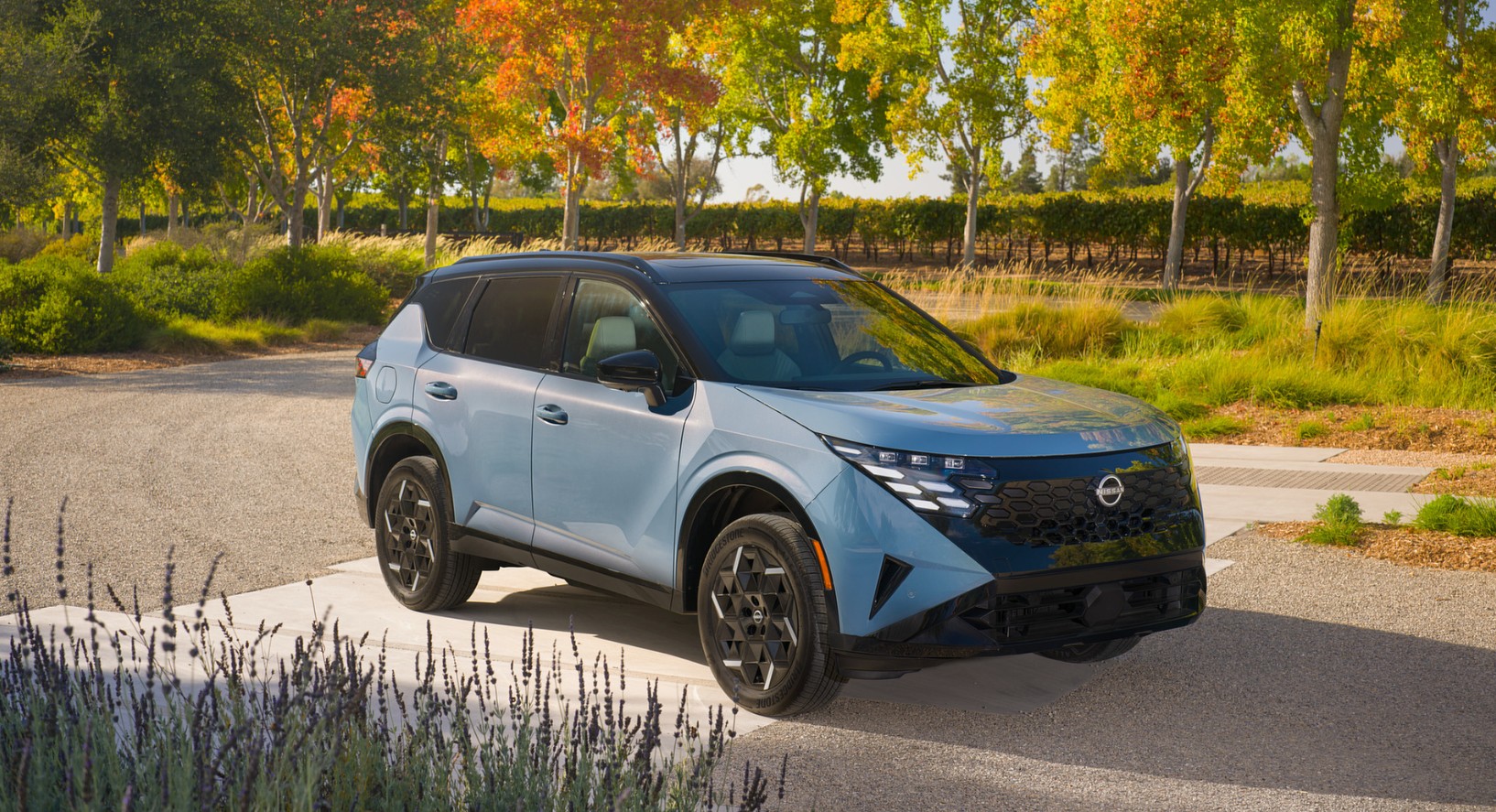
The exterior design of the 2028 Nissan Rogue Hybrid should continue the bold styling introduced with the all-new 2027 model. Nissan describes the design direction as Refined and Tough, combining a wide stance with clean body surfaces, sharply defined fenders, and Japanese-inspired details. The front fascia features a distinctive geometric grille with a hexagonal honeycomb pattern, while the LED headlights are integrated into the front-end design to create a modern lighting signature. These elements give the Rogue a more confident appearance than a conventional family crossover. For 2028, Nissan could introduce new paint colors, revised wheel designs, or small bumper details, but a major exterior redesign is not currently confirmed.
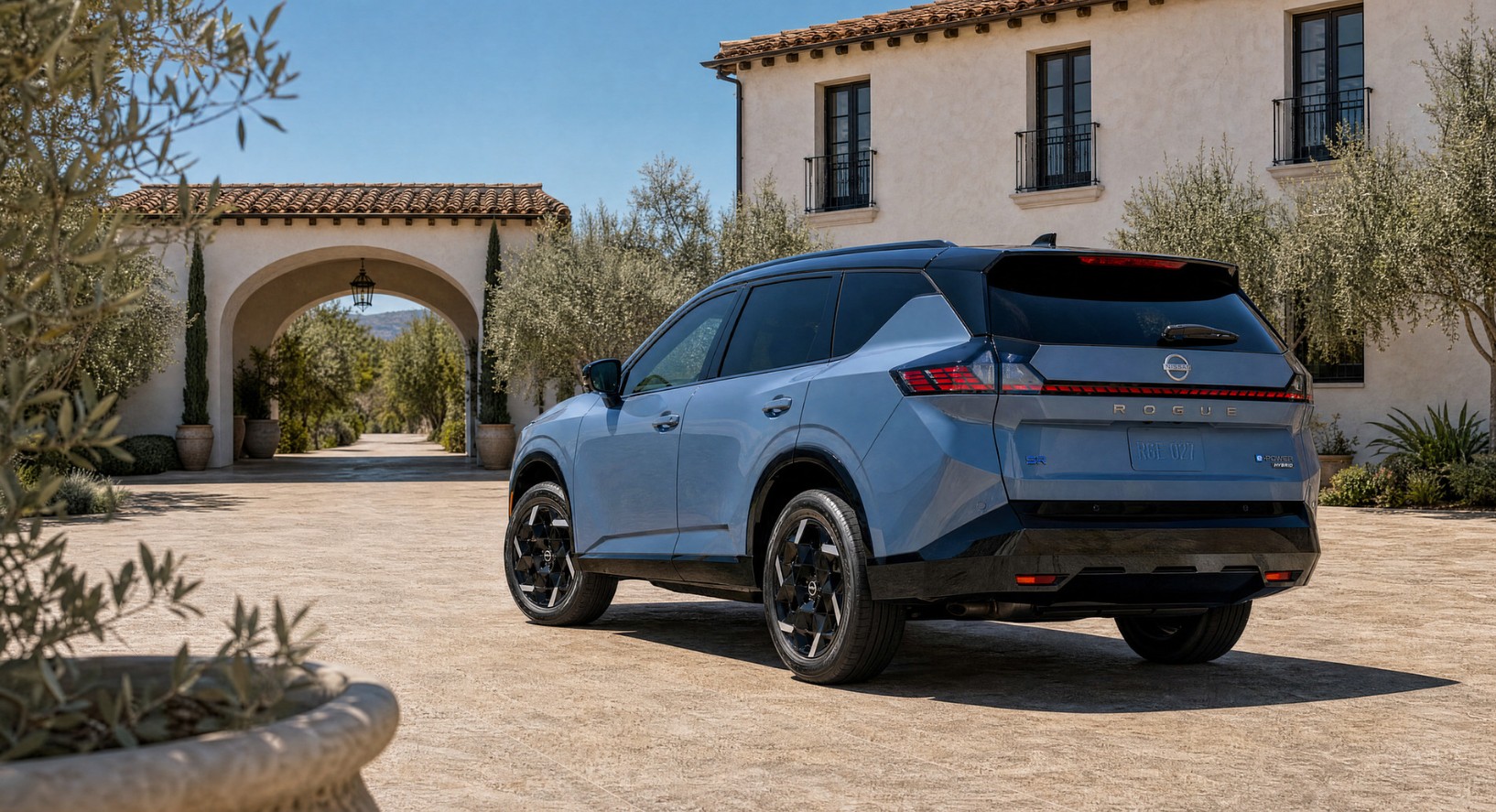
The side profile combines practical proportions with a more athletic appearance. Sculpted body panels, pronounced wheel arches, and carefully shaped lower sections help the Rogue look substantial without appearing unnecessarily bulky. Its roofline and window arrangement are designed to preserve passenger visibility, while the rear body provides a broad opening for loading luggage and everyday cargo. The SR trim adds a sportier appearance through its unique front fascia, dedicated wheels, and gloss-black exterior accents. Buyers who prefer a more premium presentation can look toward the Platinum version, which emphasizes a more sophisticated combination of exterior details and equipment. A future 2028 update could expand personalization through additional two-tone paint combinations or new wheel finishes.
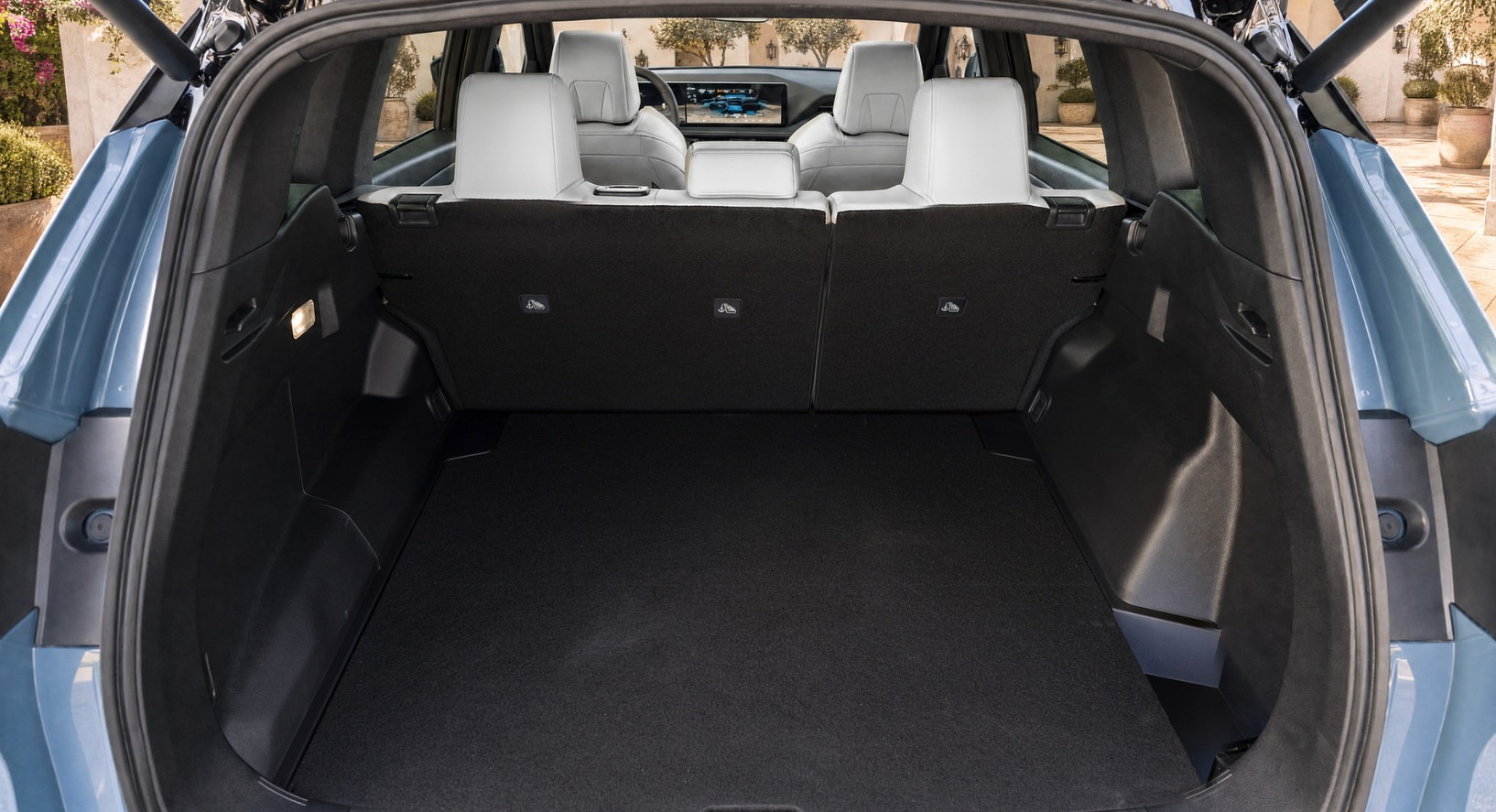
The rear design is equally important because it combines visual character with everyday functionality. Nissan offers an available full-width LED taillight treatment that visually connects the rear lighting elements across the liftgate. This gives the SUV a wider appearance while maintaining a clean and recognizable rear profile. The liftgate opening is designed to provide convenient access to the luggage compartment, and the cargo area can accommodate up to 31.1 cubic feet with the second-row seats in place. Folding the rear seats increases available cargo capacity to 65.9 cubic feet. These measurements provide a useful reference for the current 2027 model and illustrate the practical layout that could continue into 2028. Nissan may refine the rear styling, but cargo accessibility should remain a priority.
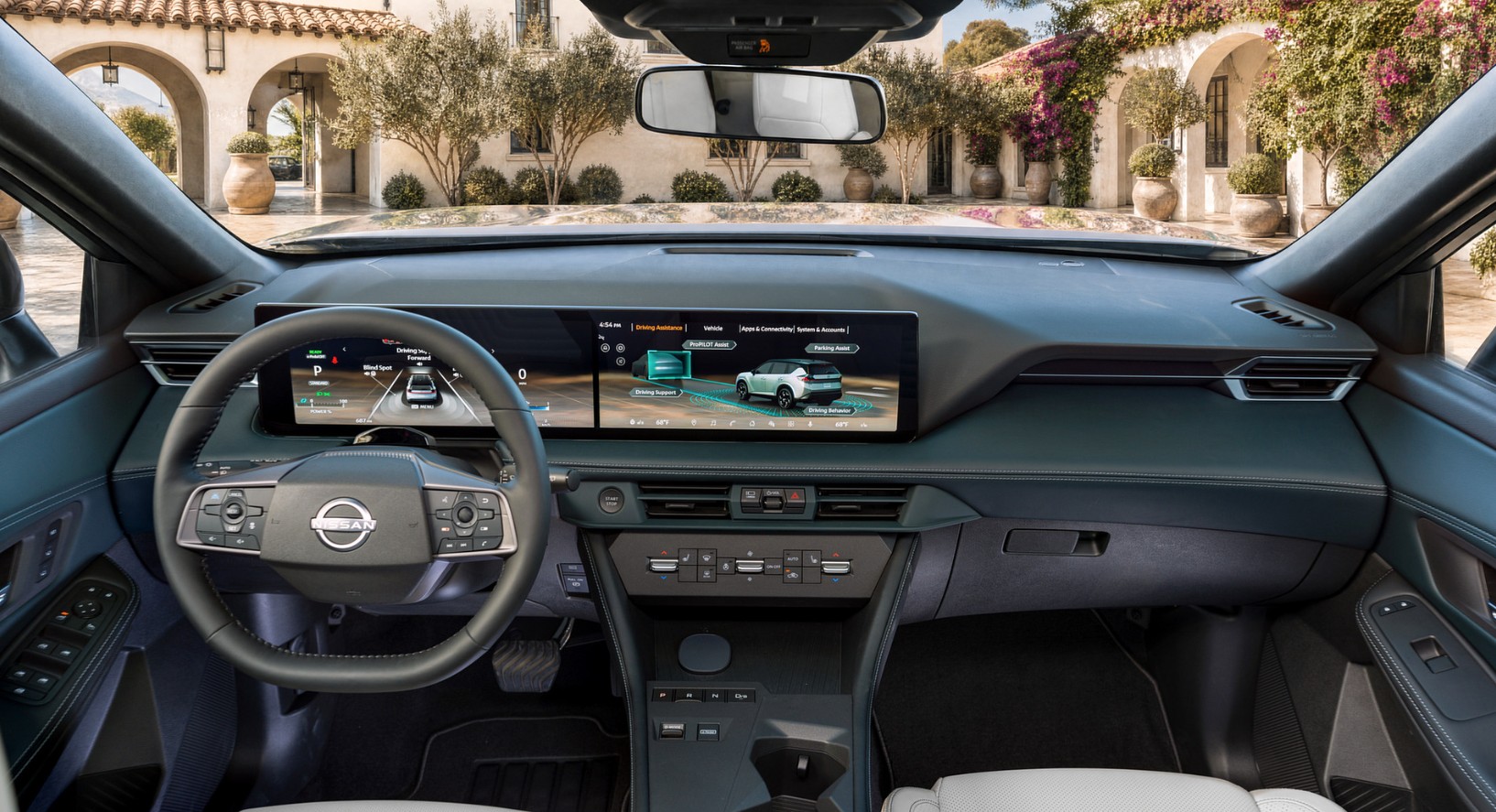
Inside, the 2028 Nissan Rogue Hybrid should retain the modern dashboard layout and family-focused features introduced with its predecessor. The cabin combines a fully digital instrument cluster, a central infotainment display, physical climate controls, and carefully arranged storage areas. Nissan offers a 12.3-inch touchscreen as standard, with wireless Apple CarPlay and Android Auto. Higher equipment levels can receive a larger 14.3-inch display with Google built-in, including Google Maps, the Play Store, and Google Gemini functionality. A 14.3-inch digital instrument display is also available on selected versions. The design keeps important controls within easy reach, avoiding an interior that relies entirely on touchscreen menus. For 2028, faster software, additional connected services, and improved interface customization would be useful upgrades.
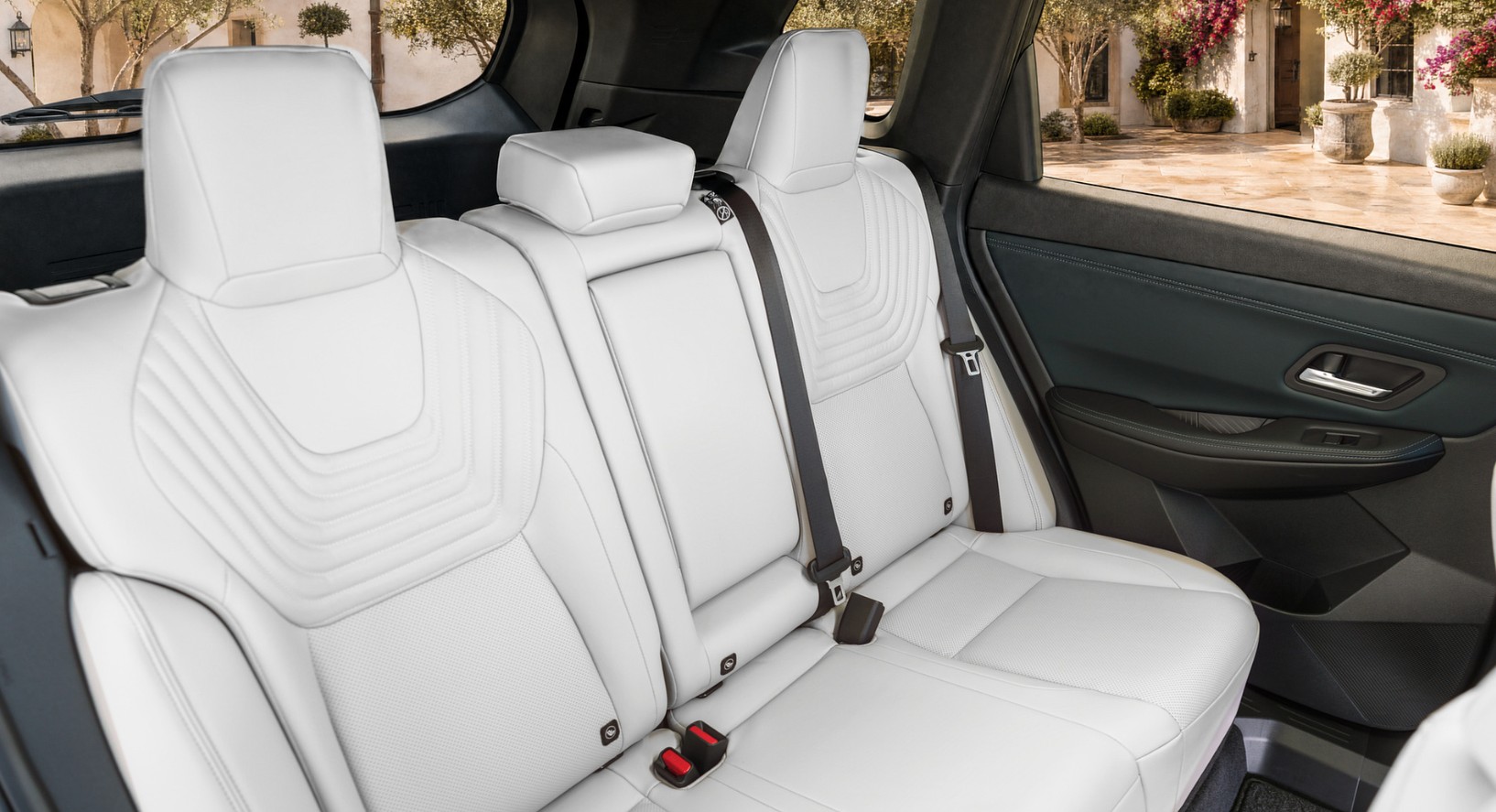
Passenger comfort is another area where the Rogue Hybrid has received meaningful attention. Nissan’s Zero Gravity front seats are designed to reduce fatigue during longer journeys, while available climate-controlled seating adds another level of comfort. The cabin also benefits from acoustic-laminated glass, improved door sealing, and aerodynamic mirror shaping intended to reduce wind noise. Rear doors open to nearly 90 degrees, making it easier to install child seats and help passengers enter or exit the vehicle. Nissan also highlights five LATCH anchors in the rear seating area, giving families additional flexibility when installing child restraints. The center console includes a larger under-console storage opening, while the cargo area offers a flexible luggage-floor arrangement. These practical details should remain central to the Rogue Hybrid’s appeal in 2028. 2028 Nissan Rogue Hybrid Specs
2028 Nissan Rogue Hybrid Specs
Engine & Performance
The defining feature of the 2028 Nissan Rogue Hybrid will likely be Nissan’s third-generation e-POWER hybrid system, provided the company carries over the technology introduced for 2027. The current system uses a dedicated 1.5-liter turbocharged three-cylinder gasoline engine that operates as an electricity generator rather than directly powering the wheels. Nissan lists the engine at 148 horsepower and 171 lb-ft of torque, while the electric motors handle propulsion. This arrangement allows the gasoline engine to operate according to electricity demand instead of following every change in accelerator input. When the battery has sufficient charge, the engine can shut off, reducing unnecessary operation. The system is designed to provide a smoother and more consistent driving experience than a traditional engine-and-transmission combination.
The electric drivetrain consists of a front motor producing 202 horsepower and 243 lb-ft of torque, together with a rear motor rated at 134 horsepower and 144 lb-ft of torque. Nissan lists combined system output at 225 horsepower. These individual motor ratings should not be added together because the combined figure reflects the system’s overall available output and operating limits. The electric motors deliver torque directly, helping the SUV respond quickly when accelerating from a stop or joining faster traffic. Instead of using a conventional multi-speed transmission to transfer engine power to the wheels, the e-POWER system uses electric drive. This contributes to the smooth acceleration that Nissan considers one of the model’s major advantages.
All-wheel drive is standard across the announced Rogue Hybrid lineup. The dual-motor arrangement allows the vehicle to distribute driving force between the front and rear axles according to traction requirements. The system can adjust torque distribution to help maintain stability on wet roads, loose surfaces, and changing road conditions. Nissan also includes several selectable drive modes, including Standard, Eco, Sport, Off-Road, Snow, and Personal. These settings allow drivers to adjust the vehicle’s response to different situations, although the Rogue remains a road-focused compact SUV rather than a dedicated off-road vehicle. For 2028, Nissan could refine the control software or improve the coordination between the motors, regenerative braking, and traction systems.
The e-Pedal system is another important part of the driving experience. It allows the driver to slow the Rogue Hybrid by lifting off the accelerator, using regenerative braking to recover energy and send it back to the battery. Nissan also introduces Smooth Stop technology, which automatically adjusts braking pressure near the end of a stop to reduce unwanted body movement. These features are particularly useful in congested urban traffic, where repeated acceleration and braking can make conventional driving tiring. The system is designed to create more predictable deceleration and a smoother final stop. If Nissan retains these technologies for 2028, they will remain important differentiators for buyers comparing the Rogue with traditional parallel-hybrid SUVs.
2028 Nissan Rogue Hybrid Fuel Economy
Fuel economy is one of the strongest reasons to consider the Rogue Hybrid. Nissan’s internal testing estimates up to 41 mpg in city driving, 36 mpg on the highway, and 38 mpg combined for the 2027 Rogue Hybrid SR AWD. These figures are targeted estimates rather than final EPA-certified ratings in the original announcement, and actual fuel consumption will depend on traffic, weather, driving habits, passenger load, and road conditions. The 1.5-liter engine’s generator role and the electric motors’ ability to recover braking energy are central to the system’s efficiency strategy. For the 2028 model, Nissan could improve energy management through software calibration or component refinements, but no higher fuel-economy figure has been confirmed. Buyers should wait for official 2028 EPA ratings before making direct efficiency comparisons.
2028 Nissan Rogue Hybrid Safety Features
Safety technology should remain a major part of the 2028 Nissan Rogue Hybrid package. The 2027 model already includes a comprehensive collection of driver-assistance features designed to help monitor surrounding traffic and reduce the risk of common accidents. Standard equipment includes Automatic Emergency Braking, Blind Spot Warning and Intervention, Lane Departure Warning, and Intelligent Lane Intervention. Nissan also introduces Lead Car Departure Notification, which alerts the driver when a vehicle ahead begins moving, such as after a traffic light changes. These technologies are intended to support the driver rather than replace attentive driving. A future 2028 version could receive software refinements or additional standard equipment, but the final safety package has not yet been announced.
The latest ProPILOT Assist system brings further improvements to highway driving. Nissan has updated the front radar sensor, widened the front camera’s field of view by 20 percent compared with the 2026 Rogue, and revised the software to make steering and speed adjustments feel more natural. Intelligent Cruise Control includes four following-distance settings and improved low-speed operation. Available Auto Lane Change can assist with moving into an adjacent lane after the driver activates the turn signal and the system confirms that conditions are suitable. Hands-off Traffic Jam Support is also available on selected equipment packages, allowing temporary hands-off steering assistance in certain low-speed highway situations. These functions have operating limitations and require the driver to remain responsible for the vehicle at all times.
Parking assistance is another area where the Rogue Hybrid offers useful technology. The available 3D HD Enhanced Intelligent Around View Monitor provides a detailed camera-based view of the vehicle’s surroundings, helping drivers identify obstacles that may be difficult to see from the driver’s seat. Additional camera functions include Front Wide View, which can help reveal approaching traffic or obstacles beyond limited sightlines, and Invisible Hood View, which provides a visual reference for the area around the front wheels. These features can make parking in tight spaces and maneuvering through crowded areas easier. For 2028, Nissan could expand camera clarity, improve display graphics, or make selected parking technologies available on more trims. 2028 Nissan Rogue Hybrid Specs
2028 Nissan Rogue Hybrid Release Date & Price
The 2028 Nissan Rogue Hybrid release date has not been officially announced. Nissan’s confirmed launch information currently applies to the 2027 model, which begins reaching U.S. dealerships in late 2026. The first version scheduled for arrival is the SR AWD with the SR Technology Package, with additional SV, SR, and Platinum versions expected in early 2027. Since the 2027 vehicle represents a completely new hybrid direction for the Rogue, a 2028 version would likely follow the normal model-year transition rather than receive another immediate full redesign. A potential reveal during 2027 would be a reasonable industry expectation, but Nissan has not provided a confirmed unveiling date, production schedule, or dealership arrival window for the 2028 model.
The Rogue Hybrid is especially important to Nissan’s North American strategy because it brings e-POWER technology to the U.S. market for the first time. Nissan has developed this hybrid system over three generations and reports that almost two million e-POWER-equipped vehicles have been sold globally across 68 countries since 2016. The 2027 Rogue Hybrid is assembled at Nissan Motor Kyushu in Japan and has been specifically tuned for North American driving conditions. This includes consideration of typical road surfaces, highway speeds, and customer expectations. If the 2028 model continues this strategy, the United States should remain its primary market, although availability in other countries will depend on Nissan’s regional product plans.
For buyers outside North America, the availability question deserves particular attention. The Rogue name is used in the United States and Canada, while the related X-Trail name is familiar in several international markets. However, the same name does not guarantee identical engines, hybrid systems, dimensions, equipment, or software across regions. Nissan’s e-POWER technology is already used in other global models, but the specific 225-horsepower dual-motor system announced for the U.S. Rogue Hybrid is a market-specific configuration. Customers in countries such as Indonesia should therefore wait for confirmation from the local Nissan distributor before assuming that the 2028 Rogue Hybrid will be officially sold there. Import availability, warranty coverage, servicing, and parts support are also important considerations.
The announced 2027 Rogue Hybrid lineup consists of SV, SR, and Platinum grades, and this structure provides the most reliable indication of what the 2028 range could look like. The SV serves as the entry point, although it already includes substantial equipment such as dual-motor AWD, the 12.3-inch infotainment screen, and standard safety technology. The SV Premium Package adds selected comfort and convenience upgrades. The SR brings a sportier exterior appearance, unique front styling, dedicated alloy wheels, and gloss-black accents. Its optional SR Technology Package adds more advanced technology, including the larger infotainment display and additional driver-assistance features. At the top of the range, Platinum emphasizes premium cabin equipment, additional convenience features, and a more sophisticated audio and display package. Nissan has not confirmed whether the same grades will carry over unchanged for 2028.
Pricing for the 2028 Nissan Rogue Hybrid has not been announced, so the 2027 U.S. MSRP provides the most useful reference. Nissan lists the SV AWD at $35,490, the SR AWD at $37,490, and the Platinum AWD at $43,490. The SV Premium Package raises the SV price to $37,590, while the SR Technology Package brings the SR to $41,490. These prices exclude the $1,575 destination and handling charge, taxes, title, license, and optional accessories. A 2028 model could cost more if Nissan introduces additional equipment or adjusts its pricing structure, but any projected figure would be speculative. Buyers should also remember that U.S. prices do not represent the cost of a vehicle in other markets, where import duties, exchange rates, taxes, and local specifications can substantially change the final retail price.
Conclusion
The 2028 Nissan Rogue Hybrid has the potential to strengthen Nissan’s position in the compact hybrid SUV segment by combining electric-motor-driven performance with the convenience of gasoline refueling. Its 225-horsepower e-POWER system, standard dual-motor AWD, targeted fuel economy of up to 38 mpg combined, and extensive driver-assistance technology give the 2027 model a strong foundation for the next model year. A 2028 update could make the package more attractive through software improvements, expanded equipment, revised styling details, and further cabin refinements. The most important information to watch will be Nissan’s confirmed specifications, EPA fuel-economy ratings, trim availability, and official pricing. Until those details arrive, the 2027 Rogue Hybrid remains the best reference for understanding what the 2028 model could deliver.
Note: The details included in this blog post are derived from pre-release material that was accessible when the article was written. If you want the latest information, you should check official sources or call your nearest dealership.
Read Also:
- 2028 Nissan Ariya NISMO Redesign, Specs, Interior
- 2028 Nissan Z Heritage Edition Review, Specs, Performance
- 2027 Nissan JUKE Release Date, Specs, Price
- 2027 Nissan Z Heritage Edition Release Date, Specs, Dimensions
- 2027 Nissan Pathfinder Rock Creek Review, Specs, Interior
Frequently Asked Questions
2028 Nissan Rogue Hybrid Specs, Price, Redesign - The 2028 Nissan Rogue Hybrid is expected to build on one of the most significant developments in Nissan's recent SUV lineup: the introduction of the all-new 2027 Rogue Hybrid with third-generation e-POWER technology. Rather than relying on a conventional hybrid…
The 2027 Rogue Hybrid represents a substantial redesign, so the 2028 model is more likely to receive targeted refinements than an entirely new generation. Nissan has introduced a new exterior appearance, an upgraded cabin, improved driver-assistance technology, and a completely different hybrid powertrain for this version of the…
One of the most important characteristics of the new Rogue Hybrid is its standard dual-motor all-wheel-drive system. Every announced 2027 trim receives electric motors that drive both axles, giving Nissan an opportunity to deliver responsive traction without relying on a traditional mechanical connection between the front and rear…
The model will compete against established hybrid SUVs such as the Toyota RAV4 Hybrid, Honda CR-V Hybrid, Hyundai Tucson Hybrid, and Kia Sportage Hybrid. Each competitor approaches electrification differently, but Nissan's e-POWER system gives the Rogue a clear technical identity because its electric motors alone drive the wheels.…
2028 Nissan Rogue Hybrid Redesign and Update Plan Exterior & Interior The exterior design of the 2028 Nissan Rogue Hybrid should continue the bold styling introduced with the all-new 2027 model. Nissan describes the design direction as Refined and Tough, combining a wide stance with clean body surfaces,…