2027 Hyundai Elantra Hybrid Redesign, Price, Specs – The 2027 Hyundai Elantra Hybrid is attracting attention from drivers who want the practicality of a compact sedan without accepting the fuel costs typically associated with conventional gasoline-powered vehicles. With the introduction of Hyundai’s completely redesigned eighth-generation Elantra, the hybrid lineup is entering a new chapter that focuses on improved efficiency, a more sophisticated appearance, additional passenger space, and advanced digital technology. Rather than simply refreshing the previous generation, Hyundai has developed a substantially updated sedan intended to remain competitive in a market increasingly influenced by electrification and rising expectations for in-car technology.
For American buyers, the next-generation hybrid is officially introduced as the 2028 Hyundai Elantra Hybrid, even though the redesigned gasoline-powered Elantra arrives as a 2027 model. This distinction does not make the hybrid less relevant to shoppers researching the 2027 lineup. Both versions share the new generation’s exterior design, larger dimensions, and updated cabin architecture. The hybrid adds an electrified powertrain engineered to reduce fuel consumption while retaining the convenience of a gasoline vehicle. Drivers will not need to depend on public charging stations or install a home charging system because the conventional hybrid automatically manages its gasoline engine, electric motor, and battery.
One of the most interesting developments is Hyundai’s decision to combine its new Art of Steel design philosophy with an upgraded Intelligent Hybrid System. The new sedan features a more confident exterior, a longer wheelbase, and an interior designed to provide a more spacious experience than the outgoing generation. Technology also receives significant attention through the introduction of Pleos Connect, Hyundai’s next-generation infotainment platform. A 12.9-inch multimedia display, artificial intelligence-assisted voice interaction, and over-the-air software updates help transform the driving experience. These improvements position the Elantra Hybrid as more than an economical commuter car.
Fuel efficiency remains the central reason many buyers consider this model. Hyundai has announced a target of up to 53 mpg combined for the new-generation Elantra Hybrid in the United States. Although that figure is slightly below the previous-generation Blue trim’s best combined EPA rating, the new vehicle introduces additional technology and a more comprehensive redesign. The combination of lower fuel consumption, expanded passenger accommodation, modern connectivity, and familiar hybrid convenience could make the next Elantra Hybrid an appealing option for commuters, families, and drivers seeking a well-equipped sedan without moving into a more expensive electric vehicle category. 2027 Hyundai Elantra Hybrid Redesign
2027 Hyundai Elantra Hybrid Redesign and Update Plan
Exterior & Interior
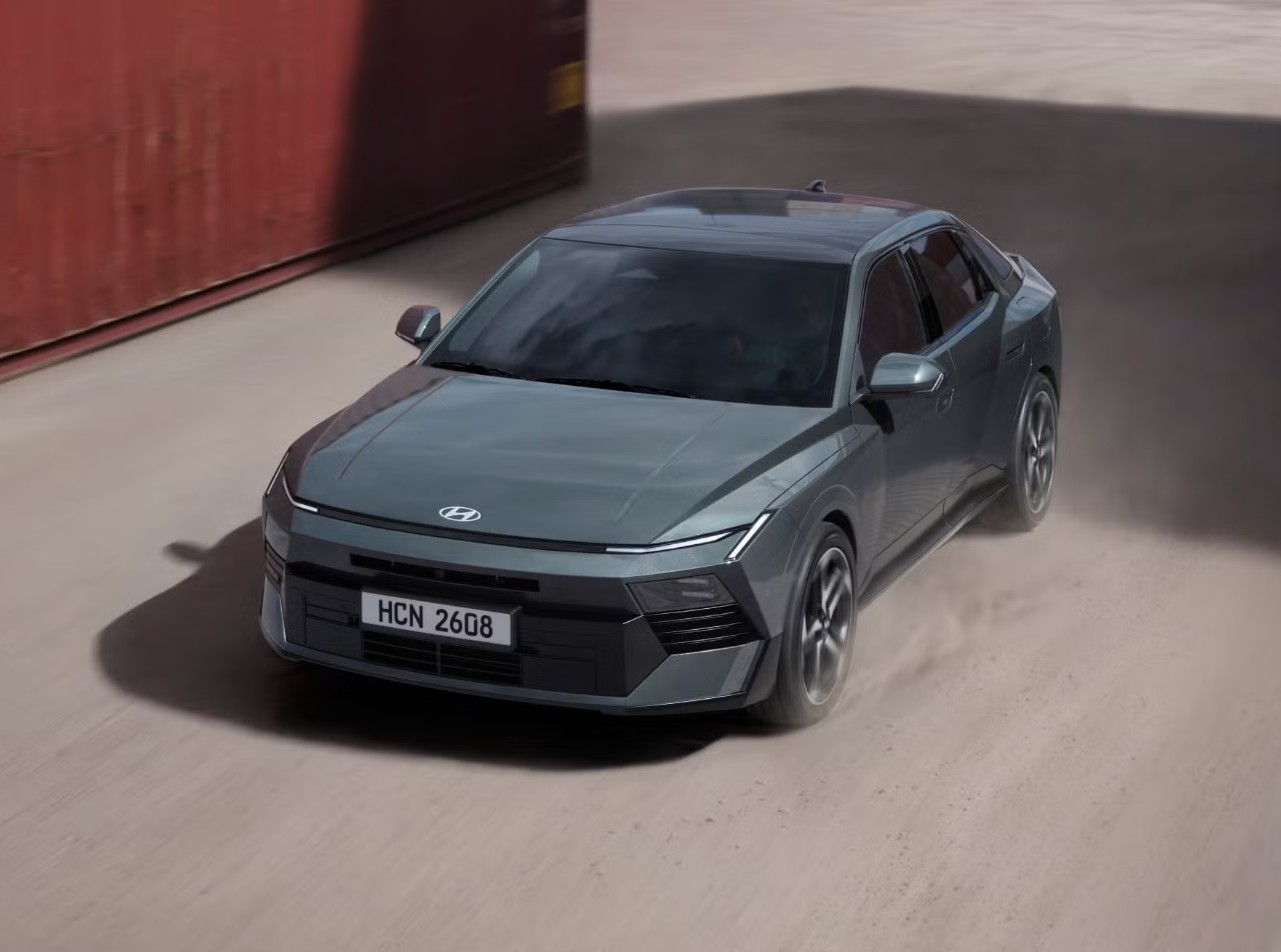
The exterior of the new Elantra Hybrid represents a significant departure from the outgoing model. Hyundai’s Art of Steel philosophy emphasizes strong body surfaces, muscular fenders, and carefully defined character lines rather than relying entirely on complicated decorative elements. At the front, the redesigned grille creates a more distinctive appearance, while the H-Edge lighting signature gives the sedan a recognizable identity, particularly at night. Horizontal daytime running lights visually emphasize the vehicle’s width, creating a lower and more planted appearance. The long hood and sculpted front bodywork also contribute to a sportier profile, giving the hybrid a more sophisticated character than many conventional economy-focused sedans.
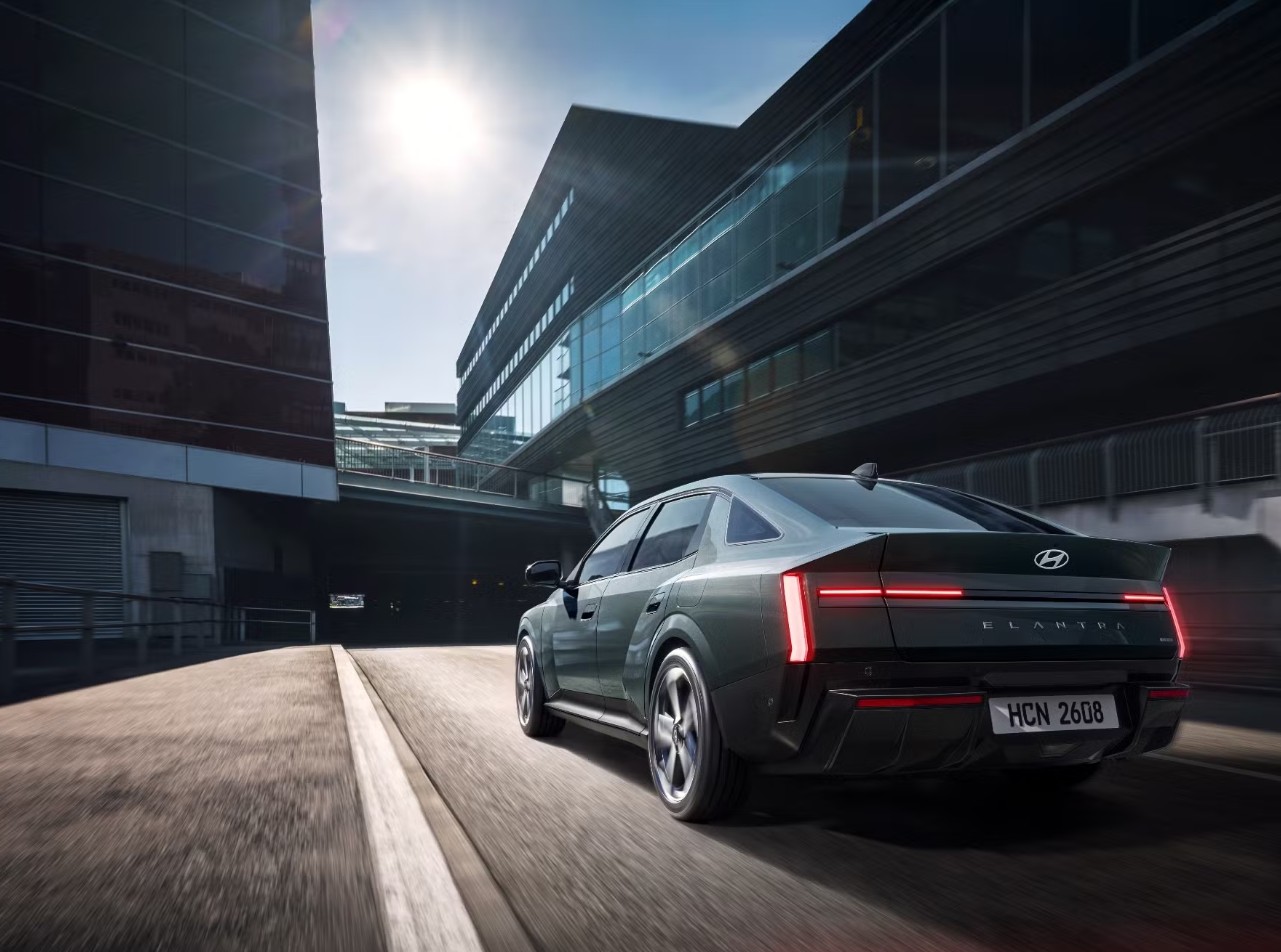
The side profile benefits from the longer wheelbase and wider body, which help improve both proportions and interior accommodation. Hyundai has incorporated slim-neck mirrors and lift-up flush door handles into the exterior design, giving the vehicle a cleaner appearance. Pronounced fender volumes add visual strength, while the three-box sedan configuration preserves the practicality of a traditional four-door car. Buyers can also expect a selection of exterior finishes, including Graphene Green Pearl, Kodiak Blue Pearl, Raptor Gray Matte, and other market-dependent colors. Wheel availability extends up to 18 inches, although the final wheel designs and combinations may differ according to the selected trim and regional specification.
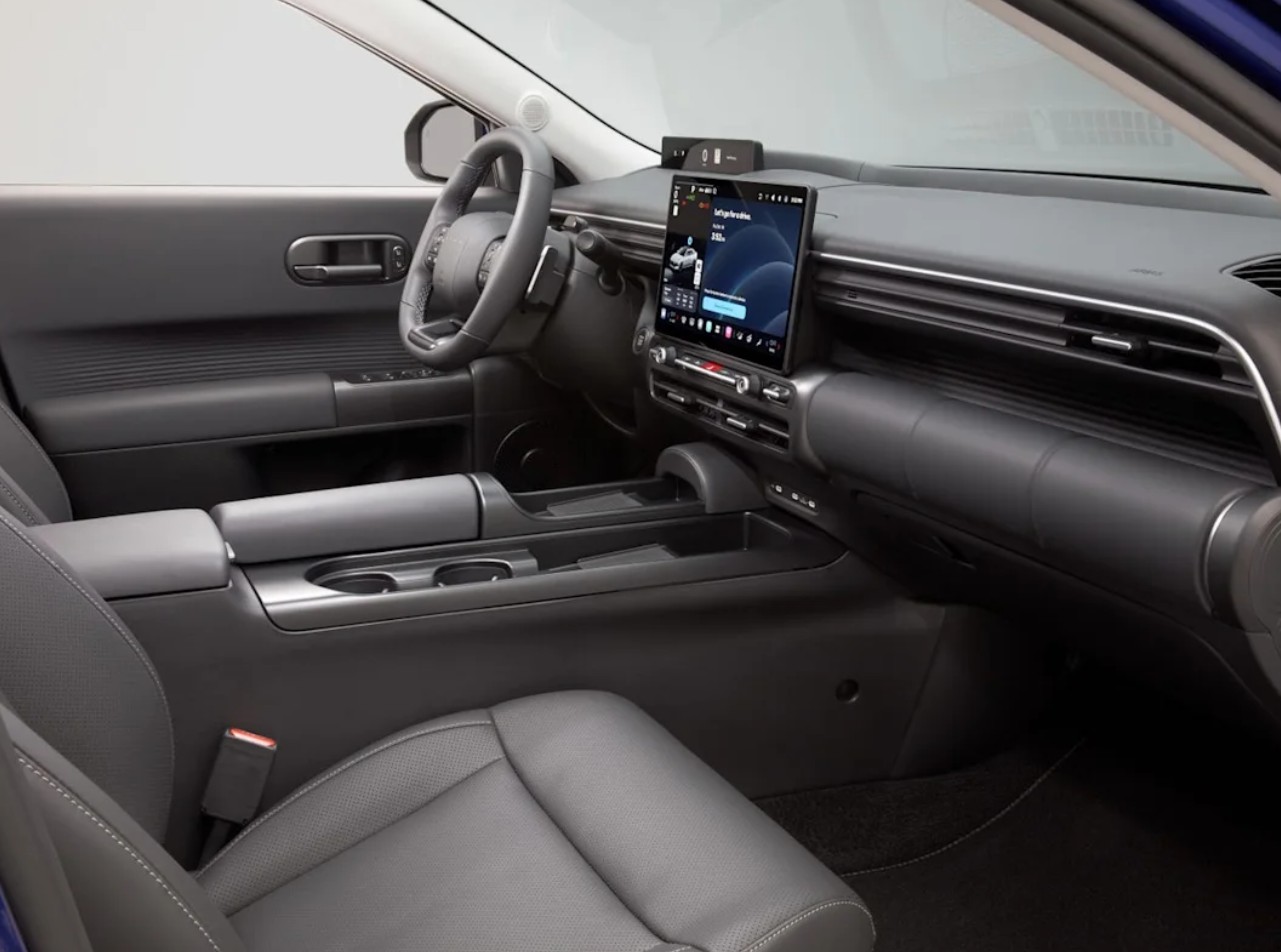
Inside, the redesigned cabin focuses on comfort, improved ergonomics, and a more advanced digital experience. The dashboard adopts a symmetrical layout with a driver-oriented arrangement that places important information within convenient reach. A standard 12.9-inch Full HD Pleos Connect display serves as the central multimedia interface, while Hyundai has retained physical buttons for essential controls. This combination is particularly useful because touchscreen-heavy interiors can sometimes make everyday adjustments unnecessarily complicated. The redesigned seating environment also emphasizes a more refined atmosphere, with available materials and color combinations intended to make the compact sedan feel more upscale. Depending on the market and trim, buyers can expect different upholstery and interior finishes.
Passenger accommodation is another important improvement. The extended wheelbase contributes to approximately 993 mm of rear legroom, while rear shoulder room increases by around 22 mm compared with the previous generation. Hyundai also reports 953 mm of rear headroom for the hybrid version. These measurements suggest that the new Elantra Hybrid should offer a more comfortable environment for adult passengers, particularly during longer journeys. Cargo capacity is listed at approximately 467 liters using the VDA measurement standard for the hybrid model. Additional convenience features include dual wireless charging pads, 100W-capable USB-C connections, Hyundai Digital Key 2, and an available Bang & Olufsen audio system.
The most significant change for the upcoming Elantra Hybrid is its transition to Hyundai’s eighth-generation compact sedan platform and design direction. The new generation introduces the Art of Steel design language, which replaces the outgoing model’s sharper, more fragmented visual treatment with a more structured appearance. Its exterior combines broad body surfaces, pronounced geometric details, and a wider-looking stance. Hyundai has also redesigned the vehicle’s proportions to create a more substantial presence on the road. This is not a minor midcycle update involving new headlights or revised bumpers; it represents a comprehensive generational transformation intended to give the Elantra a stronger identity in the competitive compact sedan market.
The redesign also brings meaningful dimensional improvements. Hyundai lists a length of approximately 4,795 mm, a width of 1,855 mm, and a wheelbase of 2,750 mm for the new generation. Compared with its predecessor, the sedan is approximately 85 mm longer, 30 mm wider, and has a wheelbase extended by 30 mm. These changes are particularly important because additional exterior dimensions can translate into better passenger accommodation. Hyundai reports 993 mm of rear legroom, an increase of approximately 29 mm, giving rear passengers more room to stretch out during longer journeys. The hybrid version also receives slightly different height and ground-clearance measurements.
Another important development involves the vehicle’s electrified driving technology. Hyundai has highlighted its Intelligent Hybrid System, predictive energy management, and Smart Regeneration System 3.0 as central elements of the new hybrid experience. These technologies are designed to manage energy more intelligently by considering driving conditions and optimizing the interaction between the gasoline engine, electric motor, and regenerative braking system. The objective is not simply to increase the amount of electric assistance available but to make the entire powertrain work more effectively in everyday situations. City traffic, frequent deceleration, and changing road conditions are particularly relevant because hybrid systems can recover energy during braking and reuse it during acceleration.
Inside the cabin, the redesign introduces Hyundai’s Pleos Connect infotainment environment, representing a considerable step forward in digital functionality. The system is built around an Android Automotive OS-based platform and incorporates a 12.9-inch Full HD multimedia display. Hyundai also highlights its Gleo AI voice assistant and over-the-air software updates, which provide a foundation for a more connected ownership experience. These upgrades are particularly relevant for buyers who expect smartphone-style functionality in their vehicles. Instead of relying exclusively on traditional buttons and conventional infotainment menus, the new Elantra integrates a more software-focused environment designed to make navigation, communication, entertainment, and vehicle information easier to access. 2027 Hyundai Elantra Hybrid Redesign
2027 Hyundai Elantra Hybrid Specs
Engine & Performance
The new-generation Hyundai Elantra Hybrid uses a 1.6-liter hybrid powertrain combining a gasoline engine with an electric motor. Hyundai has confirmed a total system output of 157 PS, equivalent to approximately 155 horsepower, paired with a six-speed dual-clutch transmission. This configuration is designed to balance everyday responsiveness with fuel-saving capability. Unlike some competing hybrids that use continuously variable transmissions, the Elantra Hybrid retains a conventional multi-speed dual-clutch arrangement. That setup can provide more familiar gear changes and a different acceleration character for drivers who prefer a more traditional automatic-transmission experience.
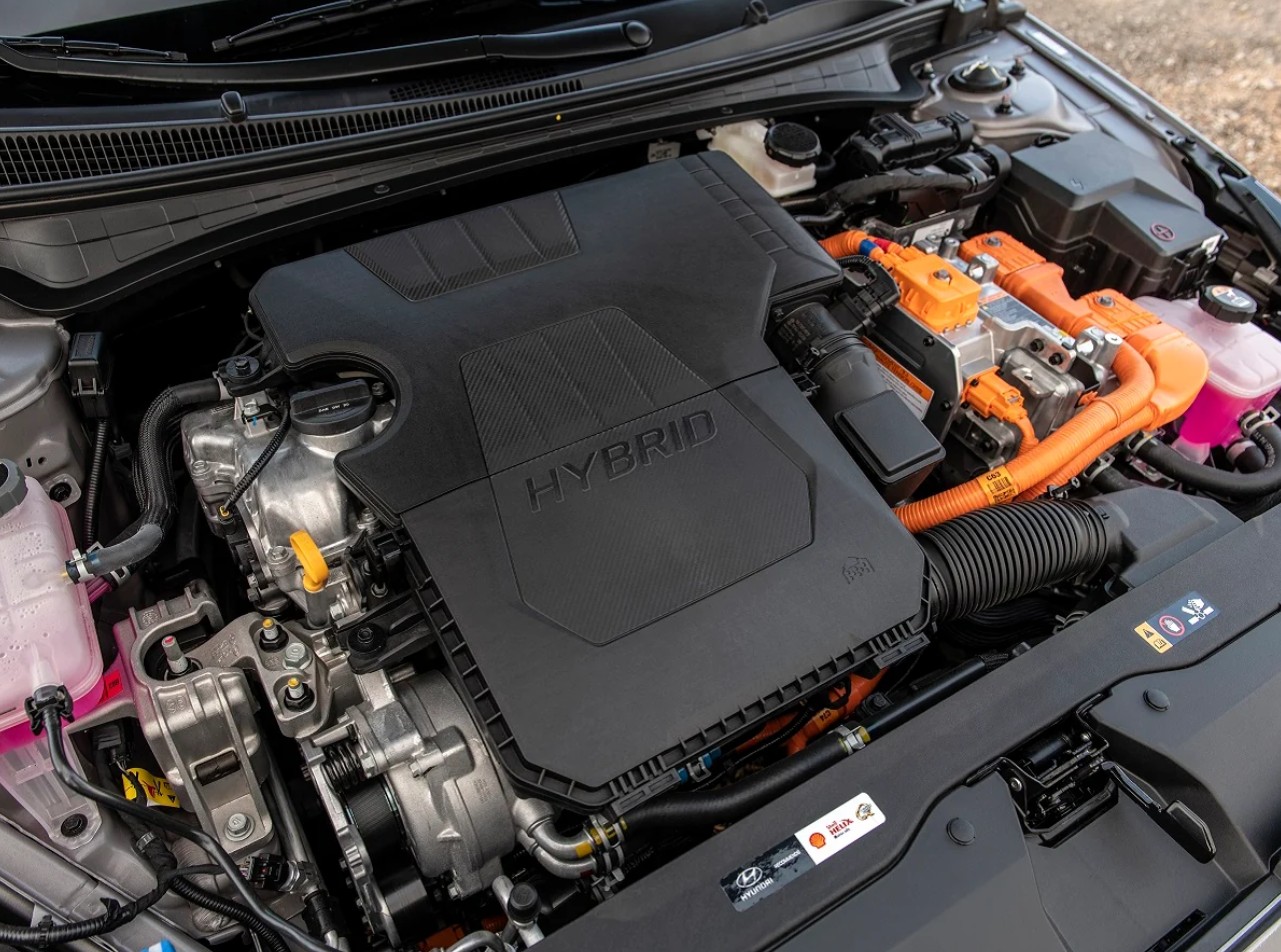
The Intelligent Hybrid System introduces several technologies intended to improve how the vehicle uses and recovers energy. Smart Regeneration System 3.0 manages energy recovery during braking and deceleration, helping convert otherwise wasted kinetic energy into electricity stored in the hybrid battery. Hyundai also highlights its Hybrid Hierarchical Predictive Control System, which anticipates driving patterns and road conditions to manage energy distribution more effectively. These systems are particularly useful in urban environments, where traffic frequently requires drivers to slow down and accelerate again. The electric motor can assist during acceleration, while the gasoline engine provides additional power when required. The result is a hybrid system designed to deliver smooth performance without requiring drivers to change their normal driving habits.
Hyundai has also introduced Stay Mode, an interesting convenience feature that allows selected electrical functions to operate while the vehicle is parked without unnecessarily running the gasoline engine. Climate control, audio, and lighting functions can be supported through the vehicle’s electrified system, providing additional comfort when occupants need to remain inside the car. This technology expands the usefulness of the hybrid beyond conventional fuel savings. For example, drivers waiting in a parking area or taking a short break can benefit from cabin comfort without keeping the gasoline engine continuously running. Availability and operating conditions will depend on the vehicle’s market specification, but the feature demonstrates Hyundai’s intention to make electrification useful in everyday situations.
2027 Hyundai Elantra Hybrid Fuel Economy
Fuel economy remains one of the strongest reasons to consider the new Elantra Hybrid. Hyundai has announced a target of up to 53 mpg combined for the redesigned U.S.-market hybrid, although EPA certification was still in progress in the manufacturer’s November 2026 technical announcement. Therefore, 53 mpg should be treated as Hyundai’s announced target rather than a finalized EPA rating. For comparison, the previous 2026 Elantra Hybrid Blue achieved EPA-estimated ratings of 51 mpg in the city, 58 mpg on the highway, and 54 mpg combined. The previous-generation SEL Sport and Limited versions delivered 49 mpg city, 52 mpg highway, and 50 mpg combined. The new generation’s target reflects a slightly different balance between efficiency, additional equipment, and revised vehicle dimensions.
For drivers who spend considerable time commuting, the new hybrid’s energy-management technology could make a noticeable difference in everyday fuel expenses. Regenerative braking is especially useful in stop-and-go traffic because the system can recover energy whenever the vehicle slows down. The electric motor also helps reduce unnecessary gasoline consumption during selected driving conditions. Highway efficiency depends on speed, road conditions, weather, tire selection, and driving behavior, so real-world consumption will not always match official laboratory figures. Nevertheless, a target of 53 mpg combined would make the Elantra Hybrid a competitive choice for motorists who want to reduce fuel purchases without switching to a fully electric vehicle. Its conventional refueling system also eliminates the need to plan journeys around charging infrastructure. 2027 Hyundai Elantra Hybrid Redesign
2027 Hyundai Elantra Hybrid Safety Features
Safety technology is another important part of the redesigned Elantra Hybrid. Hyundai’s SmartSense driver-assistance package includes technologies such as Forward Collision-Avoidance Assist, Lane Keeping Assist, Blind-Spot Collision-Avoidance Assist, and Safe Exit Warning, with availability depending on market and equipment level. These systems are designed to help drivers recognize potential hazards, maintain better awareness of surrounding traffic, and reduce the likelihood of certain collisions. Additional technologies highlighted by Hyundai include Lane Following Assist 2, Intelligent Speed Limit Assist, High Beam Assist, Driver Attention Warning, and Rear Occupant Alert. Parking-related assistance can also include Rear Cross-Traffic Collision-Avoidance Assist, Surround View Monitor, and Parking Collision-Avoidance Assist on appropriately equipped versions. These features provide useful support during highway travel, urban commuting, and tight parking situations.
2027 Hyundai Elantra Hybrid Release Date & Price
The final U.S. trim structure and pricing for the redesigned hybrid have not been fully confirmed in Hyundai’s November 2026 announcement. Buyers should therefore avoid assuming that the previous generation’s exact trim names and equipment combinations will automatically carry over. The outgoing 2026 Elantra Hybrid was offered in Blue, SEL Sport, and Limited configurations in the United States, with additional equipment differences across the range. For the new generation, Hyundai’s official announcement identifies the hybrid powertrain and its major technology upgrades but does not establish a complete U.S. retail trim and pricing schedule. The final lineup will determine which versions prioritize affordability, sporty styling, premium comfort, and additional driver-assistance equipment.
An entry-level hybrid configuration would be expected to appeal to buyers who prioritize fuel efficiency and reasonable purchase costs. This type of model would make the most sense for commuters who want the benefits of electrification without paying for every available luxury feature. Equipment such as the new infotainment system, essential driver-assistance technology, automatic climate functions, and smartphone connectivity would be particularly valuable in a lower-priced version. However, the precise standard equipment list for the redesigned U.S. hybrid has not yet been established. Buyers should check the official regional specification sheet before making decisions based on assumed features or older Elantra Hybrid trim descriptions.
A more extensively equipped version would likely attract customers interested in combining efficient transportation with additional comfort and technology. Features highlighted across the new-generation Elantra include Hyundai Digital Key 2, wireless charging, premium audio, upgraded seating materials, and a more sophisticated digital interface. The availability of these features will depend on the final trim structure and market. Sport-oriented exterior details and larger alloy wheels may also help distinguish higher equipment levels from the entry model. For customers planning to keep their vehicle for several years, selecting the right trim is important because comfort features, connectivity, and safety equipment can influence the overall ownership experience just as much as fuel consumption.
The release schedule also requires a distinction between the gasoline and hybrid models. Hyundai unveiled the eighth-generation Elantra at the Los Angeles Auto Show on November 19, 2026. The gasoline-powered 2027 Elantra is scheduled to reach global markets, including North America, in early 2027. In the United States, however, the redesigned hybrid is designated the 2028 Elantra Hybrid. Hyundai has not provided a definitive U.S. customer on-sale date for the hybrid in its initial announcement. Consequently, buyers should expect additional information about showroom availability, final specifications, and regional pricing closer to its market launch. The Korean-market AVANTE version has a different introduction schedule, so its availability should not be confused with the North American Elantra launch.
As for pricing, Hyundai has not announced the official U.S. MSRP for the redesigned 2028 Elantra Hybrid. The previous 2026 Elantra Hybrid started at $25,650 for the Blue trim, with the SEL Sport Plus listed at $27,300, the SEL Sport at $27,625, and the Limited at $30,000 before applicable freight charges, taxes, and other fees. These figures provide useful historical context, but they should not be presented as the new model’s confirmed prices. A complete generational redesign, updated infotainment technology, additional cabin space, and changes to the hybrid system could influence the final MSRP. A starting price in the mid-$20,000 range may be a reasonable market expectation, but Hyundai has not confirmed that figure.
Conclusion
The redesigned Hyundai Elantra Hybrid represents an important step forward for Hyundai’s compact sedan lineup. Its stronger exterior design, expanded passenger space, updated infotainment system, and more advanced hybrid technology make it a compelling option for drivers who want economical transportation without sacrificing everyday comfort. The introduction of the 157 PS hybrid powertrain, Smart Regeneration System 3.0, predictive energy management, and Stay Mode demonstrates that Hyundai is continuing to improve the practical benefits of electrification rather than focusing exclusively on headline performance figures.
For buyers comparing hybrid sedans, fuel economy, purchase price, equipment, and long-term ownership costs will remain important considerations. Hyundai’s announced target of up to 53 mpg combined provides a promising starting point, although final EPA certification and official pricing will be necessary before making a complete comparison. The redesigned cabin and additional rear-seat space also give the Elantra Hybrid a stronger argument for families and regular commuters who spend significant time behind the wheel.
Ultimately, the new-generation Elantra Hybrid deserves attention from anyone considering an efficient compact sedan in 2027 and beyond. Although the U.S. model carries the 2028 designation rather than 2027, its redesigned platform, modern technology, and improved hybrid management make it one of the more interesting upcoming developments in Hyundai’s passenger-car lineup. Waiting for the final trim specifications, confirmed fuel-economy figures, and official pricing will provide a clearer picture of its overall value.
Note: The details included in this blog post are derived from pre-release material that was accessible when the article was written. If you want the latest information, you should check official sources or call your nearest dealership.
Read Also:
- 2027 Hyundai i30 Tourer Redesign, Price, Specs
- 2027 Hyundai Santa Fe XRT Review, Price, Specs
- 2027 Hyundai Ioniq 5 N Specs, Performance, Review
- 2027 Hyundai Kona Specs, Price, Performance
- 2027 Hyundai Palisade Hybrid Calligraphy Black Ink Edition Review, Specs, Price
Frequently Asked Questions
2027 Hyundai Elantra Hybrid Redesign, Price, Specs - The 2027 Hyundai Elantra Hybrid is attracting attention from drivers who want the practicality of a compact sedan without accepting the fuel costs typically associated with conventional gasoline-powered vehicles. With the introduction of Hyundai's completely redesigned eighth-generation Elantra, the hybrid…
For American buyers, the next-generation hybrid is officially introduced as the 2028 Hyundai Elantra Hybrid, even though the redesigned gasoline-powered Elantra arrives as a 2027 model. This distinction does not make the hybrid less relevant to shoppers researching the 2027 lineup. Both versions share the new generation's exterior…
One of the most interesting developments is Hyundai's decision to combine its new Art of Steel design philosophy with an upgraded Intelligent Hybrid System. The new sedan features a more confident exterior, a longer wheelbase, and an interior designed to provide a more spacious experience than the outgoing…
Fuel efficiency remains the central reason many buyers consider this model. Hyundai has announced a target of up to 53 mpg combined for the new-generation Elantra Hybrid in the United States. Although that figure is slightly below the previous-generation Blue trim's best combined EPA rating, the new vehicle…
2027 Hyundai Elantra Hybrid Redesign and Update Plan Exterior & Interior The exterior of the new Elantra Hybrid represents a significant departure from the outgoing model. Hyundai's Art of Steel philosophy emphasizes strong body surfaces, muscular fenders, and carefully defined character lines rather than relying entirely on complicated…