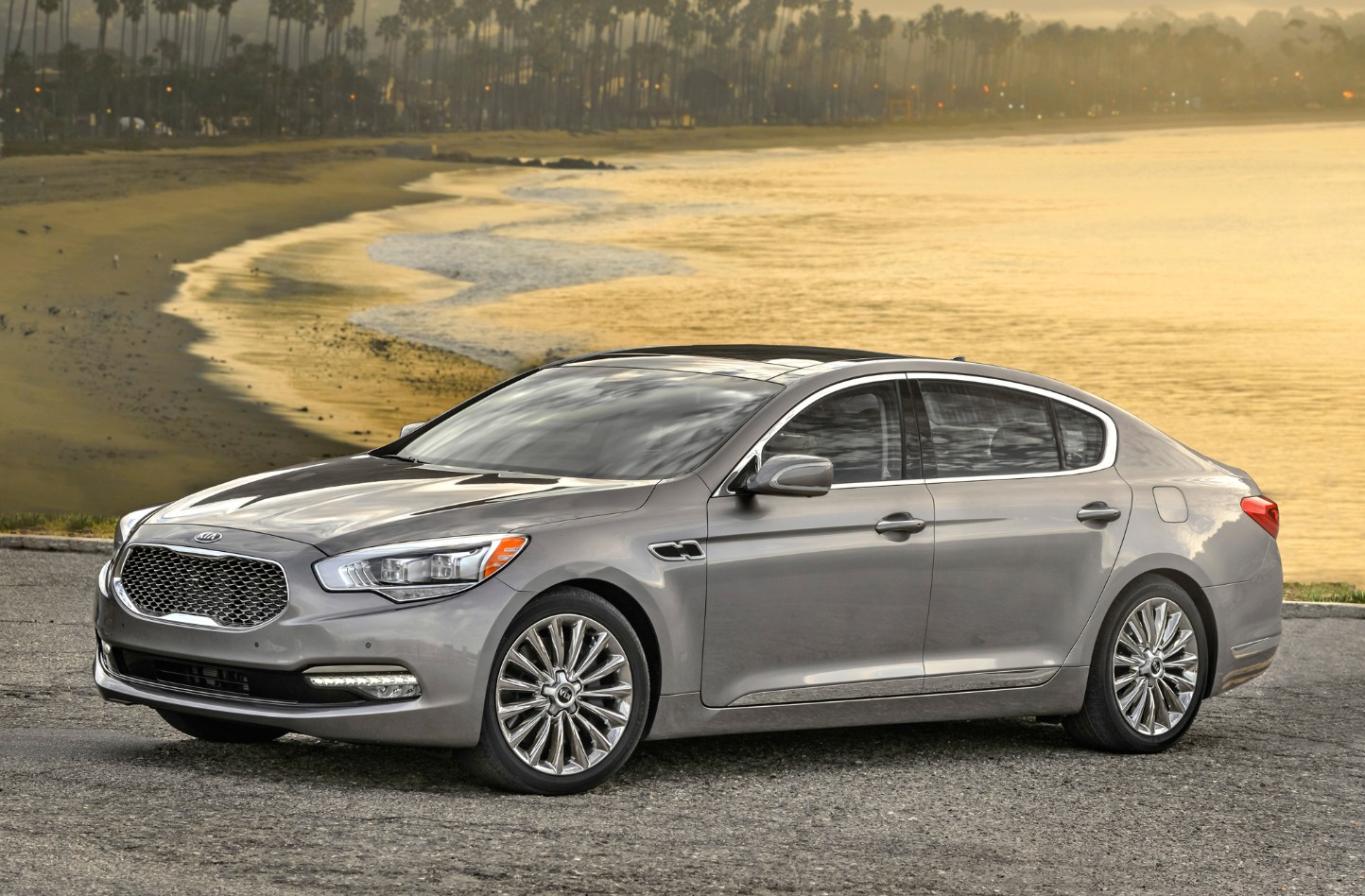
2027 Kia K900 Release Date, Specs, Price – The 2027 Kia K900 is one of the most intriguing names circulating among luxury-sedan enthusiasts, but its status needs to be clearly defined from the beginning. Kia has not officially announced a new 2027 K900 for the United States, and the company has not published specifications, pricing, trim levels, or a release date for such a model. The original K900 was discontinued from the U.S. market after the 2020 model year, while the related K9 continued in South Korea. More recent reporting indicates that Kia is preparing to end K9 production in 2026, making a direct 2027 K900 revival particularly uncertain.
That does not make the K900 name irrelevant. Quite the opposite. Kia once used the K900 as its flagship sedan, giving the brand a rear-wheel-drive luxury model capable of challenging established premium vehicles on equipment, comfort, technology, and price. The sedan offered a level of refinement that was unusual for the Kia badge at the time. A modern revival could theoretically use Kia’s latest design language, advanced electrification technology, premium materials, and sophisticated driver-assistance systems to create a completely different interpretation of the flagship formula.
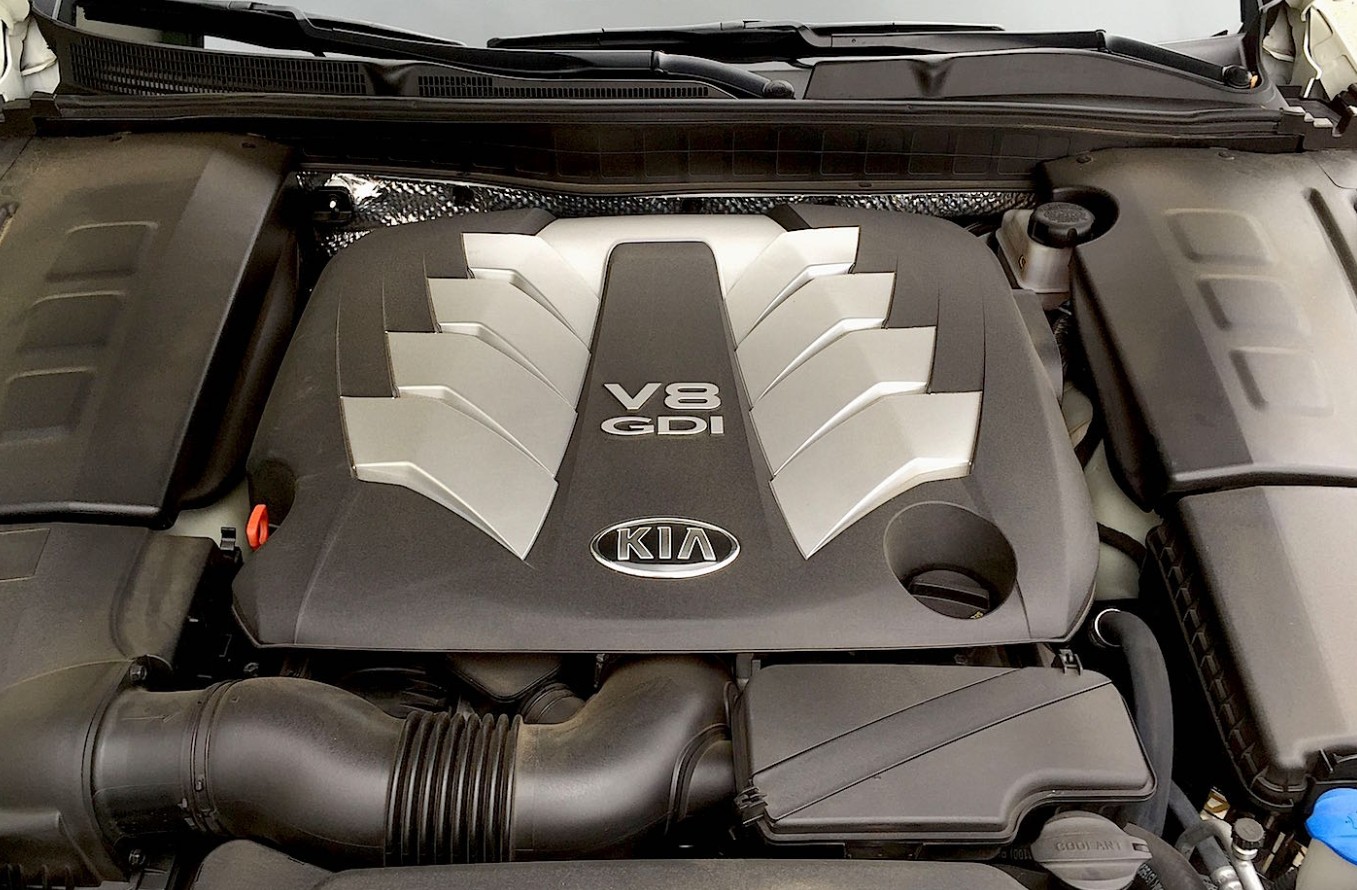
The original K900 occupied a fascinating position because it attempted to provide premium-car proportions and equipment without following traditional luxury-brand pricing. In its later U.S. form, the model used a twin-turbocharged 3.3-liter V6, an eight-speed automatic transmission, and all-wheel drive. International versions of the K9 also used other engines, including a 5.0-liter V8 in earlier generations. A hypothetical 2027 model would almost certainly need a different powertrain strategy because the premium market is rapidly moving toward electrification.
The strongest possibility for a future flagship would therefore be an electric or electrified sedan rather than a simple gasoline-powered replacement. Kia’s current global portfolio already places considerable emphasis on EV technology, while the EV9 has demonstrated that the company is willing to position a Kia-branded vehicle as a technology and design flagship. Kia Indonesia’s current lineup, for example, includes the EV9 as its flagship three-row battery-electric SUV. If the K900 name ever returns, an advanced electric grand sedan could give it a much stronger reason to exist than simply recreating the old formula. 2027 Kia K900 Release Date
2027 Kia K900 Redesign and Update Plan
Exterior & Interior
The exterior of a hypothetical New 2027 Kia K900 should be larger and more imposing than the current K8, creating a clear hierarchy within Kia’s sedan lineup. A long wheelbase, wide body, low roofline, and large wheels would provide the proportions expected from a flagship. The design could also use an unusually long cabin to maximize rear-seat space while maintaining a balanced silhouette.
Aerodynamics would become increasingly important if the K900 returned as an EV. A smooth underbody, active grille elements, flush handles, carefully shaped mirrors, and aerodynamic wheels could help reduce energy consumption at highway speeds. The body could use a fastback-inspired rear section without sacrificing rear headroom. This would create a more contemporary profile than the traditional sedan shape used by the previous K900.
Lighting could become a signature feature. Kia’s latest models use distinctive LED designs that allow the brand to create a recognizable nighttime appearance. A flagship could use an intricate front lighting system combined with thin rear lamps stretching across the width of the car. Sequential indicators, welcome animations, and configurable lighting signatures could give the K900 a premium technological personality without relying on excessive chrome.
Wheel design would also matter. A large luxury sedan could use 20- or 21-inch wheels as standard or optional equipment, although careful aerodynamic design would be necessary for an electric version. Smaller wheels with taller tires could prioritize ride comfort and efficiency, while larger performance-oriented wheels could provide a more dramatic appearance. Multiple designs would allow buyers to choose between executive elegance and sportier styling.
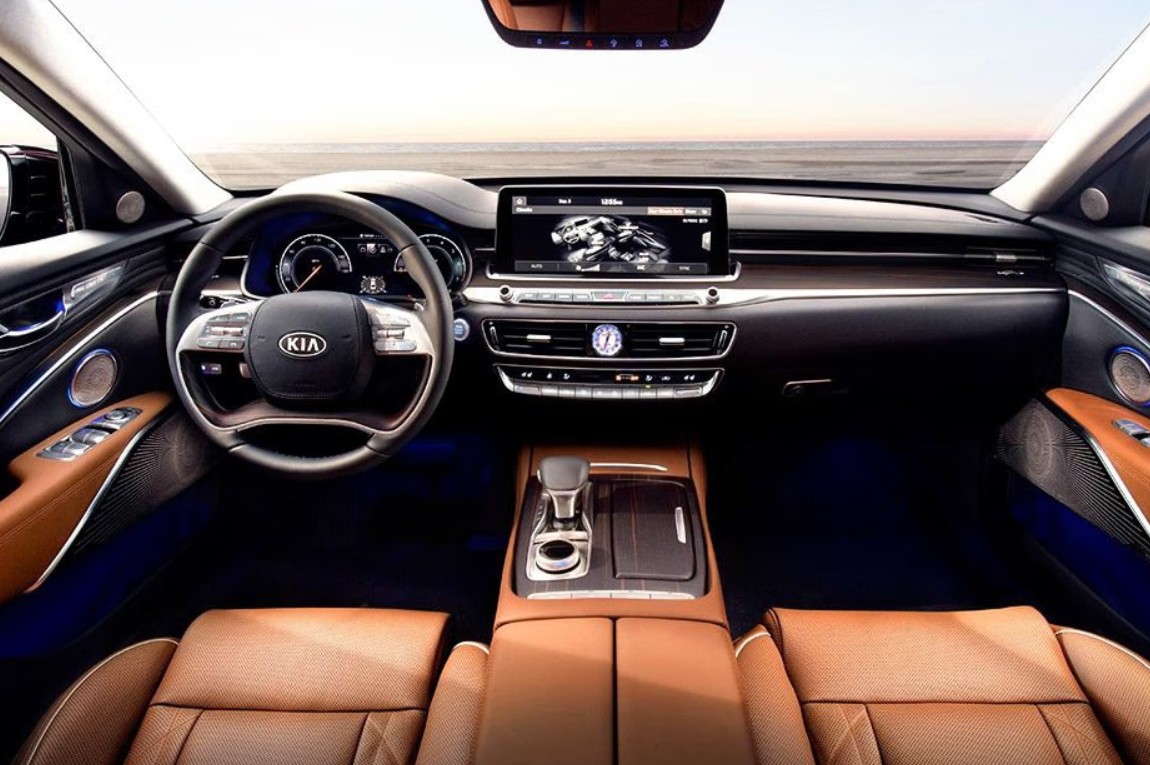
Inside, the driver should receive a commanding but comfortable position. The dashboard could combine a digital instrument cluster with a large central information display, while a head-up display could project navigation and driving information directly into the driver’s field of view. The steering wheel could use a clean design with physical controls for frequently used functions.
The front seats would need to balance support with luxury. Multi-way power adjustment, heating, ventilation, massage, memory settings, and adjustable bolsters could be available. A high-end audio system would complement the cabin, potentially using numerous speakers strategically positioned throughout the vehicle. Active noise cancellation could further improve quietness, particularly if the K900 used an electric powertrain.
Rear passengers would receive even greater attention. Executive-style seats could include powered recline, calf support, massage, heating, ventilation, and memory functions. A rear center console could provide individual climate controls, audio adjustments, lighting controls, and access to entertainment features. This configuration would transform the K900 from a conventional sedan into a vehicle capable of chauffeur-style transportation.
Cargo capacity would depend on the final body and powertrain layout. An EV could potentially provide useful underfloor packaging while maintaining a large trunk. A liftback design could increase practicality, although a traditional trunk would reinforce the vehicle’s executive character. The best solution would preserve generous luggage capacity without compromising rear-seat comfort.
The overall interior philosophy should focus on calmness rather than excessive technology. A screen-filled dashboard can look impressive in photographs but does not automatically create luxury. Premium materials, excellent seating, low cabin noise, precise controls, and natural lighting would be equally important. If Kia wanted the K900 to compete seriously at the flagship level, craftsmanship would have to receive the same attention as digital features.
A potential 2027 Kia K900 redesign would need to be substantially different from the previous generation. The old K900 was built around traditional luxury-sedan proportions, with a long hood, formal three-box body, large cabin, and rear-wheel-drive architecture. A modern successor could retain the long-wheelbase silhouette but introduce much sharper surfacing, a more aerodynamic profile, a fully enclosed front treatment for an EV version, and the latest interpretation of Kia’s distinctive lighting signature.
The front fascia could become one of the most recognizable parts of a future K900. Instead of the traditional grille used by the discontinued gasoline model, an electric K900 could use a closed digital surface with illuminated elements and vertically oriented LED lighting. Kia’s newer design direction has increasingly emphasized geometric forms, distinctive daytime-running-light signatures, and a stronger visual connection between different models. A flagship sedan could take those ideas further with a wider stance and sophisticated lighting animation.
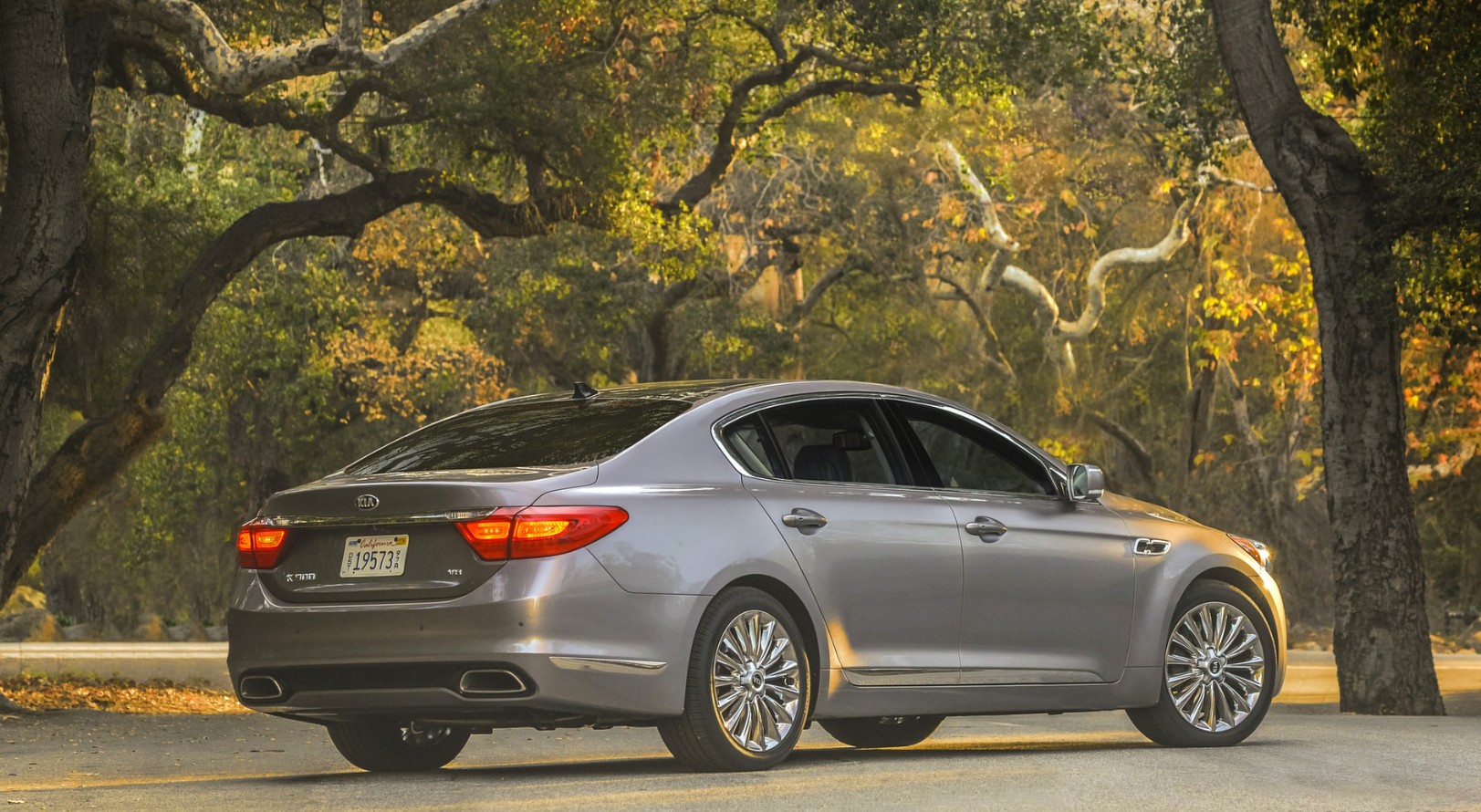
The side profile should remain elegant rather than overly aggressive. A long wheelbase would provide the visual presence expected from a flagship sedan while creating additional room for rear passengers. Flush door handles, frameless or tightly integrated window trim, aerodynamic wheels, and a gently sloping roof could reduce drag while giving the vehicle a more contemporary appearance. The goal would be to make the K900 look expensive without simply copying the design language of a Mercedes-Benz S-Class or BMW 7 Series.
The rear could receive an equally dramatic transformation. A full-width LED light signature, slim lamps, a clean trunk or liftback treatment, and a sculpted bumper would give the vehicle a distinctly modern identity. The previous-generation K9 received a major facelift in 2021 with a more imposing front end and full-width rear lighting, showing that Kia was already moving the flagship toward a more sophisticated visual direction. A future K900 could develop that theme into a much more aerodynamic design.
The interior would probably experience an even greater transformation. Instead of the relatively conventional luxury cabin of the previous K900, a 2027 model could use a minimalist dashboard with large integrated displays, premium sustainable materials, advanced ambient lighting, and highly adjustable rear seating. Kia could position the rear compartment as a private lounge rather than simply another passenger row.
Technology would become a central selling point. A hypothetical K900 could use a wide digital display system incorporating the instrument cluster, navigation, vehicle controls, media, and connected services. Wireless smartphone integration, over-the-air updates, cloud-based navigation, advanced voice controls, and remote vehicle functions would be expected in a flagship vehicle. Physical controls could remain for essential functions so the cabin does not become unnecessarily difficult to operate while driving.
The rear seats could become the centerpiece of the cabin. A flagship sedan needs to provide genuine executive-level comfort, and Kia could offer electrically reclining rear seats, heating, ventilation, massage functions, adjustable headrests, individual climate controls, and high-quality entertainment displays. A long-wheelbase platform would provide the opportunity to create substantial legroom, particularly if the vehicle used a dedicated EV architecture that allows more flexible packaging.
Material quality would also have to rise considerably. Leather or premium alternatives, genuine wood, aluminum, crystal-style controls, soft-touch surfaces, and carefully finished stitching could create a more sophisticated environment. Kia has already demonstrated through vehicles such as the EV9 that it can experiment with sustainable materials and modern cabin design. A K900 flagship could combine those ideas with a more traditional luxury atmosphere. 2027 Kia K900 Release Date
2027 Kia K900 Specs
Engine & Performance
The biggest question surrounding the hypothetical 2027 Kia K900 powertrain is whether Kia would even consider returning to the old gasoline formula. The previous U.S.-market K900 used a twin-turbocharged 3.3-liter V6 with an eight-speed automatic transmission and all-wheel drive. That combination offered strong performance, but the modern luxury market has changed considerably since the K900 left the U.S. lineup.
A battery-electric K900 would make considerably more sense from a technology-positioning perspective. Kia could use a high-capacity battery pack and dual-motor all-wheel-drive system to deliver instant acceleration while maintaining a smooth luxury driving experience. A large battery would also be appropriate for a flagship sedan because long-distance range is particularly important for executive customers.
Performance could be impressive without turning the K900 into a sports sedan. A dual-motor setup could potentially deliver more than 400 horsepower, while a high-performance version could move considerably higher. Instant electric torque would provide rapid acceleration from a standstill, while electronically controlled all-wheel drive could optimize traction in different conditions.
The focus should remain refinement. A flagship luxury sedan does not need to produce supercar acceleration. Smooth throttle response, predictable power delivery, stable highway behavior, and quiet operation would be more important. A future K900 could use adaptive air suspension, electronically controlled dampers, rear-wheel steering, and sophisticated torque management to deliver both comfort and confidence.
Air suspension would be particularly valuable. A luxury flagship should be able to absorb rough pavement while remaining composed during cornering. Adjustable ride height could improve aerodynamic efficiency at highway speeds and provide additional ground clearance when necessary. Cameras and road-scanning sensors could potentially allow the suspension system to anticipate bumps before the wheels encounter them.
Rear-wheel steering could make the large sedan easier to maneuver. At low speeds, the rear wheels could turn opposite the front wheels to reduce the turning circle. At higher speeds, they could turn in the same direction to improve stability during lane changes and fast sweeping corners. This technology is already common among high-end luxury vehicles and would suit the K900’s size.
Charging capability would be critical for an electric version. A modern flagship EV should support fast DC charging, allowing meaningful range to be recovered during highway stops. The final charging performance would depend on battery architecture and electrical hardware, but a future K900 would need competitive charging speeds to stand alongside newer premium electric sedans.
Range could become another major selling point. A large battery and aerodynamic body could potentially target a driving range of more than 300 miles in the U.S. market, although that figure would depend heavily on battery capacity, wheel selection, performance output, and EPA testing. No official 2027 K900 range estimate currently exists.
An alternative strategy could involve a hybrid powertrain. A hybrid K900 could combine a turbocharged gasoline engine with electric assistance to deliver strong acceleration while improving efficiency. However, a hybrid would not provide the same technological distinction as a dedicated electric flagship. Given Kia’s broader EV expansion, a battery-electric K900 would likely create the stronger product identity if the nameplate were revived.
2027 Kia K900 Fuel Economy
Fuel economy would depend entirely on the powertrain. A gasoline-powered K900 would likely emphasize performance and refinement rather than efficiency, much like its predecessor. An electric K900 would instead be measured by its energy consumption in kWh per 100 miles or equivalent efficiency ratings. The aerodynamic body, regenerative braking, and efficient electric motors could help deliver significantly better energy use than a large gasoline luxury sedan.
For an EV, highway efficiency would be particularly important. Large wheels, high vehicle weight, and powerful motors can significantly affect range, so Kia would need to balance visual presence with aerodynamic efficiency. A carefully designed body could minimize drag while active suspension and aerodynamic wheels further improve energy consumption.
2027 Kia K900 Safety Features
Safety would be one of the most important parts of a future 2027 Kia K900 because flagship customers expect advanced driver assistance as standard equipment. A hypothetical model could include automatic emergency braking, pedestrian and cyclist detection, adaptive cruise control, lane-centering assistance, blind-spot monitoring, rear cross-traffic alert, highway driving assistance, and front and rear collision warnings.
A more advanced system could combine cameras, radar, and other sensors to provide enhanced highway assistance. The vehicle could automatically maintain a safe distance, center itself in its lane, assist with lane changes, and respond to traffic conditions. These systems would not replace attentive driving, but they could reduce driver workload during long journeys.
Parking technology could be equally sophisticated. A 360-degree camera, ultrasonic sensors, remote parking assistance, and automated parking could help drivers maneuver the large sedan in tight urban environments. A vehicle this substantial needs excellent visibility technology because luxury appointments and low-slung styling can compromise outward visibility.
A full suite of passive safety equipment would also be expected. Multiple airbags, advanced seatbelt systems, reinforced passenger structures, electronic stability control, traction management, and sophisticated braking systems would provide the foundation for occupant protection. If the K900 returned as an EV, the battery pack would also require extensive structural and thermal safety engineering. 2027 Kia K900 Release Date
2027 Kia K900 Release Date & Price
The trim lineup would likely be relatively simple if a new K900 ever reached production. A base Luxury version could provide the core equipment, while a Premium trim could add upgraded leather, rear-seat functions, advanced audio, panoramic glass, and additional driver assistance. A flagship Performance or GT version could increase output and add sportier suspension calibration.
A high-end Executive trim could focus almost entirely on rear passengers. It might include reclining rear seats, massage functions, individual displays, upgraded sound, premium materials, and a larger center console. This would allow the K900 to appeal to customers who intend to be driven rather than always taking the wheel themselves.
Pricing would be one of the biggest challenges. The previous K900 succeeded partly because it offered luxury-car equipment at a lower price than established German competitors. A modern electric flagship, however, would require expensive battery technology, advanced electronics, premium materials, and sophisticated chassis hardware. A hypothetical U.S. starting MSRP could therefore land somewhere around $75,000 to $85,000, with higher trims potentially exceeding $100,000.
An electric flagship priced around $80,000 could position the K900 below the most expensive versions of the Mercedes-Benz S-Class and BMW 7 Series while competing with premium electric sedans. A fully equipped Executive version could approach six figures. These figures are projections only; Kia has announced no 2027 K900 pricing.
The 2027 Kia K900 release date is not officially confirmed because Kia has not announced a 2027 K900. The situation is particularly important because recent reports indicate that the K9, the model historically associated with the K900 name outside the United States, is expected to end production by the end of 2026. Reports also indicate that the model is not currently scheduled for a facelift or direct successor.
That means claims circulating online about a confirmed 2027 K900 launch should be treated cautiously. Kia’s official current U.S. lineup does not establish such a vehicle, and Kia Indonesia’s current published lineup likewise highlights models such as the Seltos, Carens, Sonet, Carnival, and EV9 rather than a K900. If Kia eventually decides to revive the name, an official announcement would be required before a release date, specifications, MSRP, and ordering information could be considered confirmed.
Conclusion
The 2027 Kia K900 remains an appealing idea because the original sedan demonstrated that Kia could build a large, sophisticated flagship with genuine luxury-car ambitions. The K900 offered impressive equipment, a comfortable cabin, strong engines, and a level of refinement that challenged assumptions about the Kia brand. Its disappearance from the U.S. market was largely a consequence of weak demand for large sedans and Kia’s decision to focus its premium ambitions elsewhere.
The current situation is even more significant. The K900 name has not been officially revived for 2027, while the related K9 is reportedly approaching the end of its production life in 2026. That makes a conventional gasoline-powered replacement unlikely unless Kia changes its current product strategy.
An electric K900 would be a much more convincing proposition. Kia already has the EV9 as a technology-focused electric flagship SUV, and an electric luxury sedan could extend that philosophy into a segment where aerodynamic efficiency, long-distance comfort, advanced technology, and rear-seat space are especially valuable.
The design could be spectacular without becoming excessive. A long wheelbase, low roofline, distinctive LED lighting, flush door handles, aerodynamic wheels, and a clean rear treatment would give the K900 a recognizable identity. Inside, a combination of premium materials, expansive digital displays, sophisticated seating, advanced audio, and executive rear-seat functions could create an entirely different level of Kia luxury.
Performance would also have the opportunity to change dramatically. Instead of the previous twin-turbo V6, an electric K900 could use dual motors and all-wheel drive, producing instant torque and strong acceleration while maintaining the quietness expected from a flagship sedan. Adaptive air suspension and rear-wheel steering could improve both comfort and handling.
Safety and technology would need to be standard-setting. Advanced emergency braking, adaptive cruise control, lane-centering technology, blind-spot assistance, highway driving assistance, panoramic cameras, and automated parking could make the large sedan easier and safer to operate. The vehicle could also use over-the-air software updates to continuously improve its digital systems.
Pricing would determine whether a revived K900 could attract customers. A projected range beginning around $75,000 to $85,000 could give Kia a potentially interesting position between mainstream premium vehicles and the most expensive European flagships. However, the final price would depend heavily on the battery, powertrain, interior equipment, and production strategy.
The most important fact remains simple: there is currently no officially confirmed 2027 Kia K900. The K900 was discontinued in the U.S., and the K9 counterpart is reportedly nearing the end of production without a confirmed successor. Any detailed horsepower, range, trim, MSRP, or release-date information beyond that should therefore be presented as speculation rather than confirmed Kia data.
If the K900 name eventually returns, an electric flagship could give it a stronger future than a simple continuation of the old luxury-sedan formula. Kia has already moved dramatically forward in design and electrification, and a new flagship sedan could showcase those capabilities in a way no existing Kia sedan does.
For now, the 2027 Kia K900 is best viewed as a potential revival rather than a confirmed production vehicle. The idea remains compelling, but the next chapter depends entirely on whether Kia chooses to bring its flagship sedan name back—and, if it does, whether that return arrives with the traditional gasoline luxury formula or an entirely new electric identity.
Note: The details included in this blog post are derived from pre-release material that was accessible when the article was written. If you want the latest information, you should check official sources or call your nearest dealership.
Read Also:
- 2027 Kia Stinger Release Date, Specs, Performance
- 2027 Kia Rio Hatchback Redesign, Specs, Interior
- 2027 Kia XCeed Review, Specs, Features
- 2027 Kia Stinger GTS Specs, Redesign, Price
- 2027 Kia Telluride SUV Review, Specs, Price
Frequently Asked Questions
2027 Kia K900 Release Date, Specs, Price - The 2027 Kia K900 is one of the most intriguing names circulating among luxury-sedan enthusiasts, but its status needs to be clearly defined from the beginning. Kia has not officially announced a new 2027 K900 for the United States, and…
That does not make the K900 name irrelevant. Quite the opposite. Kia once used the K900 as its flagship sedan, giving the brand a rear-wheel-drive luxury model capable of challenging established premium vehicles on equipment, comfort, technology, and price. The sedan offered a level of refinement that was…
The original K900 occupied a fascinating position because it attempted to provide premium-car proportions and equipment without following traditional luxury-brand pricing. In its later U.S. form, the model used a twin-turbocharged 3.3-liter V6, an eight-speed automatic transmission, and all-wheel drive. International versions of the K9 also used other…
The strongest possibility for a future flagship would therefore be an electric or electrified sedan rather than a simple gasoline-powered replacement. Kia's current global portfolio already places considerable emphasis on EV technology, while the EV9 has demonstrated that the company is willing to position a Kia-branded vehicle as…
2027 Kia K900 Redesign and Update Plan Exterior & Interior The exterior of a hypothetical New 2027 Kia K900 should be larger and more imposing than the current K8, creating a clear hierarchy within Kia's sedan lineup. A long wheelbase, wide body, low roofline, and large wheels would…