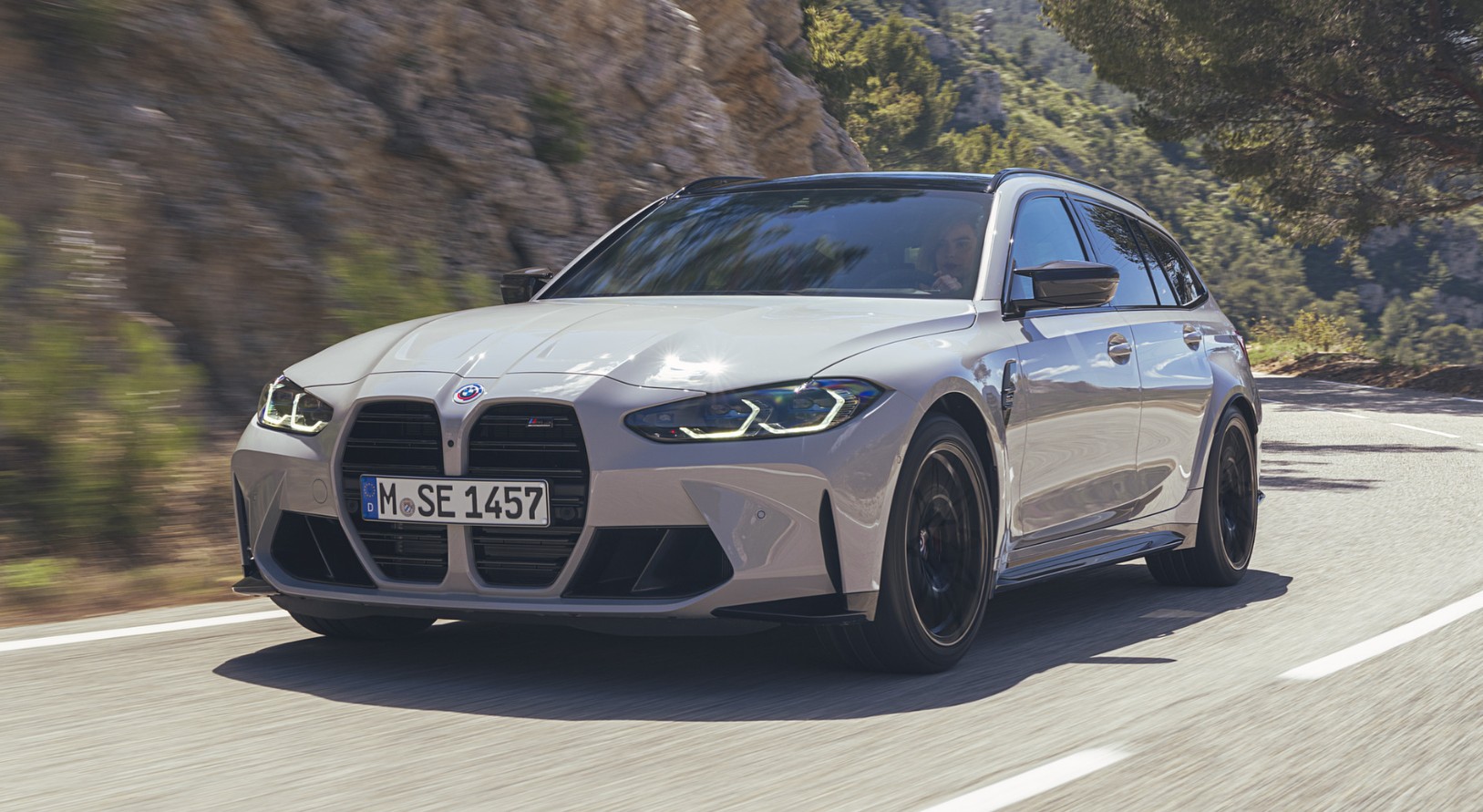
2027 BMW M3 Touring Redesign, Price, Configurations – The 2027 BMW M3 Touring is shaping up as one of the most compelling performance wagons to watch as BMW M enters a new phase of electrification, advanced chassis technology, and Neue Klasse-inspired design. The formula remains remarkably appealing: take the everyday practicality of a five-door Touring body, add the engineering intensity of an M3, and create a vehicle capable of serving as both a family hauler and a serious performance machine. The current-generation G81 established that formula successfully, becoming the first production M3 Touring in BMW M history. BMW itself describes the existing model as a combination of M performance, agility, precision, and everyday Touring practicality.
For 2027, the M3 Touring story becomes more complicated and considerably more interesting. BMW is transitioning the 3 Series family toward a new generation while simultaneously developing combustion-powered and electric performance cars. Current reporting indicates that the next M3 family is expected to split into different powertrain directions, with an electric M3 arriving ahead of a combustion-powered successor. However, a specific 2027 M3 Touring has not been officially confirmed by BMW, so the most accurate way to approach this model is as a future-focused preview combining the current M3 Touring formula with the technology and design direction BMW is preparing for its next generation.
The existing M3 Touring provides a strong engineering foundation for this forecast. Its 3.0-liter twin-turbocharged inline-six produces 530 hp and 650 Nm in Competition specification, while M xDrive sends power through an eight-speed M Steptronic Sport transmission. BMW quotes a 0-to-100-km/h time of only 3.6 seconds for the current M3 Competition Touring. Those numbers establish a serious benchmark for any successor, meaning the 2027 model cannot simply be newer; it must be more efficient, more responsive, and more sophisticated while retaining the distinctive mechanical character expected from an M3.
The greatest appeal of the 2027 BMW M3 Touring could therefore come from its ability to bridge two automotive eras. A future version could preserve a high-output inline-six and intelligent all-wheel-drive system while adopting lighter construction, mild-hybrid assistance, more advanced software, and the cleaner visual language associated with BMW’s Neue Klasse generation. At the same time, BMW M’s four-motor electric M3 technology shows that the brand is not abandoning extreme performance in the electric era. For enthusiasts, that makes the next M3 Touring particularly significant because it could become one of the last great high-performance wagons built around a combustion engine—or the beginning of an entirely new electric performance-wagon chapter. 2027 BMW M3 Touring Redesign
2027 BMW M3 Touring Redesign and Update Plan
Exterior & Interior
The exterior design of the 2027 BMW M3 Touring should retain the visual authority that separates an M car from an ordinary 3 Series Touring. A wide body, muscular fenders, large air intakes, performance wheels, prominent side skirts, and quad exhaust outlets would remain natural elements of the formula if BMW continues with a combustion-powered M3 Touring. The current G81 already uses widened axles, large front air intakes, four exhaust outlets, and a wide-body chassis, so the successor will need to evolve these elements rather than abandon them.
At the front, expect the design to become cleaner but no less aggressive. The next-generation BMW M3 family is expected to adopt Neue Klasse-inspired lighting and surface treatment, potentially giving the Touring slimmer headlights and a more integrated interpretation of the kidney grille. The M-specific grille could become less visually dominant than the current generation’s treatment while still providing substantial airflow for cooling. A deep front splitter, carefully shaped bumper openings, and sculpted hood could further reinforce the aerodynamic character without making the vehicle look excessively complicated.
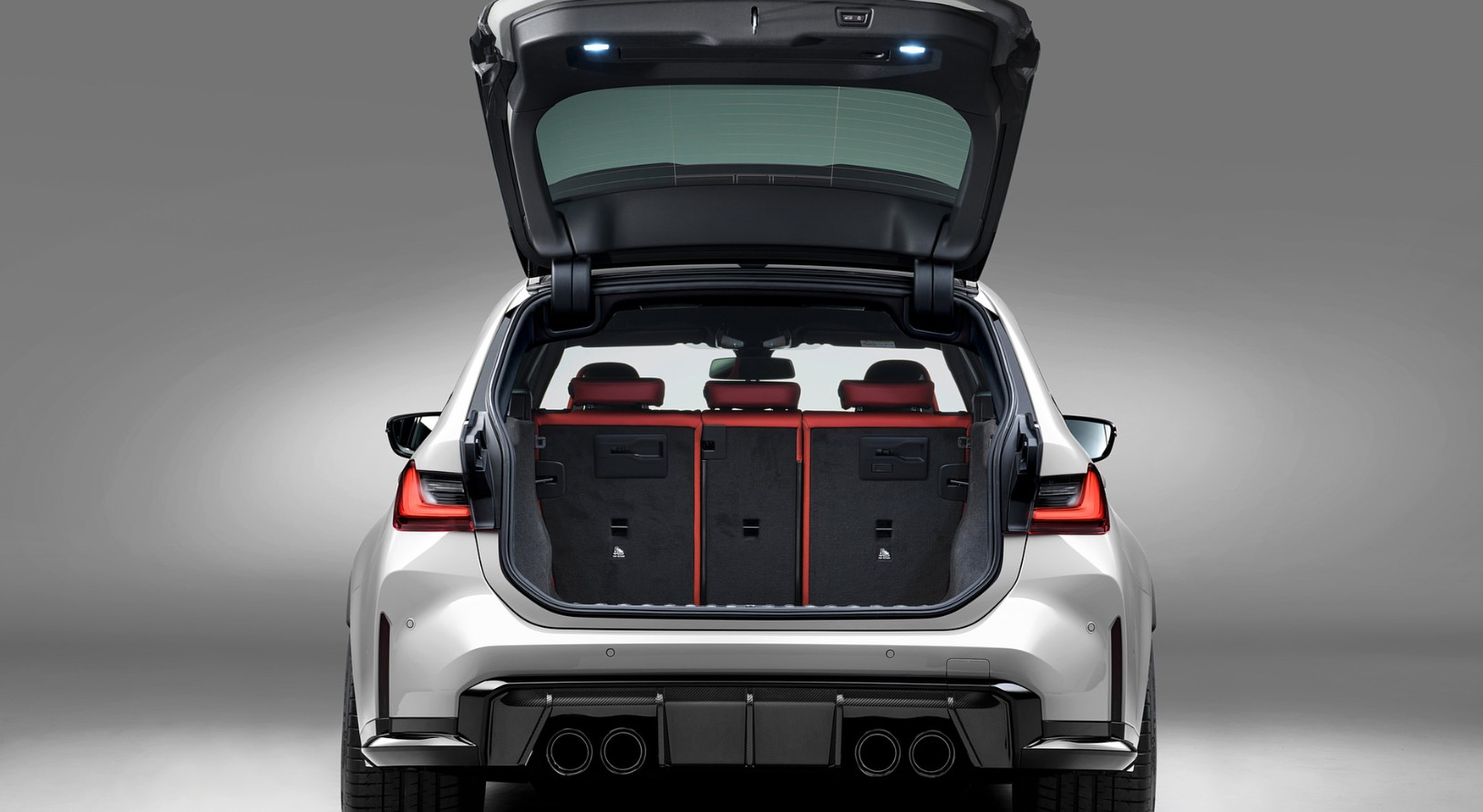
The side profile should be one of the strongest aspects of the new car. The long roof gives the M3 Touring a distinctive silhouette that cannot be replicated by a sedan, while broad rear shoulders should make the car appear planted even when parked. Large M wheels could conceal high-performance brakes, while an optional carbon roof or lightweight composite roof panel could reduce mass high in the vehicle. At the rear, a roof spoiler, sculpted tailgate, diffuser, and four exhaust outlets would provide an appropriate finishing touch. The objective should be a design that looks functional first and extravagant second.
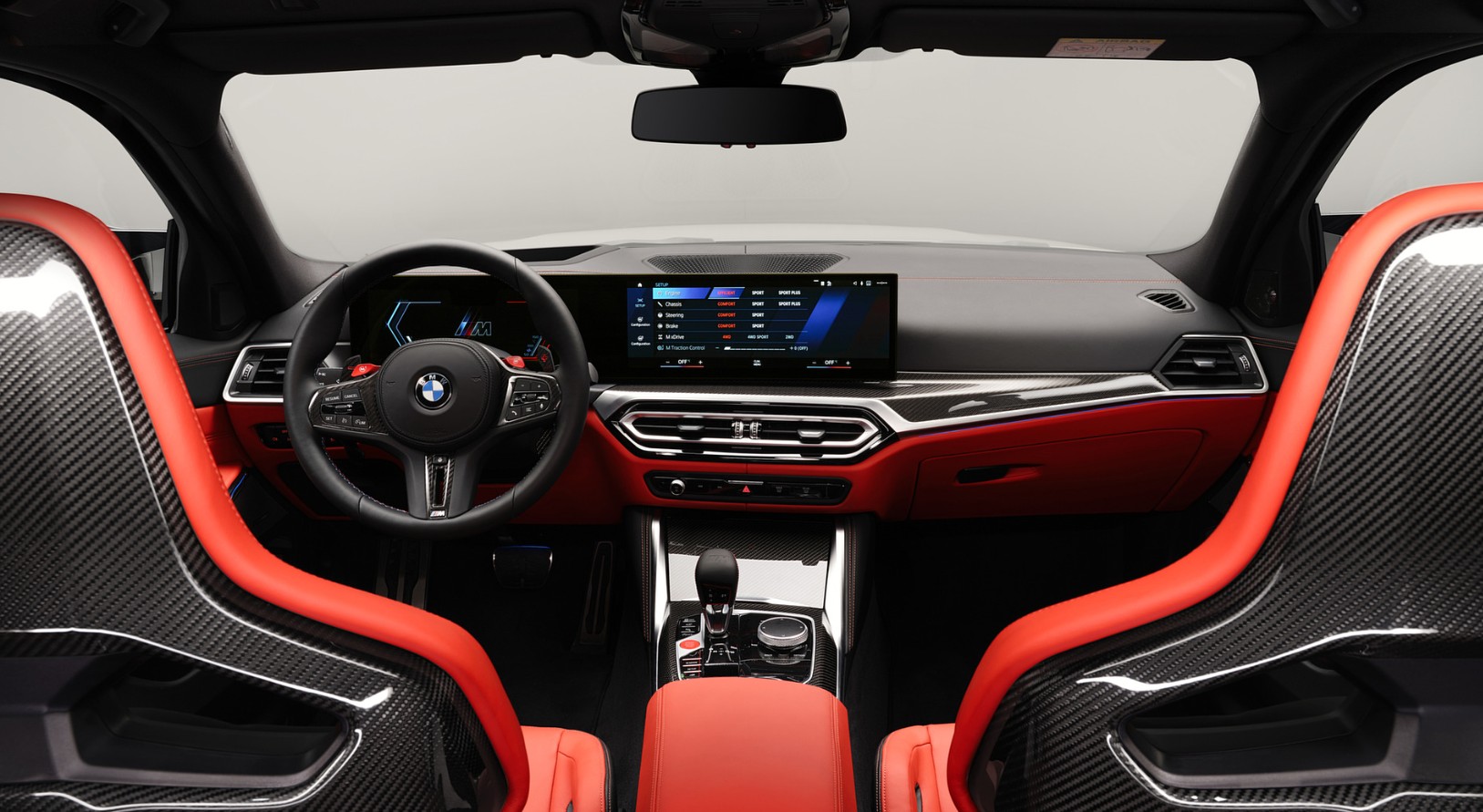
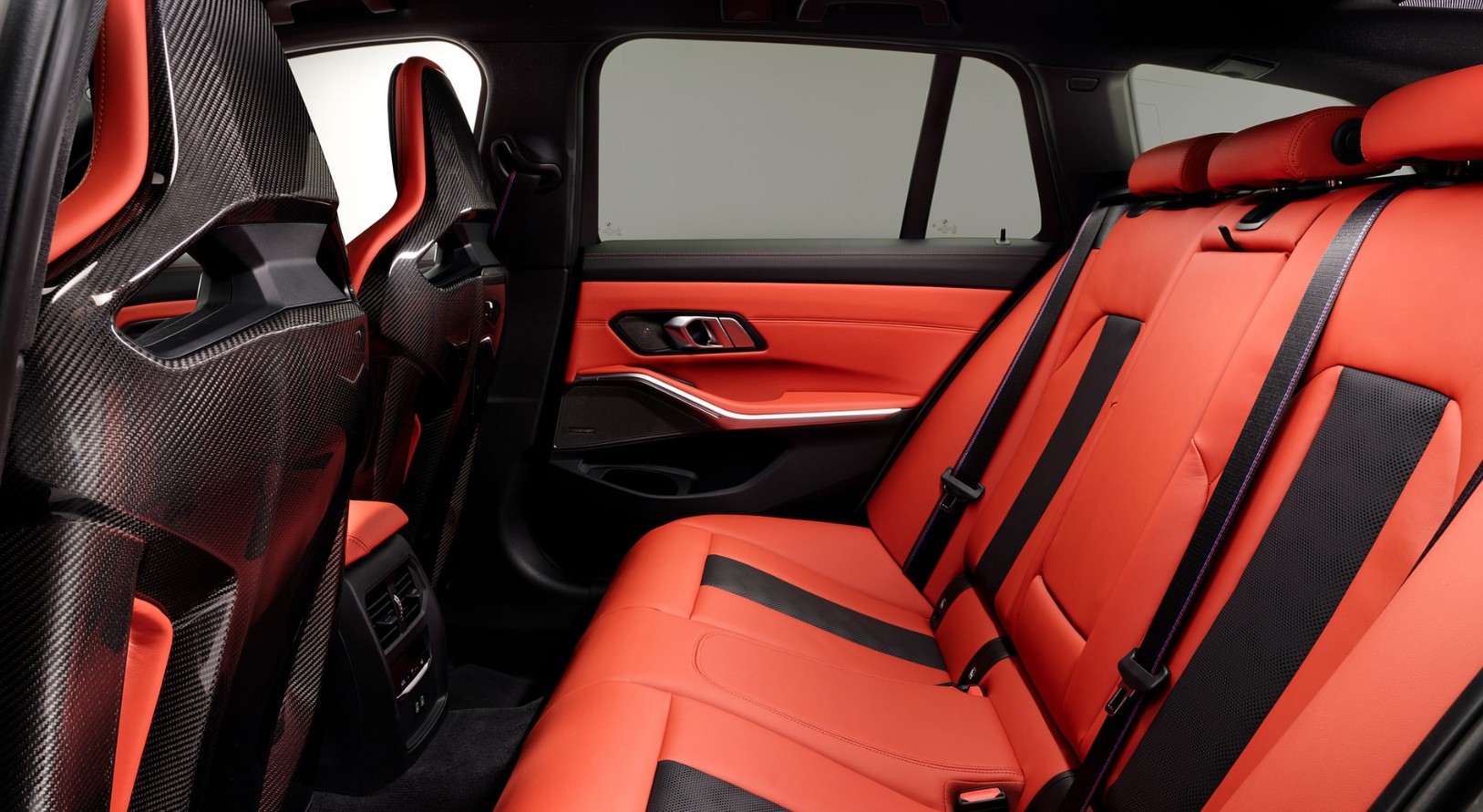
Inside, the 2027 BMW M3 Touring could undergo an even larger transformation. BMW’s next-generation digital architecture is expected to bring a wide, panoramic display strategy, more advanced voice interaction, and a redesigned user interface. A future M3 Touring should combine that technology with genuinely supportive M seats, a thick-rimmed steering wheel, configurable performance displays, carbon-fiber trim options, and intuitive physical controls for the most important driving functions. The cargo area should remain a major selling point, with a practical rear opening, folding rear seats, and enough space to make the car useful for luggage, sports equipment, and everyday family duties.
The redesign of the 2027 BMW M3 Touring should be substantially more than a conventional facelift. The next-generation car is expected to draw heavily from BMW’s Neue Klasse design philosophy, bringing cleaner surfaces, a more technical front fascia, slimmer lighting elements, and a more modern interpretation of the familiar BMW identity. Reports indicate that BMW intends the next M3 models to remain close to the M Concept Neue Klasse design language, meaning the Touring should inherit the same visual family while adapting its proportions to accommodate a long roof and larger rear cargo area.
A major engineering priority should be weight control. The current M3 Touring combines considerable power with a practical wagon structure and standard M xDrive, but the next generation has an opportunity to use more lightweight composites, aluminum components, advanced steels, and potentially natural-fiber materials. Weight reduction matters particularly on a performance wagon because the additional body structure and rear cargo packaging can otherwise compromise agility. BMW has already demonstrated its willingness to use carbon-fiber and other lightweight components in M products, and a new Touring could take that philosophy further through smarter material distribution rather than simply adding more power.
The chassis update could be equally important. A future M3 Touring would benefit from a stiffer body structure, revised suspension geometry, electronically controlled dampers, faster steering calibration, and more sophisticated torque distribution. The current M xDrive system already allows drivers to select 4WD, 4WD Sport, and, with stability control disabled, a 2WD mode. That rear-biased flexibility has become a defining element of modern M cars, and retaining or improving this characteristic would help prevent the next-generation Touring from feeling like a heavy all-wheel-drive missile with limited driver involvement.
The update plan could also introduce a much more sophisticated relationship between the driver, powertrain, and vehicle software. BMW’s next generation of performance vehicles is expected to use substantially more computing power and digital control, allowing throttle response, steering weight, suspension behavior, braking characteristics, and torque distribution to be adjusted with greater precision. For the 2027 BMW M3 Touring, this could mean multiple configurable M profiles with highly personalized settings. The goal should not be to bury the driver beneath technology, however. The best implementation would make the electronics feel invisible when driving normally and exceptionally precise when the car is pushed hard. 2027 BMW M3 Touring Redesign
2027 BMW M3 Touring Specs
Engine & Performance
The powertrain is the most important question surrounding the future 2027 BMW M3 Touring. The existing S58 3.0-liter twin-turbocharged inline-six is already an exceptionally capable engine, producing 530 hp and 650 Nm in the current M3 Competition Touring. A future combustion-powered M3 could retain the basic six-cylinder architecture while adding 48-volt mild-hybrid assistance, improved thermal management, revised turbocharging, and more sophisticated engine electronics. Recent reporting points toward an evolution of the S58 for the next combustion M3, with output potentially exceeding 520 hp. These figures remain projections rather than official BMW specifications.
Transmission strategy is likely to change as well. The current M3 Touring uses an eight-speed M Steptronic Sport automatic transmission with Drivelogic, and a future high-output Touring would probably continue with an automatic gearbox. The combination of automatic shifting, M xDrive, and hybrid torque assistance could deliver exceptionally rapid acceleration while improving consistency during repeated launches. A realistic target for a next-generation combustion M3 Touring would be a 0-to-100-km/h time in the low-to-mid-three-second range, potentially matching or slightly improving on the current car’s 3.6-second result. The precise figure would depend on final output, weight, gearing, tires, and launch-control calibration.
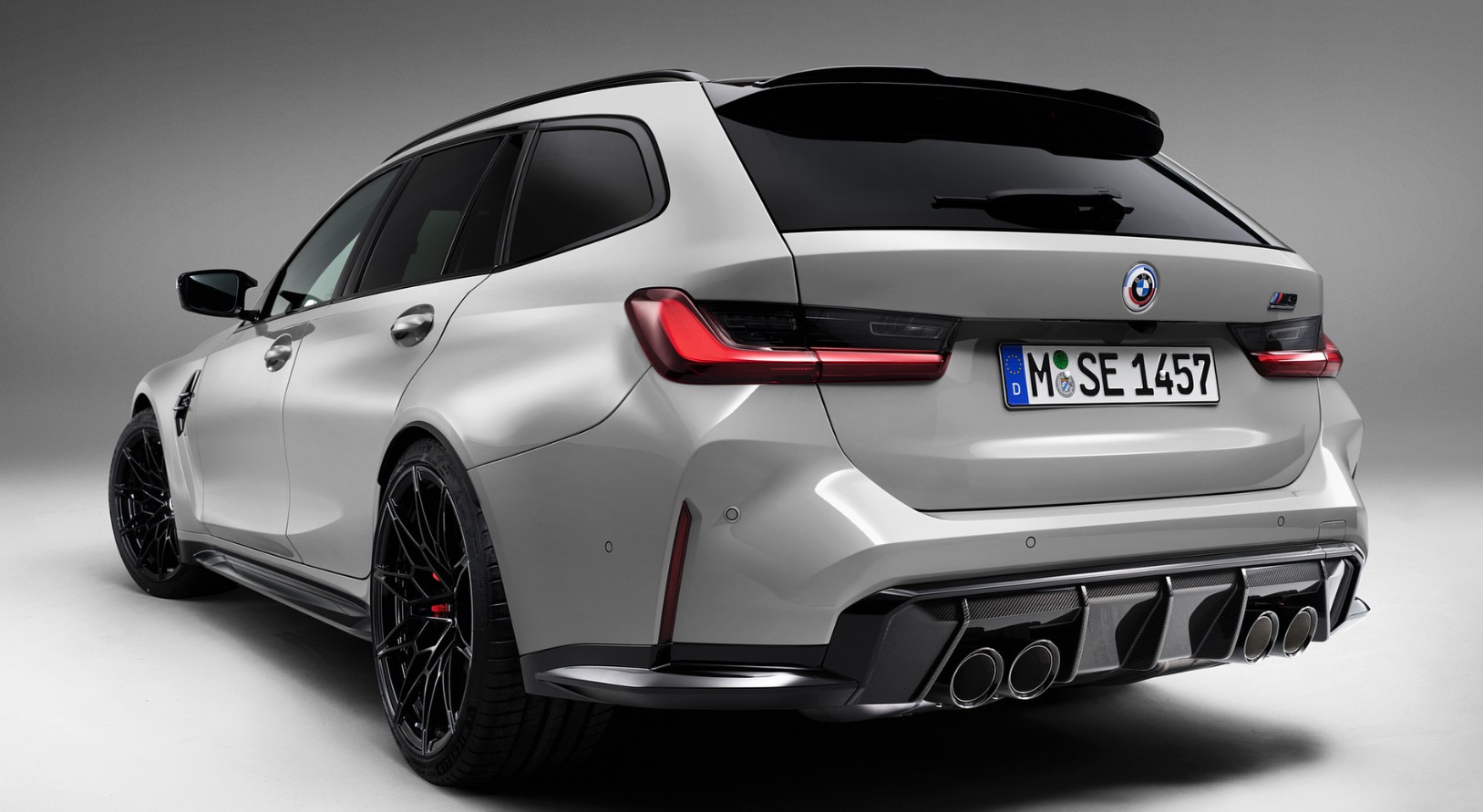
Performance will not be measured exclusively through acceleration. BMW M will need to ensure that the next Touring remains entertaining through corners, under braking, and during high-speed transitions. Adaptive dampers, an active differential, rear-biased torque distribution, high-performance brakes, variable-ratio steering, and carefully tuned stability systems could make the new wagon feel considerably smaller than its physical dimensions suggest. The M3 CS Touring already demonstrates how far BMW can push the formula, with 550 hp, M xDrive, carbon-fiber components, and a 3.5-second 0-to-100-km/h time. A next-generation model could take those lessons into a more technologically advanced platform.
2027 BMW M3 Touring Fuel Economy
Fuel economy will remain secondary to performance, but mild-hybrid assistance could improve the everyday efficiency equation. The current M3 Competition Touring is officially rated at 10.7 l/100 km combined, with 242 g/km of CO2 under the cited BMW specification. A future model with a more efficient engine, improved aerodynamics, regenerative energy recovery, and optimized transmission control could potentially improve on that figure, although higher output and additional technology could offset some of those gains. For buyers considering an electric alternative, BMW’s forthcoming quad-motor M technology points toward a separate path in which acceleration and efficiency are pursued through electrification rather than reducing the combustion engine’s appetite.
2027 BMW M3 Touring Safety Features
Safety equipment should become significantly more advanced in the next BMW M3 Touring. A future model would be expected to offer a broad suite of driver-assistance technologies covering forward collision warning, automatic emergency braking, lane monitoring, adaptive cruise control, blind-spot monitoring, parking assistance, and surrounding-camera functions, depending on market and trim. The performance-oriented M settings should also be carefully integrated so that safety technology does not interfere unnecessarily during spirited driving. BMW already provides dedicated M modes that alter the behavior of assistance systems, including a Track setting intended for closed-course use.
The chassis itself will remain an essential part of the safety package. Powerful brakes, high-performance tires, electronic stability management, strong body structures, and precise torque distribution all contribute to maintaining control before a collision becomes unavoidable. The Touring’s longer roof and rear structure also need to preserve excellent crash protection while accommodating its cargo functionality. A next-generation M3 should ideally improve not only its active safety technology but also its braking consistency, steering precision, visibility, and electronic response so the driver has a broader margin of control at high speeds. 2027 BMW M3 Touring Redesign
2027 BMW M3 Touring Release Date & Price
Trim strategy could become more diverse than the current lineup. The core 2027 BMW M3 Touring could be positioned as the standard high-performance model, while an M3 Competition Touring would likely sit above it with greater output and more aggressive chassis calibration. A future M3 CS Touring could then serve as the limited-production enthusiast model, potentially featuring additional carbon-fiber parts, reduced weight, more aggressive suspension tuning, upgraded brakes, and extra power. BMW already uses this hierarchy successfully: the current M3 CS Touring produces 550 hp and accelerates to 100 km/h in 3.5 seconds.
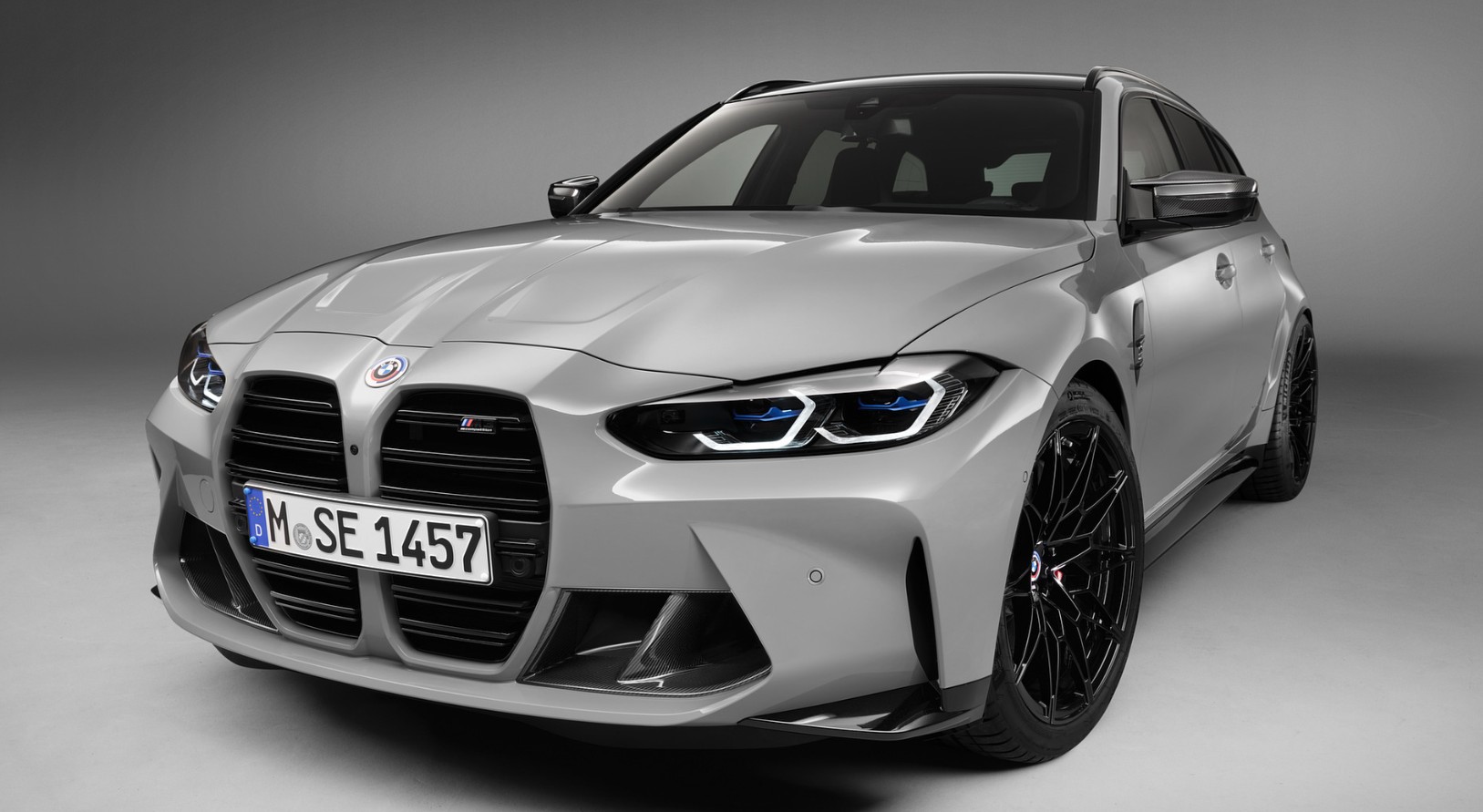
Pricing will depend heavily on the final powertrain, market, equipment, and production strategy. A next-generation M3 Touring should command a premium over ordinary 3 Series Touring models because of its bespoke M hardware, wide-body construction, powerful engine, all-wheel-drive system, performance brakes, and advanced electronics. A reasonable expectation would place a future standard M3 Touring above the current-generation car’s positioning, with Competition and CS variants climbing substantially higher. The release date requires particular caution: a 2027 model-year target can be used for forward-looking coverage, but BMW has not officially confirmed a production 2027 M3 Touring. Current reporting instead suggests that an ICE M3 Touring could arrive later, potentially around 2029 or beyond, while an electric M3 Touring has been discussed for an earlier timeframe.
Conclusion
The 2027 BMW M3 Touring has the potential to become one of the most technically interesting M cars of the next generation because its appeal is not based on speed alone. The Touring body brings something rare to the high-performance market: genuine usability without requiring the driver to sacrifice the mechanical intensity associated with an M3. The current G81 proved that the concept works, combining a 530-hp inline-six, M xDrive, rapid acceleration, sophisticated chassis technology, and a practical five-door body. A successor has the opportunity to refine every one of those characteristics while introducing a substantially more advanced digital and electrical architecture.
The biggest change could come from the powertrain strategy. BMW M is clearly moving toward a future in which combustion, mild-hybrid, and fully electric performance technologies coexist. That makes the next M3 family particularly significant. The electric M3’s proposed four-motor architecture demonstrates how far BMW M is willing to go with torque control and electric performance, while reports of a future mild-hybrid S58 indicate that the beloved inline-six formula may continue alongside it. For Touring enthusiasts, that creates the possibility of choosing between traditional engine character and a radically different electric interpretation of the high-performance wagon.
The 2027 BMW M3 Touring should therefore be viewed as a future performance-wagon benchmark rather than simply another model-year update. If BMW successfully combines the current car’s 530-hp capability with lower weight, sharper aerodynamics, more intelligent torque distribution, stronger braking, advanced driver assistance, and a dramatically improved cabin, the next-generation Touring could become even more versatile without losing its M character. Its biggest challenge will be maintaining emotional engagement while technology becomes increasingly dominant across the automotive industry.
For buyers searching for a fast wagon that can handle weekday commuting, long-distance travel, family responsibilities, and serious weekend driving, the M3 Touring formula remains unusually difficult to beat. The precise 2027 specifications, pricing, trim structure, and launch schedule remain subject to BMW confirmation, but the direction is clear: the next M3 generation is moving toward a more sophisticated performance architecture, and the Touring body has become too important to ignore. Whether the future arrives with an evolved S58, mild-hybrid assistance, electric motors, or multiple powertrain choices, the next BMW M3 Touring could represent one of the most compelling intersections of luxury, practicality, technology, and outright performance in the modern automotive market.
Note: The details included in this blog post are derived from pre-release material that was accessible when the article was written. If you want the latest information, you should check official sources or call your nearest dealership.
Read Also:
- 2027 BMW 530e iPerformance Price, Specs, Interior
- 2027 BMW M340i Sedan Review, Dimensions, Specs
- 2027 BMW X5 Release Date, Features, Performance
- 2027 BMW 4 Series Convertible Specs, Price, Release Date
- 2027 BMW X5 M50d Review, Specs, Changes
Frequently Asked Questions
2027 BMW M3 Touring Redesign, Price, Configurations - The 2027 BMW M3 Touring is shaping up as one of the most compelling performance wagons to watch as BMW M enters a new phase of electrification, advanced chassis technology, and Neue Klasse-inspired design. The formula remains remarkably appealing: take…
For 2027, the M3 Touring story becomes more complicated and considerably more interesting. BMW is transitioning the 3 Series family toward a new generation while simultaneously developing combustion-powered and electric performance cars. Current reporting indicates that the next M3 family is expected to split into different powertrain directions,…
The existing M3 Touring provides a strong engineering foundation for this forecast. Its 3.0-liter twin-turbocharged inline-six produces 530 hp and 650 Nm in Competition specification, while M xDrive sends power through an eight-speed M Steptronic Sport transmission. BMW quotes a 0-to-100-km/h time of only 3.6 seconds for the…
The greatest appeal of the 2027 BMW M3 Touring could therefore come from its ability to bridge two automotive eras. A future version could preserve a high-output inline-six and intelligent all-wheel-drive system while adopting lighter construction, mild-hybrid assistance, more advanced software, and the cleaner visual language associated with…
Fuel economy will remain secondary to performance, but mild-hybrid assistance could improve the everyday efficiency equation. The current M3 Competition Touring is officially rated at 10.7 l/100 km combined, with 242 g/km of CO2 under the cited BMW specification. A future model with a more efficient engine, improved aerodynamics, regenerative energy recovery, and optimized transmission control could potentially improve on that figure, although higher output and additional technology could offset some of those gains. For buyers considering an electric alternative, BMW’s forthcoming quad-motor M technology points toward a separate path in which acceleration and efficiency are pursued through electrification rather than reducing the combustion engine’s appetite.