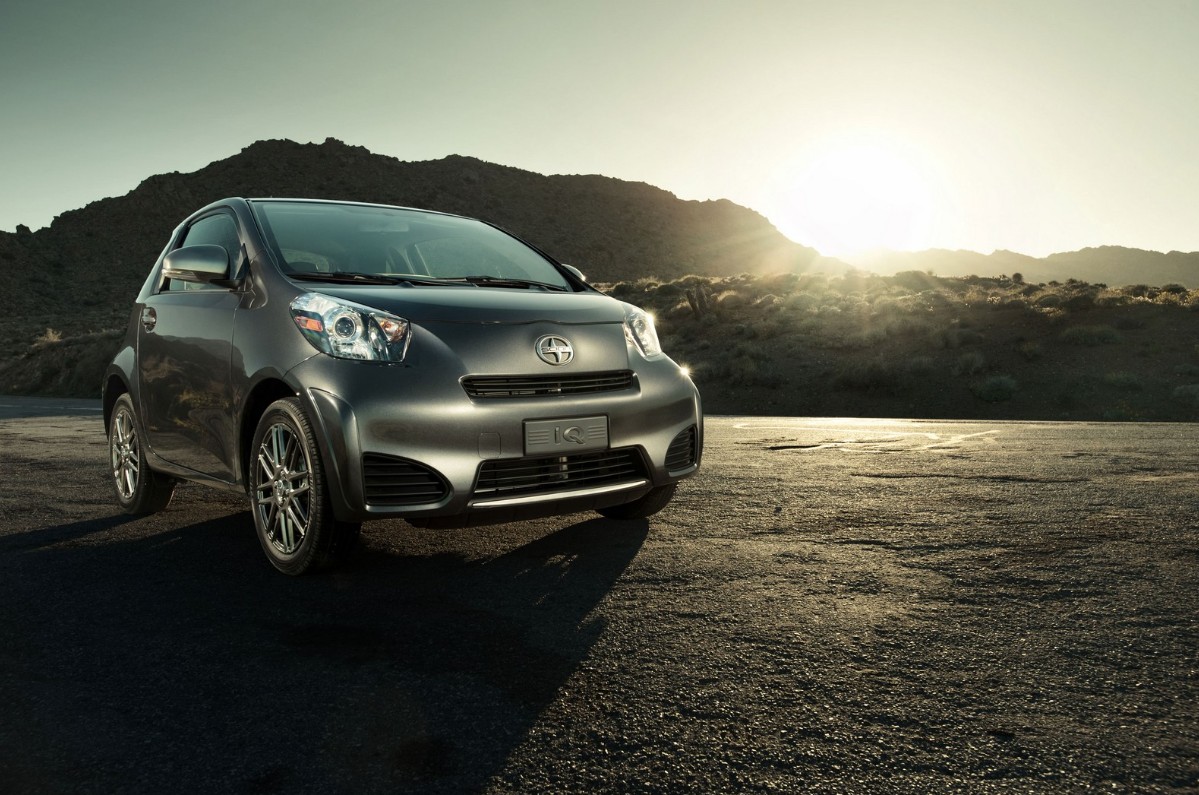
2027 Scion iQ Release Date, Performance, Dimensions – The 2027 Scion iQ is an intriguing future-car idea because the original iQ was unlike almost anything else sold by Scion. It was an ultra-compact city car designed around a remarkably short footprint while still offering a surprising amount of usable interior space for its size. Toyota’s own historical records identify the Scion iQ as the brand’s smallest model, with the car entering the U.S. lineup for the 2012 model year and leaving the lineup after 2015. A modern successor could take that same city-friendly formula and add hybrid or fully electric technology, advanced safety equipment, better connectivity, and a far more sophisticated interior.
There is an important reality behind the New 2027 Scion iQ story: Toyota has not announced a production vehicle carrying this name. Scion itself was transitioned back into Toyota beginning with the 2017 model year, and Toyota specifically stated that Scion vehicles would become Toyota-badged products. Toyota’s current official 2027 model information lists vehicles such as the Corolla Hatchback, Crown, Prius, Prius Plug-in Hybrid, Highlander, Land Cruiser, Sequoia, GR86, and Tundra, but does not list a 2027 Scion iQ. Consequently, any discussion of a 2027 iQ should be treated as a forward-looking concept rather than confirmed production information.
If Toyota ever decided to revive the iQ concept, the vehicle would probably need a completely different powertrain strategy from the original. The previous iQ relied on a small gasoline engine, but modern urban-car buyers increasingly expect electrification, low operating costs, smartphone connectivity, and sophisticated safety systems. A new iQ could therefore become a compact hybrid, battery-electric vehicle, or potentially a small electric city car developed around Toyota’s next-generation electrification technology.
The biggest opportunity would be size. Large SUVs dominate much of the modern market, but a tiny vehicle can still make enormous sense in dense cities, crowded parking areas, and narrow streets. A redesigned iQ could focus specifically on maneuverability and efficiency rather than trying to compete with larger hatchbacks on cargo capacity. The original concept proved that an extremely short car could have a useful cabin, and a modern platform could potentially improve that formula through better packaging, flat-floor architecture, and compact electric components. 2027 Scion iQ Release Date
2027 Scion iQ Redesign and Update Plan
Exterior & Interior
The exterior of a hypothetical 2027 Scion iQ would need to preserve the original vehicle’s most important characteristic: an extremely compact footprint. The original iQ was engineered around an unusually short body, allowing it to occupy far less road space than conventional small cars. A modern version could keep the basic city-car proportions while using a more aerodynamic body, larger glass areas, slim LED lighting, flush door handles, and carefully shaped surfaces.
A modern front fascia could eliminate the need for a large conventional grille if the iQ were powered entirely by electricity. Instead, the front could feature a smooth aerodynamic panel with a small lower air intake for battery and brake cooling. Slim daytime running lights could stretch across the upper portion of the nose, creating a distinctive visual signature. A centered Scion emblem would make the vehicle immediately recognizable if Toyota ever decided to revive the discontinued brand.
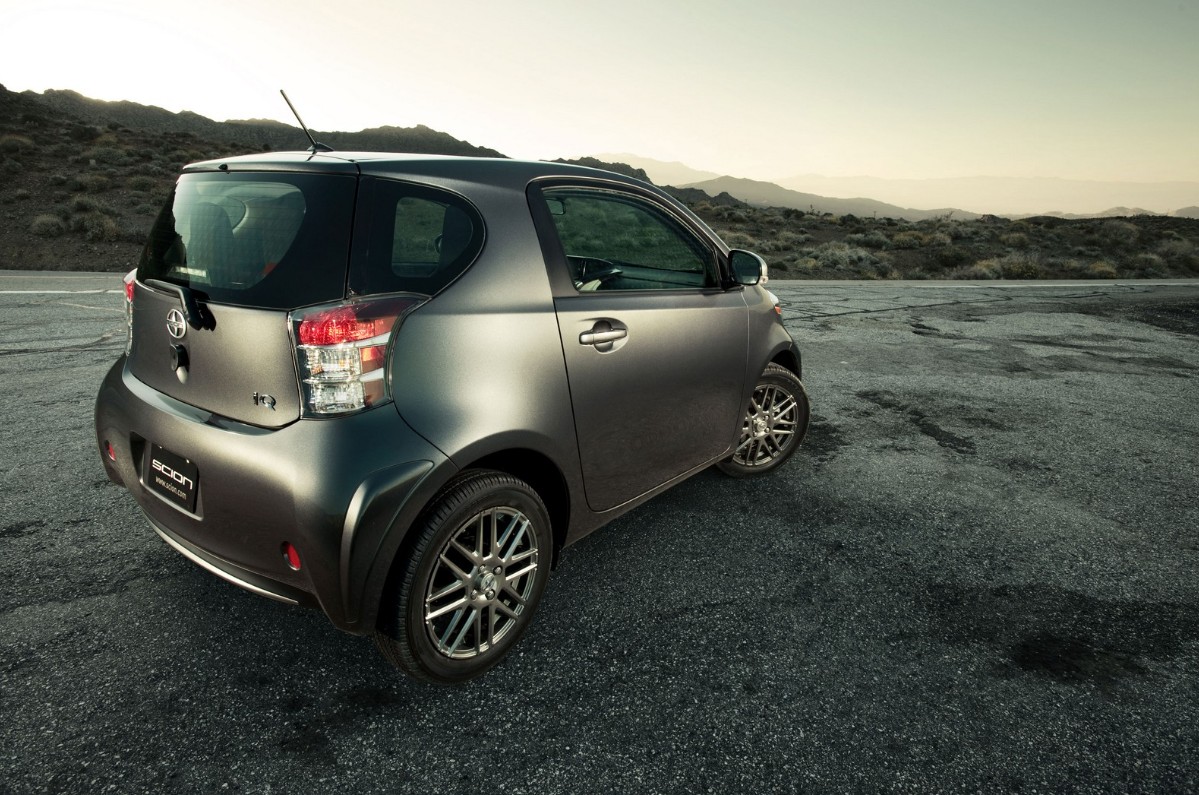
The side profile could be extremely short while maximizing cabin volume. Short front and rear overhangs, wheels positioned close to the corners, and a tall roof would allow designers to maximize interior space without making the vehicle physically large. The shape could also improve visibility for city driving. Large windows, a relatively upright windshield, and a high seating position would make it easier to judge narrow streets and tight parking spaces.
The rear could use a vertical hatchback design with slim LED taillights positioned high on the body. A compact rear spoiler could improve aerodynamic performance while giving the car a sportier appearance. The hatch would remain essential because it would provide access to the vehicle’s limited but useful cargo area. Designers could also use a two-tone roof, contrasting exterior trim, and several bold paint colors to recreate the youthful personality associated with the original Scion brand.
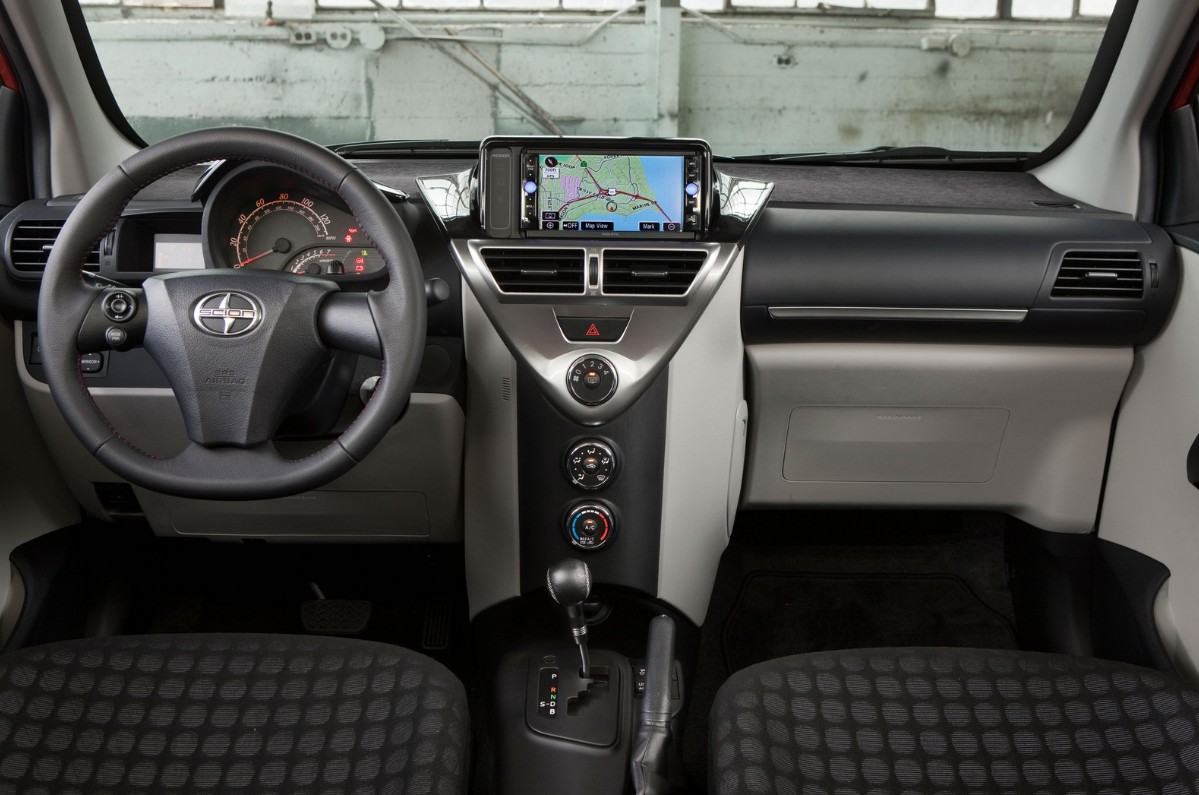
The cabin could be dramatically more advanced than the original iQ. A 2027 Scion iQ interior could use a minimalist dashboard with a digital instrument display and a central touchscreen. Rather than covering every surface with hard plastic, Toyota could use soft-touch materials in key areas, sustainable fabrics, synthetic leather, and textured trim. A carefully designed cabin could make the vehicle feel considerably more expensive than its exterior dimensions suggest.
The biggest challenge would be interior space. A tiny city car cannot offer the same passenger room as a conventional compact hatchback, so clever packaging would be essential. A modern electric platform could help by eliminating a traditional transmission tunnel and allowing engineers greater freedom when positioning the battery and electric drive components. The result could be a cabin that feels surprisingly open despite the vehicle’s short overall length.
The seating arrangement could remain unusual. The original iQ was famous for its distinctive compact layout, with Toyota using several packaging solutions to create useful space inside a very small footprint. A future model could use two primary front seats plus occasional rear seating, or potentially adopt a more conventional four-seat configuration if the body became slightly longer. The decision would depend on whether Toyota prioritized absolute compactness or everyday passenger practicality.
Technology could become a major selling point. Wireless smartphone integration, USB-C charging, wireless phone charging, connected navigation, voice controls, over-the-air software updates, and a high-quality compact audio system could all fit the character of a modern iQ. A panoramic roof could make the cabin feel larger, while configurable ambient lighting could add a more premium atmosphere without requiring excessive physical space.
2027 Scion iQ Specs
Engine & Performance
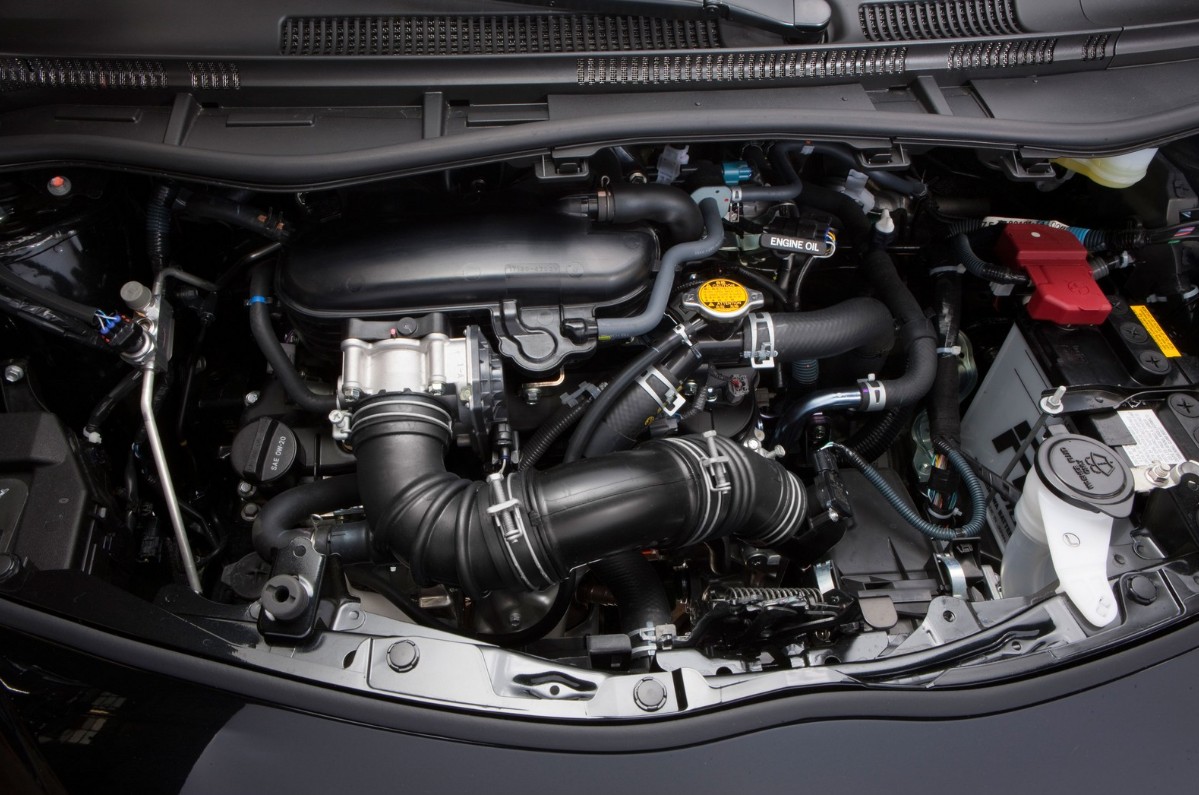
A potential 2027 Scion iQ powertrain would probably be far more advanced than the gasoline setup used by the original model. Toyota has extensive experience with hybrid technology, while the company’s current 2027 lineup includes electrified vehicles such as the Prius and Prius Plug-in Hybrid. That makes a small hybrid system one possible direction for a future iQ, particularly if Toyota wanted to keep the car affordable while delivering excellent fuel economy.
A compact gasoline-electric hybrid could use a small-displacement engine paired with an electric motor and compact battery pack. The electric motor would provide immediate low-speed torque, which is particularly useful in urban traffic. The gasoline engine could take over during sustained highway driving, while regenerative braking would recover energy during deceleration. Such a system could deliver smooth acceleration without requiring a large battery.
A fully electric configuration could be even more interesting. A small battery-electric iQ could use a compact battery pack designed for city driving rather than maximum long-distance range. A modest range of approximately 150 to 200 miles could potentially be sufficient for an urban-focused vehicle, although the actual battery size and EPA range would depend on final engineering. Smaller battery capacity would also help control vehicle weight and cost.
Performance would not need to focus on extreme horsepower. The ideal iQ would be light, responsive, and easy to maneuver. An electric motor with relatively modest output could still make the car feel quick from a stop because electric motors deliver torque immediately. Steering could be calibrated for easy parking and quick direction changes, while a tight turning radius would be one of the vehicle’s most important performance characteristics.
A sportier version could potentially receive a stronger electric motor, upgraded tires, and revised suspension. Such a model would not need to become a true performance car. Instead, it could deliver a playful driving experience similar to the lightweight city cars that have traditionally appealed to enthusiasts. A lower center of gravity from an underfloor battery could also improve stability and cornering. 2027 Scion iQ Release Date
2027 Scion iQ Fuel Economy
Fuel economy would be one of the strongest selling points if Toyota chose a hybrid. A future small hybrid could potentially achieve exceptionally high city fuel-economy figures, perhaps approaching or exceeding the 50-mpg range depending on weight and drivetrain configuration. These numbers are estimates, not official specifications, but the basic engineering advantage is clear: a lightweight vehicle requires less energy to move than a larger SUV.
An electric iQ would obviously avoid gasoline consumption altogether. Running costs could be particularly attractive for urban drivers who charge primarily at home. Regenerative braking would also reduce brake wear, while fewer mechanical components could simplify certain aspects of long-term maintenance. The trade-off would be charging requirements and the potentially higher upfront cost of battery technology.
The driving experience could be tailored through multiple modes. Eco mode could prioritize maximum efficiency, Normal could provide a balanced response, and Sport could sharpen accelerator mapping and steering. An additional one-pedal driving mode could increase regenerative braking, making urban driving easier by allowing the driver to control much of the vehicle’s acceleration and deceleration with the accelerator pedal.
2027 Scion iQ Safety Features
Safety would be a completely different story compared with the original Scion iQ. A hypothetical 2027 model would need to meet modern crash standards and could use a comprehensive driver-assistance package. Automatic emergency braking, pedestrian detection, lane-departure warning, lane-keeping assistance, adaptive cruise control, and automatic high beams could become available even on lower trims.
Blind-spot monitoring would be especially valuable because of the vehicle’s small size and urban mission. Rear cross-traffic alert could help drivers leave crowded parking spaces, while a surround-view camera could make tight maneuvering even easier. A front and rear parking sensor system could provide additional protection when navigating narrow garages or busy city streets.
The iQ could also use a more advanced driver-monitoring system. A camera mounted inside the cabin could determine whether the driver is paying attention when active assistance systems are operating. If the system detected prolonged distraction or a lack of driver response, it could issue escalating warnings. This technology would fit naturally into a modern urban vehicle designed around connected safety systems.
Infotainment could become another important part of the package. An entry-level model could feature a compact touchscreen with wireless Apple CarPlay and Android Auto, while higher versions could add built-in navigation, cloud services, larger displays, premium audio, and connected vehicle functions. Smartphone-based digital keys could allow owners to lock, unlock, and potentially start the vehicle without carrying a conventional key.
A possible trim structure could include Scion iQ Base, iQ Urban, iQ Sport, and iQ EV Premium versions. These names are hypothetical and have not been announced by Toyota. The Base model could focus on affordability and essential safety technology. Urban could add convenience features such as upgraded infotainment, parking sensors, and additional connectivity.
The Sport version could introduce larger wheels, a sport-tuned suspension, darker exterior trim, unique bumpers, and more aggressive interior details. A hypothetical EV Premium model could offer the larger battery, upgraded charging capability, premium upholstery, advanced audio, and the most comprehensive technology package. 2027 Scion iQ Release Date
2027 Scion iQ Release Date & Price
There is currently no official 2027 Scion iQ price because Toyota has not announced a new iQ or revived the Scion brand. Any MSRP circulating for a supposed 2027 model should therefore be treated cautiously. If Toyota ever developed a new iQ, the vehicle would probably need to occupy an accessible price point to remain faithful to the original Scion concept.
A hypothetical gasoline-hybrid model could potentially start around $22,000 to $26,000, while a fully electric version could begin closer to $25,000 to $30,000 before destination charges and available incentives. Higher trims could approach $35,000 if they included a larger battery, premium equipment, advanced driver assistance, and upgraded interior materials. These are projections rather than Toyota-confirmed prices.
The 2027 Scion iQ release date is equally uncertain. Toyota’s official 2027 vehicle information currently lists its confirmed 2027 products, and the Scion iQ is not among them. The original Scion iQ ended production after 2015, and Toyota subsequently transitioned Scion’s remaining vehicles into the Toyota lineup. There is therefore no official launch schedule to report for a new iQ.
If Toyota were to revive the concept, the most logical timing would involve an initial concept or design study followed by production development. A modern city EV would require significant engineering work involving battery packaging, crash structures, software, charging systems, and production economics. A vehicle announced for the 2027 model year would normally need substantial development before its official market launch.
The market case would depend heavily on pricing. Small cars face a difficult business environment because larger crossovers can offer more space for only a modest increase in price. However, an iQ would not need to beat every crossover on cargo capacity. Its strongest advantages would be maneuverability, parking convenience, efficiency, low urban running costs, and a unique design.
A new iQ could be particularly appealing in densely populated cities where parking is expensive and roads are crowded. Its tiny dimensions could make parallel parking considerably easier than with a conventional SUV. An electric version could also be optimized for frequent short trips, where regenerative braking and electric efficiency provide strong advantages.
The biggest question would be whether Toyota would use the Scion name at all. Toyota officially announced in 2016 that Scion would transition back to the Toyota brand, with 2017-model-year vehicles becoming Toyotas. The company specifically noted that the FR-S, iA, and iM would receive Toyota badges, while the C-HR would become part of the Toyota lineup. That means a future small vehicle inspired by the iQ could theoretically appear as a Toyota rather than a Scion.
The original iQ nevertheless has enough character to make a comeback concept interesting. Toyota’s historical material describes it as a premium micro-subcompact and identifies it as Scion’s smallest car. A new generation could reinterpret that idea for an era in which urban efficiency, electrification, connectivity, and compact dimensions are increasingly important.
Toyota could also use a limited Scion Release Series model if the brand ever returned. Release Series editions were part of Scion’s historical strategy, with special versions used to create distinctive styling and limited-production appeal. A modern interpretation could feature an exclusive paint color, special wheels, unique interior materials, numbered badging, and additional technology.
Pricing would determine whether any of these trims made sense. The original Scion brand was built around distinctive products and accessible pricing. Toyota described Scion as a test laboratory intended to attract younger buyers and noted that its products combined style, affordability, and driving enjoyment. A new iQ would need to maintain that philosophy instead of becoming an expensive niche EV.
Conclusion
The 2027 Scion iQ is not currently a confirmed production vehicle, but the concept behind it remains relevant. The original iQ demonstrated that a car could be exceptionally small while still delivering a distinctive design and surprisingly clever packaging. Toyota’s historical records show that the Scion iQ was sold in the United States from 2012 through 2015 before Scion transitioned back into Toyota.
A modern successor could take the idea much further. A hybrid or battery-electric powertrain could deliver outstanding efficiency, while a lightweight body and compact footprint would make the vehicle ideal for crowded urban environments. Advanced driver assistance, digital connectivity, modern LED lighting, and a premium-looking interior could turn the tiny car into a genuinely appealing city vehicle.
The most realistic future path would probably involve Toyota rather than Scion. Since Toyota officially ended the Scion brand transition in 2016, a modern iQ-inspired product would likely wear a Toyota badge unless the company makes the unexpected decision to revive Scion.
For now, there is no confirmed 2027 Scion iQ price, engine, electric range, trim lineup, redesign, or release date. Toyota’s official 2027 model information does not list the vehicle. Any specific specifications should therefore be presented as predictions rather than confirmed facts.
Still, the idea of a tiny, efficient, technology-rich iQ remains compelling. If Toyota ever decides that the growing demand for efficient urban mobility justifies another ultra-compact vehicle, the iQ name could provide an instantly recognizable foundation. A modern interpretation could preserve the original’s clever dimensions while replacing its old-school powertrain with hybrid or electric technology, creating a small car designed specifically for the realities of 2027 and beyond.
Note: The details included in this blog post are derived from pre-release material that was accessible when the article was written. If you want the latest information, you should check official sources or call your nearest dealership.
Read Also:
- 2027 Scion iM Release Date, Price, Specs
- 2026 Scion C-HR Specs, Price, Dimensions
- 2026 Scion iM Release Date, Specs, Dimensions
Frequently Asked Questions
2027 Scion iQ Release Date, Performance, Dimensions - The 2027 Scion iQ is an intriguing future-car idea because the original iQ was unlike almost anything else sold by Scion. It was an ultra-compact city car designed around a remarkably short footprint while still offering a surprising amount of…
There is an important reality behind the New 2027 Scion iQ story: Toyota has not announced a production vehicle carrying this name. Scion itself was transitioned back into Toyota beginning with the 2017 model year, and Toyota specifically stated that Scion vehicles would become Toyota-badged products. Toyota's current…
If Toyota ever decided to revive the iQ concept, the vehicle would probably need a completely different powertrain strategy from the original. The previous iQ relied on a small gasoline engine, but modern urban-car buyers increasingly expect electrification, low operating costs, smartphone connectivity, and sophisticated safety systems. A…
The biggest opportunity would be size. Large SUVs dominate much of the modern market, but a tiny vehicle can still make enormous sense in dense cities, crowded parking areas, and narrow streets. A redesigned iQ could focus specifically on maneuverability and efficiency rather than trying to compete with…
2027 Scion iQ Redesign and Update Plan Exterior & Interior The exterior of a hypothetical 2027 Scion iQ would need to preserve the original vehicle's most important characteristic: an extremely compact footprint. The original iQ was engineered around an unusually short body, allowing it to occupy far less…