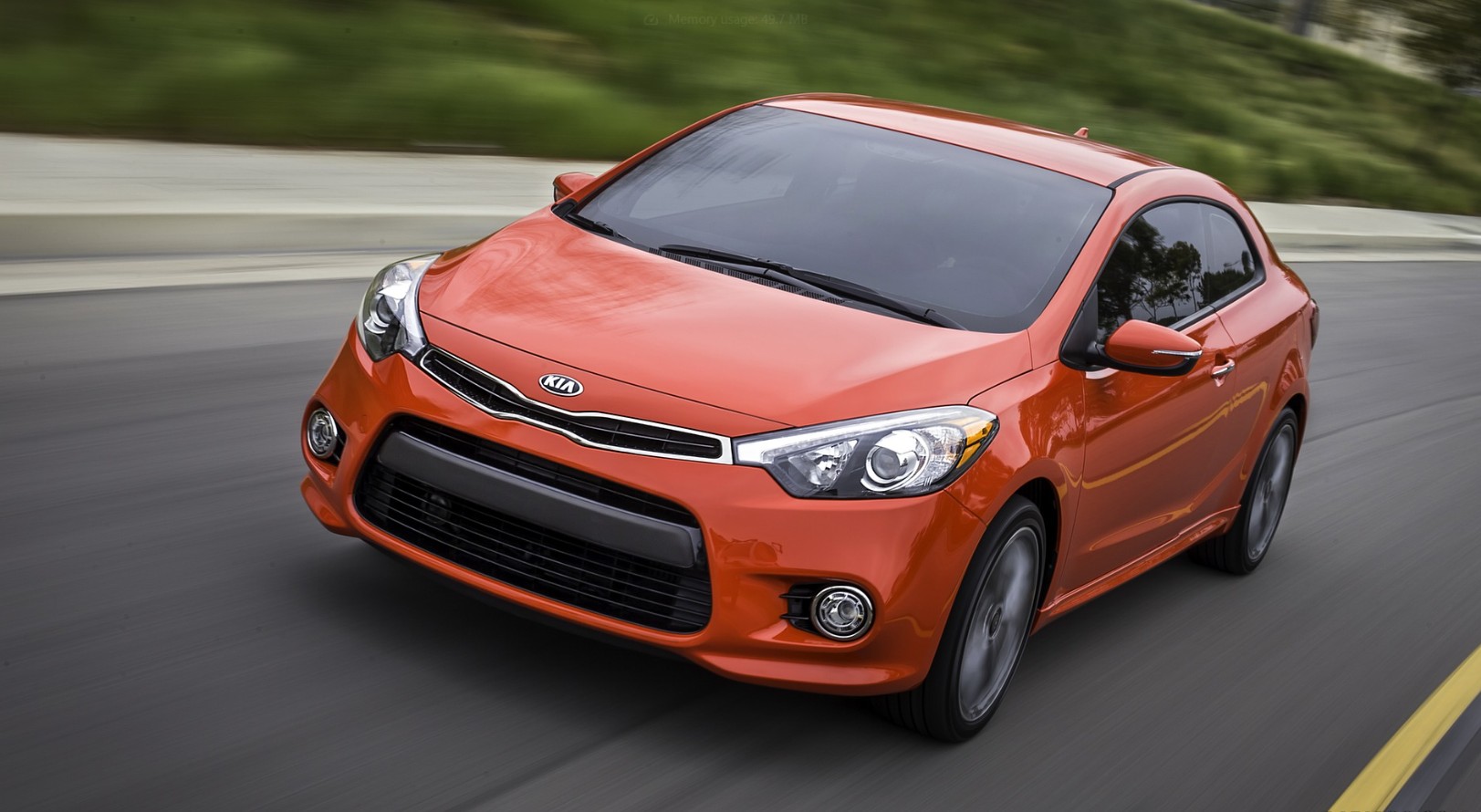
2027 Kia Forte Koup Price, Specs, Redesign – The 2027 Kia Forte Koup is an exciting name for anyone who remembers Kia’s previous two-door compact. However, the first point to establish is that Kia has not officially announced a 2027 Forte Koup. The Forte itself has also disappeared from Kia’s current U.S. passenger-car strategy, having effectively been replaced by the K4 for the 2025 model year. That makes a new Koup a potential revival rather than a confirmed production vehicle. Still, the idea makes considerable sense from an enthusiast perspective because Kia once used the Forte Koup to offer a sportier alternative to the conventional compact sedan.
The original Forte Koup was introduced as a two-door version of the Forte and became one of Kia’s more distinctive affordable performance-oriented models. It offered a lower, more athletic profile than the four-door sedan and eventually gained a turbocharged engine in the SX trim. The final-generation Koup used a 1.6-liter turbocharged four-cylinder producing 201 horsepower and 195 lb-ft of torque, paired with either a six-speed manual or six-speed dual-clutch automatic transmission. Those numbers were modest by today’s standards, but they gave the little coupe a genuinely entertaining character.
A modern 2027 Kia Forte Koup would face a very different market. Compact two-door cars have become uncommon as buyers increasingly choose SUVs, crossovers, and practical hatchbacks. Yet that scarcity could actually make a new Koup more interesting. Kia has developed a stronger design identity, more sophisticated interiors, improved driver-assistance technology, and increasingly capable powertrains. A new compact coupe could use those advances to create a lightweight, affordable sports-oriented model positioned below larger performance vehicles.
The most logical approach would not be a simple recreation of the old Forte Koup. Kia would need to give the car a clear reason to exist alongside the K4, K4 Hatchback, K3 in certain international markets, and the company’s growing SUV and EV range. A sharply styled two-door body, turbocharged performance, modern infotainment, upgraded suspension, and an attractive starting price could create a niche product with considerable enthusiast appeal. For now, though, pricing, specifications, trims, fuel economy, and release timing remain hypothetical because Kia has not confirmed the model. 2027 Kia Forte Koup Price
2027 Kia Forte Koup Redesign and Update Plan
Exterior & Interior
The exterior of the hypothetical 2027 Kia Forte Koup could be one of its biggest selling points. Modern Kia design is much more distinctive than it was during the original Koup era, giving designers the opportunity to create a compact coupe that looks significantly more expensive than its expected price. A wide stance, low nose, sharp LED lighting, and sculpted bodywork would make the Koup visually different from the sea of compact crossovers occupying today’s roads.
The front end could feature Kia’s latest interpretation of its signature lighting design, potentially with vertically oriented elements extending toward the grille. A blacked-out grille and aggressive lower air intake could identify the GT version. The standard model could use a cleaner appearance with smaller wheels and less aggressive detailing, while the performance model could add a front splitter, larger brake openings, and a subtle rear spoiler.
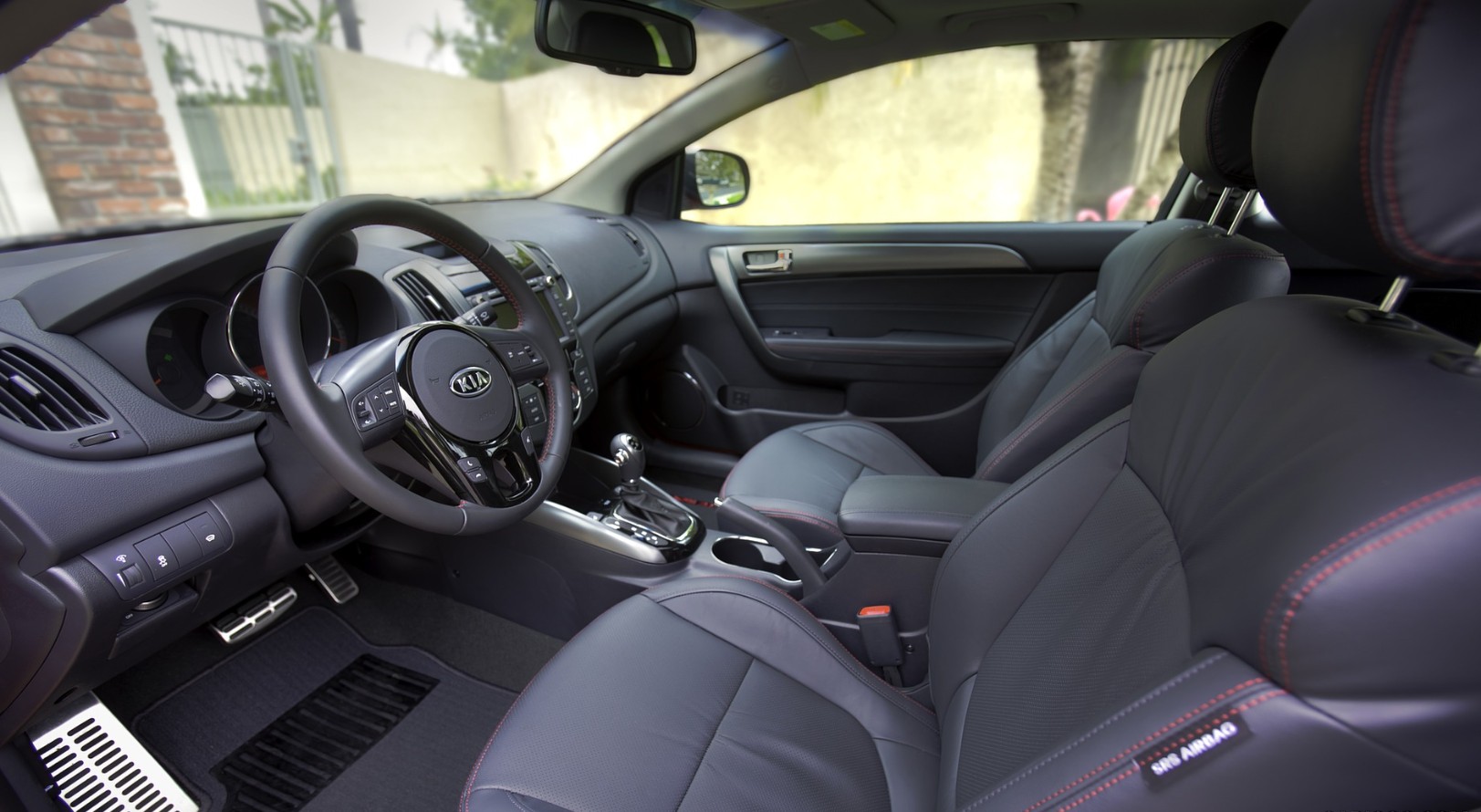
From the side, proportions would matter more than decorative details. The absence of rear doors would create a long, uninterrupted shoulder line and allow the roof to flow naturally toward the rear. Large wheels could fill the arches, while a black roof and dark window surrounds could produce a more premium appearance. Kia could also offer several bold colors, including metallic blue, deep red, pearl white, graphite, and a distinctive performance-specific shade.
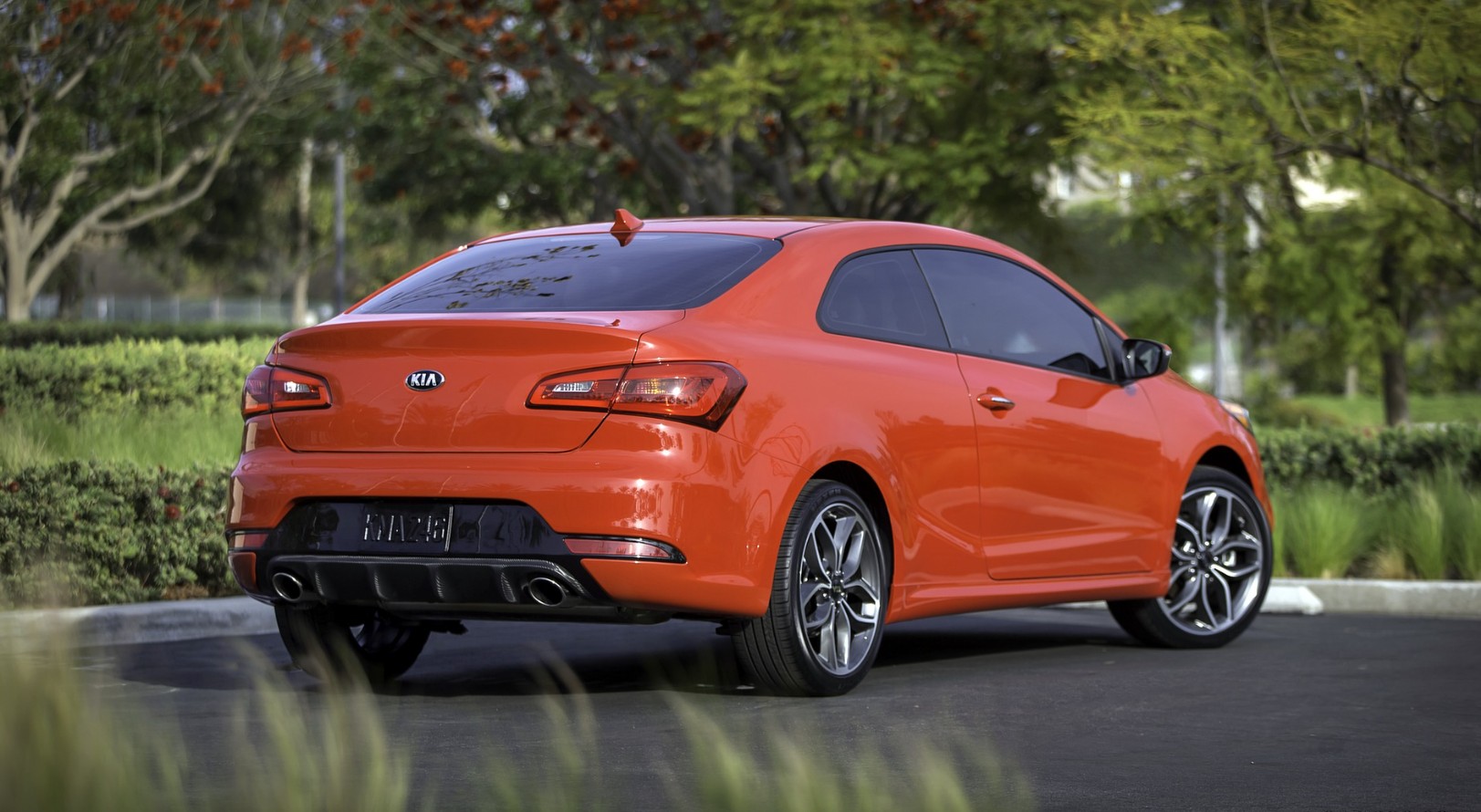
The rear design could be equally dramatic. Slim LED taillights stretching across the rear width would fit the latest Kia aesthetic, while a sculpted trunk lid could incorporate a subtle integrated spoiler. A lower diffuser and dual exhaust outlets could distinguish a turbocharged GT model. If the vehicle used an electric powertrain instead, the rear treatment could be cleaner, with aerodynamic details replacing traditional exhaust hardware.
Inside, the Koup would need to maintain its compact dimensions without feeling cramped. Front-seat passengers should receive the majority of the available space, with deeply shaped seats offering sufficient shoulder and legroom. A lower seating position would improve the sports-car sensation while allowing the dashboard to wrap around the driver.
The rear seats would remain useful for occasional passengers rather than being treated as the primary seating area. A two-door configuration naturally makes rear access less convenient, so Kia could design the front seats with a one-touch folding mechanism. Adequate rear headroom and legroom would help the Koup remain practical enough for short journeys while preserving the coupe’s sleek roofline.
Cargo capacity could remain surprisingly useful if Kia designed the rear deck carefully. A wide trunk opening and split-folding rear seats would allow the Koup to transport shopping bags, luggage, or recreational equipment. The car would not match a crossover for versatility, but that would not be its purpose. The appeal would come from combining everyday usability with a much more engaging body style.
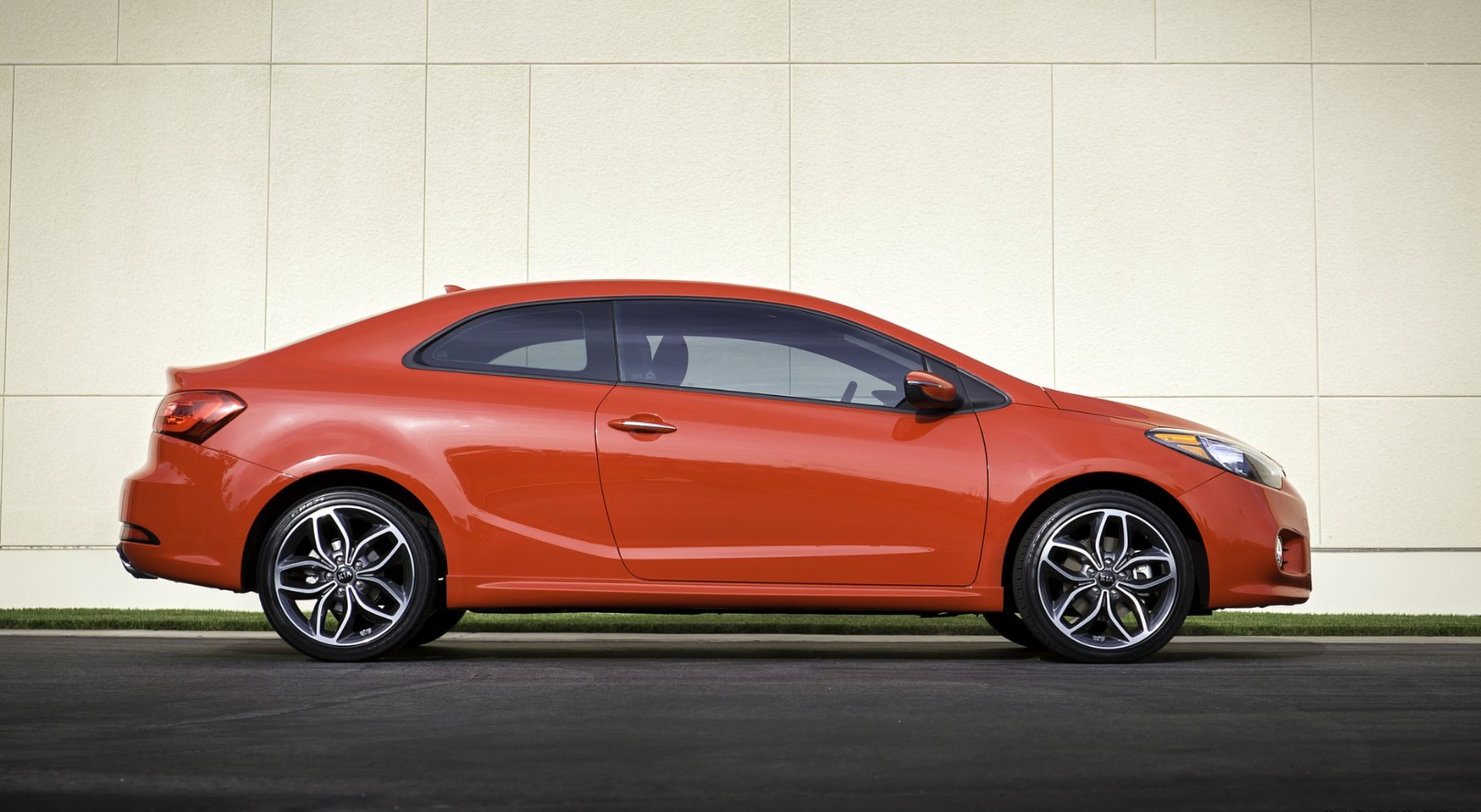
Technology would complete the cabin. A large central display, configurable digital gauges, wireless charging, connected navigation, voice controls, and over-the-air software updates could make the Koup feel completely modern. Higher trims could add a premium sound system, panoramic roof, heated and ventilated front seats, ambient lighting, and a head-up display.
If Kia decided to revive the Forte Koup for 2027, the redesign would probably borrow heavily from the company’s latest design language rather than simply reproduce the old Koup’s proportions. The current K4 demonstrates how dramatically Kia’s compact-car styling has evolved. Its angular lighting, distinctive front-end treatment, stretched body proportions, and fastback-inspired profile provide a useful foundation for imagining a much sportier two-door derivative.
The front fascia could become considerably more aggressive on a Koup. A low hood, narrow LED daytime-running lights, a broad lower grille, and larger corner air intakes would establish the car as the performance-oriented member of the family. Kia could use a GT-style appearance package with gloss-black exterior elements, red or metallic accents, and a more sculpted bumper. The objective would be to make the car recognizable from a distance without covering every surface with artificial vents.
The side profile would be where the Koup could truly differentiate itself. Removing the rear doors would create a longer, cleaner visual sweep from the front windshield to the rear quarter panel. A sloping roof, muscular rear haunches, frameless-style door glass, and larger wheels could give the compact coupe a premium appearance. A relatively short rear deck would preserve the sporty character while allowing enough trunk space for everyday use.
The chassis would also require meaningful changes. A coupe designed for enthusiastic drivers should receive more precise steering, firmer suspension calibration, stronger brakes, and improved body control than a standard commuter-oriented compact. An optional electronically controlled limited-slip differential could further enhance cornering traction. Kia could also offer adaptive dampers on an upper performance trim, allowing the car to transition between comfortable daily driving and more aggressive weekend use.
The powertrain strategy would be equally important. The easiest route would be a turbocharged four-cylinder, but Kia could potentially use a modernized version of the turbocharged architecture found elsewhere in its lineup. The old Koup’s 201-hp turbo engine already demonstrated that a small Kia could deliver strong performance. A modern engine producing somewhere around 200 to 250 horsepower would give a revived Koup enough muscle to compete with today’s compact sport models.
Transmission choices could determine the personality of the vehicle. A six-speed manual would be the enthusiast’s preferred option and would immediately distinguish the Koup from many modern compact cars. A seven- or eight-speed dual-clutch transmission could serve buyers seeking rapid shifts and everyday convenience. Kia could also use paddle shifters, launch-control programming, and multiple drive modes on an upper GT performance model.
The interior would need to be substantially more advanced than the cabin of the final Forte Koup. A modern digital instrument cluster, large infotainment display, wireless smartphone integration, USB-C connectivity, premium audio, and a more sophisticated center console would be expected. Kia could also install physical controls for important climate and audio functions to maintain usability.
A performance-focused cabin could use sport seats with stronger bolsters, contrast stitching, aluminum pedals, a thicker steering wheel, and unique GT badging. A combination of synthetic leather and durable suede-like upholstery would provide a sporty atmosphere without pushing the price too high. A limited edition could receive red or bronze stitching and numbered interior trim to make the vehicle feel genuinely special. 2027 Kia Forte Koup Price
2027 Kia Forte Koup Specs
Engine & Performance
The most convincing 2027 Kia Forte Koup powertrain would probably be a turbocharged four-cylinder. Kia has considerable experience with turbocharged compact engines, and the original Forte Koup SX already established the formula. Its 1.6-liter turbocharged engine produced 201 horsepower and 195 lb-ft of torque, providing strong acceleration for a relatively inexpensive front-wheel-drive coupe.
A modern Koup could potentially use a larger 2.0-liter turbocharged engine or a heavily updated 1.6-liter turbo. A target around 220 to 250 horsepower would give the car a meaningful performance advantage over ordinary compact sedans. Kia would not need to create a 300-hp monster; keeping the vehicle relatively light would allow moderate power to produce an entertaining driving experience.
Front-wheel drive would likely remain the most affordable configuration. However, Kia could make the performance model more interesting with an electronically controlled limited-slip differential. That system would help reduce inside-wheel spin when accelerating out of corners and provide more predictable power delivery. Combined with wider tires and a tuned suspension, the result could feel significantly more sophisticated than the old Koup.
A six-speed manual would be a major selling point. Modern compact coupes with manual transmissions are increasingly uncommon, so Kia could create immediate enthusiast interest simply by offering a good three-pedal setup. The alternative would be a quick-shifting dual-clutch automatic, providing rapid gear changes and easier commuting without sacrificing the car’s performance character.
Acceleration could potentially reach 0–60 mph in the mid-five-second range for a high-output model. That figure is speculative, but it illustrates the potential of a lightweight turbocharged coupe. More important than a single acceleration number would be throttle response, transmission behavior, steering feel, braking consistency, and the ability to maintain composure through corners.
A performance suspension package could include stiffer springs, larger anti-roll bars, upgraded dampers, and lower ride height. Adaptive dampers could be reserved for the highest trim, providing Comfort and Sport settings. The driver could then choose a softer setup for daily commuting or a firmer calibration for winding roads.
Braking hardware would also need to match the additional performance. Larger front rotors, higher-friction pads, and improved cooling would reduce fade during repeated hard stops. A GT model could use larger wheels to accommodate the upgraded brakes while providing additional tire width for improved cornering grip.
Fuel economy would depend heavily on the final engine and transmission. A turbocharged four-cylinder producing around 220 horsepower could potentially return competitive highway mileage if equipped with a modern automatic transmission and efficient gearing. A manual version would likely sacrifice some efficiency, particularly in city driving. Exact EPA figures cannot be established until Kia confirms an actual production model.
An electrified version is another possibility. Kia could theoretically combine a turbocharged engine with a hybrid system to create a high-output compact coupe with instant electric assistance. Such a configuration would deliver impressive torque and potentially better urban efficiency, although the additional weight and complexity could conflict with the lightweight character expected from a Koup. A fully electric Koup would be even more radical, but there is currently no indication that Kia plans such a vehicle.
2027 Kia Forte Koup Fuel Economy
Fuel economy would likely be one of the Koup’s strengths if Kia kept the vehicle relatively light. A turbocharged compact engine could potentially deliver fuel consumption in the range of today’s efficient sport compacts, although exact figures would depend on the final engine, transmission, wheels, tires, and EPA testing. An efficiency-focused base model could prioritize economy, while a GT model would accept higher fuel consumption in exchange for stronger acceleration.
2027 Kia Forte Koup Safety Features
A modern 2027 Kia Forte Koup would need an extensive safety package to remain competitive. Automatic emergency braking, pedestrian and cyclist detection, lane-keeping assistance, lane-centering technology, blind-spot monitoring, rear cross-traffic alert, and adaptive cruise control could form the foundation. Kia has steadily expanded advanced driver-assistance technology throughout its newer vehicles, so a revived Koup should not be treated as a stripped-down enthusiast car.
Higher trims could receive more sophisticated highway assistance, navigation-based adaptive cruise control, and additional collision-avoidance functions. A surround-view camera would make parking easier, particularly on a sporty model with a low seating position and large wheels. Front and rear parking sensors could also be useful in urban environments.
Passive safety would remain equally important. Multiple airbags, electronic stability control, traction management, reinforced passenger structures, advanced seatbelt systems, and strong crash protection would be expected. The two-door body would require careful structural engineering because removing rear doors changes how loads are distributed through the vehicle’s side structure.
2027 Kia Forte Koup Release Date & Price
A sensible trim lineup could begin with a Kia Forte Koup LX or similar entry-level specification. This version could provide the turbocharged engine in a detuned configuration, 17-inch alloy wheels, LED lighting, a modern infotainment system, smartphone integration, and the core safety package. Keeping the equipment list generous would help the Koup maintain its value-oriented reputation.
The Forte Koup GT could become the enthusiast favorite. A higher-output turbocharged engine, sport suspension, larger brakes, 18-inch wheels, a limited-slip differential, sport seats, dual-clutch transmission availability, and aggressive exterior styling could turn it into a genuine performance compact. A manual transmission should ideally remain available to make the GT particularly attractive to driving enthusiasts.
A potential GT Performance package could add adaptive dampers, larger wheels, upgraded tires, a more aggressive exhaust, enhanced cooling, and performance-oriented drive modes. Brembo-style high-performance brakes could be offered as an option, although Kia could keep the system more affordable to prevent the car from becoming too expensive.
A limited Koup Launch Edition could provide the highest level of exclusivity. Exclusive paint, forged wheels, numbered badging, premium audio, upgraded upholstery, special interior stitching, and a panoramic roof could create a model aimed at collectors and enthusiasts. Production could be limited to a few hundred or a few thousand units, depending on demand.
Pricing would determine whether the revival succeeded. The original Forte Koup was attractive partly because it offered sporty styling and turbocharged performance without reaching traditional sports-car prices. A modern version should ideally start around $25,000 to $28,000, with a GT model moving into the low-to-mid $30,000 range. A highly equipped performance version could approach $38,000.
Those numbers are projections rather than official Kia pricing. The modern cost of safety systems, turbocharged engines, electronics, emissions compliance, and advanced interiors could push the actual price higher. Kia would also need to account for the fact that a low-volume coupe costs more per vehicle to produce than a high-volume sedan or crossover.
The 2027 Kia Forte Koup release date has not been announced. Kia has not confirmed that the Forte Koup nameplate will return, and there is currently no official 2027 production schedule for such a vehicle. The original Forte nameplate has effectively given way to the K4 in the U.S. market, making any future Koup revival dependent on a significant strategic decision by Kia.
If Kia did approve the project, an unveiling could theoretically take place during the 2026–2027 period, followed by production later in the 2027 model year. However, that is only a hypothetical timeline. There is no confirmed dealership arrival date, ordering schedule, MSRP, or production allocation for a 2027 Forte Koup at this time.
The biggest challenge would be convincing Kia that a compact coupe can generate enough demand to justify production. Crossovers dominate the market, and even mainstream manufacturers have reduced their coupe offerings. Yet a carefully positioned Koup could function as a brand-building product rather than a high-volume vehicle. A relatively small production run could create attention around Kia’s performance image while allowing the company to test demand for affordable enthusiast vehicles. 2027 Kia Forte Koup Price
Conclusion
The 2027 Kia Forte Koup is not currently a confirmed production model, but the concept has enough historical credibility to remain interesting. Kia already has experience building a two-door Forte, and the earlier Koup demonstrated that the company could combine attractive styling, turbocharged power, a manual transmission, and accessible pricing in one compact package.
A modern revival would need to be more ambitious. The old Koup’s formula could be updated with a sharper design, substantially improved cabin technology, advanced driver assistance, stronger chassis tuning, larger brakes, and a modern turbocharged engine. A performance-focused GT version could become the centerpiece, particularly if Kia retained the manual transmission.
The ideal Koup would not attempt to compete directly with expensive sports cars. Its strongest position would be as an affordable, lightweight performance coupe that provides genuine driving enjoyment without requiring a six-figure budget. A projected starting price in the upper-$20,000 range could make the model especially attractive to younger enthusiasts and buyers who want something more distinctive than another small crossover.
A turbocharged engine producing approximately 220 to 250 horsepower could give the Koup enough performance for everyday excitement. A limited-slip differential, sport suspension, upgraded brakes, performance tires, and a manual gearbox would transform that output into a much more engaging package. An automatic version could appeal to buyers who want performance without sacrificing commuting convenience.
The interior could provide another major improvement over the previous generation. Modern digital displays, wireless connectivity, premium seating, advanced safety systems, and improved materials could make the Koup feel substantially more sophisticated. At the same time, physical controls, supportive seats, and a driver-focused layout could preserve the straightforward character expected from a compact sports coupe.
Fuel economy would remain competitive if Kia focused on efficient turbocharging and reasonable vehicle weight. A hybrid system could offer another route, although adding significant weight could work against the Koup’s enthusiast-focused identity. For a first-generation revival, a straightforward turbocharged gasoline engine might provide the cleanest balance between performance, affordability, and mechanical simplicity.
The biggest obstacle is not engineering. It is market demand. Two-door compact cars occupy a small niche, and Kia has already moved its mainstream compact-car strategy toward the K4 and crossover models. A 2027 Koup would therefore need a carefully controlled production strategy, compelling design, competitive pricing, and a strong performance identity to justify its place in the lineup.
For now, buyers should treat all projected 2027 Kia Forte Koup specifications, prices, trim levels, horsepower figures, fuel-economy estimates, and release dates as unofficial. Kia has not confirmed a new Koup, so there is no verified MSRP or dealership launch schedule to report.
Still, the idea remains compelling. Kia’s current design language is far more confident than when the original Forte Koup was sold, while the company’s modern turbocharged engines, electronics, chassis technology, and safety systems could create a dramatically more capable car. A sleek two-door body combined with a manual transmission and around 230 horsepower would give the brand something increasingly rare: an affordable new performance coupe with a mainstream badge.
If Kia eventually decides to revive the name, the 2027 Kia Forte Koup could become one of the most interesting under-$35,000 enthusiast cars on the market. Rather than chasing extreme horsepower or luxury-car pricing, the winning formula would be simple: sharp styling, responsive handling, useful technology, strong turbocharged performance, and a price that keeps the car within reach of ordinary enthusiasts.
Note: The details included in this blog post are derived from pre-release material that was accessible when the article was written. If you want the latest information, you should check official sources or call your nearest dealership.
Read Also:
- 2027 Kia K900 Release Date, Specs, Price
- 2027 Kia Stinger Release Date, Specs, Performance
- 2027 Kia Rio Hatchback Redesign, Specs, Interior
- 2027 Kia XCeed Review, Specs, Features
- 2027 Kia Stinger GTS Specs, Redesign, Price
Frequently Asked Questions
2027 Kia Forte Koup Price, Specs, Redesign - The 2027 Kia Forte Koup is an exciting name for anyone who remembers Kia's previous two-door compact. However, the first point to establish is that Kia has not officially announced a 2027 Forte Koup. The Forte itself has also disappeared…
The original Forte Koup was introduced as a two-door version of the Forte and became one of Kia's more distinctive affordable performance-oriented models. It offered a lower, more athletic profile than the four-door sedan and eventually gained a turbocharged engine in the SX trim. The final-generation Koup used…
A modern 2027 Kia Forte Koup would face a very different market. Compact two-door cars have become uncommon as buyers increasingly choose SUVs, crossovers, and practical hatchbacks. Yet that scarcity could actually make a new Koup more interesting. Kia has developed a stronger design identity, more sophisticated interiors,…
The most logical approach would not be a simple recreation of the old Forte Koup. Kia would need to give the car a clear reason to exist alongside the K4, K4 Hatchback, K3 in certain international markets, and the company's growing SUV and EV range. A sharply styled…
2027 Kia Forte Koup Redesign and Update Plan Exterior & Interior The exterior of the hypothetical 2027 Kia Forte Koup could be one of its biggest selling points. Modern Kia design is much more distinctive than it was during the original Koup era, giving designers the opportunity to…