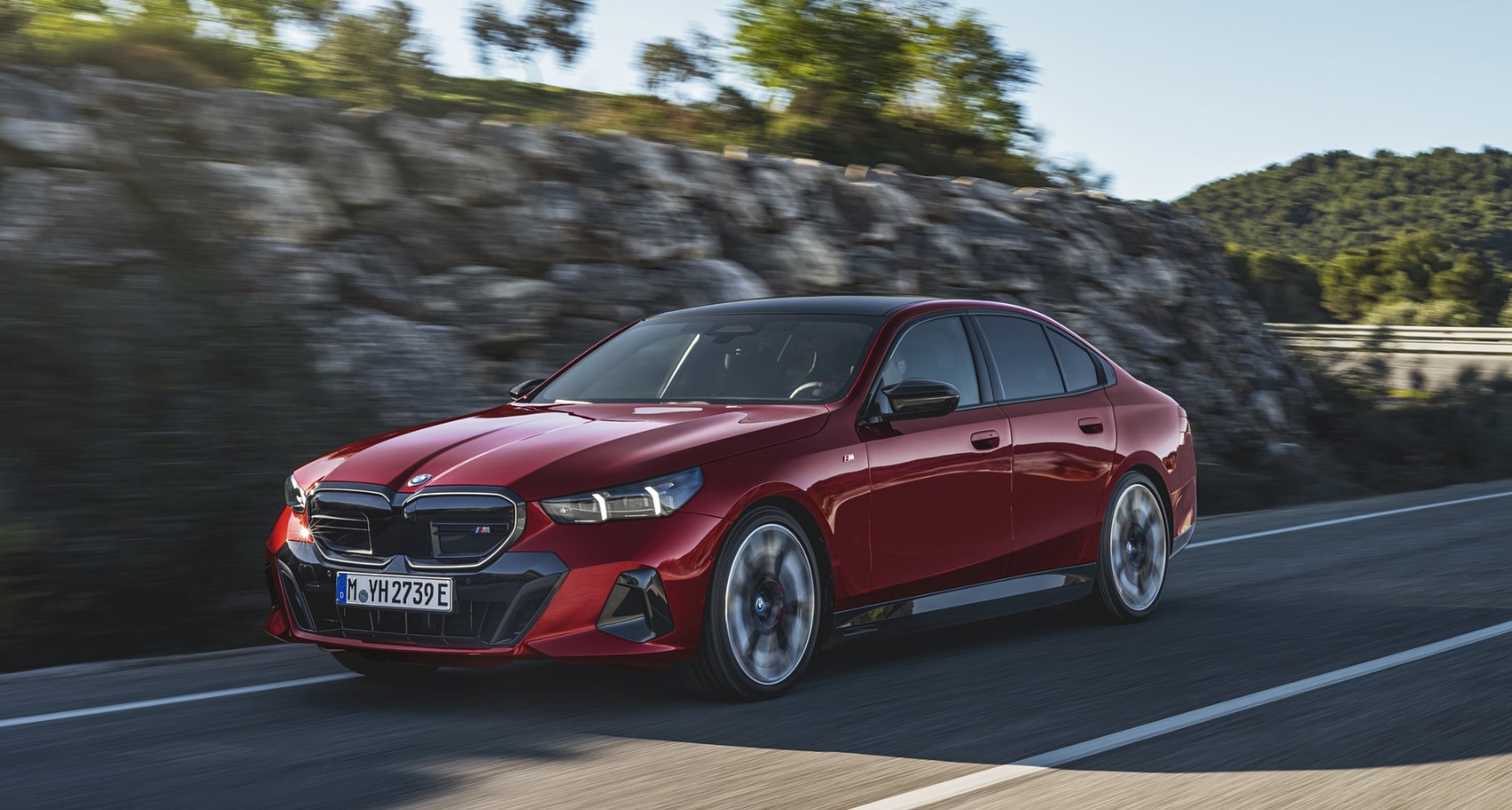
2028 BMW i5 Release Date, Price, Specs – The 2028 BMW i5 is expected to become an important chapter in BMW’s transition toward a more software-focused and technologically advanced electric lineup. The current i5 already gives the 5 Series a fully electric alternative without abandoning the traditional executive-sedan formula: a long wheelbase, premium cabin, familiar BMW driving position, multiple powertrain choices, and strong long-distance comfort. BMW has also introduced the i5 M60 xDrive as the performance flagship, delivering 593 hp and 820 Nm of torque, with a 0–60 mph time of 3.7 seconds in U.S. specification. The next stage should focus less on simply adding power and more on improving efficiency, charging, software, range, and overall usability.
The timing is particularly interesting because BMW is rolling out its Neue Klasse technology across the next generation of vehicles. BMW says its next-generation electric architecture brings new electrical and computing systems, sixth-generation eDrive technology, improved battery technology, and BMW Panoramic iDrive. Although BMW has not yet published a complete 2028 i5 specification sheet, those technologies provide a strong indication of where the model could be heading. The future i5 is therefore likely to become more closely connected to BMW’s next-generation electric ecosystem while retaining the practical proportions that make the 5 Series popular with executive-car buyers.
The i5 occupies an important position between BMW’s smaller electric models and the much larger i7 luxury sedan. That middle ground gives the car a broad audience. It can serve as an everyday commuter, business sedan, family vehicle, long-distance cruiser, or performance-oriented electric car depending on the selected configuration. The current i5 also demonstrates that BMW is not treating electrification as a reason to abandon driver engagement. Rear-wheel-drive and all-wheel-drive configurations, adaptive suspension, precise steering, and strong regenerative braking allow the car to retain much of the dynamic character associated with the 5 Series name.
For the 2028 model year, expectations should therefore be realistic. BMW has not confirmed the final redesign, horsepower figures, battery capacity, EPA range, trim structure, MSRP, or release date. Any specific future figures should be treated as projections rather than official specifications. Nevertheless, the existing i5 and BMW’s confirmed next-generation technology provide enough information to understand the likely direction. The 2028 BMW i5 should continue targeting buyers who want premium electric transportation without moving into the larger, more expensive territory occupied by the i7. 2028 BMW i5 Release Date
2028 BMW i5 Redesign and Update Plan
Exterior & Interior
The exterior of the 2028 BMW i5 could receive a substantial technology-driven refresh as BMW continues integrating its newer design language. The current 5 Series already features a more upright front section, a prominent kidney grille, slim lighting elements, flush door handles, and carefully sculpted bodywork. A future version could incorporate slimmer lighting technology, more aerodynamic surfaces, revised bumpers, and additional design elements derived from BMW’s Neue Klasse family. Rather than dramatically changing the recognizable sedan silhouette, BMW is likely to concentrate on improving aerodynamic efficiency while giving the car a more modern electric identity.
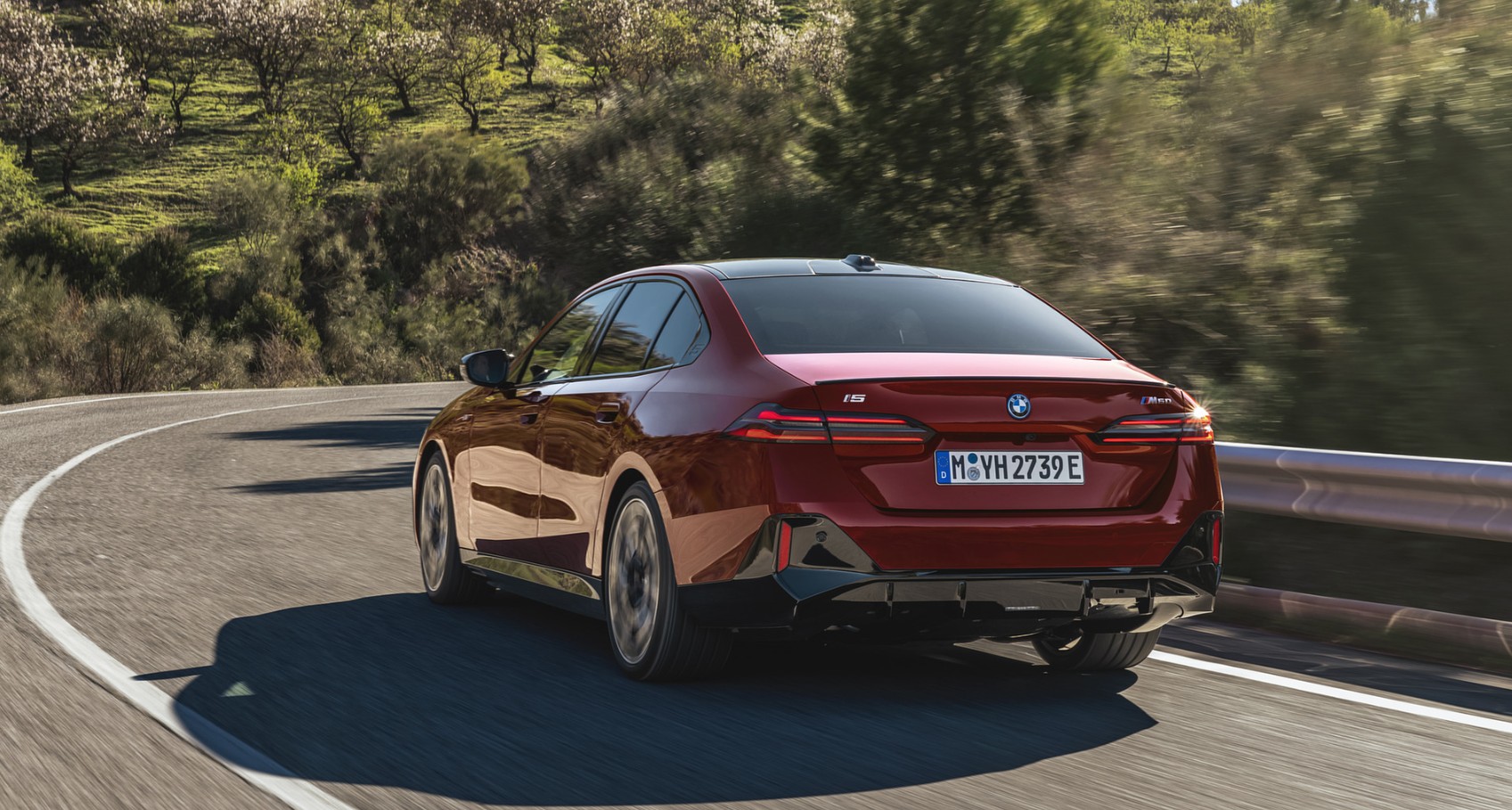
Aerodynamics will become increasingly important for the next-generation i5. A sedan that moves through the air efficiently needs less electrical energy at highway speeds, which directly affects driving range. Wheel design, underbody panels, grille treatment, air curtains, active cooling shutters, and the shape of the rear section can all contribute to efficiency. The existing i5 already uses aerodynamic design principles to reduce drag, but future BMW electric models are expected to push this approach further. A 2028 i5 could therefore look cleaner and more streamlined while gaining subtle functional improvements that are difficult to notice from a distance.
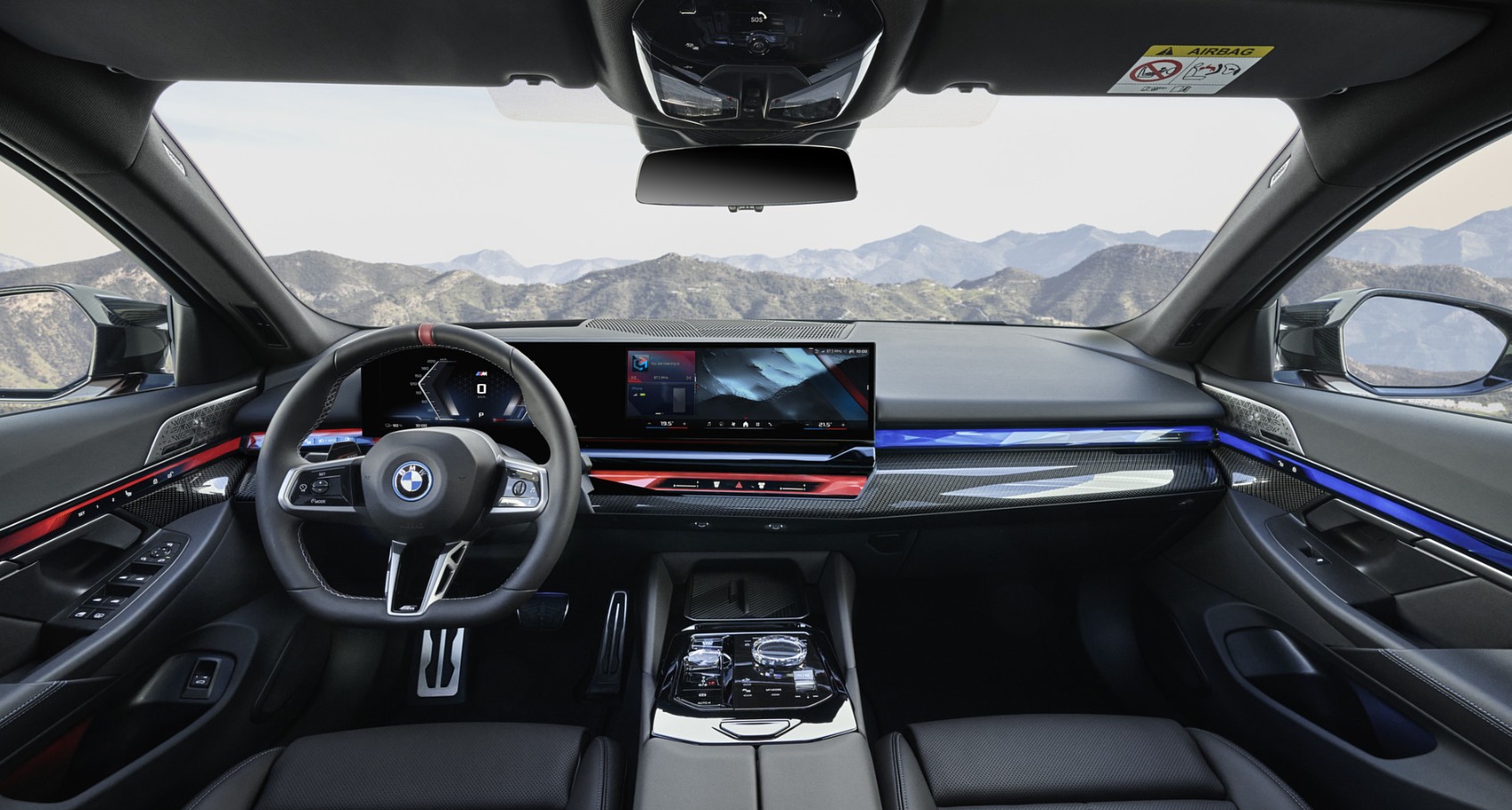
Inside, the transformation could be more significant. BMW’s latest-generation technology is moving toward a panoramic dashboard interface that combines digital information with a broad central display concept. The company has announced BMW Panoramic iDrive and BMW Operating System X as major elements of its future vehicle architecture. If these technologies reach the i5 by 2028, the cabin could feature a wider visual interface, improved voice control, more contextual information, and a more personalized software experience. The emphasis would be on reducing physical complexity while making important controls easier to access through a combination of touch, voice, steering-wheel inputs, and intelligent display systems.
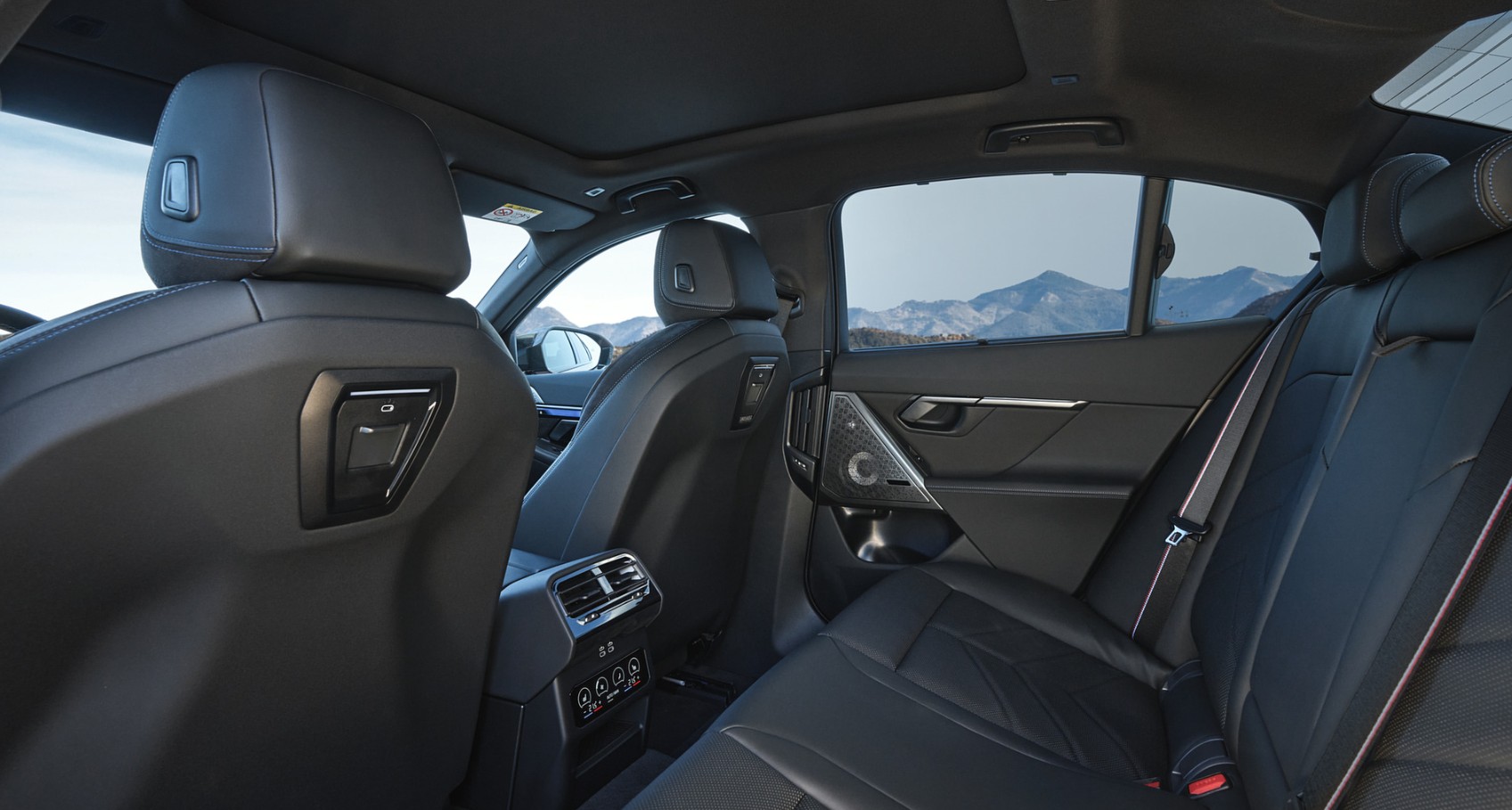
Material quality should remain a major selling point. The i5 is positioned as a premium executive sedan, so buyers can expect a cabin with high-quality upholstery, metallic accents, ambient lighting, comfortable front seats, and configurable interior finishes. BMW has increasingly expanded sustainable material options across its electric lineup, meaning future i5 versions could offer more recycled and animal-free interior surfaces without sacrificing perceived quality. Rear-seat passengers should also continue benefiting from generous legroom and a quiet cabin. The i5 does not need to become a limousine because the i7 already fills that role; its advantage is delivering premium comfort in a more manageable package.
2028 BMW i5 Specs
Engine & Performance
Powertrain development will probably be one of the biggest differences between the current i5 and a future 2028 model. The current lineup already ranges from the efficiency-oriented i5 eDrive40 to the high-performance i5 M60 xDrive. In the United States, the current i5 eDrive40 uses a rear-mounted electric motor producing 335 hp, while the i5 M60 xDrive combines front and rear electric motors for 593 hp and 586 lb-ft of torque. The M60 can temporarily produce additional output using BMW’s M Sport Boost function, helping the large sedan reach 60 mph in only 3.7 seconds.
A next-generation i5 could benefit from BMW’s sixth-generation eDrive technology. BMW has described its Gen6 system as a major advancement in electric motor, battery, charging, and electrical architecture technology. The new system is designed to improve energy density, charging capability, efficiency, and overall system performance. For the 2028 i5, that could translate into stronger acceleration without requiring a dramatically larger battery. It could also allow BMW to offer longer range while keeping vehicle weight under control, an important consideration for an executive sedan that needs to remain agile.
The performance version could evolve considerably as well. A future i5 M60 xDrive or successor could potentially deliver more than the current 593 hp, but BMW has not announced a 2028 output figure. More important than a headline horsepower number will be how effectively the car manages heat, battery discharge, traction, and repeated acceleration. Electric performance cars can deliver enormous peak power, but sophisticated thermal management determines how consistently that performance remains available. BMW’s experience with the i5 M60 and its broader M Performance portfolio should help the future car combine rapid acceleration with stable performance during demanding driving.
Chassis technology should remain another major advantage. The current i5 benefits from adaptive suspension technology, sophisticated stability control, variable steering, and available all-wheel drive. A future model could receive even more advanced electronically controlled suspension and torque-distribution systems. Rear-wheel steering may also continue to improve maneuverability, particularly in urban environments where a large executive sedan can otherwise feel cumbersome. The ideal 2028 i5 will not simply be faster in a straight line; it should also feel composed on winding roads, stable at high speed, easy to position in traffic, and comfortable during long highway trips. 2028 BMW i5 Release Date
2028 BMW i5 Fuel Economy
Range is likely to be one of the biggest priorities for the 2028 i5. The current i5 eDrive40 is EPA-rated for up to 295 miles of range in the United States depending on configuration, while the M60 xDrive has a lower maximum range because its dual-motor system prioritizes performance. The next generation could improve on these numbers through better battery chemistry, improved energy density, lower electrical losses, enhanced aerodynamics, and more efficient motors. BMW’s next-generation EV strategy specifically targets improvements in range and charging performance, making efficiency a major part of the company’s future product development.
Real-world efficiency will still depend on how the vehicle is driven. High-speed highway driving, cold temperatures, aggressive acceleration, large wheels, winter tires, heavy loads, and frequent climate-control use can reduce EV range. Conversely, steady speeds, moderate acceleration, regenerative braking, and favorable temperatures can help maximize usable distance. The 2028 i5 should ideally provide a comfortable buffer for everyday driving rather than forcing owners to plan every trip around charging. Fast charging will also matter because a long-range EV becomes considerably more convenient when a short charging stop can restore a substantial amount of usable driving distance.
2028 BMW i5 Safety Features
Safety technology will be central to the 2028 BMW i5 because modern premium vehicles increasingly depend on sophisticated driver-assistance systems. The current 5 Series family offers a wide selection of active safety technologies, including forward-collision warning, automatic emergency braking, lane-departure warning, blind-spot monitoring, adaptive cruise-control functions, parking assistance, and surround-view camera technology depending on specification and market. A future i5 should build on this foundation with more capable sensors, improved processing power, better object recognition, and increasingly advanced highway assistance.
BMW’s move toward a software-defined vehicle architecture could make safety improvements easier to integrate over the vehicle’s lifetime. More powerful computing systems can process information from cameras and other sensors faster, while over-the-air updates can introduce improvements without requiring a dealership visit for every software change. That does not mean every future feature will automatically be available in every market. Regulations, optional packages, local equipment strategies, and hardware differences will continue to influence which functions customers receive. Buyers should therefore verify the exact equipment list for their country rather than relying on global BMW announcements.
2028 BMW i5 Release Date & Price
The 2028 BMW i5 trim structure has not been officially announced, but the current lineup provides a useful framework. The i5 eDrive40 is designed around rear-wheel-drive efficiency and everyday usability, while the i5 xDrive40 adds all-wheel drive and greater traction. At the top sits the i5 M60 xDrive, which combines dual-motor all-wheel drive with substantially higher output and M Performance tuning. A similar hierarchy could remain for 2028, although BMW may introduce new names as its next-generation electric architecture becomes more widely adopted. The exact trims will ultimately depend on BMW’s market strategy and production plans.
Pricing is another area where future estimates need to be separated from confirmed information. The current U.S. i5 starts in the mid-$60,000 range before destination charges and options, while the M60 xDrive sits considerably higher. A next-generation 2028 model could cost more if it introduces substantially improved battery technology, advanced computing hardware, more sophisticated displays, and greater standard equipment. At the same time, manufacturing efficiencies and falling battery costs could offset some increases. A reasonable preliminary estimate would place the 2028 i5 eDrive40 around $70,000–$75,000, with higher trims potentially reaching well beyond $80,000.
The performance-focused M60 xDrive or its successor could potentially begin around $90,000–$100,000, although this remains an estimate rather than an official BMW price. Optional packages could push the final transaction price considerably higher. Premium paint, upgraded wheels, advanced driver assistance, luxury seating, premium audio, and high-end interior finishes can quickly add thousands of dollars to an executive sedan. Buyers comparing prices should also consider federal or local EV incentives where applicable, because the effective ownership cost can differ substantially from the vehicle’s advertised MSRP.
A confirmed 2028 BMW i5 release date has not been published. The timing will depend on how BMW coordinates the existing 5 Series/i5 lifecycle with the broader Neue Klasse rollout. If BMW follows a conventional model-year schedule, production or sales could begin during late 2027 or sometime in 2028, but that should be considered a forecast rather than a confirmed launch date. The final release schedule will likely become clearer as BMW announces future 5 Series updates, next-generation battery technology, and additional Neue Klasse-based vehicles. Until then, the most reliable expectation is that the i5 will continue evolving toward higher efficiency, faster charging, stronger software integration, and increasingly sophisticated electric performance. 2028 BMW i5 Release Date
Conclusion
The 2028 BMW i5 has the potential to become a significant evolution of BMW’s electric executive sedan rather than simply another annual update. The current i5 already combines the familiar 5 Series formula with instant electric torque, rear- or all-wheel-drive configurations, premium comfort, advanced suspension technology, and an M60 performance variant capable of 593 hp. BMW’s next-generation electrical and software architecture points toward a future i5 with better battery efficiency, improved charging, more sophisticated digital interfaces, and stronger integration between hardware and software.
The biggest unknowns remain the official 2028 battery capacity, EPA and WLTP range figures, horsepower, charging times, trim structure, MSRP, and launch date. Those details should not be treated as confirmed until BMW releases them. What is clear is the direction: the future i5 is likely to become more efficient, more connected, and more technologically advanced while retaining the balanced proportions and driving character expected from a BMW 5 Series. For buyers considering a premium electric sedan, the 2028 BMW i5 could become one of the most closely watched models in the segment as BMW continues moving the 5 Series into its next electric era.
Note: The details included in this blog post are derived from pre-release material that was accessible when the article was written. If you want the latest information, you should check official sources or call your nearest dealership.
Read Also:
- 2028 BMW i7 M70 Specs, Price, Release Date
- 2027 BMW 4 Series Convertible Review, Price, Specs
- 2027 BMW 1 Series Release Date, Specs, Features
- 2027 BMW X5 Redesign, Price, Configurations
- 2027 BMW M3 Touring Redesign, Price, Configurations
Frequently Asked Questions
2028 BMW i5 Release Date, Price, Specs - The 2028 BMW i5 is expected to become an important chapter in BMW’s transition toward a more software-focused and technologically advanced electric lineup. The current i5 already gives the 5 Series a fully electric alternative without abandoning the traditional executive-sedan…
The timing is particularly interesting because BMW is rolling out its Neue Klasse technology across the next generation of vehicles. BMW says its next-generation electric architecture brings new electrical and computing systems, sixth-generation eDrive technology, improved battery technology, and BMW Panoramic iDrive. Although BMW has not yet published…
The i5 occupies an important position between BMW’s smaller electric models and the much larger i7 luxury sedan. That middle ground gives the car a broad audience. It can serve as an everyday commuter, business sedan, family vehicle, long-distance cruiser, or performance-oriented electric car depending on the selected…
For the 2028 model year, expectations should therefore be realistic. BMW has not confirmed the final redesign, horsepower figures, battery capacity, EPA range, trim structure, MSRP, or release date. Any specific future figures should be treated as projections rather than official specifications. Nevertheless, the existing i5 and BMW’s…
2028 BMW i5 Redesign and Update Plan Exterior & Interior The exterior of the 2028 BMW i5 could receive a substantial technology-driven refresh as BMW continues integrating its newer design language. The current 5 Series already features a more upright front section, a prominent kidney grille, slim lighting…