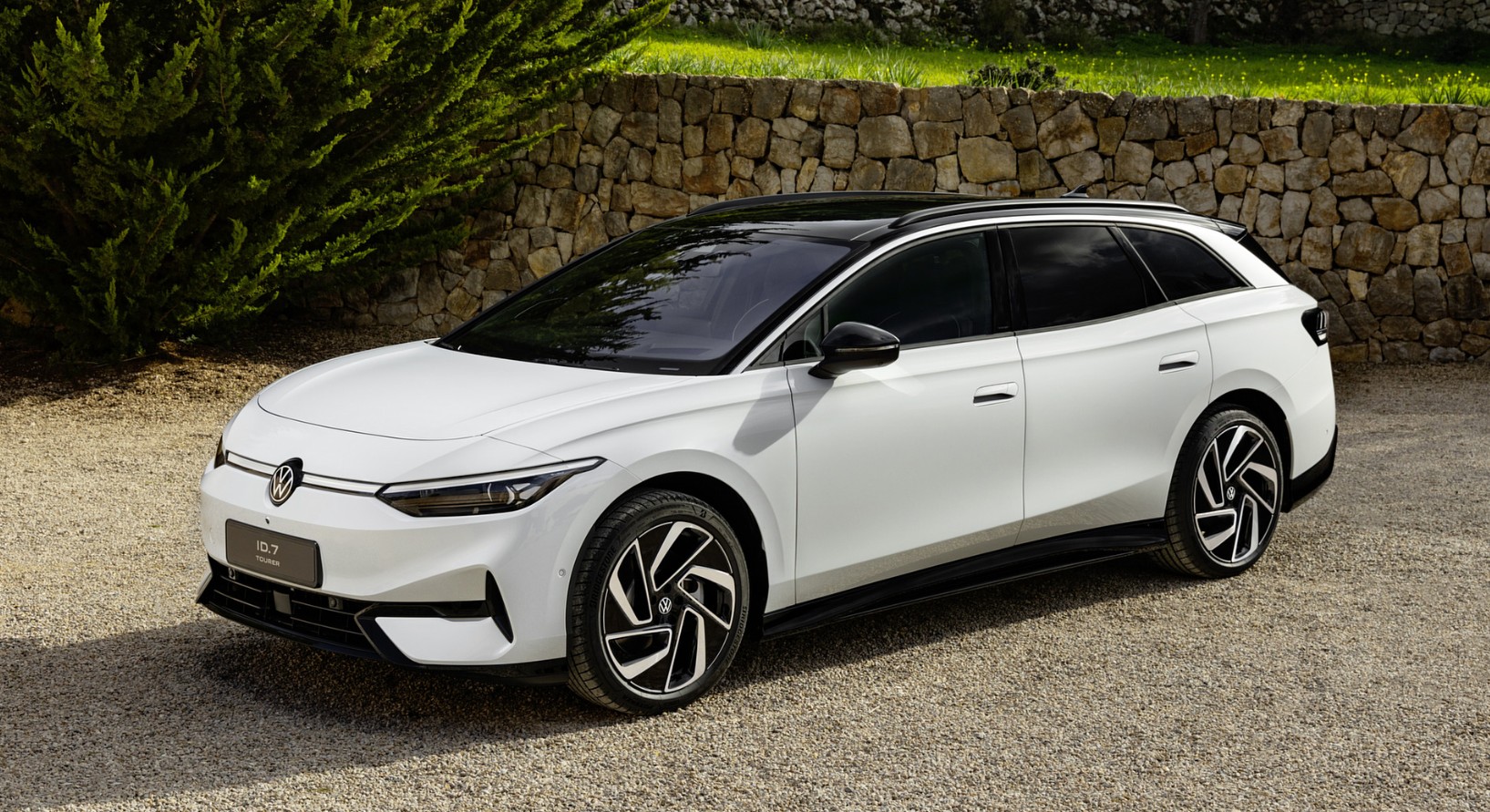
2028 Volkswagen ID.7 Tourer Redesign, Specs, Price – The 2028 Volkswagen ID.7 Tourer is shaping up as an important electric wagon for buyers who want long-distance capability without giving up practicality. Volkswagen introduced the ID.7 Tourer as the estate-bodied companion to the ID.7 fastback, combining an aerodynamic silhouette with a large cargo area and a spacious five-seat cabin. The current model already offers up to 1,714 liters of luggage capacity, long-range battery options, rapid DC charging and a choice between rear-wheel drive and dual-motor all-wheel drive. Volkswagen has not yet published a complete official 2028 model-year specification, so the next model should be viewed as a forward-looking projection based on the latest confirmed ID.7 Tourer.
For 2028, the biggest opportunity is refinement rather than a complete reinvention. The ID.7 Tourer already occupies a distinctive position between conventional executive wagons and large electric SUVs, and Volkswagen has little reason to abandon that formula. A future update could concentrate on battery efficiency, software responsiveness, charging performance, cabin technology and driver-assistance functions. The basic long-roof body could remain because it delivers the practical advantage that makes the Tourer different from the ID.7 fastback. At the same time, aerodynamic improvements and more efficient electric hardware could potentially increase usable range without requiring a dramatic increase in battery size.
The latest official Volkswagen data provides a strong technical foundation for expectations. Current ID.7 Tourer versions use either a 77-kWh or 86-kWh net battery, with the larger pack reaching as much as 688 km of WLTP range in Volkswagen’s German-market specification. Depending on configuration, DC charging reaches roughly 175 to 200 kW, while the 86-kWh battery can be charged from 10 to 80 percent in around 26 to 28 minutes under suitable conditions. Those numbers make the Tourer particularly relevant for high-mileage drivers, and any 2028 revision will be measured against this established baseline.
A 2028 update could also bring a clearer separation between comfort-focused Pro models and performance-oriented GTX versions. Volkswagen already uses this strategy, with the GTX Tourer combining a 340-PS dual-motor drivetrain with 4MOTION all-wheel drive. The practical body remains intact, but the GTX adds stronger acceleration and sportier equipment. For the 2028 model year, buyers could therefore see an improved range of standard equipment, more sophisticated suspension tuning, additional software functions and incremental efficiency gains rather than an entirely new vehicle. Until Volkswagen releases official 2028 specifications, however, exact battery capacities, range figures, prices and launch timing should not be treated as confirmed. 2028 Volkswagen ID.7 Tourer Redesign
2028 Volkswagen ID.7 Tourer Redesign and Update Plan
Exterior & Interior
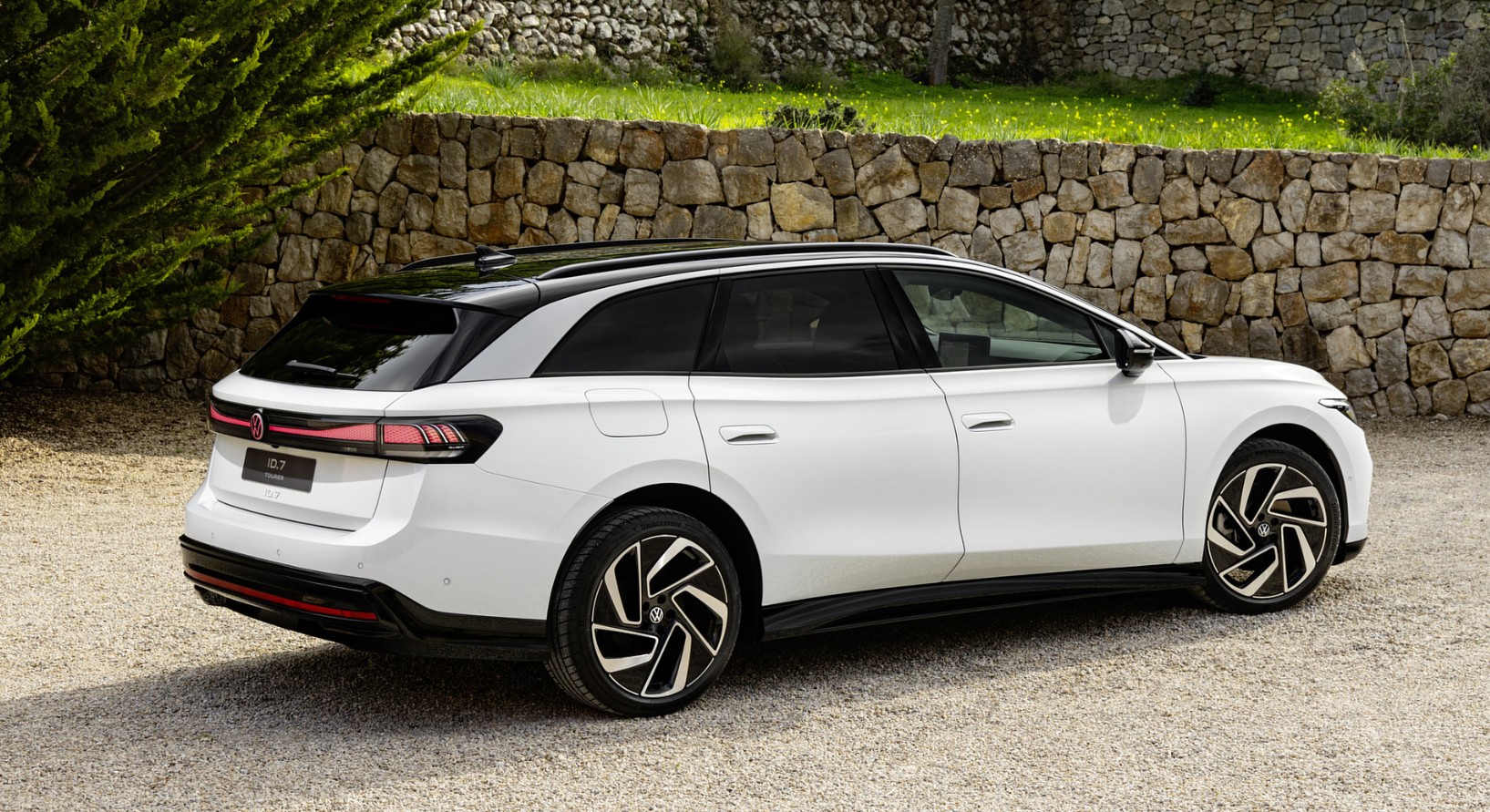
The ID.7 Tourer’s exterior is one of its strongest characteristics because it combines the visual presence of a large estate with the smooth proportions expected from an electric vehicle. At 4,961 mm long, the current Tourer has substantial road presence without moving into full-size SUV territory. The long roof extends the practical load area while maintaining a relatively sleek profile, and Volkswagen’s aerodynamic approach helps reduce energy consumption at higher speeds. Current specifications list a drag coefficient of approximately 0.24 for several versions, demonstrating that practicality has not been achieved by simply creating a boxier rear section.
A 2028 refresh could introduce redesigned front and rear lighting, revised bumpers, new wheel designs and subtle aerodynamic improvements. The basic identity would likely remain recognizable because the Tourer already has a carefully developed estate profile. Slimmer lighting signatures could give the front end a more technical appearance, while revised rear lamps could create a stronger nighttime identity. Wheel designs could also receive attention because low-drag wheels are particularly important on an EV. A future GTX could continue with larger wheels and distinctive exterior details, while standard Pro versions would likely prioritize efficiency and quieter highway driving.
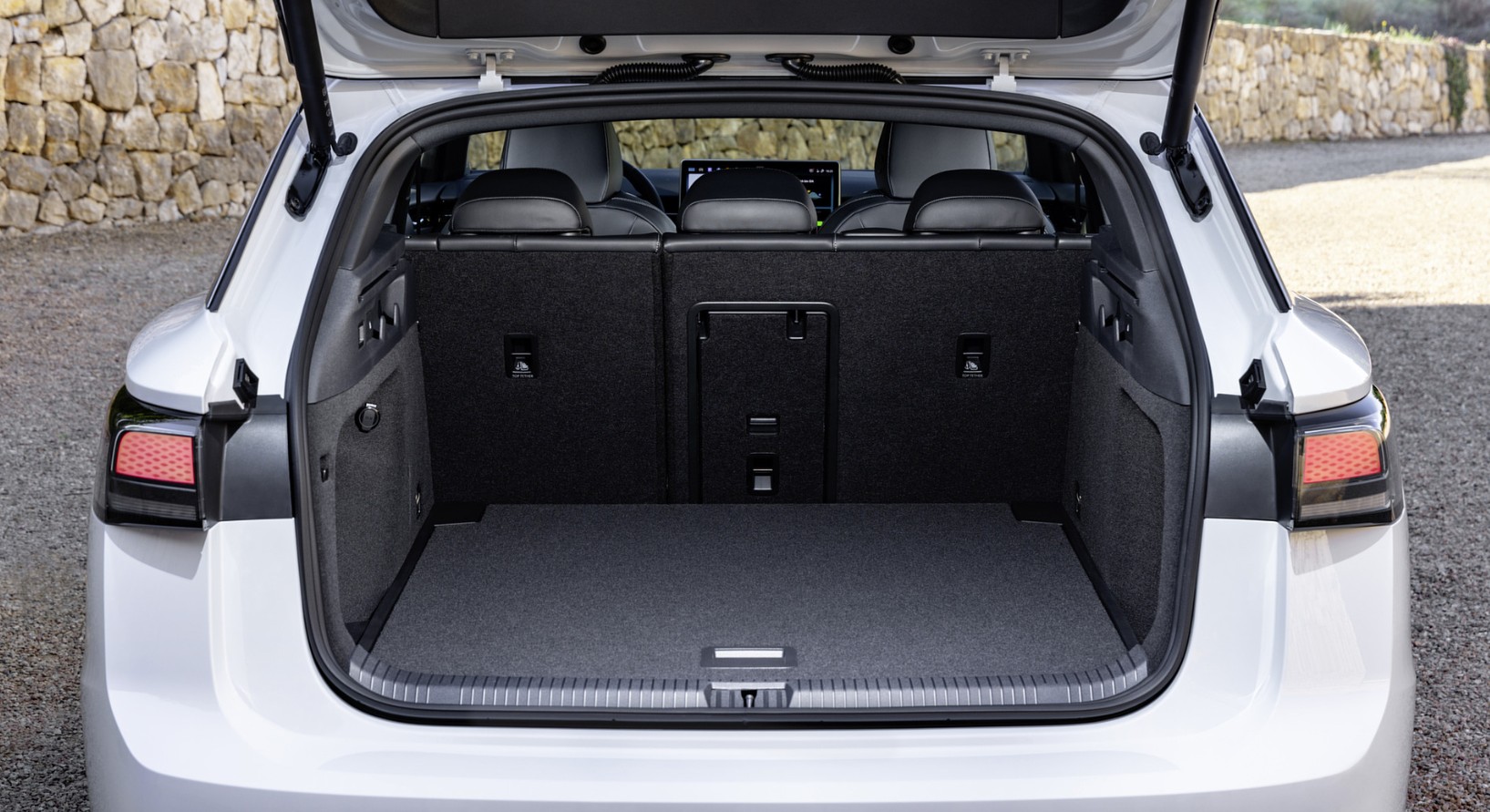
Practicality remains central to the Tourer concept. Volkswagen currently quotes 605 liters of luggage capacity with five occupants, expanding to as much as 1,714 liters when the rear seats are folded and the load area is used up to the roof. The loading floor can approach two meters in length under maximum-load conditions, giving the vehicle enough flexibility for family travel, business equipment, bicycles and larger recreational gear. This is a major advantage over many sleek electric crossovers because the wagon body provides useful vertical and longitudinal cargo space without requiring a tall SUV-style rear end.
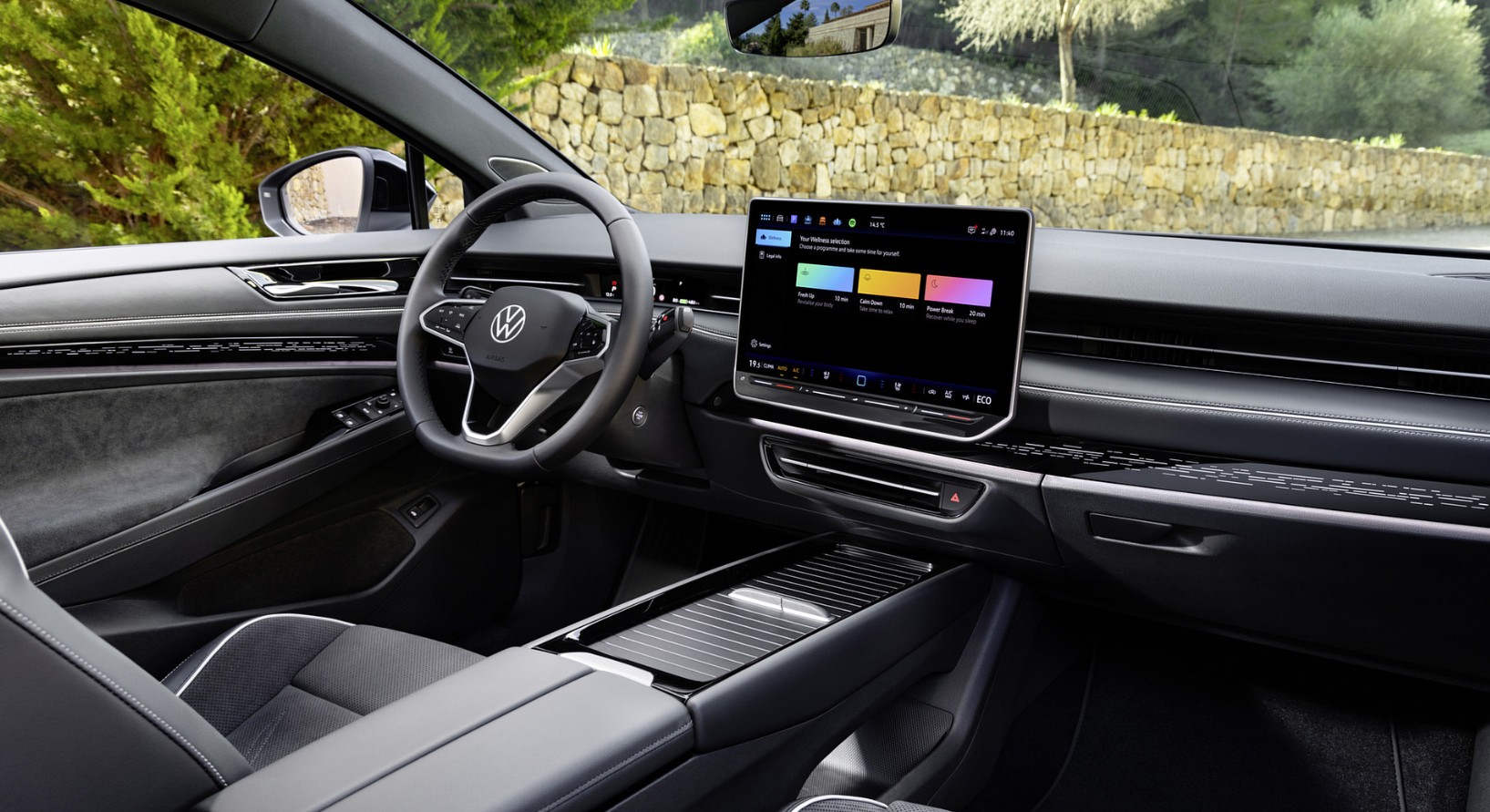
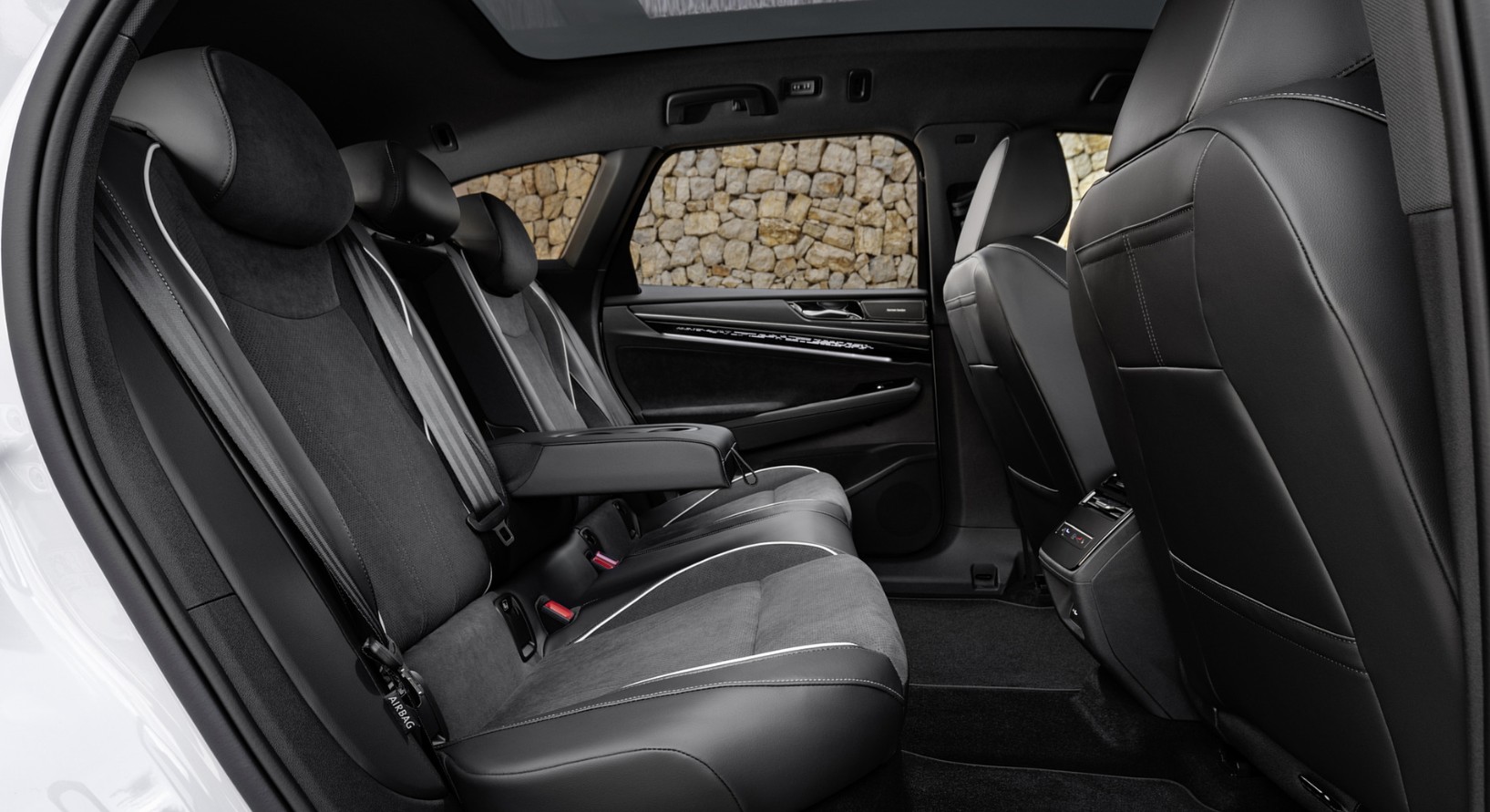
Inside, the 2028 ID.7 Tourer could receive a more polished interpretation of Volkswagen’s current digital cabin. The existing model already offers a large central infotainment display, augmented-reality head-up display availability, advanced climate functions and comfort-oriented seating. Higher specifications add features such as ventilated massage seats, while the GTX Plus specification in the UK includes adaptive chassis control, heated front and rear seats and a Harman Kardon audio system. A future model could build on this foundation with faster software, improved voice interaction, better navigation and more intuitive physical controls.
2028 Volkswagen ID.7 Tourer Specs
Engine & Performance
The powertrain strategy of the ID.7 Tourer is already centered on efficiency rather than excessive complexity. Current Pro and Pro S versions use a rear-mounted electric drive system producing 210 kW, equivalent to 286 PS. The 77-kWh model can provide a WLTP range in the broad region of 524 to 606 km depending on specification, while the larger 86-kWh battery raises the potential range to approximately 578 to 689 km in Volkswagen’s published data. The exact number depends on wheels, equipment, driving conditions and market configuration, but the larger battery clearly targets drivers who spend significant time on motorways.
For 2028, an efficiency-focused revision could be more important than a major power increase. Electric motors, inverters, battery chemistry and thermal management can all influence range, charging consistency and energy consumption. Volkswagen could use improved semiconductor technology and software optimization to extract more usable distance from similar battery capacity. A more advanced regenerative-braking strategy could also improve energy recovery in urban traffic and on descending roads. Such changes would not necessarily produce dramatic headline figures, but they could make the car easier to live with during long journeys, particularly when temperatures are low or the vehicle is heavily loaded.
The performance flagship is the ID.7 GTX Tourer. Volkswagen currently gives this model a dual-motor electric 4MOTION system with 250 kW, or 340 PS, making it the most powerful Volkswagen estate in the brand’s lineup. The GTX Tourer uses an 86-kWh net battery and can accelerate from 0 to 62 mph in around 5.5 seconds according to Volkswagen’s published overview data. Its performance is therefore substantial without sacrificing the wagon body or its maximum 1,714-liter cargo capacity.
A 2028 GTX could preserve the 340-PS configuration while gaining more sophisticated torque management, suspension calibration and traction control. The dual-motor layout provides an obvious advantage on wet roads and during hard acceleration, while adaptive chassis technology can balance comfort and handling. Volkswagen’s current UK GTX Plus specification already includes DCC adaptive chassis control and driving profile selection, giving a future model a solid platform for further refinement. The standard Pro versions, meanwhile, should remain focused on quiet cruising, low energy consumption and long-distance comfort rather than outright acceleration. 2028 Volkswagen ID.7 Tourer Redesign
2028 Volkswagen ID.7 Tourer Fuel Economy
Charging capability is another area where the 2028 model could gain meaningful improvements. The current 77-kWh battery supports DC charging of up to approximately 175 kW, while the 86-kWh versions can accept up to around 200 kW depending on configuration. Volkswagen states that the 86-kWh ID.7 Tourer can replenish from 10 to 80 percent in roughly 26 minutes under suitable conditions. The practical benefit is significant on long trips: a properly prepared charging stop can add a substantial amount of usable range without requiring the driver to spend a long period beside the vehicle.
For the 2028 model, Volkswagen could target better charging consistency rather than simply increasing peak charging power. A higher peak number is useful only when the battery can sustain strong charging rates across a meaningful portion of the charging session. Improved battery thermal management, charging curves and navigation-based battery preconditioning could therefore deliver a noticeable improvement in real-world road-trip performance. The car’s energy-management software could also become more predictive, automatically preparing the battery for an upcoming DC charger and adjusting charging recommendations according to the route.
2028 Volkswagen ID.7 Tourer Safety Features
Safety technology is expected to remain a major component of the 2028 ID.7 Tourer’s equipment strategy. The current ID.7 family uses a broad range of driver-assistance technologies, and Volkswagen positions the Tourer as a vehicle suited to long-distance family and business travel. Depending on market and trim, equipment can include adaptive cruise control, lane-support functions, camera-based parking assistance, area-view cameras and other electronic assistance systems. The exact 2028 package has not yet been announced, but additional software capability and improved sensor integration would be logical areas for development.
The current Tourer’s efficiency figures are already competitive for a large electric estate. Volkswagen’s official data lists combined consumption from roughly 14.0 to 16.8 kWh/100 km depending on battery, drivetrain and specification. The most efficient Pro S configurations are positioned toward the lower end of that range, while the GTX’s dual-motor system and performance hardware increase energy consumption. Because EV efficiency changes significantly with speed, temperature, wheel size and driving style, real-world results will naturally differ from laboratory WLTP figures.
2028 Volkswagen ID.7 Tourer Release Date & Price
The current European ID.7 Tourer range gives a useful indication of how Volkswagen could structure the 2028 lineup. In Germany, the latest official configurator lists Pro, Pro S and GTX versions. The Pro uses a 77-kWh battery, while Pro S and GTX use an 86-kWh battery. The German-market prices currently start at €55,305 for the Pro, €60,295 for the Pro S and €64,635 for the GTX, including VAT. These are current prices rather than confirmed 2028 pricing, so they should be used only as a reference point when considering the future model.
The Pro should remain the logical entry point for customers prioritizing range, comfort and value. Its 77-kWh battery already provides a substantial WLTP driving range, while the rear-wheel-drive layout keeps the drivetrain relatively straightforward. Pro S is likely to remain attractive to drivers who regularly travel long distances because its larger 86-kWh battery can provide substantially more WLTP range. In the latest German specification, Volkswagen quotes up to 688 km for the Pro S, making it the range-focused choice within the lineup.
The GTX should continue serving buyers who want a genuinely fast electric wagon rather than simply a practical family EV. Its dual-motor 4MOTION system, 340-PS output and sport-oriented equipment give it a different character from the Pro and Pro S. Current UK equipment for the GTX Plus includes 20-inch wheels, adaptive DCC chassis control, ventilated massage front seats, heated front and rear seats and a premium Harman Kardon sound system. A 2028 version could add more standard technology, but there is no official confirmation yet of its final specification or price.
Volkswagen has not announced a definitive 2028 ID.7 Tourer release date or official U.S.-market pricing in the sources available for this article. The current vehicle is already on sale in European markets, and Volkswagen’s official information confirms the model’s established position in the brand’s electric lineup. Consequently, a 2028 model-year vehicle could arrive as a continuation or refresh rather than a completely new generation. Buyers should watch for Volkswagen’s official 2028 announcements before treating any projected MSRP, battery capacity, EPA range, trim names or launch timing as final. The current ID.7 Tourer begins at €55,305 in Germany, providing a reasonable reference point but not a confirmed 2028 price. 2028 Volkswagen ID.7 Tourer Redesign
Conclusion
The 2028 Volkswagen ID.7 Tourer has a strong foundation because its core formula is already clear: combine long-distance electric range with genuine estate-car practicality, premium comfort and useful performance. The current model offers up to 1,714 liters of cargo space, an 86-kWh battery option, rapid DC charging and a 340-PS GTX version, giving Volkswagen a broad technical base for future development.
The most meaningful 2028 improvements would likely come through refinement rather than dramatic changes to the body. More efficient battery and motor technology, better charging consistency, faster software, improved driver assistance and additional cabin comfort could make the Tourer more competitive as electric family and executive cars continue to evolve.
Most importantly, the ID.7 Tourer occupies a category that remains unusually practical for an EV. It delivers the low-roof efficiency of a large electric passenger car while retaining the loading flexibility associated with a traditional wagon. That combination gives the 2028 model a clear identity even before Volkswagen announces its final specifications.
Until the manufacturer publishes official 2028 details, the current ID.7 Tourer should remain the factual reference point. Exact range, equipment, pricing, battery technology and release timing may change, but the existing model demonstrates why the Tourer is one of Volkswagen’s most interesting electric vehicles for buyers who want long-distance capability without moving into a large SUV.
Note: The details included in this blog post are derived from pre-release material that was accessible when the article was written. If you want the latest information, you should check official sources or call your nearest dealership.
Read Also:
- 2028 Volkswagen Atlas Redesign, Price, Dimensions
- 2027 Volkswagen Golf 7 Facelift Release Date, Specs, Performance
- 2027 Volkswagen Taigo Price, Specs, Configurations
- 2027 Volkswagen Polo GTI Edition 25 Price, Specs, Interior
- 2027 Volkswagen Polo Features, Specs, Redesign
Frequently Asked Questions
2028 Volkswagen ID.7 Tourer Redesign, Specs, Price - The 2028 Volkswagen ID.7 Tourer is shaping up as an important electric wagon for buyers who want long-distance capability without giving up practicality. Volkswagen introduced the ID.7 Tourer as the estate-bodied companion to the ID.7 fastback, combining an aerodynamic silhouette…
For 2028, the biggest opportunity is refinement rather than a complete reinvention. The ID.7 Tourer already occupies a distinctive position between conventional executive wagons and large electric SUVs, and Volkswagen has little reason to abandon that formula. A future update could concentrate on battery efficiency, software responsiveness, charging…
The latest official Volkswagen data provides a strong technical foundation for expectations. Current ID.7 Tourer versions use either a 77-kWh or 86-kWh net battery, with the larger pack reaching as much as 688 km of WLTP range in Volkswagen's German-market specification. Depending on configuration, DC charging reaches roughly…
A 2028 update could also bring a clearer separation between comfort-focused Pro models and performance-oriented GTX versions. Volkswagen already uses this strategy, with the GTX Tourer combining a 340-PS dual-motor drivetrain with 4MOTION all-wheel drive. The practical body remains intact, but the GTX adds stronger acceleration and sportier…
2028 Volkswagen ID.7 Tourer Redesign and Update Plan Exterior & Interior The ID.7 Tourer's exterior is one of its strongest characteristics because it combines the visual presence of a large estate with the smooth proportions expected from an electric vehicle. At 4,961 mm long, the current Tourer has…