2028 Lamborghini Urus SE Release Date, Specs, Price – The 2028 Lamborghini Urus SE sits at an unusual point in Lamborghini’s product cycle. Rather than being an officially announced all-new model year, it is better understood as a likely continuation of the current Urus SE formula before the arrival of the next-generation Urus. Lamborghini introduced the Urus SE in 2024 as the first plug-in hybrid version of its Super SUV, combining a twin-turbocharged 4.0-liter V8 with an electric motor and a 25.9-kWh battery. The result is 800 CV, 950 Nm and a 312-km/h top speed. For 2028, the key question is therefore not whether Lamborghini will suddenly abandon the SE formula, but how much additional development could be applied before the next-generation Urus arrives.
The timing matters because Lamborghini has changed its electrification strategy. Earlier plans envisioned an all-electric Urus successor, but Lamborghini CEO Stephan Winkelmann subsequently confirmed that the next generation would continue with plug-in hybrid technology. Automotive reporting now places the all-new second-generation Urus around 2029, meaning a 2028 Urus SE would potentially represent one of the final evolutions of the current generation rather than a completely new SUV. This makes a carefully targeted update more plausible than a ground-up redesign. Improvements could focus on software, battery management, hybrid calibration, infotainment and customization while retaining the recognizable Urus architecture.
The current Urus SE already introduced substantial technical changes, so Lamborghini does not need to reinvent its hardware immediately. The electric motor is positioned inside the eight-speed automatic transmission and can operate as both a performance booster and a traction source. The system also introduces a centrally positioned longitudinal electric torque-vectoring system working with the transfer case and an electronically controlled rear limited-slip differential. These technologies allow the Urus SE to alter torque distribution according to driving conditions and provide a more agile, rear-biased character when appropriate. A 2028 update could refine those controls further through software rather than replacing the underlying system.
Another likely area for refinement is Lamborghini’s vehicle-dynamics software. The Urus already uses sophisticated electronic systems to coordinate power delivery, steering, braking, suspension and traction. With the SE, hybrid power adds another layer because the electric motor can deliver instant torque independently of the V8. A future calibration could make transitions between combustion and electric assistance even less noticeable while improving launch performance and corner-exit response. If Lamborghini does offer a 2028 Urus SE before the all-new generation, software optimization could be more significant than a cosmetic facelift. The brand has not published a specific 2028 update plan, so these developments remain projections rather than confirmed equipment. 2028 Lamborghini Urus SE Release Date
2028 Lamborghini Urus SE Redesign and Update Plan
Exterior & Interior
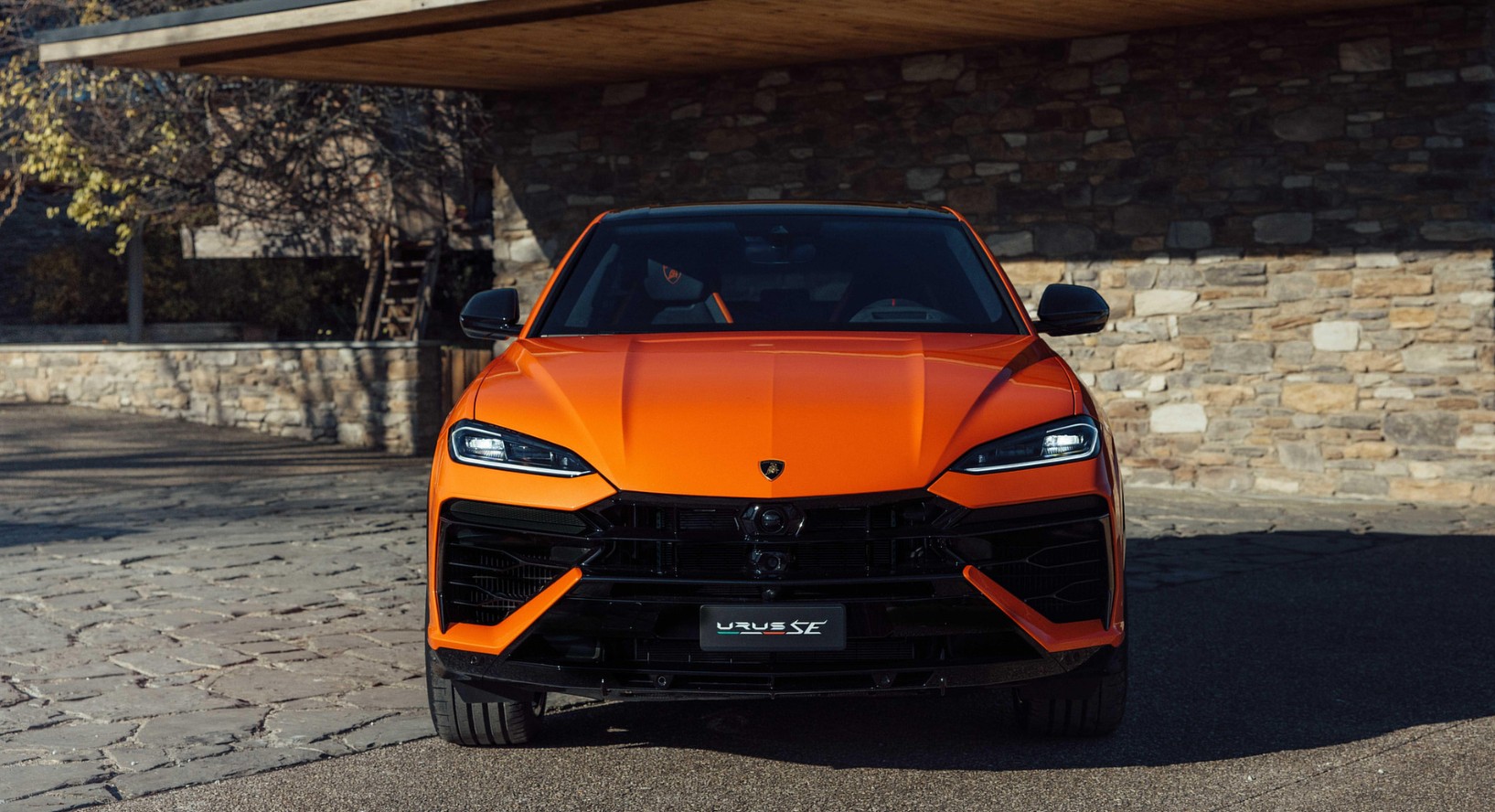
The current Urus SE already received a substantial exterior redesign when Lamborghini introduced the PHEV. The front end gained a new hood design, revised bumper and grille, and new Matrix LED headlight clusters with a lighting signature inspired by the bull motif associated with Lamborghini. The hood uses a floating visual treatment without the previous cut-off line, creating a smoother transition from the front fascia toward the windshield. The changes were not simply decorative; Lamborghini also optimized the aerodynamic balance and cooling requirements of the hybrid Super SUV. A potential 2028 version would likely retain this design rather than immediately replace it with another major body shape.
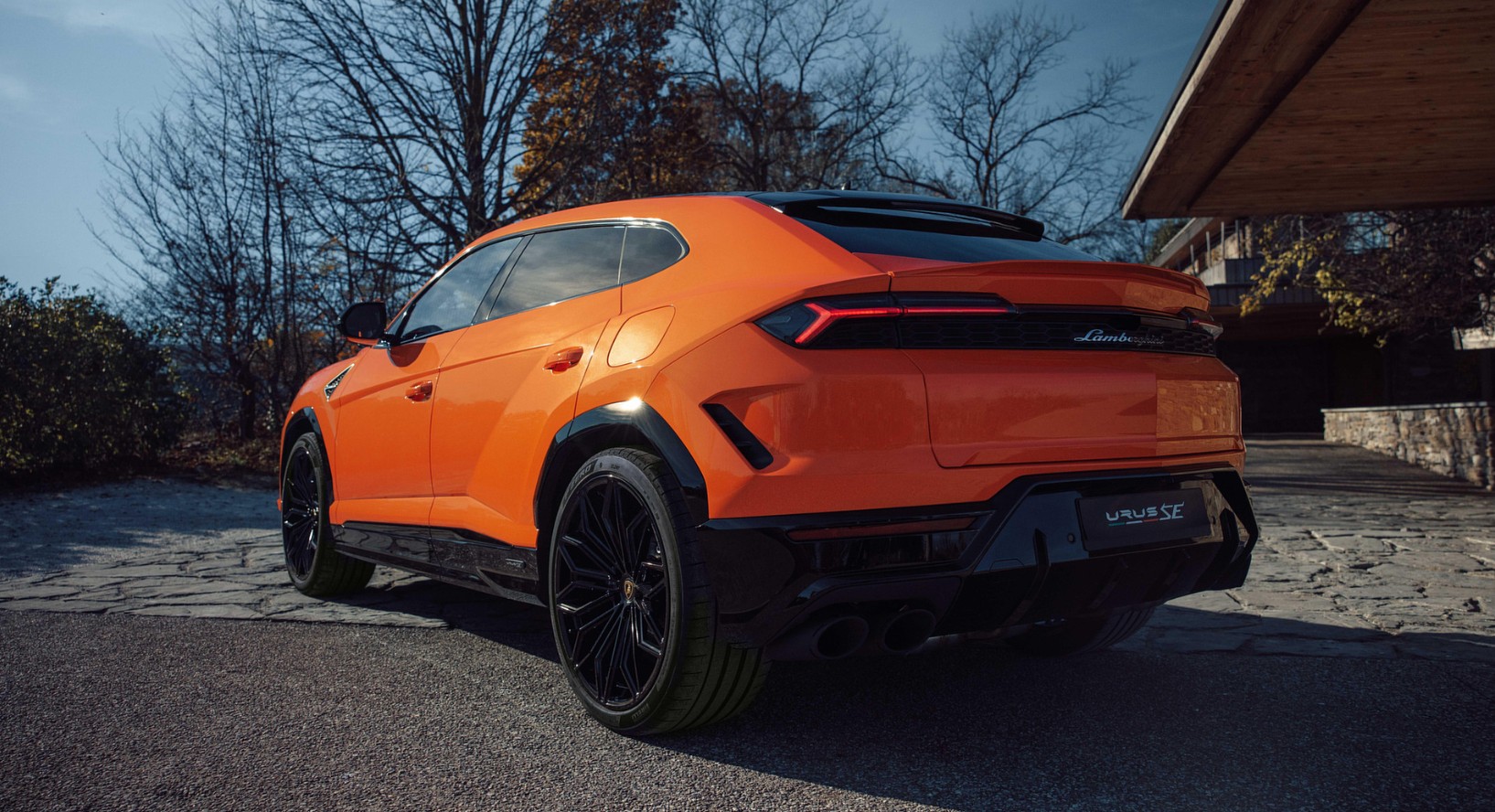
The rear of the Urus SE is equally important because Lamborghini reshaped the aerodynamic package to increase visual width and improve airflow. The rear diffuser, bumper treatment and spoiler contribute to a more planted appearance, while the side profile maintains the characteristic Urus proportions: a high-performance crossover body with a relatively low roofline and strongly sculpted surfaces. Lamborghini’s design language continues to emphasize the contrast between the two-thirds body and one-third glass ratio. Large wheels, angular wheel arches and sharp character lines prevent the vehicle from appearing like a conventional luxury SUV. For 2028, new wheel designs or limited-edition exterior packages would be more likely than a complete visual transformation.
Customization will remain a major part of the Urus ownership experience. Lamborghini’s Ad Personam program allows customers to select an enormous range of exterior and interior finishes, colors, wheels, brake-caliper combinations and trim details. The Urus family has also received special Capsule and limited-edition treatments, demonstrating how Lamborghini can create new visual identities without changing the underlying vehicle. A 2028 Urus SE could therefore be differentiated through a new factory appearance package, special paint palette or interior theme. Such an approach would fit Lamborghini’s strategy of making individual customer specification a major part of the vehicle’s value proposition.
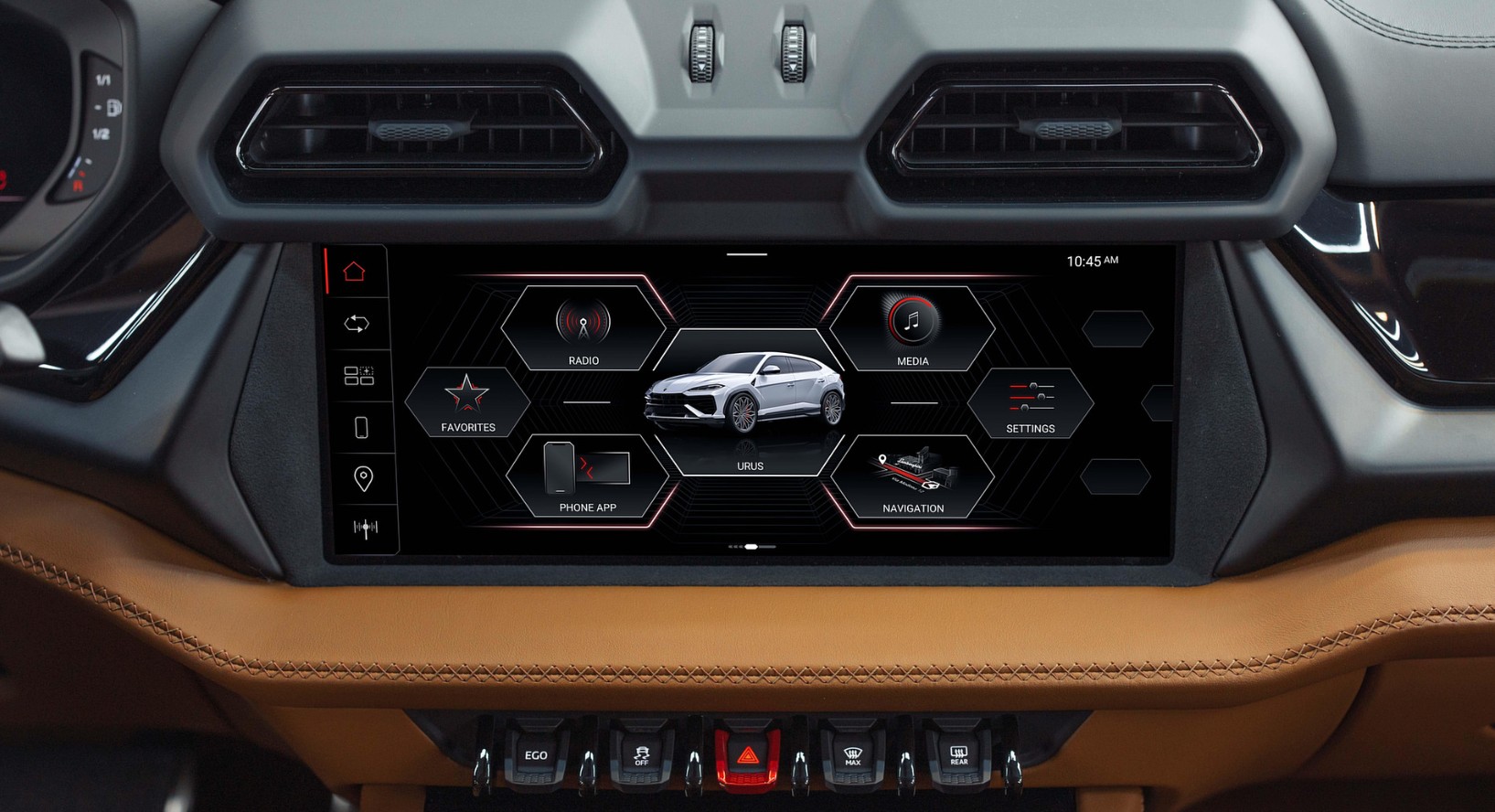
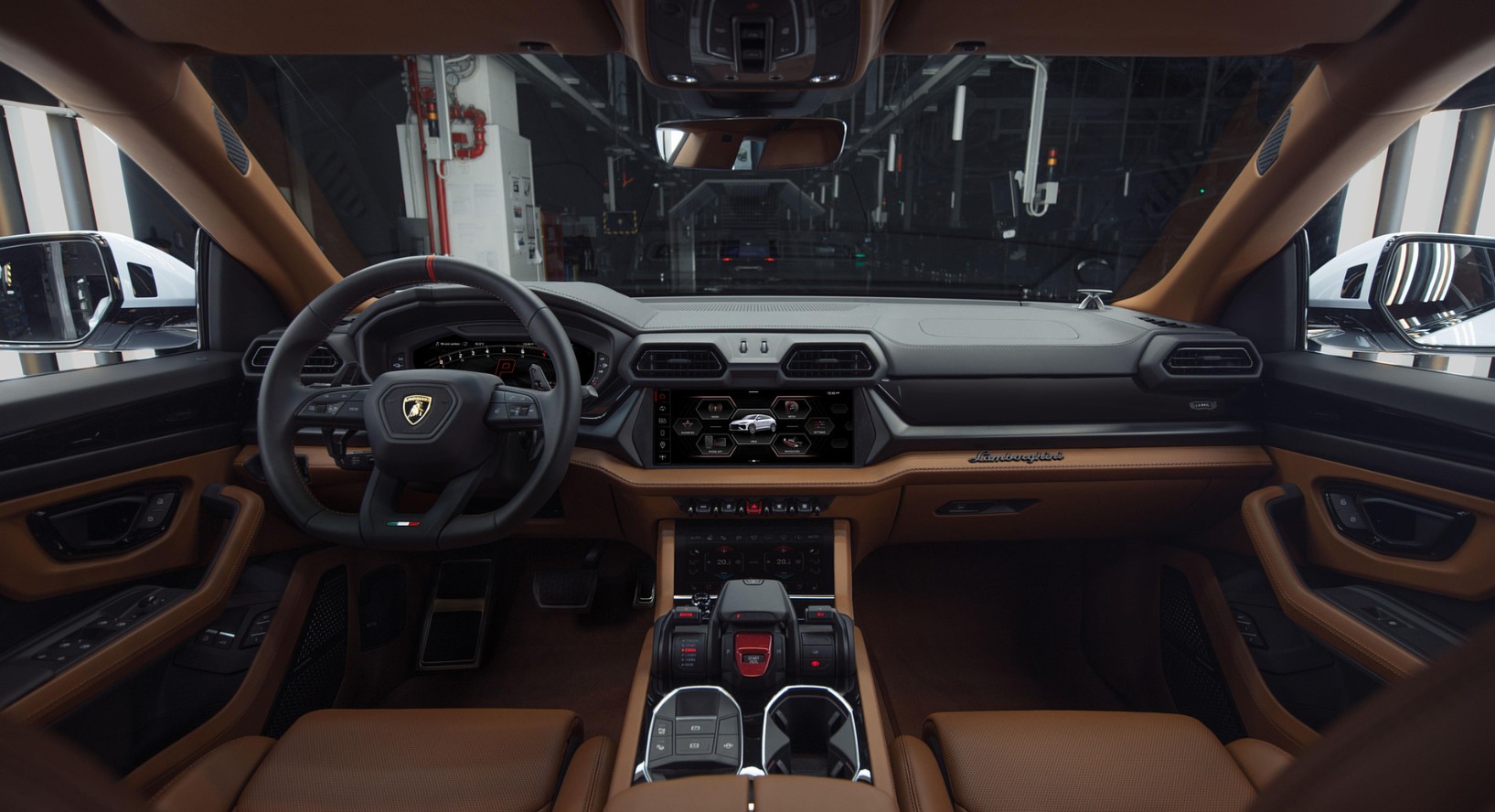
Inside, the Urus SE combines a driver-oriented layout with substantially updated digital technology. Lamborghini redesigned the front portion of the dashboard and introduced an updated Human-Machine Interface with hybrid-specific displays. The Lamborghini Infotainment System provides information about energy flow, battery status and the interaction between the V8 and electric motor. The cabin retains the brand’s aviation-inspired design language, including the characteristic switchgear and driver-focused center console. For 2028, the most plausible interior improvements would involve graphics, connectivity, software and additional customization rather than another complete dashboard redesign. The existing cabin already provides the hardware necessary for a high-end Super SUV.
2028 Lamborghini Urus SE Specs
Engine & Performance
At the center of the Urus SE is Lamborghini’s 4.0-liter twin-turbocharged V8. The combustion engine produces 620 CV and 800 Nm of torque, while the permanent-magnet synchronous electric motor contributes to the hybrid system. Combined output reaches 800 CV, equivalent to roughly 789 horsepower using the U.S. conversion convention. Maximum system torque is 950 Nm and is available from relatively low engine speed, giving the Urus SE immediate acceleration that combines the response of an electric motor with the sustained power of a turbocharged V8. The powertrain is connected to an eight-speed automatic transmission and sends drive to all four wheels.
The performance figures place the Urus SE firmly in supercar territory despite its SUV body. Lamborghini quotes 0–100 km/h in 3.4 seconds, 0–200 km/h in 11.4 seconds and a maximum speed of 312 km/h, or approximately 194 mph. Those numbers make the SE faster than the earlier Urus S in Lamborghini’s official figures, while the hybrid system adds performance instead of merely reducing fuel consumption. That distinction is important. The electric motor is not simply an economy device; it supplies additional torque, supports traction and allows the vehicle to deliver strong acceleration before the V8 is operating at its full potential.
The 25.9-kWh lithium-ion battery is another defining component. Lamborghini states that the Urus SE can travel more than 60 kilometers in full-electric mode, while the U.S. market figure is advertised as more than 37 miles. Electric driving is available with all four wheels powered, because the motor is integrated into the transmission and works with the rest of the drivetrain. That makes the Urus SE unusual among high-performance SUVs: it can operate silently and emissions-free for shorter journeys, yet still provide the full V8 experience when the battery strategy and driving mode demand maximum performance.
The driving modes are another major component of the Urus SE experience. Lamborghini combines the familiar Urus driving selections with four Electric Performance Strategies, creating eleven possible combinations. These systems allow the driver to prioritize EV operation, hybrid efficiency, battery recharge or maximum performance. The central electric torque splitter can continuously vary torque between the axles, while the electronically controlled rear differential adds another layer of control. This gives the Urus SE a much broader dynamic range than its exterior suggests, from quiet urban driving to aggressive cornering and high-speed performance. A 2028 model could improve the software response, but Lamborghini has not announced new modes for that model year. 2028 Lamborghini Urus SE Release Date
2028 Lamborghini Urus SE Fuel Economy
Fuel economy is one of the more interesting aspects of the SE because the vehicle combines an extremely powerful V8 with a plug-in hybrid system. Lamborghini’s U.S. specification lists 20 mpg combined when operating on gasoline and 48 MPGe for combined electricity-and-gasoline operation. European figures are calculated differently because of regulatory testing procedures and the weighting of plug-in hybrid electric driving. Lamborghini has also stated that the Urus SE can reduce emissions by up to 80 percent compared with the previous model under the applicable testing methodology. Real-world fuel consumption will depend heavily on battery charging frequency and driving style.
The battery therefore changes how the Urus SE should be evaluated. A driver who regularly charges the vehicle and uses its electric range for short daily journeys can exploit much more of the hybrid system’s efficiency advantage. Someone who drives long distances at sustained high speeds will rely increasingly on the V8 and may experience fuel consumption much closer to that of a conventional high-performance SUV. The 48 MPGe rating should not be interpreted as a constant real-world fuel-economy figure. It represents a combined regulatory measurement involving both electrical energy and gasoline. That distinction will remain important for any 2028 Urus SE buyer comparing operating costs.
2028 Lamborghini Urus SE Safety Features
The Urus SE’s safety package combines conventional electronic stability systems with Lamborghini’s advanced chassis-control technology. The vehicle uses sophisticated traction management, all-wheel drive, torque vectoring and electronic differential control to maintain stability as available power changes. This is particularly important in a 800-CV SUV because acceleration forces can overwhelm available traction extremely quickly. The electronic systems continuously manage the relationship between engine output, electric torque, braking and wheel grip. For a future 2028 version, further software refinement could improve predictive control and response, although Lamborghini has not yet announced a new safety package specifically for that model year.
Driver assistance technology also plays an important role in making the Urus practical outside performance driving. Depending on market specification and selected equipment, the Urus family can be equipped with systems such as adaptive cruise control, lane-departure assistance, blind-spot monitoring, parking assistance, surround-view camera technology and other electronic driver-support features. Exact equipment varies by market and optional package. Lamborghini’s approach remains performance-focused, so these systems are intended to reduce workload rather than transform the Urus into an autonomous vehicle. A potential 2028 update would likely add or refine digital assistance functions as the underlying electronics platform evolves.
2028 Lamborghini Urus SE Release Date & Price
Unlike mainstream SUVs, the Urus does not follow a conventional trim ladder with dozens of inexpensive equipment packages. Lamborghini offers the vehicle as a highly configurable luxury Super SUV, with extensive personalization through Ad Personam and specialized editions. The regular Urus SE is the core plug-in-hybrid model, while the recently introduced Urus SE Performante represents a more extreme performance derivative. Lamborghini announced the Performante in 2026 with 812 CV and 1,000 Nm, placing it above the standard SE in performance terms. That model is therefore an important reference for understanding where the Urus family is heading before the next generation.
The SE Performante demonstrates how much further Lamborghini can push the existing hybrid architecture. It retains the 4.0-liter twin-turbo V8 and electric-motor concept but raises combined output to 812 CV and torque to 1,000 Nm. Lamborghini also adds extensive carbon-fiber components, revised suspension technology, aerodynamic changes and a more aggressive braking and exhaust specification. The Performante’s existence means a future 2028 Urus range could potentially include additional high-performance derivatives even if the standard SE remains mechanically close to the current version. Exact 2028 trim availability, however, has not been confirmed by Lamborghini.
Price is another area where the 2028 model should be treated carefully. The current Urus SE has been listed in the U.S. market at roughly the $260,000-plus level depending on model year and destination, before options and personalization. Industry pricing data places the current SE around $281,000 MSRP, while Lamborghini’s enormous Ad Personam program can push an individually specified vehicle substantially higher. A projected 2028 standard Urus SE price in the region of $280,000–$300,000 would therefore be plausible if the current generation remains in production, while a highly customized vehicle could move well beyond $300,000. These figures are estimates, not confirmed 2028 MSRP.
The release-date question requires the most caution. Lamborghini has not announced a specific 2028 Urus SE launch date. Current reporting indicates that the all-new second-generation Urus is expected around 2029, and that it will use plug-in hybrid technology rather than the previously expected battery-electric-only powertrain. That makes a 2028 Urus SE most likely to be a continuation or final evolution of the current generation if Lamborghini keeps the model on sale through that period. The exact timing could change, and Lamborghini has not released an official 2028 product calendar. 2028 Lamborghini Urus SE Release Date
Conclusion
The 2028 Lamborghini Urus SE is unlikely to be defined by a simple horsepower increase. The more important story is the continuation of Lamborghini’s hybrid Super SUV strategy during the transition toward the next-generation Urus. With 800 CV, 950 Nm, a 25.9-kWh battery, more than 60 km of electric driving capability and a 312-km/h top speed, the existing SE already occupies an unusual position: it can function as a luxury family SUV during normal driving while delivering acceleration and dynamics that would have been associated with exotic sports cars only a few years ago.
The arrival of the Urus SE Performante also changes the context for the standard model. Lamborghini has demonstrated that the same basic hybrid architecture can support more than 800 CV, 1,000 Nm and significantly more aggressive chassis hardware. That creates considerable room for future derivatives without abandoning the V8-powered PHEV formula.
For the 2028 model year, the most credible expectation is continued development of the existing SE rather than an entirely new Urus. The exterior should retain the latest Lamborghini design language, while software, hybrid management, cabin technology, customization and chassis calibration offer opportunities for refinement. Pricing is likely to remain firmly in the ultra-luxury category, with extensive Ad Personam personalization capable of pushing the final transaction price far beyond the base figure.
The larger change is expected one year later. Current reporting places the all-new second-generation Urus around 2029, with Lamborghini having shifted away from the earlier plan for an immediately electric Urus and instead committing to another plug-in-hybrid generation. That makes the 2028 Urus SE potentially one of the last and most developed expressions of the current Urus architecture before Lamborghini introduces its next major chapter in Super SUV design.
Note: The details included in this blog post are derived from pre-release material that was accessible when the article was written. If you want the latest information, you should check official sources or call your nearest dealership.
Read Also:
- 2027 Lamborghini Urus SE Price, Release Date, Performance
- 2027 Lamborghini Fenomeno Release Date, Specs, Dimensions
- 2027 NOVITEC TORADO Lamborghini Huracan Price, Specs, Performance
- 2027 Lamborghini Essenza SCV12 Review, Specs, Dimensions
- 2026 Lamborghini Lanzador Specs, Changes, Price
Frequently Asked Questions
2028 Lamborghini Urus SE Release Date, Specs, Price - The 2028 Lamborghini Urus SE sits at an unusual point in Lamborghini's product cycle. Rather than being an officially announced all-new model year, it is better understood as a likely continuation of the current Urus SE formula before the…
The timing matters because Lamborghini has changed its electrification strategy. Earlier plans envisioned an all-electric Urus successor, but Lamborghini CEO Stephan Winkelmann subsequently confirmed that the next generation would continue with plug-in hybrid technology. Automotive reporting now places the all-new second-generation Urus around 2029, meaning a 2028 Urus…
The current Urus SE already introduced substantial technical changes, so Lamborghini does not need to reinvent its hardware immediately. The electric motor is positioned inside the eight-speed automatic transmission and can operate as both a performance booster and a traction source. The system also introduces a centrally positioned…
Another likely area for refinement is Lamborghini's vehicle-dynamics software. The Urus already uses sophisticated electronic systems to coordinate power delivery, steering, braking, suspension and traction. With the SE, hybrid power adds another layer because the electric motor can deliver instant torque independently of the V8. A future calibration…
2028 Lamborghini Urus SE Redesign and Update Plan Exterior & Interior The current Urus SE already received a substantial exterior redesign when Lamborghini introduced the PHEV. The front end gained a new hood design, revised bumper and grille, and new Matrix LED headlight clusters with a lighting signature…