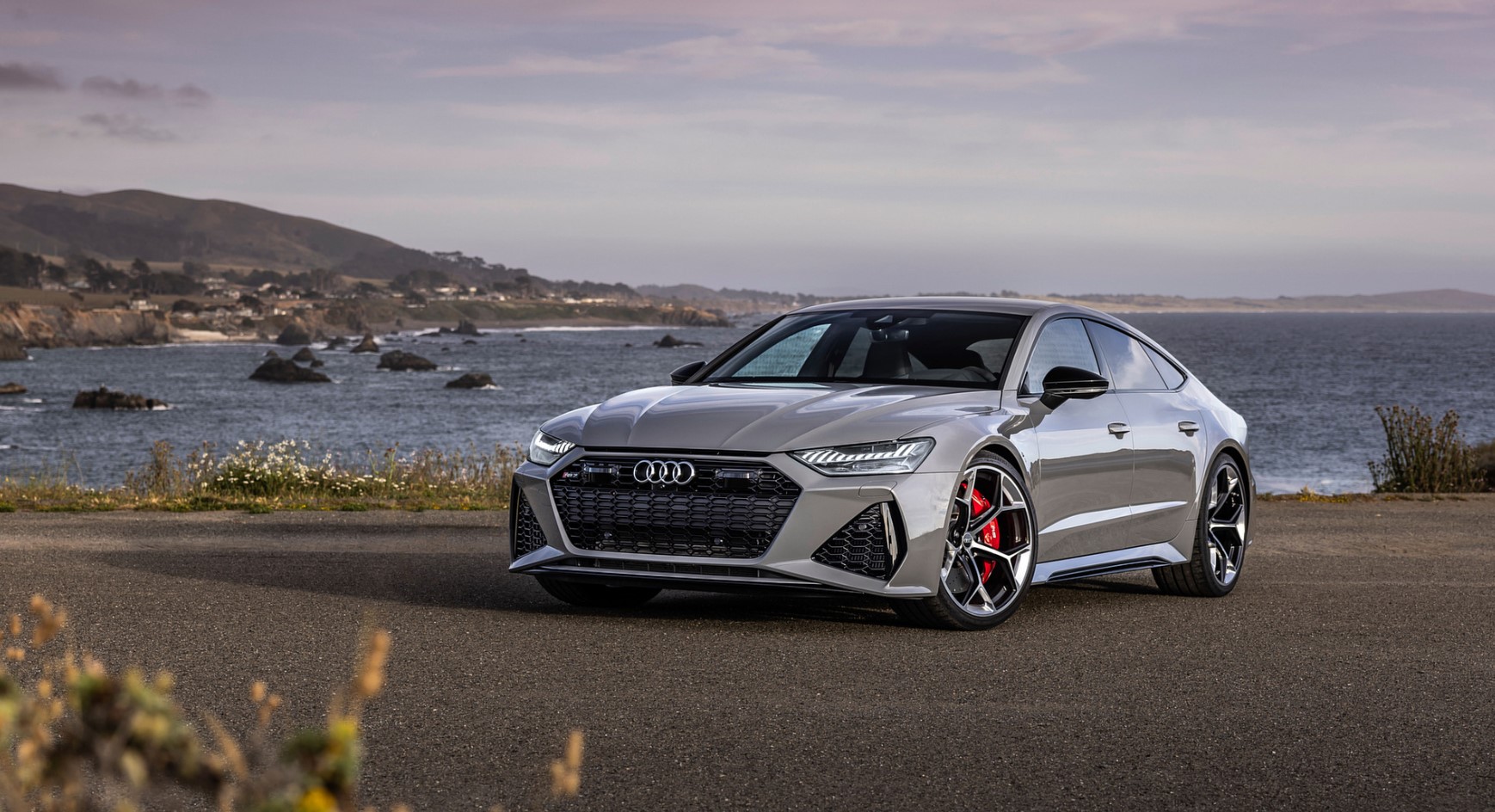
2028 Audi RS 7 Performance Release Date, Specs, Interior – The 2028 Audi RS 7 Performance could become one of the most interesting high-performance grand tourers in Audi Sport’s next generation. The current RS 7 performance combines a 4.0-liter twin-turbo V8, quattro all-wheel drive, an eight-speed Tiptronic transmission and 621 horsepower in the U.S. specification. Audi lists a starting MSRP of $130,700 for the 2026 RS 7 performance and quotes a 0–60 mph time of 3.3 seconds. However, the model’s future is changing quickly. Audi’s A7 and S7 have already been discontinued in the U.S. for 2026, and industry reporting indicates that the RS 7 is also ending with the 2026 model year. That means a vehicle carrying the RS 7 name into 2028 would almost certainly represent a new generation rather than a simple annual update.
The most important question surrounding the 2028 Audi RS 7 Performance is therefore not whether Audi can make the existing car faster. It is how Audi will reinterpret the RS 7 concept in a rapidly changing performance-car market. The outgoing car is a traditional internal-combustion performance machine, using a 4.0-liter V8 supported by a 48-volt mild-hybrid system. Audi’s newer RS models are moving toward electrified performance, with the RS 5 becoming Audi Sport’s first high-performance plug-in hybrid. Audi has also publicly described a broader strategy that leaves room for combustion engines and hybrids while expanding its electric portfolio. A next-generation RS 7 could consequently use a more sophisticated electrified powertrain rather than simply carrying over the current V8 unchanged.
There is another important change in the Audi lineup. The company has repositioned its conventional combustion-powered executive cars, while the current A6 name now serves a different role depending on powertrain and market. Audi’s own media site identifies the previous A7 Sportback as a model “until 2025” and points visitors toward the current A6 as its successor. The 2026 RS 7 has continued temporarily, but reporting indicates that the RS 7 will not continue into the 2027 model year. This creates uncertainty around the exact name, body style and technical foundation of any 2028 successor. Audi could retain the RS 7 badge, but the eventual production model may also reflect the company’s revised naming and platform strategy.
For buyers searching for the 2028 Audi RS 7 Performance price, there is currently no official MSRP. The $130,700 starting price of the 2026 U.S. RS 7 performance is the latest useful benchmark, but it should not be presented as the 2028 price. A next-generation car with plug-in hybrid technology, a larger battery, new chassis electronics and additional standard equipment could occupy a substantially different price bracket. The same applies to horsepower, fuel economy, electric range and acceleration. Until Audi publishes definitive specifications, the current RS 7 provides the factual baseline, while the 2028 model should be discussed as a next-generation expectation rather than an officially confirmed specification. 2028 Audi RS 7 Performance Release Date
2028 Audi RS 7 Performance Redesign and Update Plan
Exterior & Interior
The next RS 7 would need to preserve the visual identity that made the current Sportback so distinctive while adopting Audi’s newer design language. The outgoing RS 7 measures 5,009 mm long and 1,950 mm wide, with flared wheel arches extending 20 mm farther outward on each side compared with the standard A7. Its broad Singleframe grille, low roofline, muscular shoulders, RS-specific bumpers and large wheels give the car a dramatically wider appearance than an ordinary executive sedan. A future 2028 model could retain the fundamental fastback silhouette while introducing slimmer lighting signatures, cleaner surfaces and a more technical interpretation of Audi’s current design philosophy.
Aerodynamics would become even more important if the 2028 RS 7 adopts a plug-in hybrid system. A larger battery and additional electric hardware can increase mass, so Audi Sport would need to recover efficiency through careful aerodynamic development. An active front air-control system, a more precisely shaped underbody, optimized cooling openings and an electronically controlled rear spoiler could all help. The current RS 7 already uses a deployable rear spoiler that extends from the tailgate at 100 km/h, while the bodywork is heavily differentiated from the regular A7. A new-generation model could make active aerodynamic components more sophisticated, linking them directly to drive modes and performance demands.
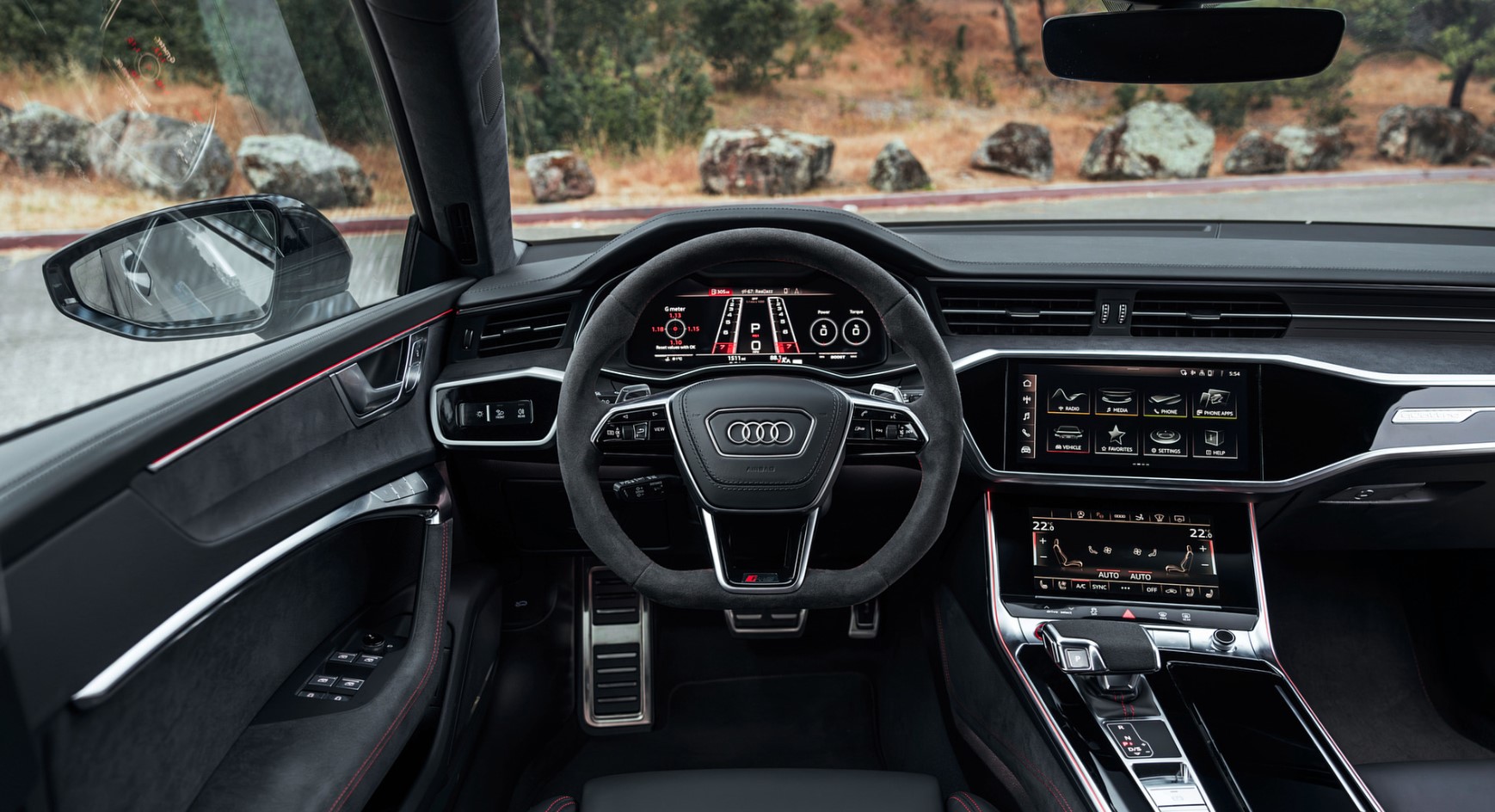
Inside, the 2028 Audi RS 7 Performance should continue Audi’s emphasis on a driver-focused digital environment, but the technology could be considerably more advanced. The current car uses a 12.3-inch Audi virtual cockpit plus display and a 10.1-inch MMI touchscreen, with optional head-up display technology. Wireless Apple CarPlay and Android Auto are available, while an optional Bang & Olufsen Advanced sound system uses 19 speakers and 1,820 watts of power. A next-generation RS 7 could replace much of this hardware with a newer software architecture, faster processors and a wider range of customizable RS displays.
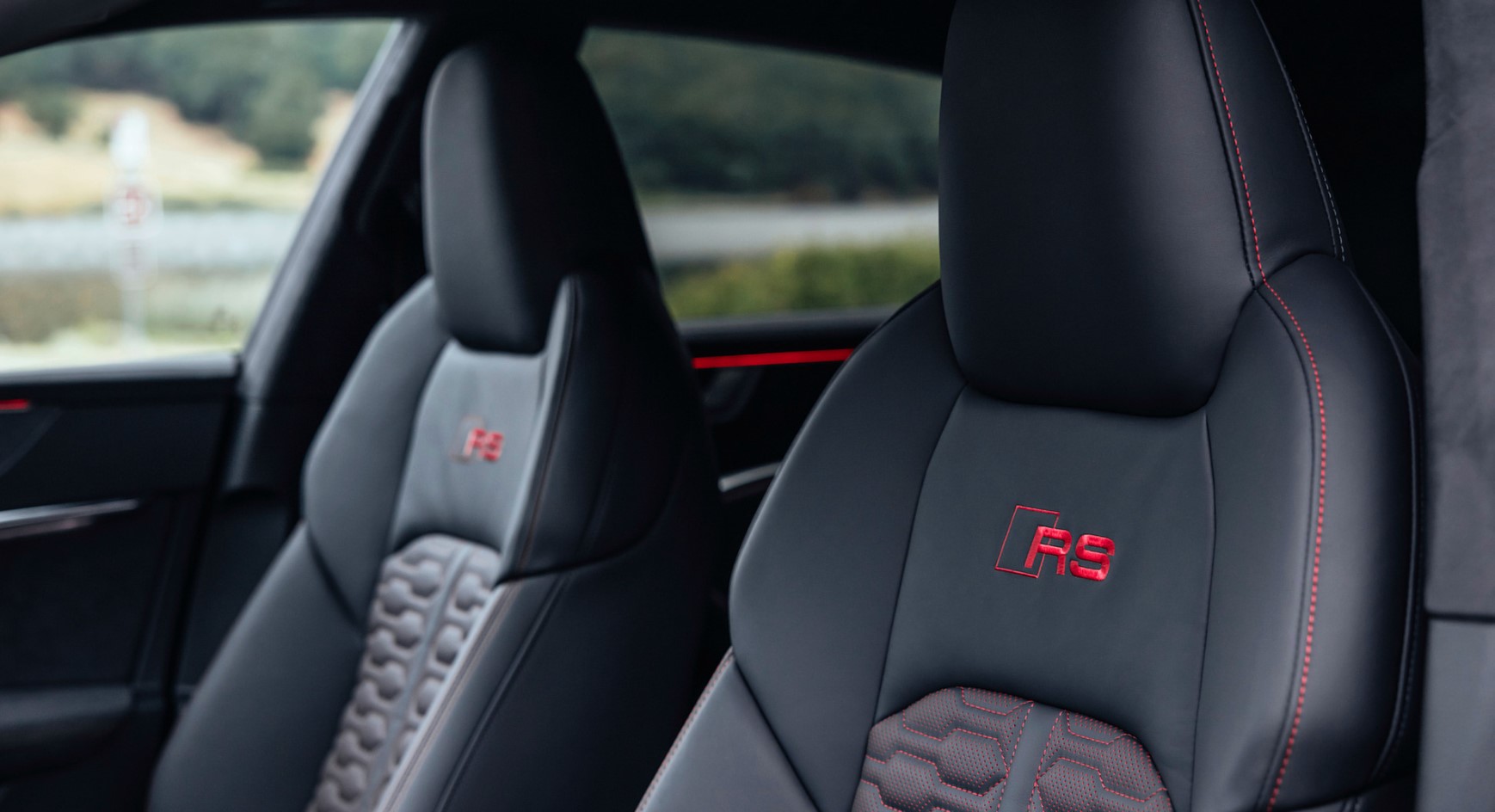
Luxury would remain a major part of the package. The RS 7 is not intended to be a stripped-down track car; it is a high-speed grand tourer capable of covering long distances while providing serious performance. The current model offers RS sport seats, optional Valcona leather, carbon-fiber trim, Alcantara elements and multiple RS design packages. The 2028 model could introduce lighter sport seats with integrated heating, ventilation and massage functions, alongside recycled or technical materials designed to reduce weight. Audi could also make the cabin more configurable, allowing drivers to switch between comfort-oriented displays and detailed performance information covering powertrain temperatures, torque distribution, acceleration and chassis behavior.
2028 Audi RS 7 Performance Specs
Engine & Performance
The current RS 7 performance establishes a very high mechanical benchmark. Its 4.0-liter twin-turbo V8 produces 621 hp and 627 lb-ft in the U.S. market, with an eight-speed Tiptronic transmission sending power through standard quattro all-wheel drive. Audi’s U.S. specification quotes 0–60 mph in 3.3 seconds. In Germany, the RS 7 Sportback performance is rated at 630 PS and 850 Nm, reaches 100 km/h in 3.4 seconds and can achieve up to 305 km/h with the appropriate performance package. The different figures illustrate why market-specific specifications matter when discussing the RS 7.
A 2028 successor could take several technical directions, but an electrified powertrain appears particularly relevant to Audi’s current performance strategy. The company has already introduced the RS 5 as its first high-performance plug-in hybrid, showing that Audi Sport is willing to combine combustion engines with substantial electric assistance. A future RS 7 could theoretically use a V6 or V8 combustion engine together with one or more electric motors, providing instantaneous low-speed torque while retaining the character of a high-output gasoline engine. Such a system could also enable meaningful electric-only driving for urban use. The exact configuration remains unconfirmed, however.
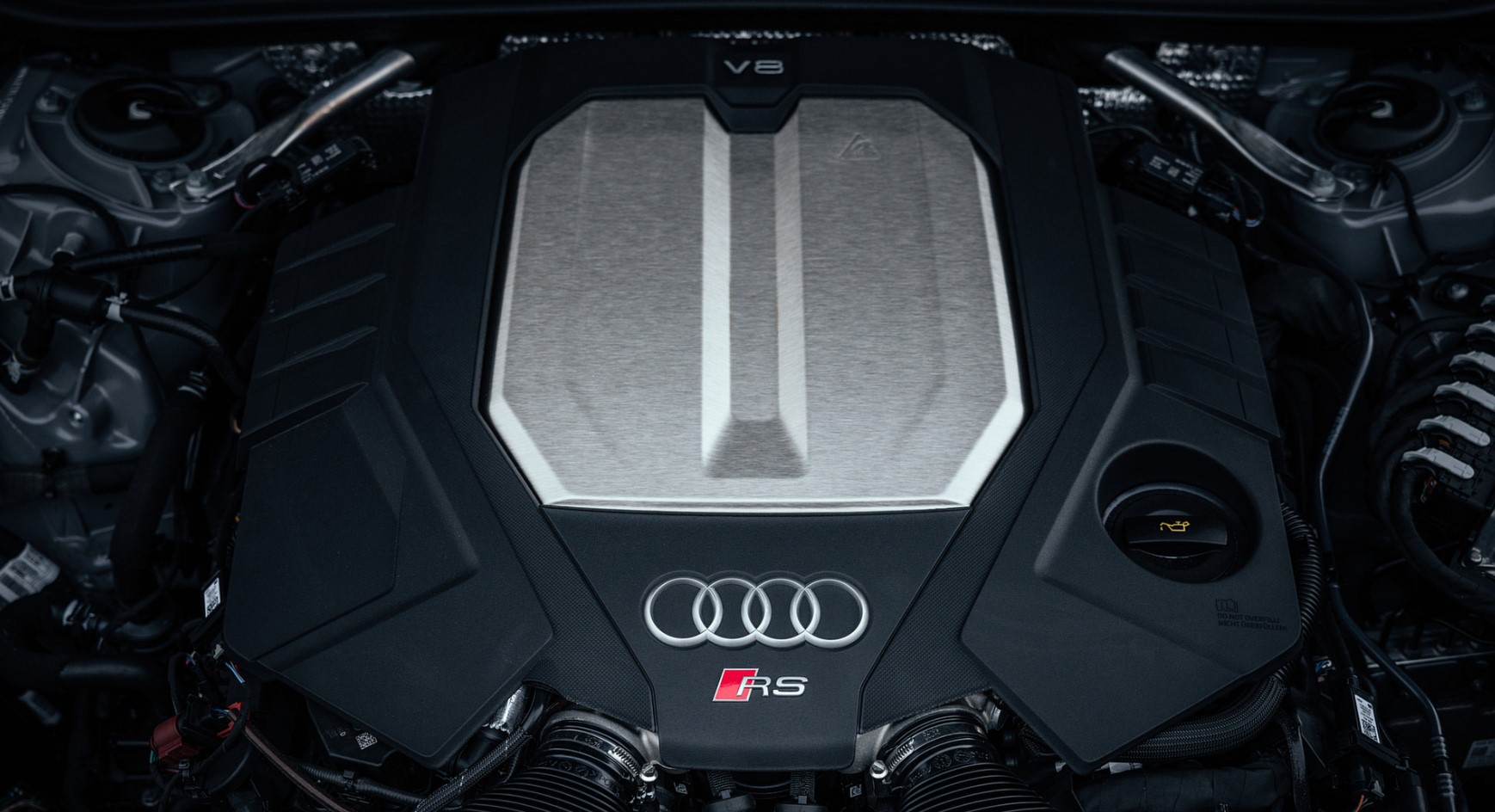
If Audi retains the V8, electrical assistance could solve one of the biggest challenges facing a large luxury performance car: weight. Rather than relying entirely on a larger combustion engine, electric motors could provide additional torque during acceleration while allowing the combustion engine to operate more efficiently under certain conditions. A plug-in hybrid RS 7 could also use regenerative braking to recover energy during deceleration. Audi’s current RS 5 demonstrates that the company is already developing this type of performance philosophy, although its technology cannot automatically be assumed to become the RS 7’s specification.
Chassis engineering would be just as important as the engine. The existing RS 7 uses a five-link front and rear suspension, RS-tuned adaptive air suspension, progressive steering and an available sport rear differential. Audi also offers dynamic all-wheel steering and a Dynamic Ride Control setup designed to reduce pitch and body roll. A 2028 generation could integrate these systems into a more centralized electronic chassis platform, allowing steering, braking, torque distribution, suspension damping and rear-wheel steering to respond together. The objective would be to make a large fastback feel substantially more agile without sacrificing the ride quality required from a premium grand tourer. 2028 Audi RS 7 Performance Release Date
2028 Audi RS 7 Performance Fuel Economy
Fuel economy is one of the areas where a 2028 electrified RS 7 could make a major difference. The existing RS 7 performance is fundamentally a high-output V8 machine, and Audi lists combined WLTP consumption of approximately 12.6–12.1 liters per 100 km for the German RS 7 Sportback performance. That works out to roughly 18.7–19.4 U.S. mpg. The vehicle does use a 48-volt mild-hybrid system and cylinder deactivation, but its mission remains high performance rather than low fuel consumption. A plug-in hybrid successor could dramatically change this equation by allowing many short journeys to be completed using electric power.
The exact 2028 Audi RS 7 fuel economy cannot be stated until Audi confirms the engine, battery, electric motors, curb weight and certification cycle. If the next model becomes a plug-in hybrid, official consumption figures would likely be expressed as weighted combined fuel and electrical consumption in markets using WLTP, making direct comparisons with the current V8 model more complicated. Electric-only range would become another important metric. The most meaningful real-world benefit could be reduced gasoline use during commuting, while the combustion engine would remain available for high-speed highway travel and sustained performance. Audi’s current RS 5 demonstrates that this dual-purpose approach is already entering the RS lineup.
2028 Audi RS 7 Performance Safety Features
Safety technology will be another major area of development for the next RS 7. The current model already offers a broad collection of driver-assistance systems, including adaptive cruise assist with lane guidance, lane-departure warning, a top-view camera system, remote park assist plus and optional night vision. Audi explains that its driver-assistance controller manages more than 30 assistance systems on the current RS 7. A future model could combine similar functions with more powerful sensor processing, improved object recognition and more accurate prediction of traffic behavior. These systems would remain driver aids rather than autonomous substitutes for attentive driving.
A new RS 7 could also benefit from improvements in active safety hardware. High-resolution cameras, radar sensors and potentially additional sensing technology could help the vehicle detect pedestrians, cyclists, vehicles and obstacles at greater distances. The top-view camera could provide more detailed three-dimensional surroundings, while automated parking could become smoother and more precise. Audi may also integrate safety warnings directly into the head-up display, reducing the need to look down at the central screen. For a car capable of extremely rapid acceleration, keeping essential information within the driver’s field of vision is especially valuable. 2028 Audi RS 7 Performance Release Date
2028 Audi RS 7 Performance Release Date & Price
The outgoing RS 7 performance has effectively functioned as the top performance version of the A7 family rather than as a model with a long list of conventional trim levels. In the U.S., Audi currently lists the 2026 RS 7 performance from $130,700 MSRP, before destination, taxes, dealer charges and options. The car can then become significantly more expensive through packages such as the Executive package, carbon-fiber exterior options, RS Design packages, upgraded wheels, ceramic brakes and premium interior equipment. For 2028, Audi could retain this single-model strategy or introduce multiple performance configurations depending on how the next-generation powertrain is structured.
A future range could potentially include a standard RS 7 Performance and a higher-output flagship version. The latter could receive a larger battery, more powerful electric motors, carbon-ceramic brakes, a sportier chassis calibration, lightweight wheels and additional carbon-fiber components. Audi could also continue offering an RS Dynamic package that increases the vehicle’s top-speed capability. However, these are possible product strategies rather than announced 2028 trims. The current RS 7 already demonstrates how Audi can create meaningful differentiation through equipment packages without producing a large number of separate grades.
The expected price position would remain firmly in the high-end luxury-performance category. The current U.S. starting point of $130,700 provides a useful reference, but a next-generation 2028 RS 7 could be more expensive if it adopts plug-in hybrid technology, a larger battery and more advanced chassis electronics. Battery size and hybrid hardware can add substantial cost, while Audi Sport models typically include specialized brakes, suspension components and performance software. Consequently, a hypothetical 2028 MSRP around or above the current model should be treated only as an expectation, not as a confirmed figure. The eventual transaction price would also depend heavily on options and market-specific equipment.
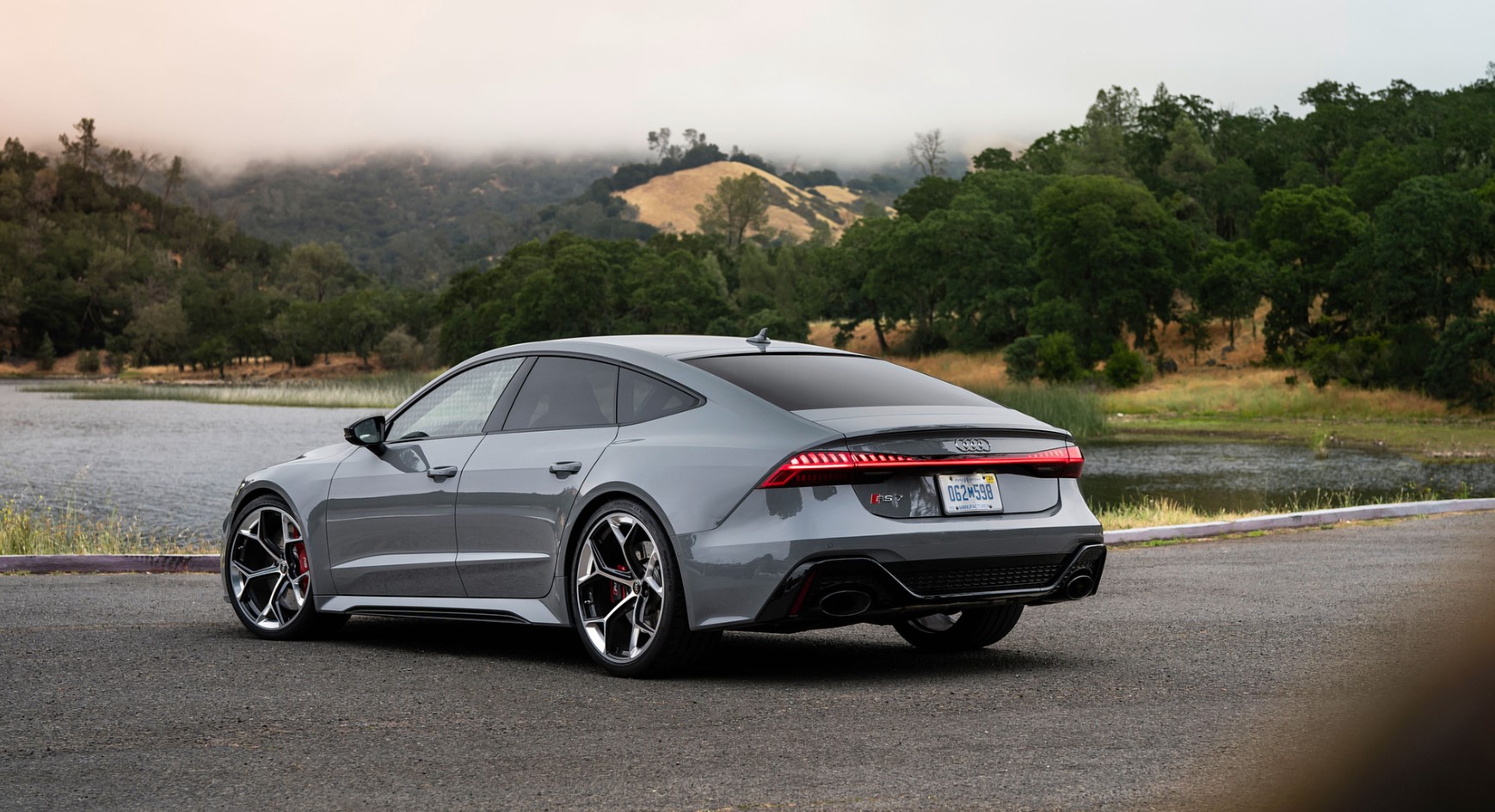
The 2028 Audi RS 7 Performance release date is also uncertain. The latest available reporting indicates that the RS 7 ends with the 2026 model year, meaning a 2028 vehicle would not simply arrive as an ordinary annual refresh. Audi’s current product strategy is moving through a substantial restructuring, including new combustion models, plug-in hybrids and fully electric vehicles. The company has also accelerated development of new products, while its A6 family has taken over much of the territory previously occupied by the A7. If Audi retains the RS 7 name, an announcement would likely precede production by several months, but Audi has not yet provided an official 2028 launch schedule.
At present, there is no official 2028 Audi RS 7 Performance release date. The current RS 7 continues for the 2026 model year, while reporting indicates that Audi will discontinue the RS 7 after that model year. Therefore, any future RS 7 would need to be considered a successor rather than a routine 2028 continuation.
The uncertainty surrounding the name is particularly relevant because Audi has reorganized its combustion-powered executive-car range. The previous A7 Sportback is officially listed by Audi as a model until 2025, with the current A6 positioned as its successor. The 2026 RS 7 survived temporarily, but the broader A7 family no longer provides the same model structure that previously surrounded the RS 7.
If Audi decides to retain the RS 7 badge, the 2028 version could arrive with a significantly different technical identity. A plug-in hybrid powertrain would fit Audi Sport’s recent direction, while a new-generation combustion engine combined with stronger electrification could preserve the dramatic character of the existing V8. A fully electric interpretation is another theoretical possibility, although Audi has not announced such an RS 7. The company’s current electric portfolio already includes the A6 e-tron and RS e-tron GT, so product positioning would be an important consideration.
For now, the strongest factual baseline remains the current RS 7 performance: 621 hp, 627 lb-ft, quattro all-wheel drive, an eight-speed Tiptronic transmission and a 3.3-second U.S. 0–60 mph claim. Any 2028 figures should be treated as unconfirmed until Audi releases technical information. This distinction is particularly important for horsepower, battery capacity, electric range, fuel economy and MSRP, all of which could change significantly if the next RS 7 moves to a new platform or electrified powertrain.
Conclusion
The 2028 Audi RS 7 Performance sits at an interesting crossroads. The current RS 7 has established an exceptionally strong performance benchmark with its 621-hp twin-turbo V8, 627 lb-ft of torque, quattro all-wheel drive and 3.3-second 0–60 mph specification. At the same time, Audi is restructuring the A6/A7 family and accelerating its move toward electrified performance. That makes the next RS 7 far more significant than a simple facelift.
The most logical direction is a greater emphasis on electrification while preserving the RS philosophy of immediate response, high-speed stability and everyday usability. A plug-in hybrid could provide electric-only commuting capability without giving up long-distance performance, while advanced torque management, rear-wheel steering, adaptive suspension and active aerodynamics could make the next car more agile than its size suggests.
The biggest unanswered questions remain the powertrain, platform, body style, price and launch timing. Audi has not confirmed a 2028 RS 7, and current reporting indicates that the existing RS 7 ends after the 2026 model year. If the name returns, it should be regarded as a new-generation performance model rather than a continuation of today’s car. Until Audi provides official specifications, the current RS 7 performance remains the most reliable benchmark for understanding what the next generation will need to surpass.
Note: The details included in this blog post are derived from pre-release material that was accessible when the article was written. If you want the latest information, you should check official sources or call your nearest dealership.
Read Also:
- 2028 Audi Q8 e-tron Dakar Edition Review, Specs, Dimensions
- 2027 Audi Q2 Specs, Price, Configurations
- 2027 Audi E Concept Review, Performance, Features
- 2027 Audi Q8 Redesign, Price, Specs
- 2027 Audi A6 55 TFSI e quattro Release Date, Specs, Interior
Frequently Asked Questions
2028 Audi RS 7 Performance Release Date, Specs, Interior - The 2028 Audi RS 7 Performance could become one of the most interesting high-performance grand tourers in Audi Sport's next generation. The current RS 7 performance combines a 4.0-liter twin-turbo V8, quattro all-wheel drive, an eight-speed Tiptronic transmission…
The most important question surrounding the 2028 Audi RS 7 Performance is therefore not whether Audi can make the existing car faster. It is how Audi will reinterpret the RS 7 concept in a rapidly changing performance-car market. The outgoing car is a traditional internal-combustion performance machine, using…
There is another important change in the Audi lineup. The company has repositioned its conventional combustion-powered executive cars, while the current A6 name now serves a different role depending on powertrain and market. Audi's own media site identifies the previous A7 Sportback as a model “until 2025” and…
For buyers searching for the 2028 Audi RS 7 Performance price, there is currently no official MSRP. The $130,700 starting price of the 2026 U.S. RS 7 performance is the latest useful benchmark, but it should not be presented as the 2028 price. A next-generation car with plug-in…
2028 Audi RS 7 Performance Redesign and Update Plan Exterior & Interior The next RS 7 would need to preserve the visual identity that made the current Sportback so distinctive while adopting Audi's newer design language. The outgoing RS 7 measures 5,009 mm long and 1,950 mm wide,…