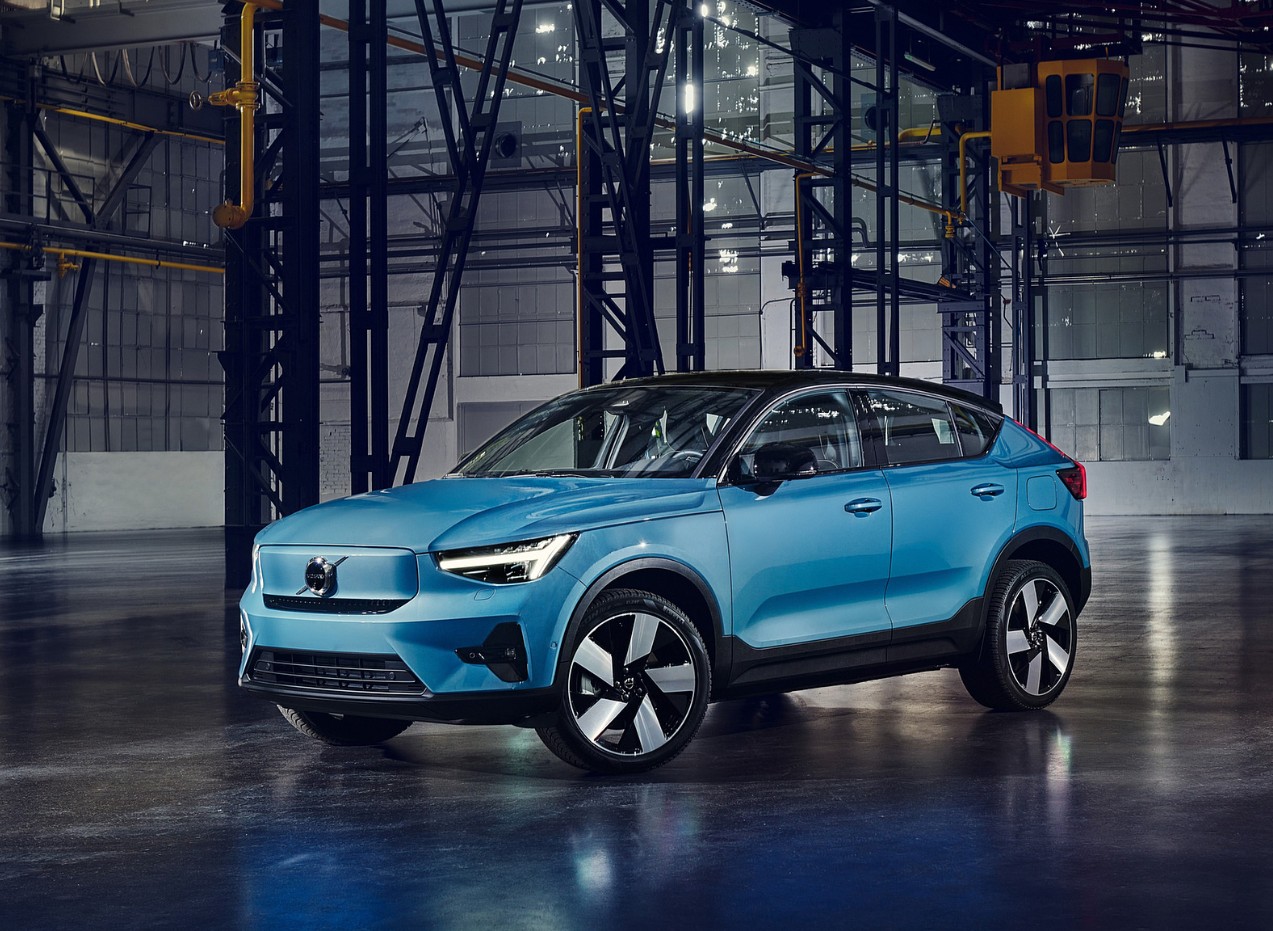
2028 Volvo C40 Recharge Redesign, Specs, Dimensions – The 2028 Volvo C40 Recharge is an intriguing prospect for drivers seeking an electric luxury crossover that combines distinctive styling, responsive performance, advanced safety technology, and everyday practicality. Its sloping roofline separates it from conventional compact SUVs, giving it a coupe-inspired silhouette without sacrificing the elevated driving position that many buyers appreciate.
However, Volvo has already renamed the C40 Recharge the EC40 as part of its simplified electric vehicle naming strategy. Therefore, the 2028 model is best understood as an anticipated future model year of the EC40 rather than a confirmed new vehicle carrying the original C40 Recharge badge. The established EC40 provides a useful foundation for evaluating its potential design, performance, equipment, and ownership costs.
Volvo’s decision to remove the Recharge designation from its fully electric models reflects a broader effort to make its electric lineup easier to understand. The C40 Recharge became the EC40, while the fully electric XC40 Recharge adopted the EX40 name. This distinction helps separate Volvo’s electric vehicles from models that retain combustion-engine powertrains. For shoppers researching the 2028 Volvo C40 Recharge, both names remain relevant because older inventory, used-car listings, reviews, and automotive databases may continue to use the original designation. The EC40 is the appropriate name to watch when checking new-model availability, official specifications, equipment packages, and manufacturer announcements for the years ahead.
For the 2028 model year, a comprehensive redesign has not been officially confirmed. The current EC40 already features an established electric powertrain architecture, a distinctive fastback body, a modern digital cockpit, and a suite of driver-assistance technologies. These elements provide a strong foundation for potential future refinements without requiring an entirely new vehicle design. Possible developments could include revised software, updated connected services, changes to available exterior colors, or adjustments to standard equipment, but these remain possibilities rather than confirmed upgrades. Buyers should avoid treating speculative renderings or unofficial reports as evidence of a redesigned 2028 model. Until Volvo releases a model-year-specific announcement, the existing EC40 should serve as the primary reference.
The competitive environment will also influence how the next model year is positioned. Electric crossovers increasingly compete on more than acceleration or battery capacity, with buyers considering charging convenience, cabin quality, infotainment usability, safety systems, and long-term operating expenses. The EC40’s appeal lies in its combination of premium materials, compact dimensions, strong available performance, and distinctive styling.
It is particularly suited to drivers who want an electric vehicle with a more expressive silhouette than a traditional box-shaped SUV. For a potential 2028 buyer, the key questions will be whether Volvo improves the driving range, charging experience, technology package, or pricing while preserving the vehicle’s character. Those details will ultimately determine how competitive the next model year becomes. 2028 Volvo C40 Recharge Redesign
2028 Volvo C40 Recharge Redesign and Update Plan
Exterior & Interior
The exterior design is one of the defining characteristics of the Volvo C40 Recharge and its successor, the EC40. Its coupe-inspired roofline slopes toward the rear, creating a more athletic profile than the upright design of the related EX40. At the front, Volvo’s signature Thor’s Hammer-inspired lighting provides a recognizable visual identity, while the enclosed front treatment reflects the vehicle’s fully electric architecture. Carefully shaped body surfaces and a streamlined profile contribute to its contemporary Scandinavian appearance. Rather than relying on excessive decorative details, the design emphasizes proportion, restrained styling, and purposeful features. For 2028, revised lighting elements, new paint choices, or different wheel designs could be introduced, although no specific exterior changes have been confirmed.
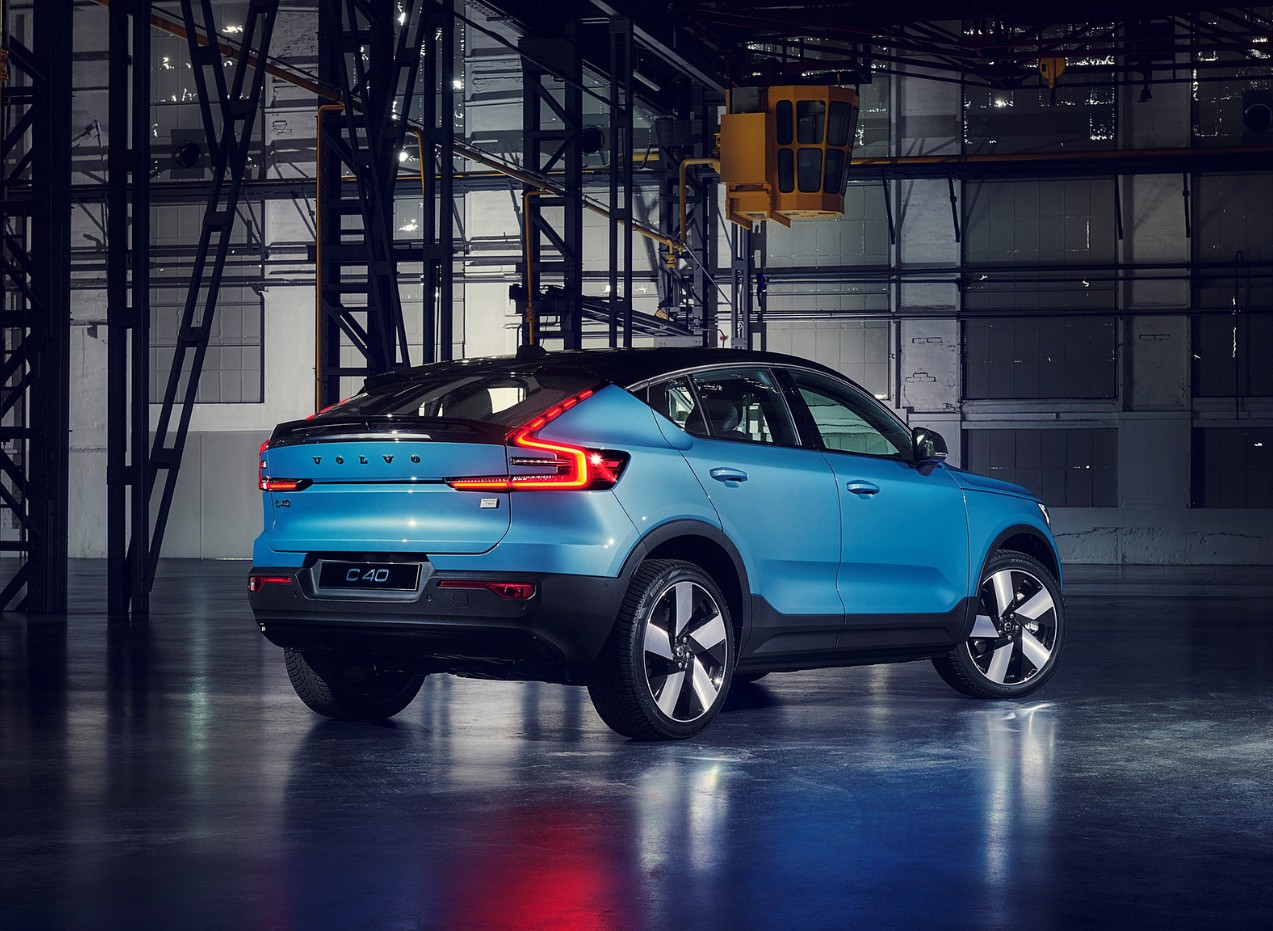
From the side, the sloping roof gives the EC40 a sporty appearance that appeals to drivers who want something more distinctive than a conventional family crossover. Its compact overall dimensions make it suitable for urban environments, parking structures, and narrow streets, while its five-seat configuration preserves everyday usefulness. Volvo has also incorporated aerodynamic details around the body, including roof spoilers and a rear diffuser, to support airflow management and driving stability. Available wheel designs vary by market and equipment level, with larger alloy wheels contributing a more assertive stance. Prospective buyers should consider the practical differences between wheel options because tire replacement costs, ride comfort, and energy consumption can change with wheel and tire specifications.
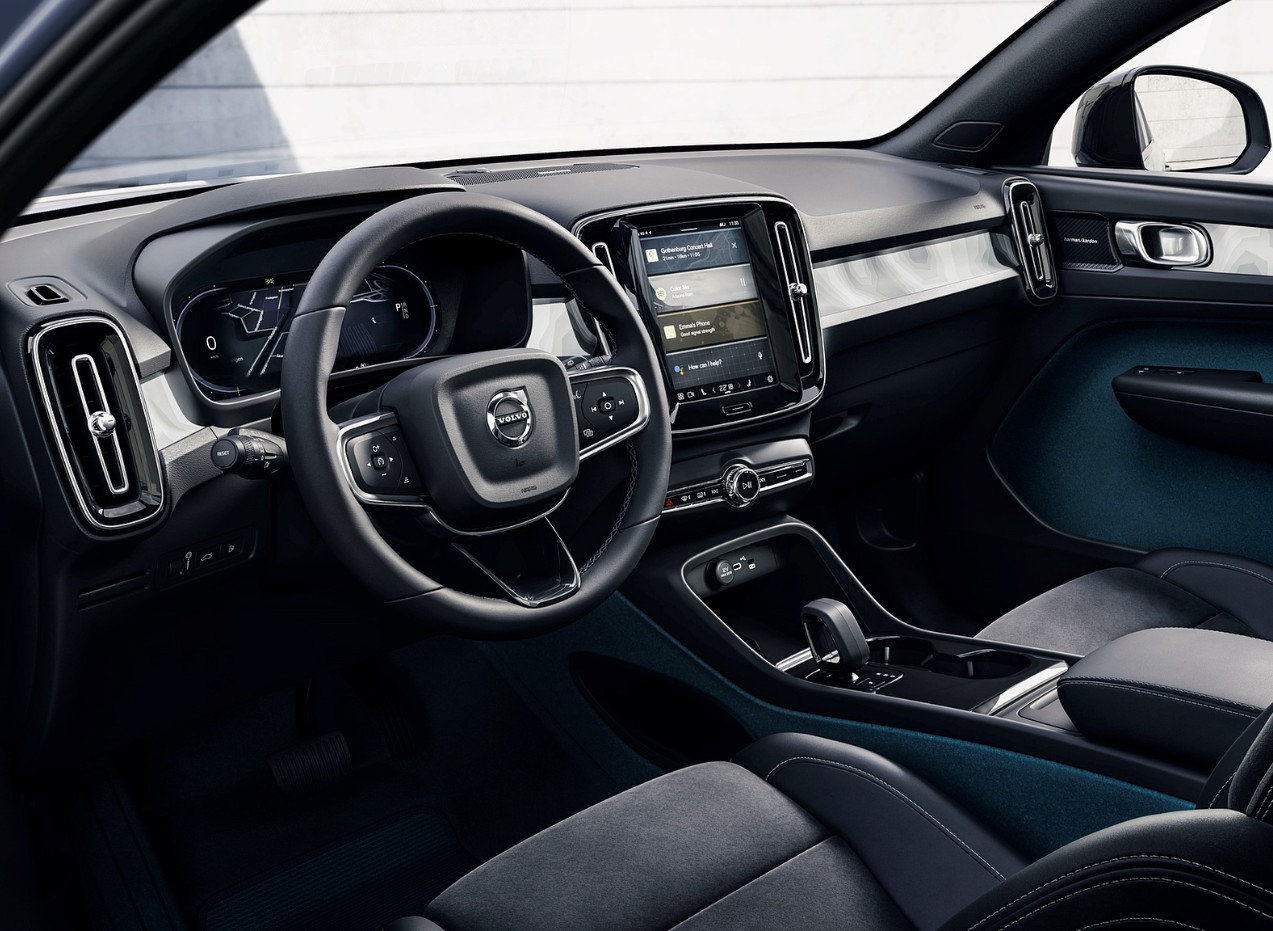
The interior follows Volvo’s familiar emphasis on simplicity, comfort, and thoughtful functionality. Rather than surrounding occupants with an overwhelming number of physical controls, the cabin combines a digital driver display with a central touchscreen and a clean dashboard layout. Seating for five makes the EC40 suitable for couples, small families, and professionals who need a premium daily driver. Front-seat comfort, adjustable seating positions, and a carefully organized center console contribute to a relaxed driving environment. Rear headroom deserves particular attention because the coupe-style roofline sacrifices some vertical space compared with a more upright SUV. Buyers who frequently transport tall passengers should inspect the rear seating area in person before choosing the EC40 over a conventional electric crossover.
Cargo flexibility is another important consideration. The EC40 provides a rear luggage compartment, folding rear seatbacks, and additional storage space beneath the front hood. Volvo’s published specifications for the Indonesian-market Twin Motor version list 404 liters of luggage capacity with the rear seats raised under one measurement method, increasing to 958 liters with the rear seats folded; alternative maximum-volume measurements are also published depending on the measurement standard used. A separate 31-liter front storage compartment provides room for smaller items.
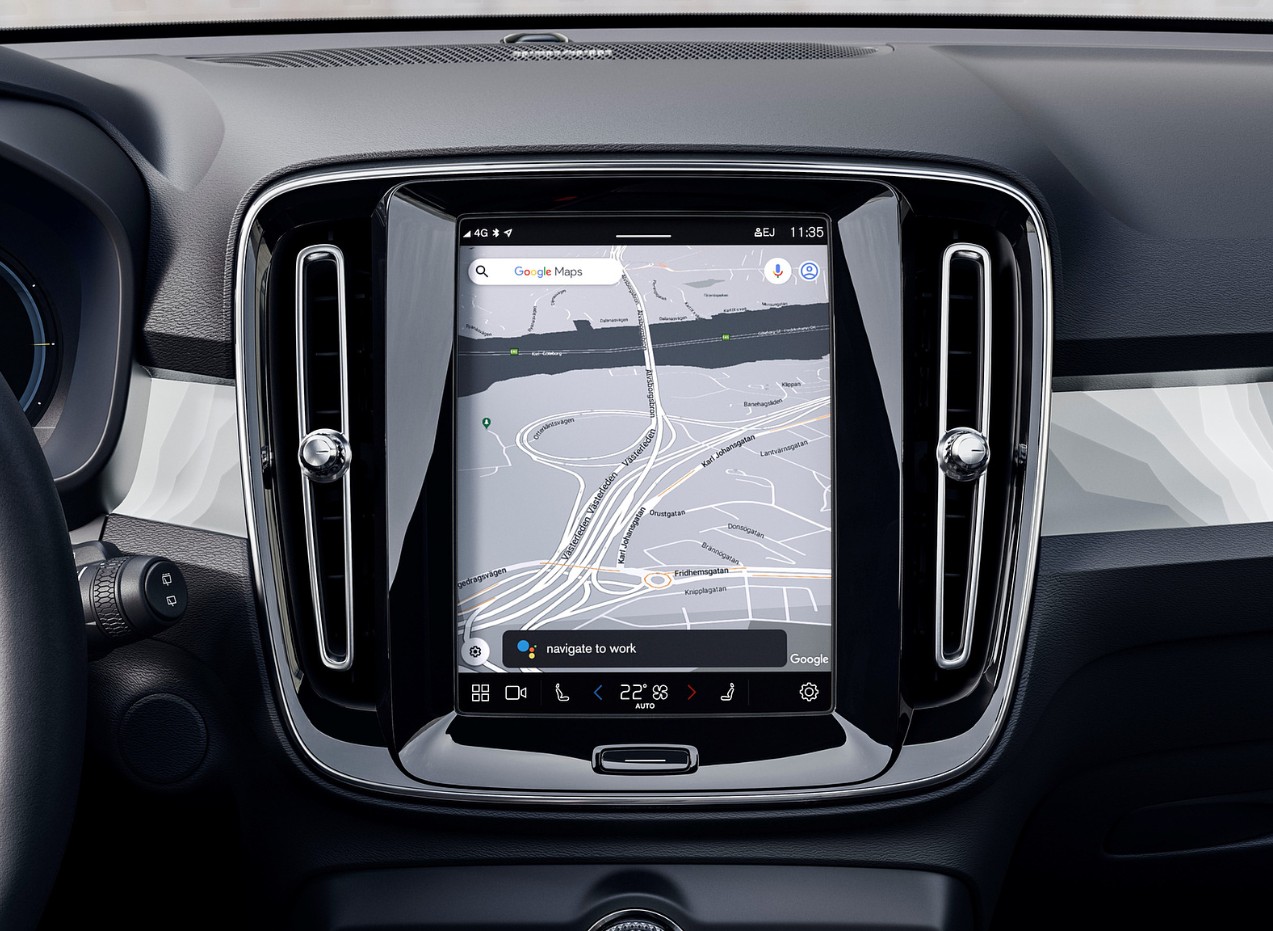
The precise usable space depends on the measurement method and market specification. Inside the cabin, Google built-in, Google Maps, Apple CarPlay, and wireless phone charging help integrate everyday digital services, while selected equipment levels offer a panoramic roof, a 360-degree camera, and premium Harman Kardon audio.
2028 Volvo C40 Recharge Specs
Engine & Performance
The powertrain is central to the C40 Recharge’s appeal because electric motors deliver immediate torque without the gear changes associated with conventional gasoline vehicles. The EC40 has been offered with single-motor rear-wheel-drive and dual-motor all-wheel-drive configurations, depending on the market and model year. A single-motor version generally suits drivers who prioritize everyday efficiency and predictable performance, while a dual-motor configuration offers greater power and additional traction. Both approaches provide the smooth acceleration and quiet operation expected from a premium electric crossover. For the 2028 model year, the final powertrain lineup remains unconfirmed, so specifications from existing EC40 models should be treated as reference figures rather than guaranteed future equipment.
The single-motor configuration offers a useful balance between performance and energy consumption. In the Malaysian-market specification, Volvo lists a rear-wheel-drive EC40 Single Motor with approximately 238 horsepower, 420 Nm of torque, and a claimed zero-to-100-km/h acceleration time of 7.3 seconds. These figures are sufficient for routine commuting, highway merging, and ordinary overtaking without requiring the more powerful dual-motor system. Rear-wheel drive can also contribute to a responsive driving character because acceleration forces are delivered through the rear axle. Actual performance varies with battery charge, temperature, road conditions, tire selection, and vehicle load. Buyers considering a future 2028 version should verify whether this powertrain remains available and whether Volvo changes its output or battery configuration.
The Twin Motor version is designed for drivers who want more substantial acceleration and all-wheel-drive capability. Volvo’s Indonesian EC40 page lists a maximum output of approximately 408 horsepower and 670 Nm of torque, with a claimed zero-to-100-km/h time of 4.7 seconds. The system distributes propulsion between the front and rear axles, improving the ability to put power down when road conditions are less than ideal. That additional performance can be useful when accelerating onto highways or driving on wet roads, although tires, road surfaces, and driving technique still determine available grip. Volvo also limits the vehicle’s maximum speed to 180 km/h in the cited specification, reflecting the brand’s established approach to limiting top speed across its modern vehicle lineup.
Electric range is likely to be one of the most searched specifications for the 2028 Volvo C40 Recharge. Volvo’s Indonesian EC40 page advertises a preliminary range of up to 650 kilometers under WLTP testing for the Twin Motor configuration, while the Malaysian-market Single Motor specification lists up to 488 kilometers. These figures are market-specific and should not be compared as if they were measured under identical conditions.
They also do not represent guaranteed real-world distances. Highway speed, air-conditioning use, outside temperature, terrain, wheel size, and driving style all influence energy consumption. A driver traveling primarily at moderate urban speeds may achieve a different result from someone who regularly covers long highway distances. The official certified range for the eventual 2028 version must be checked once Volvo publishes the relevant specifications. 2028 Volvo C40 Recharge Redesign
2028 Volvo C40 Recharge Fuel Economy
Charging convenience is essential for anyone considering an electric vehicle as a replacement for a gasoline-powered car. The EC40 supports AC charging for routine replenishment and DC fast charging for longer journeys. Volvo’s Indonesian specifications list an approximate 10-to-80-percent charging time of 28 minutes when using a compatible 200-kW DC fast-charging station.
That figure is a manufacturer estimate under specified conditions, not a promise that every charging session will take exactly 28 minutes. Actual results depend on charger output, battery temperature, battery condition, ambient temperature, and the charging curve. Charging speed generally slows as the battery approaches a high state of charge. Drivers planning frequent road trips should therefore consider charging-stop locations, connector compatibility, and the availability of reliable fast chargers along their usual routes.
Energy efficiency directly affects how much it costs to operate the EC40. Volvo’s Indonesian specification lists combined energy consumption of approximately 15.1 kWh per 100 kilometers under the NEDC measurement standard for the cited Twin Motor configuration. This figure should not be treated as a universal consumption rating for every market or model year.
The actual amount of electricity used depends on driving conditions, speed, weather, cabin climate settings, tire pressure, and passenger load. Home charging can make everyday ownership more convenient because the vehicle can recharge while parked overnight, especially when a suitable wallbox is installed. Public charging costs vary by provider and location, while maintenance requirements differ from those of combustion-engine vehicles because electric cars do not require engine oil changes or conventional exhaust-system servicing.
2028 Volvo C40 Recharge Safety Features
Safety has long been a defining part of Volvo’s brand identity, and the EC40 incorporates a broad selection of occupant-protection systems and driver-assistance technologies. The current specification includes multiple airbags, inflatable curtain protection, side-impact protection, whiplash injury protection, and child-seat mounting points for the rear seats. These systems are designed to reduce injury risk during different types of collisions. The vehicle’s structure and restraint systems work together rather than relying on a single safety feature to protect occupants. For families, the availability of appropriate child-seat installation points and accessible rear seating is particularly important. The exact equipment and certification details for a 2028 model will depend on the final specification and the safety regulations applicable in each market.
Driver-assistance technology adds another layer of support during daily driving. Listed EC40 equipment includes Blind Spot Information System, Lane Keeping Aid, Oncoming Lane Mitigation, adaptive cruise control, Pilot Assist, and parking assistance. A 360-degree camera is also available in the Indonesian-market equipment offering. These features can help drivers monitor surrounding traffic, maintain a suitable following distance, and maneuver in tight parking spaces.
Nevertheless, they should be treated as assistance systems rather than autonomous-driving capabilities. Sensors and cameras can be affected by heavy rain, poor visibility, obstructed road markings, or unexpected traffic behavior. Drivers remain responsible for steering, braking, observing road conditions, and responding appropriately to hazards. The standard and optional status of each system should be confirmed for the selected trim.
2028 Volvo C40 Recharge Release Date & Price
The 2028 Volvo C40 Recharge is expected to follow the EC40 naming convention if Volvo continues its current branding strategy, but the final trim structure has not been officially announced. Existing EC40 equipment levels vary between countries, with some markets offering Core, Plus, or Ultra specifications and others using a more limited selection.
The Ultra specification shown on Volvo’s Indonesian website includes premium equipment such as a panoramic roof, a 360-degree camera, and Harman Kardon audio. Other features available across the range can include Google built-in, Apple CarPlay, adaptive cruise control, advanced parking assistance, and power-operated tailgate functionality. Buyers should compare the actual equipment list rather than relying solely on trim names, since identical labels do not always represent identical specifications worldwide.
Pricing for the 2028 model remains unconfirmed. As a current-market reference, Volvo’s Indonesian website lists the 2026 EC40 from approximately IDR 1.4 billion. This is a reference price for the existing model, not an announced price for the 2028 Volvo C40 Recharge. The final amount may change because of model-year updates, equipment differences, taxes, import costs, exchange rates, and local distribution policies. Buyers should also account for insurance, registration, home-charger installation, and any applicable public charging expenses when calculating the total ownership cost. In markets where the vehicle is imported, availability and after-sales support may have as much influence on the purchase decision as the advertised price. An authorized Volvo retailer is the appropriate source for a current quotation.
The release date for a distinct 2028 Volvo C40 Recharge has not been officially confirmed. Volvo introduced the EC40 name as part of its electric-vehicle naming changes, and the current EC40 is the relevant production model to follow for future developments. A new model year may arrive with changes to equipment, pricing, software, or powertrain availability without requiring a complete redesign. However, there is not enough confirmed information to assign a specific 2028 launch date, ordering window, or delivery schedule.
Buyers who need an electric crossover soon should check current EC40 availability rather than delaying a purchase based on unverified future announcements. Those who can wait should monitor Volvo’s official market-specific website and request updates from a local retailer as the 2028 model-year information becomes available. 2028 Volvo C40 Recharge Redesign
Conclusion
In conclusion, the 2028 Volvo C40 Recharge remains an important search term for drivers exploring Volvo’s electric crossover lineup, even though the vehicle’s current name is EC40. Its combination of coupe-inspired styling, responsive electric performance, premium interior technology, practical cargo storage, and extensive driver-assistance equipment gives it a distinct position in the compact luxury EV market. The single-motor configuration offers a more efficiency-oriented approach, while the Twin Motor version provides stronger acceleration and all-wheel-drive traction. However, the final 2028 range, equipment, pricing, and release date must be confirmed by Volvo. For buyers evaluating the model today, the current EC40 specifications provide the clearest starting point for comparing charging needs, expected running costs, available features, and suitability for everyday driving.
Note: The details included in this blog post are derived from pre-release material that was accessible when the article was written. If you want the latest information, you should check official sources or call your nearest dealership.
Read Also:
- 2028 Volvo EX60 Release Date, Specs, Interior
- 2027 Volvo XC90 Armoured Redesign, Specs, Interior
- 2027 Volvo Recharge Release Date, Specs, Interior
- 2027 Volvo XC40 Release Date, Specs, Features
- 2027 Volvo V40 Review, Specs, Configurations
Frequently Asked Questions
2028 Volvo C40 Recharge Redesign, Specs, Dimensions - The 2028 Volvo C40 Recharge is an intriguing prospect for drivers seeking an electric luxury crossover that combines distinctive styling, responsive performance, advanced safety technology, and everyday practicality. Its sloping roofline separates it from conventional compact SUVs, giving it a…
However, Volvo has already renamed the C40 Recharge the EC40 as part of its simplified electric vehicle naming strategy. Therefore, the 2028 model is best understood as an anticipated future model year of the EC40 rather than a confirmed new vehicle carrying the original C40 Recharge badge. The…
Volvo's decision to remove the Recharge designation from its fully electric models reflects a broader effort to make its electric lineup easier to understand. The C40 Recharge became the EC40, while the fully electric XC40 Recharge adopted the EX40 name. This distinction helps separate Volvo's electric vehicles from…
For the 2028 model year, a comprehensive redesign has not been officially confirmed. The current EC40 already features an established electric powertrain architecture, a distinctive fastback body, a modern digital cockpit, and a suite of driver-assistance technologies. These elements provide a strong foundation for potential future refinements without…
The competitive environment will also influence how the next model year is positioned. Electric crossovers increasingly compete on more than acceleration or battery capacity, with buyers considering charging convenience, cabin quality, infotainment usability, safety systems, and long-term operating expenses. The EC40's appeal lies in its combination of premium…