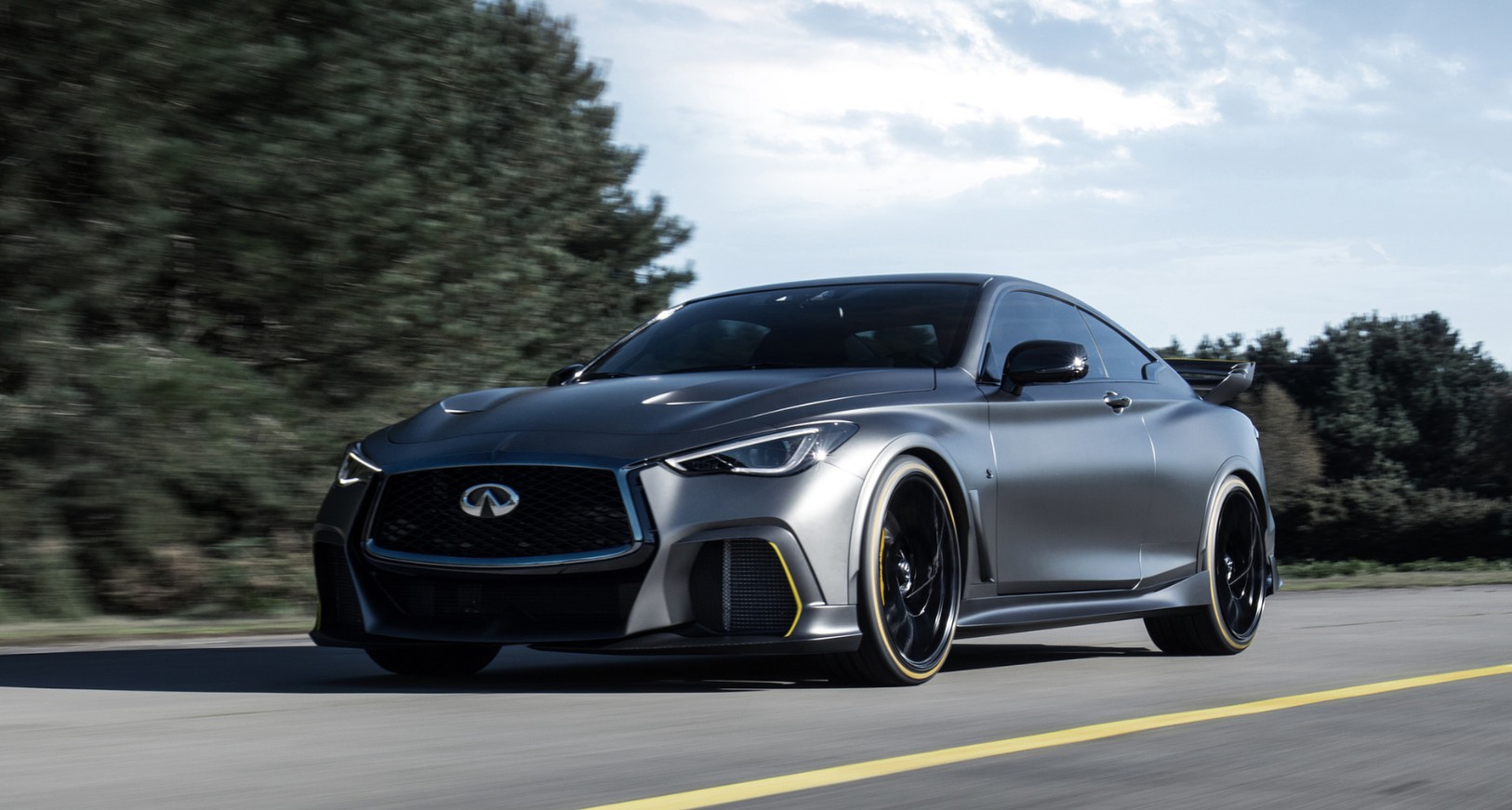
2027 Infiniti Project Black S Price, Specs, Interior – The 2027 Infiniti Project Black S is one of the most intriguing names in Infiniti performance history, but it requires an important distinction between an actual production vehicle and a future-model concept. Project Black S was real: Infiniti developed the Q60-based prototype with technology inspired by the Renault Sport Formula One team, and the 2018 prototype produced a claimed 563 horsepower from a twin-turbocharged 3.0-liter V6 combined with an advanced hybrid energy-recovery system. Infiniti said the prototype could accelerate from zero to 60 mph in less than four seconds. However, the Project Black S never entered series production, and the Q60 itself was discontinued after the 2022 model year. A 2027 revival has not been officially announced.
That history makes a hypothetical 2027 Infiniti Project Black S especially interesting. Instead of treating the name as another ordinary trim level, Infiniti could revive it as a technology flagship that demonstrates what the brand can accomplish when performance, electrification, and Japanese luxury design are developed around the same objective. The original prototype was already far more ambitious than the Q60 Red Sport 400. Its 563-horsepower output represented a substantial increase over the 400-horsepower Q60 Red Sport, while the hybrid system was designed around energy recovery concepts derived from Formula One. A modern interpretation could retain that technical character while using today’s battery, motor, software, and chassis technologies.
The redesign would also need to move beyond the styling of the previous Q60. The original Project Black S prototype used an aggressive aero package with large air intakes, carbon-fiber components, 21-inch wheels, a prominent rear diffuser, and a dramatic exhaust arrangement. A 2027 version could reinterpret those elements around Infiniti’s newer design language, which emphasizes Japanese influences, clean surfaces, distinctive lighting, and carefully controlled visual complexity. Infiniti’s design philosophy explicitly references concepts such as ma, or purposeful space and minimalism, creating an opportunity to make a future Black S look aggressive without covering every body panel in unnecessary aerodynamic decoration.
The biggest update would likely be the powertrain philosophy. Infiniti’s older Project Black S was built around Formula One-inspired energy recovery, but a 2027 version could use a considerably more sophisticated electrified system. A compact high-output battery could feed one or more electric motors to provide instant torque, while regenerative braking could recover energy that would otherwise be lost. A modern electric-assisted turbocharging system could also improve response and reduce lag. If Infiniti combined these technologies with a high-output twin-turbo V6, the Black S could potentially deliver performance well beyond the original 563-horsepower prototype. Such figures remain speculative because Infiniti has not confirmed a production program. 2027 Infiniti Project Black S Price
2027 Infiniti Project Black S Redesign and Update Plan
Exterior & Interior
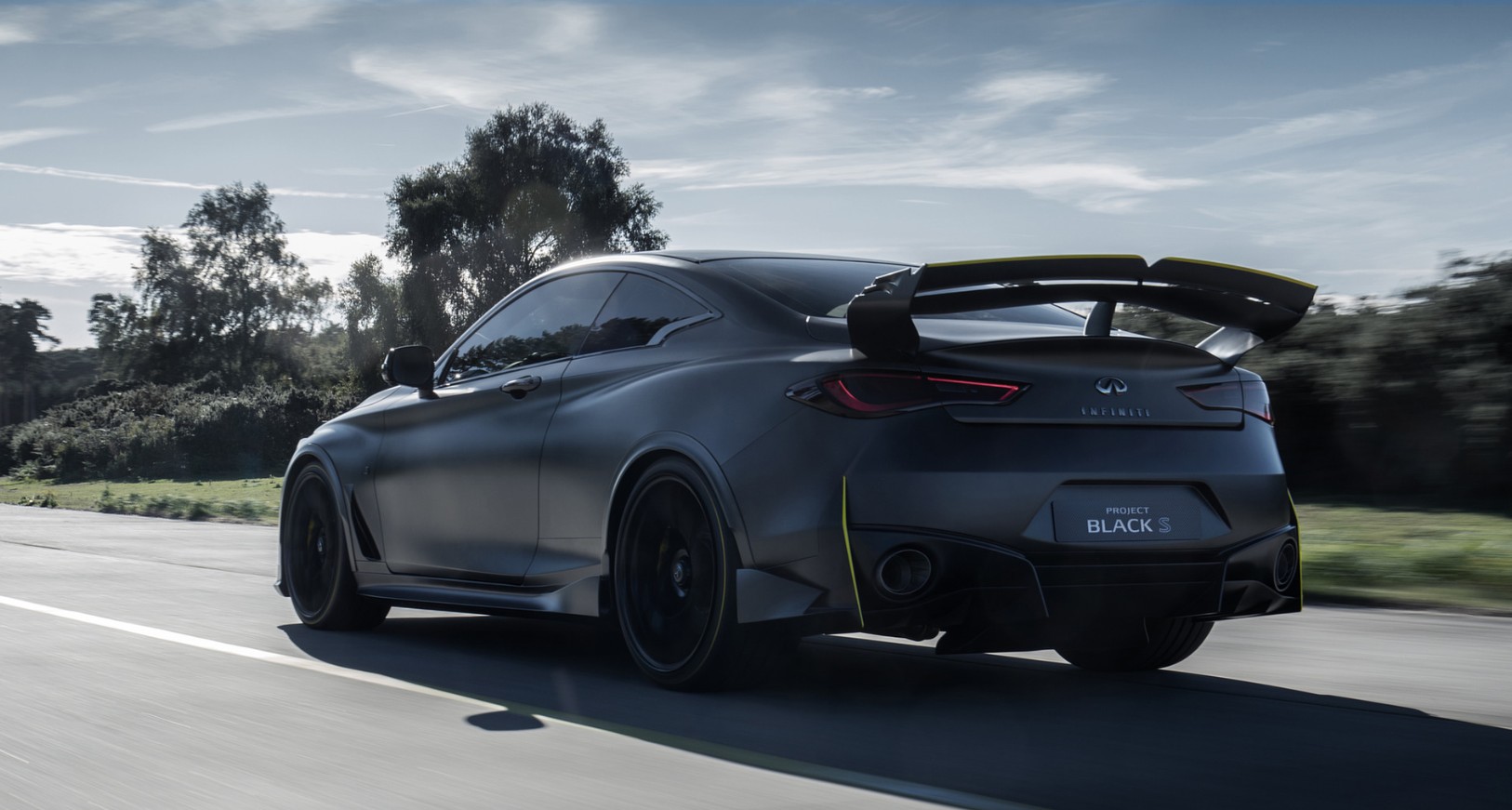
The exterior of the 2027 Infiniti Project Black S should be unmistakable from the first glance. The original prototype was deliberately more extreme than the standard Q60, using carbon-fiber aerodynamic elements and a body designed to communicate its motorsport connection. A revived model could take that approach even further with a lower front splitter, enlarged cooling openings, active aerodynamic surfaces, sculpted side skirts, a functional rear diffuser, and a carefully engineered rear wing. The important distinction would be functionality. Each visible component should contribute to airflow management, cooling, downforce, or stability rather than merely making the car look more aggressive.
The front fascia could become one of the most dramatic parts of the redesign. Infiniti’s signature grille could be reduced in visual dominance compared with the conventional Q60, with the surrounding bodywork directing air toward the radiators, brakes, and hybrid components. Slim LED headlights could create a sharp horizontal signature, while illuminated details could provide a distinctive nighttime appearance. Carbon fiber would be used where it genuinely saves weight or improves aerodynamic performance, including the front splitter, hood sections, mirror housings, rear diffuser, and potentially the roof. Lightweight materials would help offset the mass added by batteries, electric motors, and hybrid hardware.
The side profile should preserve the low, sleek proportions expected from a serious grand touring coupe while making the car substantially more muscular. Wider fenders could accommodate larger performance tires, while forged 21-inch wheels would leave room for massive carbon-ceramic brakes. A lower ride height and aggressively sculpted rocker panels could visually reduce the body’s height. The rear would likely feature four exhaust outlets or a carefully integrated performance exhaust system, although a hybrid powertrain could allow Infiniti to use exhaust design more selectively. A subtle Project Black S emblem could sit behind the front wheels or near the rear quarter panels, with the overall appearance relying on proportions and engineering details rather than excessive branding.
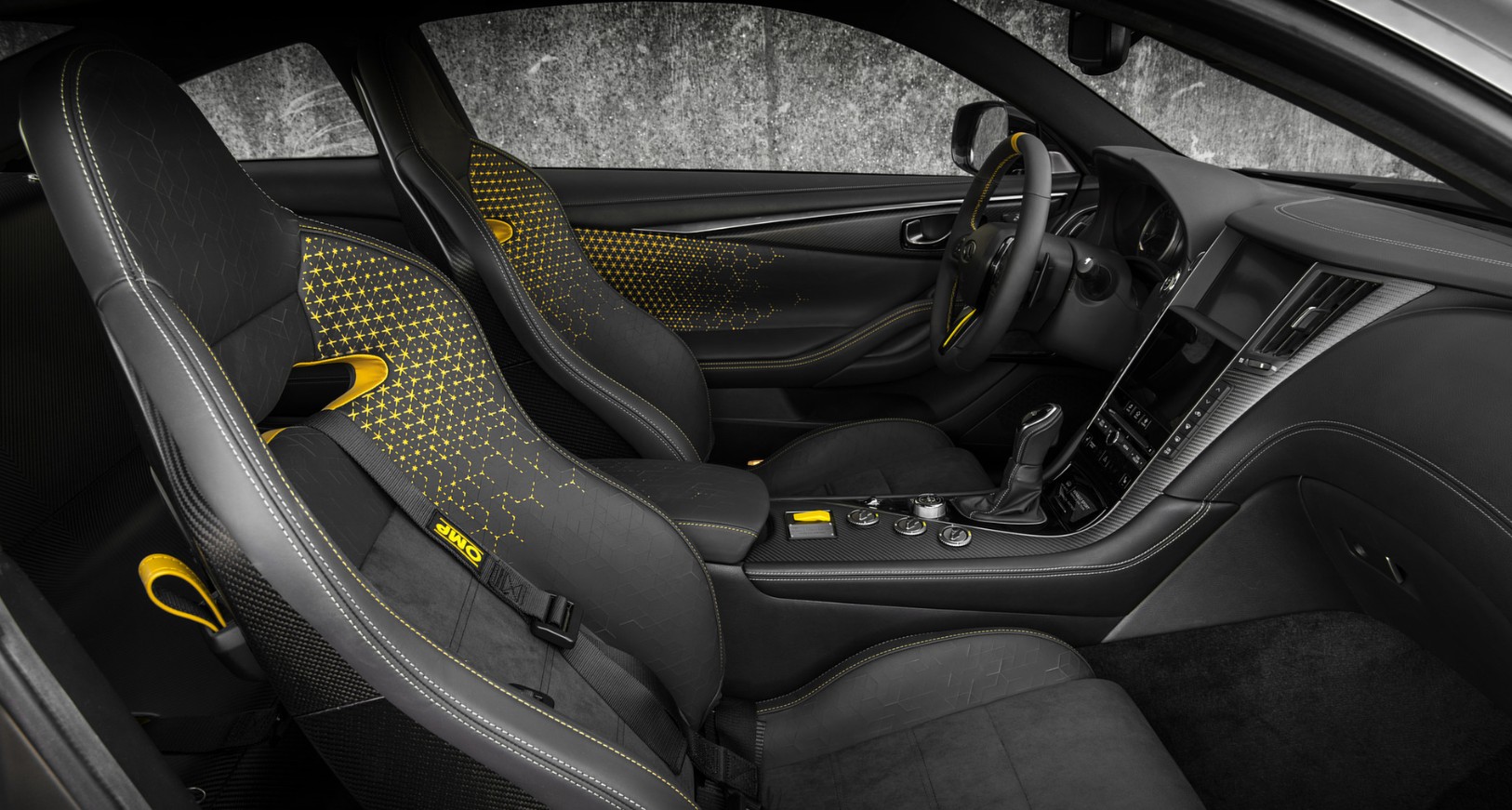
Inside, the cabin would need to balance motorsport-inspired performance with genuine Infiniti luxury. The original Q60 interior was attractive but its technology eventually aged compared with newer premium vehicles. A 2027 Black S should correct that completely with a digital instrument cluster, a high-resolution center display, wireless smartphone connectivity, advanced navigation, cloud-based services, and a performance data interface capable of showing battery state, regenerative energy, boost pressure, motor contribution, brake temperatures, and lap-oriented information. Carbon-fiber trim could be combined with leather and Alcantara-style materials, while lightweight sport seats could provide support without turning the cabin into an uncomfortable race-car interior.
2027 Infiniti Project Black S Specs
Engine & Performance
The original Project Black S powertrain remains the most fascinating part of the story. Infiniti fitted its twin-turbocharged 3.0-liter V6 with an energy-recovery system developed with inspiration from Renault Sport Formula One technology. The system used two motor-generators: one associated with the drivetrain and another integrated around the turbocharging system. Energy generated during braking could be stored in a lithium-ion battery, while recovered energy from the exhaust side could also be converted into electrical power. Under acceleration, that stored energy could be deployed to assist the engine and electrically accelerate the turbocharger. Infiniti’s prototype produced a claimed 563 horsepower.
That basic concept could be far more effective in a 2027 vehicle. Battery technology, inverter efficiency, electric motor packaging, thermal management, and software control have all advanced considerably since the original prototype was revealed. A modern system could use a compact high-power battery positioned low in the chassis, allowing the electric hardware to supplement the gasoline engine during launches, corner exits, and overtaking. Rather than carrying a large battery designed primarily for electric range, the Black S could use a smaller high-discharge pack optimized for repeated performance bursts. This would keep the system focused on acceleration, responsiveness, regenerative braking, and energy deployment.
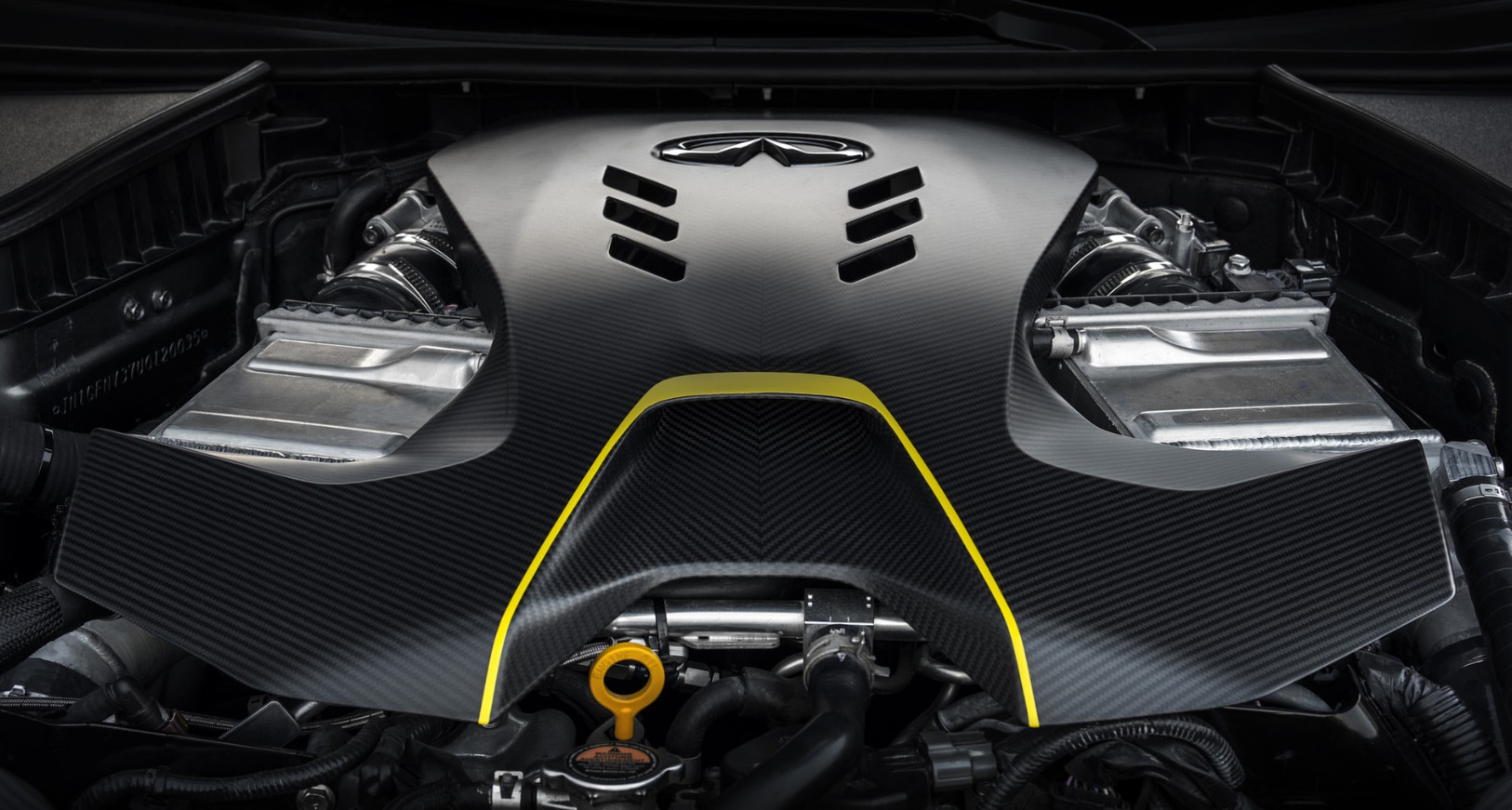
A future powertrain could potentially exceed 600 horsepower if Infiniti chose to pursue an evolution of the original concept. A reasonable target would be somewhere in the 600-to-650-horsepower range, although there is absolutely no confirmed factory specification for a 2027 Black S. The more important number would be torque response. Electric assistance could fill the low-rpm gap before the turbochargers reach maximum boost, producing immediate acceleration without the traditional delay associated with large turbocharged engines. The gasoline engine could then deliver sustained high-rpm power while the electric system provides additional thrust when the battery has sufficient charge.
Transmission and drivetrain choices would determine how effectively that power reaches the road. The original Q60-based Project Black S prototype was designed around the Q60’s performance architecture, while the production Q60 used a seven-speed automatic transmission with rear-wheel drive or available all-wheel drive depending on configuration. A modern Black S would likely benefit from an advanced automatic or dual-clutch transmission if packaging and torque requirements allowed it. All-wheel drive could provide the strongest launch performance, although a rear-drive layout would preserve a more traditional enthusiast character. Active torque management could distribute power intelligently while allowing the driver to select aggressive rear-biased behavior.
The chassis would need to be engineered specifically around electrified performance rather than simply adding motors to an existing car. A low-mounted battery would help lower the center of gravity, but the additional mass would still need to be controlled. Infiniti could use extensive aluminum and carbon fiber, forged suspension components, lightweight wheels, carbon-ceramic brakes, and electronically controlled dampers. Active rear steering could improve agility at lower speeds while adding stability during high-speed direction changes. The goal should be a car that feels significantly more responsive than the original Q60 while retaining enough suspension compliance to function as a real grand tourer rather than a weekend-only track machine. 2027 Infiniti Project Black S Price
2027 Infiniti Project Black S Fuel Economy
Fuel economy is particularly interesting because electrification was central to the original Black S concept. Infiniti’s Project Black S was never designed primarily as a fuel-saving vehicle; the hybrid system was intended to recover energy and deploy it for performance. A 2027 version could use the same philosophy while also achieving better efficiency during normal driving. Regenerative braking could reduce energy waste in urban traffic, while electric assistance could allow the engine to operate closer to efficient load points. A sophisticated hybrid control system could also shut down the gasoline engine during low-load situations when conditions permit. Still, a 600-plus-horsepower performance coupe would not realistically compete with a conventional hybrid sedan for fuel economy.
The most valuable efficiency improvement could come from energy management rather than simply reducing fuel consumption. A modern Black S could learn the driver’s route, traffic conditions, elevation changes, and driving style, deciding when to preserve battery energy and when to deploy it. On a winding road, the system could maintain sufficient battery charge for repeated acceleration zones. On a highway, it could favor efficient gasoline operation and use regenerative braking to replenish the battery. Such software would make the hybrid system feel like part of the car’s performance personality rather than an economy feature added for regulatory reasons.
The cabin could also display the energy strategy in real time. A dedicated Black S interface could show power flowing between the engine, turbocharger, battery, electric motor, and wheels. Drivers could monitor regenerative braking, battery temperature, available electric boost, and system output. Track-focused screens could show acceleration data, lap times, G-forces, tire temperatures, and braking performance. These functions would make the technology tangible. Instead of hiding the hybrid system beneath the floor and hood, Infiniti could turn it into one of the defining reasons to buy the car. That would be particularly appropriate for a model whose original identity was built around Formula One-inspired energy recovery.
2027 Infiniti Project Black S Safety Features
The 2027 Infiniti Project Black S safety package should be significantly more advanced than anything fitted to the original Q60. A modern flagship performance coupe would be expected to include automatic emergency braking, forward-collision warning, blind-spot monitoring, rear cross-traffic alert, lane-departure warning, adaptive cruise control, and a surround-view camera system. More sophisticated software could add active lane intervention, enhanced pedestrian and cyclist detection, intersection monitoring, and highway assistance. Infiniti’s future technology strategy has already emphasized intelligent driver assistance, while its concept vehicles have explored increasingly integrated approaches to vehicle control.
The Black S should also use its advanced electronics to make performance driving safer. A modern vehicle could monitor tire temperature, brake temperature, battery temperature, motor temperature, and drivetrain conditions in real time. Stability-control software could coordinate the gasoline engine, electric motor, brakes, and differential to maintain traction without making the car feel artificially restrained. Multiple drive modes could provide a relaxed Touring setting, a Sport setting, and an aggressive Black S mode that changes throttle response, steering weight, damping, shift strategy, torque distribution, and energy deployment. This would make the car adaptable rather than permanently extreme. 2027 Infiniti Project Black S Price
2027 Infiniti Project Black S Release Date & Price
The 2027 Infiniti Project Black S trim structure would almost certainly be different from a conventional Q60 lineup if Infiniti ever revived the name. The original Project Black S was effectively a high-performance prototype based on the Q60, not a normal production trim. A modern version could follow a similar strategy by making Black S a standalone flagship rather than offering multiple grades. The hypothetical lineup could include a standard performance model, a Black S, and perhaps a limited Black S Track Edition, but such a structure would only make sense if Infiniti first re-established a production sports coupe. At present, Infiniti’s active range is focused heavily on SUVs and crossovers, while the Q60 ended production after 2022.
If Infiniti did approve a new Black S, exclusivity would be critical. A limited production run of perhaps 500 units globally would create far more collector appeal than building thousands every year. Each car could receive a numbered plaque, unique paint, bespoke interior materials, carbon-fiber aerodynamic parts, forged wheels, carbon-ceramic brakes, and a dedicated ownership package. Infiniti could even provide a technical presentation explaining the hybrid energy-recovery system and its connection to the original Project Black S prototype. That would make the car a piece of Infiniti engineering history rather than simply another high-performance luxury coupe.
Pricing would naturally be much higher than the former Q60 Red Sport 400. The original Q60 Red Sport 400 was positioned as a performance luxury coupe, whereas the Project Black S prototype introduced F1-inspired hybrid technology and 563 horsepower. A production 2027 Black S using carbon fiber, high-output hybrid hardware, advanced suspension, large brakes, and limited production could reasonably target the $100,000-plus luxury performance segment. A particularly sophisticated version could reach $120,000 or more. These figures are estimates only; Infiniti has announced no MSRP, production plan, or pricing for a 2027 Project Black S.
The release date is the biggest uncertainty. There is currently no confirmed 2027 Infiniti Project Black S production model or official release schedule. The historical prototype was shown in 2018, and the Q60 was subsequently discontinued after the 2022 model year. That means any claim that the Black S is definitely arriving for the 2027 model year would be inaccurate. A future revival would require Infiniti to announce a new sports coupe or performance vehicle program first. The company has continued to show interest in electrified performance through its concept portfolio, including the Prototype 10, which Infiniti described as an exploration of electrified performance and future electric and e-POWER vehicles.
The most exciting possibility is that Infiniti could use the Project Black S name for something completely new rather than simply resurrecting the old Q60. The original concept was tied closely to Formula One-inspired hybrid technology, but a modern version could become an electrified performance flagship using a much more advanced system. A high-output twin-turbo engine, compact high-discharge battery, electric torque assistance, advanced turbocharging, active aerodynamics, all-wheel drive, and carbon-fiber construction could create a genuinely distinctive Infiniti. Such a car would give the brand a technological halo product capable of attracting attention far beyond its sales volume.
Conclusion
There is also a strong design argument for the project. Infiniti’s current design philosophy is built around Japanese influences and a desire to create distinctive vehicles rather than simply imitate European luxury brands. The company describes its design approach through concepts including ma, with an emphasis on space, minimalism, and intricate details. A Black S would provide an opportunity to apply that philosophy to a much more aggressive performance vehicle. Instead of copying the visual language of a BMW M car or Mercedes-AMG, Infiniti could create a low, wide coupe with a distinctively Japanese identity and aerodynamic details derived from actual engineering requirements.
Performance would remain the strongest selling point. The original prototype’s 563 horsepower and sub-four-second claimed 0-to-60-mph target were already serious numbers for 2018. A 2027 version would need to go further if it were to justify its place as a modern halo car. A target above 600 horsepower, combined with electric torque assistance and advanced traction control, could produce acceleration well below four seconds. More importantly, the hybrid system could make the car faster and more responsive throughout the rev range rather than merely increasing peak output. That would make the Black S feel technically sophisticated rather than simply powerful.
The 2027 Infiniti Project Black S ultimately remains a fascinating possibility rather than an announced production car. Its foundation, however, is real. Infiniti and Renault Sport Formula One engineers created a Q60-based prototype with a 563-horsepower twin-turbo V6 hybrid system, Formula One-inspired energy recovery, aggressive aerodynamic components, and a claimed sub-four-second 0-to-60-mph time. The program never developed into the production model enthusiasts were hoping for, and the Q60 itself has since left the market.
If Infiniti ever decides to revive the Black S name, the smartest approach would be to preserve its original purpose: technology first, performance second, and luxury throughout. A modernized F1-inspired hybrid powertrain, carbon-fiber bodywork, sophisticated active aerodynamics, premium digital cabin, advanced safety systems, and limited production could create a vehicle unlike anything else in Infiniti’s current range. It would also give the brand a way to demonstrate that electrification does not have to mean abandoning performance. Until Infiniti announces an actual production program, however, the 2027 Project Black S should be viewed as an informed future-model concept rather than a confirmed vehicle with official specifications, pricing, trims, fuel economy, or release date.
Note: The details included in this blog post are derived from pre-release material that was accessible when the article was written. If you want the latest information, you should check official sources or call your nearest dealership.
Read Also:
- 2027 Infiniti QX80 Signature Edition Redesign, Price, Specs
- 2027 Infiniti QX80 Monograph Review, Price, Features
- 2027 Infiniti Q60 Neiman Marcus Limited Edition Release Date, Price, Specs
- 2027 Infiniti Q60 Edition 30 Redesign, Specs, Interior
- 2027 Infiniti Q50 Edition 30 Review, Price, Configurations
Frequently Asked Questions
2027 Infiniti Project Black S Price, Specs, Interior - The 2027 Infiniti Project Black S is one of the most intriguing names in Infiniti performance history, but it requires an important distinction between an actual production vehicle and a future-model concept. Project Black S was real: Infiniti developed…
That history makes a hypothetical 2027 Infiniti Project Black S especially interesting. Instead of treating the name as another ordinary trim level, Infiniti could revive it as a technology flagship that demonstrates what the brand can accomplish when performance, electrification, and Japanese luxury design are developed around the…
The redesign would also need to move beyond the styling of the previous Q60. The original Project Black S prototype used an aggressive aero package with large air intakes, carbon-fiber components, 21-inch wheels, a prominent rear diffuser, and a dramatic exhaust arrangement. A 2027 version could reinterpret those…
The biggest update would likely be the powertrain philosophy. Infiniti's older Project Black S was built around Formula One-inspired energy recovery, but a 2027 version could use a considerably more sophisticated electrified system. A compact high-output battery could feed one or more electric motors to provide instant torque,…
2027 Infiniti Project Black S Redesign and Update Plan Exterior & Interior The exterior of the 2027 Infiniti Project Black S should be unmistakable from the first glance. The original prototype was deliberately more extreme than the standard Q60, using carbon-fiber aerodynamic elements and a body designed to…