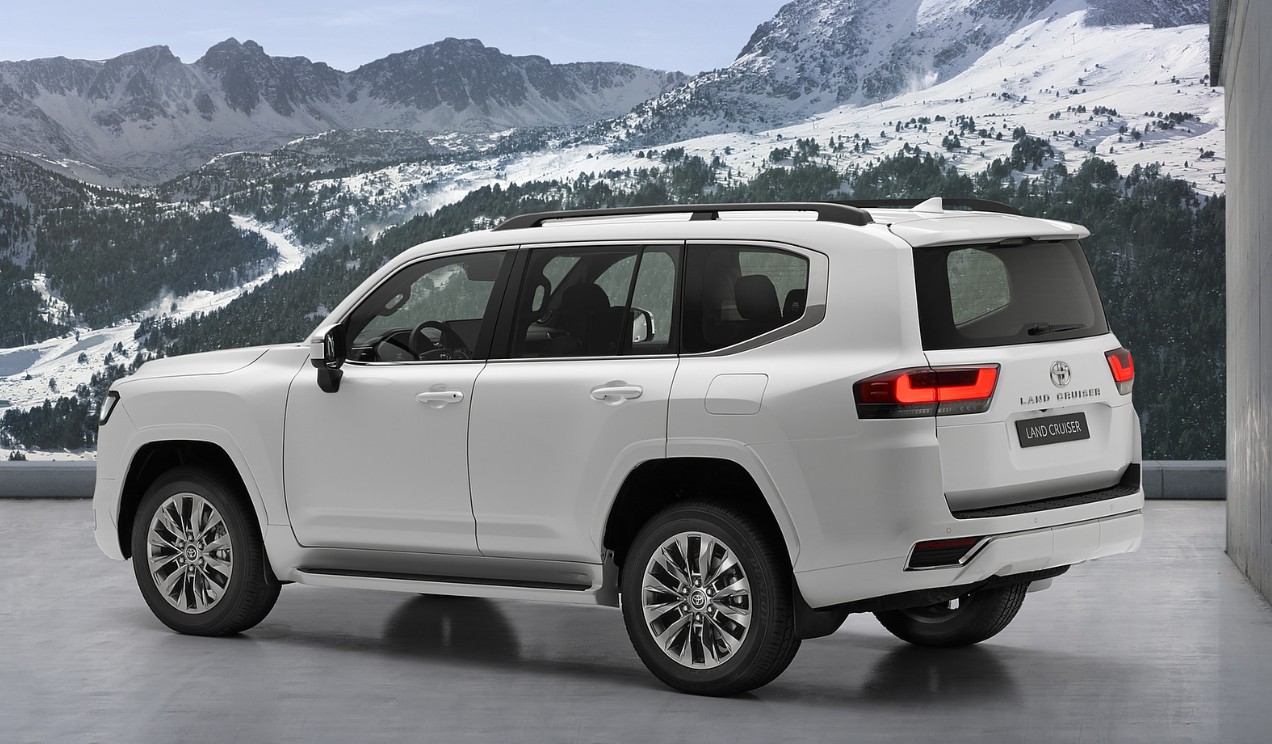
2027 Toyota Land Cruiser 300 Series Review, Specs, Dimensions – The 2027 Toyota Land Cruiser 300 Series enters a fascinating stage in the history of Toyota’s flagship off-road SUV. Rather than receiving a completely new generation, the LC300 continues the current-generation formula introduced as the successor to the Land Cruiser 200 Series, while Toyota expands its electrification strategy with a high-output performance hybrid system. For markets such as Indonesia and Australia, the most important development is not a cosmetic redesign but the arrival of the 3.5-liter twin-turbo V6 hybrid powertrain. Toyota-Astra Motor officially introduced the New Land Cruiser 300 Hybrid EV in Indonesia at GIIAS 2026, while Toyota Australia introduced its performance hybrid for flagship LC300 grades.
The 300 Series remains fundamentally different from the smaller Land Cruiser 250 sold in several markets under the broader Land Cruiser name. Toyota originally developed the LC300 as the flagship station-wagon member of the Land Cruiser family, retaining a body-on-frame architecture and the core priorities of reliability, durability and off-road performance. The GA-F platform brought weight reduction, a lower center of gravity and modern technology without abandoning the separate-frame concept that has defined the model. That engineering philosophy continues to make the LC300 especially attractive to buyers who need genuine long-distance durability, towing capability and off-road control rather than simply an SUV with rugged styling.
For 2027, the most significant update is therefore expected to center on powertrain availability and equipment rather than a ground-up exterior redesign. Toyota’s current 300 Series development has already introduced the performance hybrid to flagship variants, combining the twin-turbocharged V6 with an electric motor mounted between the engine and automatic transmission. In Indonesia, the new hybrid system produces 341 kW and 790 Nm of combined output, making it the most powerful Land Cruiser yet. Toyota describes the system as a performance-oriented hybrid rather than a conventional economy-focused hybrid, with the electric motor providing additional response, torque and refinement while preserving the LC300’s core 4WD capability.
That makes the 2027 Toyota Land Cruiser 300 Series particularly interesting for buyers who have been waiting for electrification without wanting to give up the traditional Land Cruiser package. The diesel remains important in markets where long-distance range, fuel availability and established heavy-duty use matter, while the new petrol-electric setup gives the flagship SUV substantially stronger acceleration and instant electric assistance. Toyota has also continued updating safety, multimedia and comfort equipment across the broader LC300 range. The 2027 model should therefore be viewed as an evolution of the current 300 Series rather than an entirely new vehicle, with the hybrid powertrain representing the biggest step forward. 2027 Toyota Land Cruiser 300 Series Review
2027 Toyota Land Cruiser 300 Series Redesign and Update Plan
Exterior & Interior
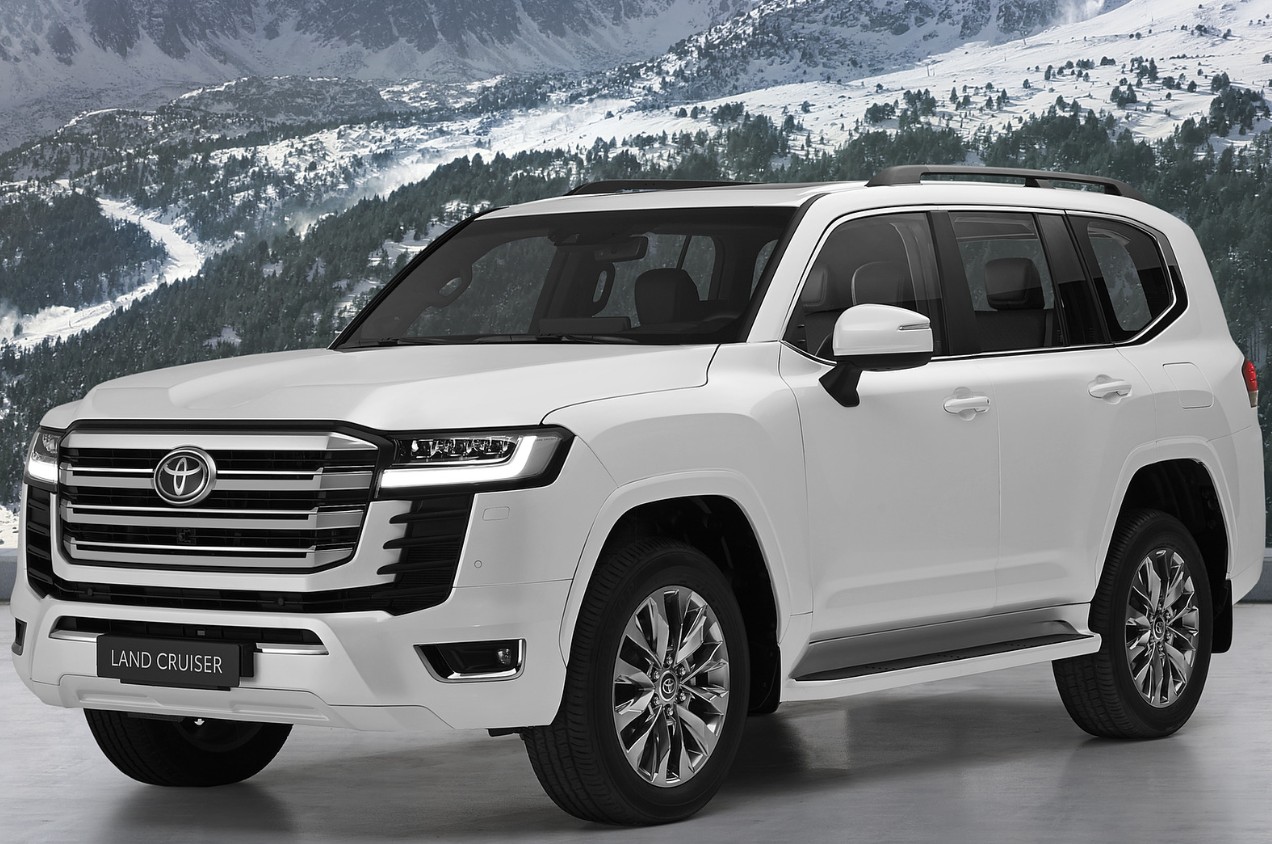
The exterior design of the 2027 Toyota Land Cruiser 300 Series remains instantly recognizable as a flagship Land Cruiser. The body is tall, substantial and upright, with a long wheelbase, squared-off greenhouse and high ground clearance that communicate its purpose before the vehicle even moves. The front fascia uses a large horizontal grille, muscular fenders and slim modern lighting elements, while the proportions remain carefully engineered for visibility and off-road clearance. Unlike many luxury SUVs that increasingly use dramatic curves and coupe-like rooflines, the LC300 maintains a relatively functional silhouette. That approach also preserves the model’s visual connection with earlier Land Cruiser generations without turning the design into a retro exercise.
Toyota offers different visual personalities depending on grade. In Indonesia, the LC300 GR-S Hybrid EV receives a black TOYOTA grille, GR Sport-specific bumper treatment, black-matte wheels and GR badging, giving it a more aggressive appearance than the conventional flagship. The VX-R version also receives refreshed front and rear lower bumper details. These changes are relatively restrained, but that restraint suits the Land Cruiser because its visual identity has always depended more on proportion, stance and durability than excessive bodywork. The GR Sport configuration in particular gives the 300 Series a more performance-oriented presence while preserving the upright architecture needed for serious off-road driving.
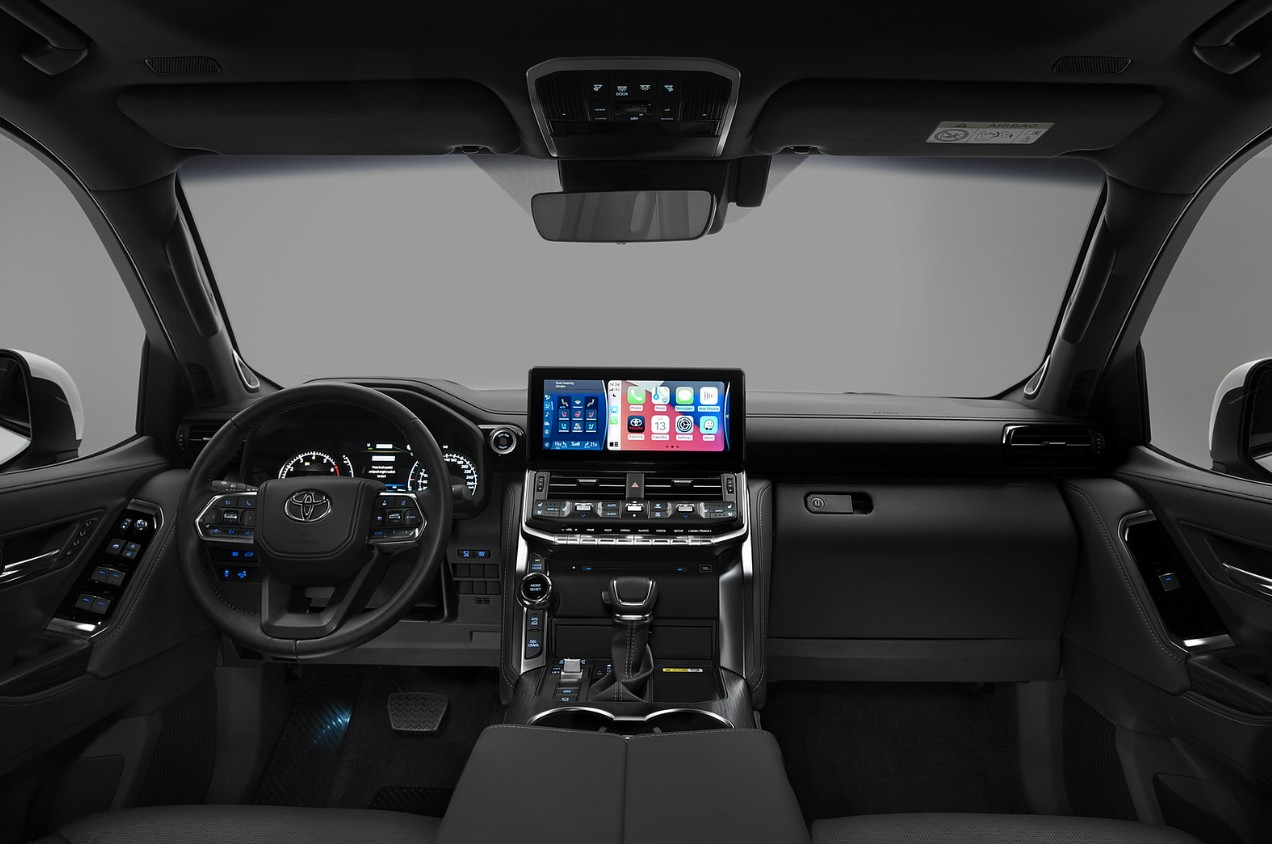
Inside, the LC300 combines rugged functionality with a much more sophisticated environment than earlier generations. The dashboard is broad and horizontally organized, with controls positioned to remain usable while driving on uneven surfaces. Modern versions feature large multimedia displays, digital instrumentation and premium materials, while higher grades add heated and ventilated seats, leather-accented upholstery, premium audio and additional convenience technology. Toyota Australia’s specification information shows that upper grades can include a 12.3-inch multimedia touchscreen, 14-speaker JBL audio, heated and ventilated front seats and heated and ventilated second-row outboard seats.
Practicality remains a major advantage because the LC300 was not designed simply as a luxury statement. Depending on grade and market, buyers can choose configurations with five or seven seats, while higher specifications add power-operated seating, memory functions and power-folding third-row seats. The cabin’s upright architecture creates useful headroom and gives passengers a commanding view over surrounding traffic. For families traveling long distances, the combination of spacious seating, strong air-conditioning capability, multiple storage areas and premium comfort equipment makes the LC300 considerably easier to live with than its rugged reputation might suggest. The flagship Sahara ZX and GR Sport versions can therefore bridge the gap between expedition vehicle and luxury family SUV.
2027 Toyota Land Cruiser 300 Series Specs
Engine & Performance
The headline powertrain for the latest LC300 is Toyota’s 3.5-liter twin-turbo V6 i-FORCE MAX performance hybrid. In the Indonesian specification, the gasoline engine produces 305 kW and 650 Nm, while the electric motor contributes 36 kW and 250 Nm. Combined system output reaches 341 kW and 790 Nm. Toyota uses a parallel hybrid layout with the electric motor positioned between the gasoline engine and 10-speed automatic transmission. This arrangement allows the engine and electric motor to work together when maximum performance is required, while the vehicle can also use electric propulsion independently under suitable conditions.
The numbers represent a substantial performance increase over the 3.3-liter twin-turbo diesel used in the LC300. Toyota Australia quotes 341 kW and 790 Nm for the performance hybrid, compared with 227 kW and 700 Nm from the diesel engine. That gives the hybrid 114 kW more power and 90 Nm more torque than the diesel specification. The result is not simply a faster SUV in a straight line. Additional electric torque can make throttle response more immediate, particularly during initial acceleration, climbing and overtaking. For a heavy body-on-frame vehicle, that instant response can make the LC300 feel considerably more energetic without requiring an enormous increase in engine displacement.
Toyota has also designed the hybrid around the requirements of a genuine off-road vehicle. The electric motor can provide torque without waiting for turbocharger boost to build, while the drivetrain continues to use the robust four-wheel-drive architecture expected from a Land Cruiser. The LC300 employs a 10-speed automatic transmission, full-time four-wheel drive and advanced traction-management systems. Depending on grade and market, features include Multi-Terrain Select, Crawl Control, Downhill Assist Control and Multi-Terrain Monitor. These systems work alongside the mechanical drivetrain rather than replacing it, giving drivers additional control when traction becomes unpredictable.
The standard 3.3-liter twin-turbo diesel remains a major part of the LC300 story in markets where it is offered. Toyota’s Australian specifications list 227 kW and 700 Nm, paired with a 10-speed automatic transmission and four-wheel drive. Its strong torque delivery and established reputation make it particularly appealing for towing and long-distance touring. The performance hybrid, meanwhile, is aimed at customers prioritizing power, response and refinement. That distinction gives the 300 Series unusual flexibility: buyers can select a proven diesel for traditional touring duties or move to the performance hybrid for the strongest acceleration and most sophisticated powertrain currently offered in the Land Cruiser family. 2027 Toyota Land Cruiser 300 Series Review
2027 Toyota Land Cruiser 300 Series Fuel Economy
Fuel economy varies considerably depending on engine and market. Toyota Australia’s published specifications list combined laboratory consumption of 8.9 L/100 km for the 3.3-liter diesel and 10.0 L/100 km for the performance hybrid, with urban and extra-urban figures varying by powertrain. The hybrid’s purpose is therefore not simply to produce the lowest possible fuel-consumption figure. Instead, Toyota has prioritized performance, torque and responsiveness, using electric assistance to make the large twin-turbo V6 more capable. The hybrid can also operate using electric propulsion under suitable conditions, including low-speed operation, helping smooth take-off and reduce unnecessary engine operation.
Technology inside the LC300 also moves the flagship further into premium territory. Higher grades can include a 12.3-inch multimedia screen, 14-speaker JBL premium audio, head-up display, digital convenience features and sophisticated seating functions. Toyota Australia’s flagship performance-hybrid versions include heated and ventilated front seats and outboard rear seats, while the Sahara ZX can also provide a dual rear-seat entertainment system. These features are important because the LC300 is often used for long-distance family travel, not merely weekend off-road excursions. A vehicle capable of tackling remote terrain still needs to keep occupants comfortable for hours on highways before the trail even begins.
2027 Toyota Land Cruiser 300 Series Safety Features
Safety technology has become increasingly important for a vehicle as large and expensive as the Land Cruiser 300 Series. Recent updates to the model have brought newer Toyota Safety Sense driver-assistance technology, along with improved multimedia connectivity. Depending on market and grade, the LC300 can feature pre-collision assistance, adaptive cruise control, lane-departure warning, lane-tracing assistance, road-sign recognition and automatic high beams. These systems are designed to reduce driver workload on highways while retaining the driver’s responsibility for controlling the vehicle. The combination is particularly useful on long-distance journeys, where the LC300’s ability to travel hundreds of kilometers between destinations is one of its strongest traditional advantages.
The LC300’s safety strategy extends beyond electronic driver assistance. Its body-on-frame construction, robust chassis engineering and sophisticated suspension contribute to stability in demanding conditions. Toyota uses an independent double-wishbone front suspension and four-link rigid rear suspension with coil springs, providing the durability and wheel-control characteristics needed for rough terrain. Full-time four-wheel drive, traction management and electronic assistance then build upon that mechanical foundation. The result is a vehicle that can remain composed on paved highways while still offering the suspension movement and drivetrain control necessary for gravel roads, rocky trails, steep climbs and other challenging surfaces. 2027 Toyota Land Cruiser 300 Series Review
2027 Toyota Land Cruiser 300 Series Release Date & Price
The 2027 Toyota Land Cruiser 300 Series represents one of the most significant technical developments in the modern Land Cruiser story. The arrival of the 3.5-liter twin-turbo V6 performance hybrid gives the flagship SUV an extraordinary 341 kW and 790 Nm, while the familiar body-on-frame construction, full-time four-wheel drive and advanced off-road systems preserve the capabilities that made the Land Cruiser name famous.
For Indonesia, the new LC300 Hybrid EV and GR-S Hybrid EV bring a more powerful and responsive alternative to the traditional diesel formula, with official GIIAS 2026 pricing beginning at Rp2.716 billion. For Australia, the performance hybrid expands into the GR Sport and Sahara ZX flagship grades. The result is a Land Cruiser that feels more powerful, more refined and more technologically advanced without losing its essential identity as a durable, long-distance, go-anywhere SUV.
The next chapter of the LC300 is therefore not about abandoning its heritage. It is about adding electric performance to one of Toyota’s most established mechanical formulas. For buyers searching for a luxury SUV with genuine off-road credentials, serious towing potential, premium comfort and now supercharged hybrid performance, the 2027 Toyota Land Cruiser 300 Series stands as one of the most capable and technically interesting versions of the iconic nameplate yet.
Conclusion
The 2027 Toyota Land Cruiser 300 Series represents one of the most significant technical developments in the modern Land Cruiser story. The arrival of the 3.5-liter twin-turbo V6 performance hybrid gives the flagship SUV an extraordinary 341 kW and 790 Nm, while the familiar body-on-frame construction, full-time four-wheel drive and advanced off-road systems preserve the capabilities that made the Land Cruiser name famous.
For Indonesia, the new LC300 Hybrid EV and GR-S Hybrid EV bring a more powerful and responsive alternative to the traditional diesel formula, with official GIIAS 2026 pricing beginning at Rp2.716 billion. For Australia, the performance hybrid expands into the GR Sport and Sahara ZX flagship grades. The result is a Land Cruiser that feels more powerful, more refined and more technologically advanced without losing its essential identity as a durable, long-distance, go-anywhere SUV.
The next chapter of the LC300 is therefore not about abandoning its heritage. It is about adding electric performance to one of Toyota’s most established mechanical formulas. For buyers searching for a luxury SUV with genuine off-road credentials, serious towing potential, premium comfort and now supercharged hybrid performance, the 2027 Toyota Land Cruiser 300 Series stands as one of the most capable and technically interesting versions of the iconic nameplate yet.
Note: The details included in this blog post are derived from pre-release material that was accessible when the article was written. If you want the latest information, you should check official sources or call your nearest dealership.
Read Also:
- 2027 Toyota Land Cruiser Release Date, Specs, Interior
- 2027 Toyota Corolla Sedan Redesign, Specs, Configurations
- 2027 Toyota Avalon Hybrid Price, Specs, Features
- 2027 Toyota Venza Review, Specs, Performance
- 2027 Toyota RAV4 GR Sport Release Date, Specs, Changes
Frequently Asked Questions
2027 Toyota Land Cruiser 300 Series Review, Specs, Dimensions - The 2027 Toyota Land Cruiser 300 Series enters a fascinating stage in the history of Toyota's flagship off-road SUV. Rather than receiving a completely new generation, the LC300 continues the current-generation formula introduced as the successor to the…
The 300 Series remains fundamentally different from the smaller Land Cruiser 250 sold in several markets under the broader Land Cruiser name. Toyota originally developed the LC300 as the flagship station-wagon member of the Land Cruiser family, retaining a body-on-frame architecture and the core priorities of reliability, durability…
For 2027, the most significant update is therefore expected to center on powertrain availability and equipment rather than a ground-up exterior redesign. Toyota's current 300 Series development has already introduced the performance hybrid to flagship variants, combining the twin-turbocharged V6 with an electric motor mounted between the engine…
That makes the 2027 Toyota Land Cruiser 300 Series particularly interesting for buyers who have been waiting for electrification without wanting to give up the traditional Land Cruiser package. The diesel remains important in markets where long-distance range, fuel availability and established heavy-duty use matter, while the new…
2027 Toyota Land Cruiser 300 Series Redesign and Update Plan Exterior & Interior The exterior design of the 2027 Toyota Land Cruiser 300 Series remains instantly recognizable as a flagship Land Cruiser. The body is tall, substantial and upright, with a long wheelbase, squared-off greenhouse and high ground…