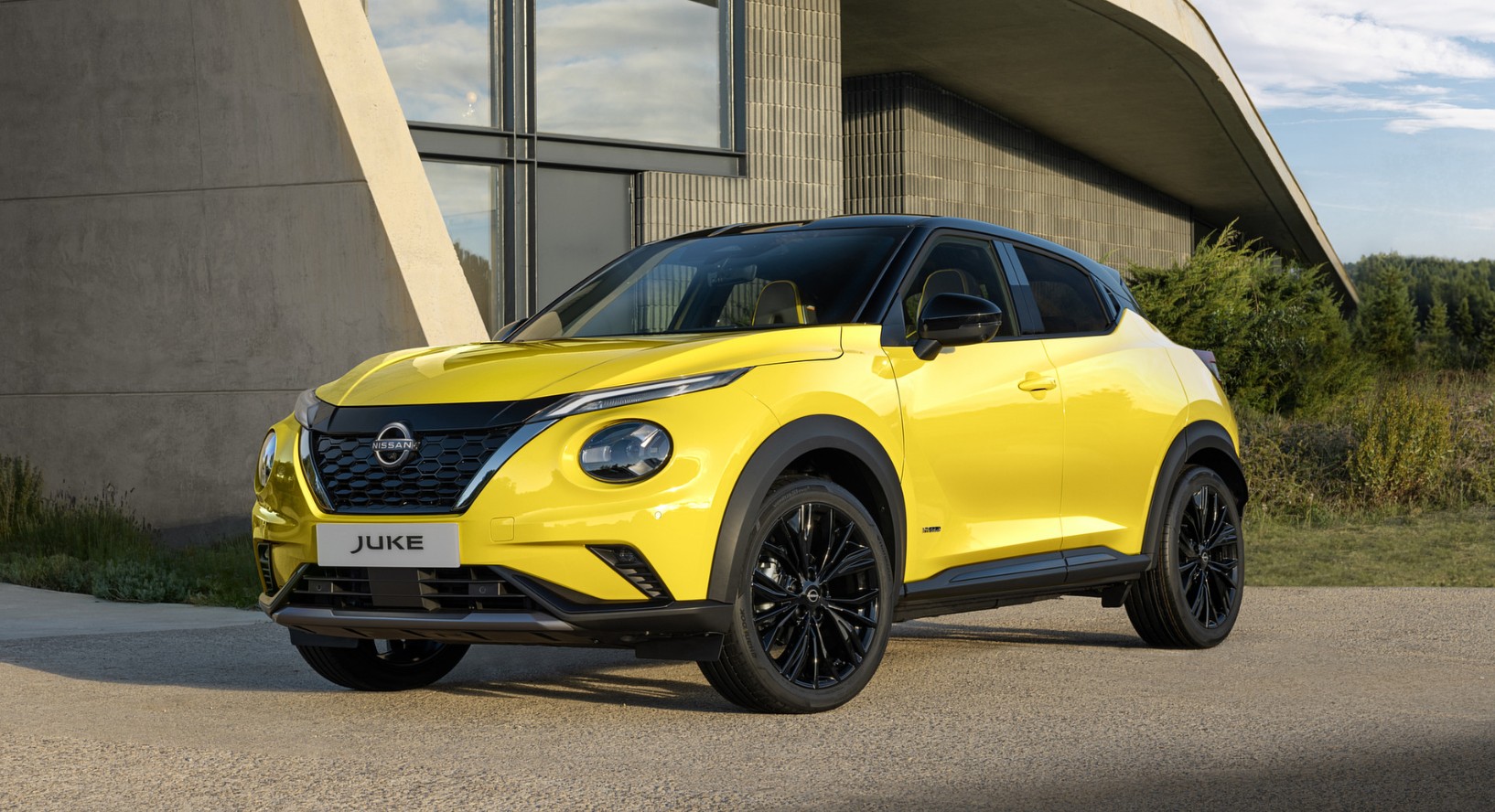
2027 Nissan JUKE Release Date, Specs, Price – The 2027 Nissan JUKE could become one of the most intriguing small crossover stories in the European market as Nissan prepares to reinvent the name for the electric era. The important distinction is that Nissan has not announced a conventional 2027 Juke powered by the current gasoline and hybrid systems. Instead, Nissan has officially identified Juke EV as a core European model in its future portfolio, describing it as a rule-breaking vehicle designed to push automotive design forward once again. Nissan’s global strategy places the Juke EV among its important European products, which makes a next-generation 2027 Juke more than a speculative nameplate revival.
The current Juke already occupies an unusual position in Nissan’s European range. The latest version is a small crossover available with either a 1.0-liter turbocharged three-cylinder gasoline engine or a 1.6-liter hybrid system. In the UK, Nissan currently lists the Juke from £24,485, while the updated 2026 model year remains available to order. The existing hybrid produces 143 PS, while the gasoline version produces 114 PS. Nissan’s current Juke measures 4,210 mm long, 1,800 mm wide and 1,593 mm high, giving it a compact footprint while maintaining a recognizable crossover stance.
For 2027, the most significant change could therefore be the transition from a familiar combustion-based formula to an electric architecture. Nissan has already shown that it wants the next Juke to remain visually unconventional rather than becoming another anonymous electric crossover. That approach is important because the original Juke became famous precisely because it ignored conventional small-SUV styling. A new electric version could preserve the raised driving position, short body and expressive front end while using a cleaner EV architecture underneath. The result could be a vehicle that feels unmistakably related to the Juke but is technologically far removed from the first-generation model.
The redesign would also need to address practicality. Earlier Juke generations became known for dramatic styling, but buyers in the modern small-SUV market increasingly expect generous rear-seat space, useful cargo capacity, excellent infotainment and strong charging capability. A new electric platform could help Nissan improve interior packaging because there would be no large conventional engine occupying the front of the vehicle. A longer wheelbase could create additional rear legroom, while a flatter floor could improve cabin flexibility. The goal would be to preserve the Juke’s personality while making the vehicle easier to live with every day. 2027 Nissan JUKE Release Date
2027 Nissan JUKE Redesign and Update Plan
Exterior & Interior
The exterior of the 2027 Nissan JUKE could become the model’s most recognizable feature once again. Nissan has already described the upcoming Juke EV as a vehicle that will push design convention, strongly suggesting that the next generation will not simply imitate the styling of the current Kicks or Qashqai. A more aerodynamic body would likely combine a tall crossover stance with a lower roofline, short overhangs and heavily sculpted surfaces. The familiar circular-headlamp theme could evolve into slim LED lighting signatures, while a closed or partially closed EV grille could create a cleaner front fascia. Strong shoulder lines would help retain the muscular visual character associated with the Juke name.
The front end could also incorporate Nissan’s latest design language without making the vehicle look generic. The company has been developing more integrated lighting signatures and cleaner surfaces across its newest products, while its future EV portfolio emphasizes distinctive design as a way to differentiate Nissan from competitors. A future Juke could use a broad illuminated grille or shield, narrow daytime-running lights and hidden main lamps positioned lower in the bumper. Active aerodynamic shutters could improve efficiency, while carefully shaped wheel arches could reduce turbulence around the tires. The overall shape would need to balance personality with the aerodynamic requirements of an electric vehicle.
From the side, the next Juke could retain the floating-roof appearance that helped make the current generation recognizable. A black roof, dark pillars and sharply rising beltline would create the illusion of a more compact glasshouse, while larger wheels could emphasize the crossover’s athletic stance. Flush door handles would improve airflow and provide a cleaner visual surface. Nissan could also offer multiple two-tone combinations, giving buyers a way to personalize the car without relying on aftermarket accessories. The previous Juke was already known for customization, and continuing that philosophy would make sense for a model whose identity is strongly connected to visual individuality.
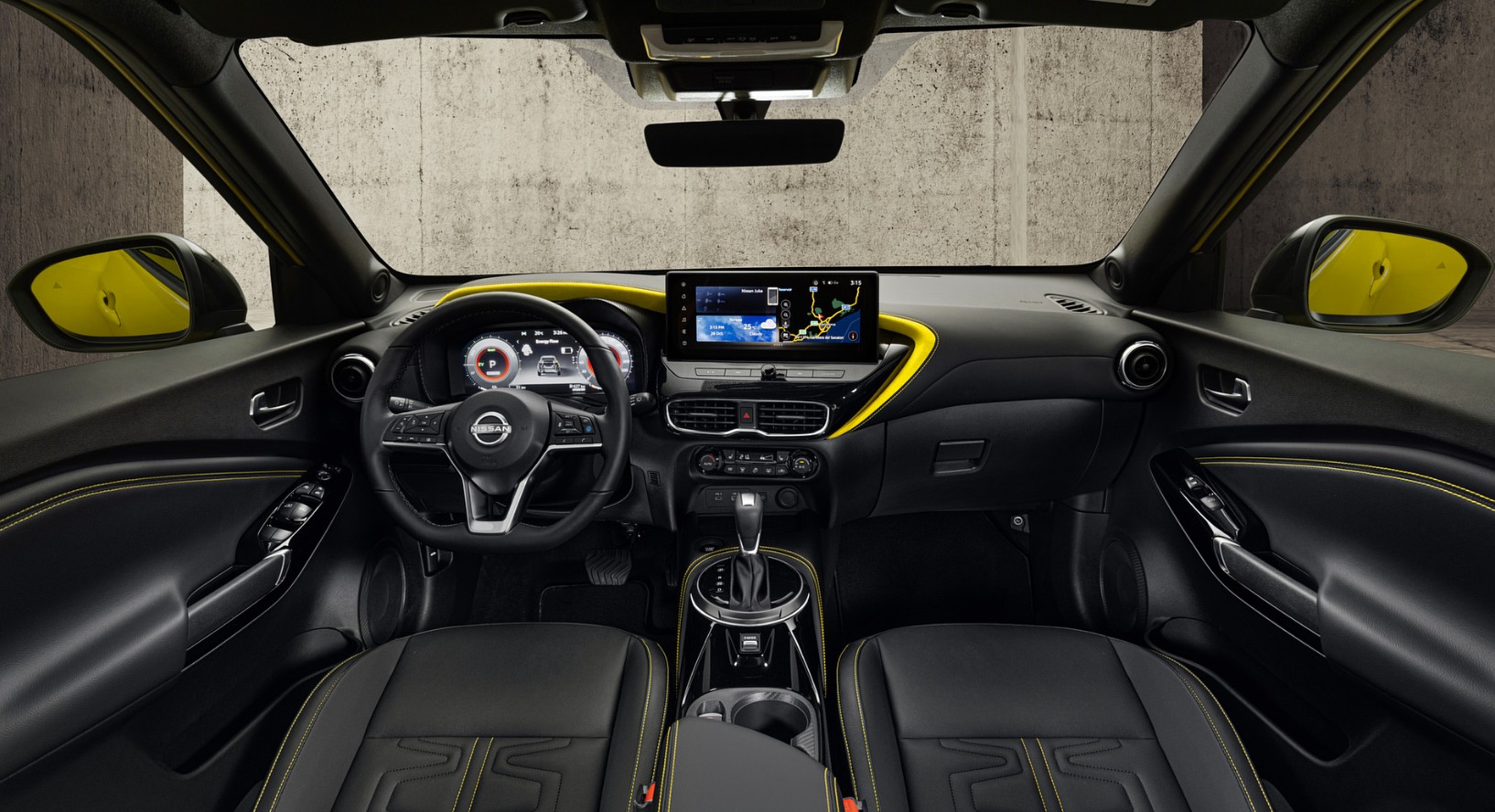
The interior could undergo an even larger transformation. The current Juke has a driver-focused dashboard with a distinctive center console inspired by a motorcycle fuel tank, but a future EV would likely replace much of that architecture with a more open digital cabin. Two large displays could form the main instrument and infotainment interface, while physical controls would remain for frequently used functions such as climate and drive selection. Nissan could use recycled fabrics, soft-touch materials and contrasting surfaces to create a more premium environment. A panoramic glass roof could make the compact cabin feel substantially larger, particularly if the electric platform allows a longer wheelbase without increasing the exterior footprint dramatically.
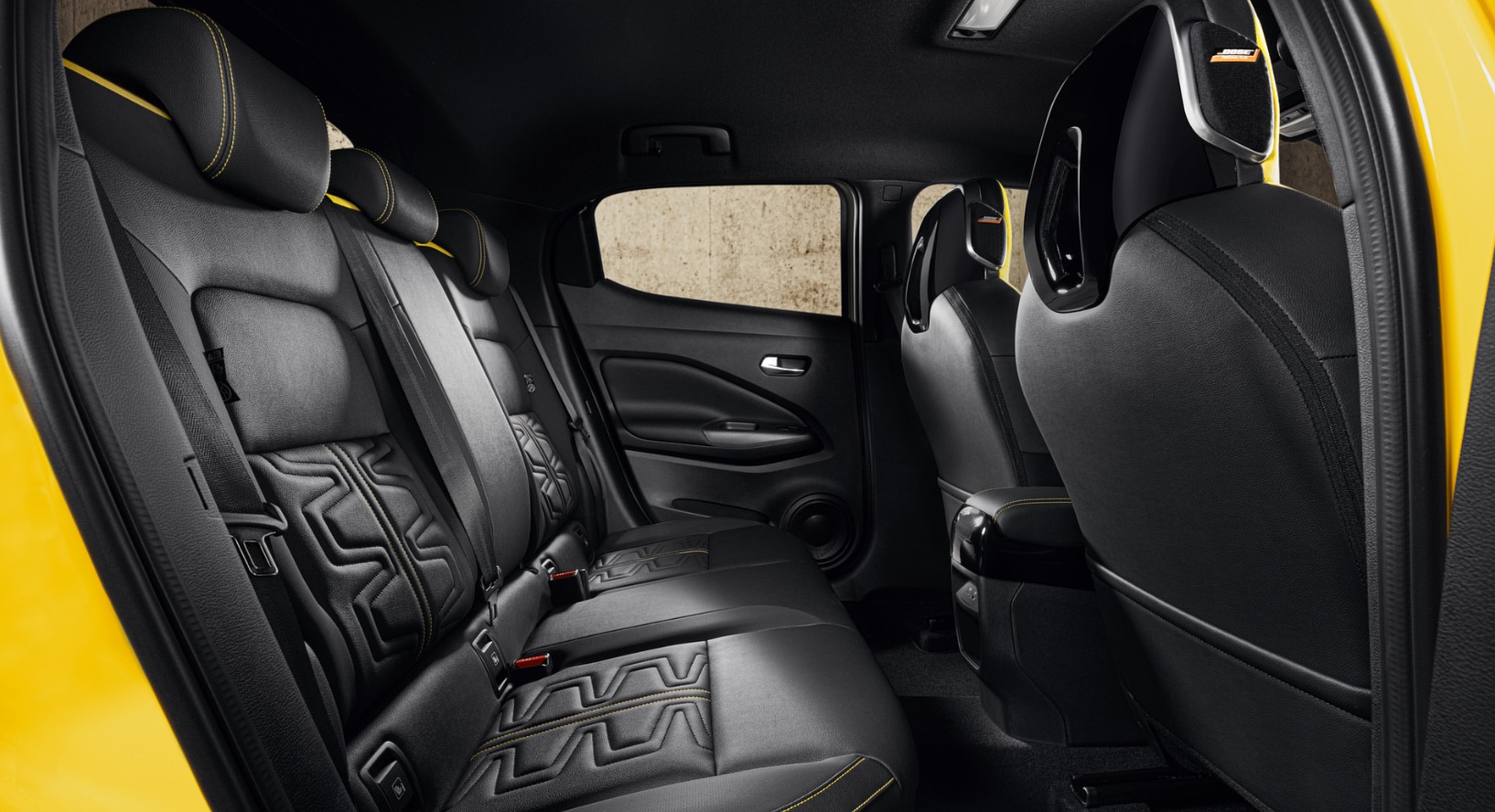
Passenger space should be one of the most important improvements. The current Juke provides seating for five and up to 422 liters of luggage space with the rear seats in place in applicable gasoline configurations, according to Nissan’s current UK specifications. The hybrid sacrifices some cargo volume, with Nissan listing 354 liters behind the rear seats for the current hybrid specification. A new EV architecture could potentially improve this packaging. The battery would remain beneath the floor, but eliminating the conventional engine and associated hardware could give designers more freedom with front storage, cabin proportions and suspension placement. A future Juke could therefore retain its compact exterior while becoming significantly more useful inside.
2027 Nissan JUKE Specs
Engine & Performance
The powertrain is where the 2027 Nissan JUKE could differ most dramatically from today’s model. Nissan has officially identified the Juke EV as a core European model, so an all-electric version is the clearest indication of the company’s future direction for the nameplate. Exact battery capacity, horsepower, torque and range figures have not yet been officially published for a production 2027 Juke EV, so those specifications should not be presented as confirmed. Nevertheless, the move to electric propulsion could give the compact crossover considerably quicker throttle response and a quieter driving experience than the current three-cylinder gasoline model.
A single electric motor driving the front wheels would likely provide the most efficient and affordable configuration, while a dual-motor all-wheel-drive version could potentially become the performance flagship. Nissan has experience with both front- and all-wheel-drive electrification through its broader EV portfolio, so the technical foundation for such a strategy already exists. The entry model could focus on range and affordability, while a higher-performance version could add a second motor for improved traction. A dual-motor Juke would also fit the model’s historical personality because the original Juke NISMO demonstrated that Nissan was willing to make its smallest crossover surprisingly sporty.
Performance could become one of the strongest advantages of electrification. Today’s Juke Hybrid produces 143 PS and accelerates from 0 to 62 mph in 10.1 seconds, while the 114-PS gasoline version takes approximately 10.7 to 11.8 seconds depending on transmission. An electric Juke with substantially more power could reduce that acceleration time considerably. Instant electric torque would make the vehicle feel particularly responsive in urban traffic, where quick launches and smooth low-speed acceleration matter more than high-speed top-end performance. A sport-oriented version could also receive a lower suspension setting, larger brakes, performance tires and more aggressive steering calibration.
Battery technology would determine whether the new Juke is positioned primarily as an affordable city EV or a genuinely versatile long-distance crossover. A battery in the 50-to-60-kWh class could potentially offer a useful balance between weight, cost and range, while a larger battery could make the vehicle more competitive with premium compact electric SUVs. These figures are projections rather than Nissan-confirmed specifications. DC fast charging would be essential, particularly in Europe, where public charging infrastructure continues to expand and consumers increasingly expect road-trip capability from electric vehicles. A high charging rate could also make the Juke more attractive to buyers who cannot install a home charger.
Driving dynamics could receive special attention because the Juke name has always carried a sporty image. Battery placement beneath the floor would lower the center of gravity, potentially improving cornering stability compared with a conventional gasoline crossover. Nissan could tune the steering for a sharper response while retaining a comfortable ride over rough urban roads. A dual-motor system could provide variable torque distribution between the axles, improving traction during acceleration and cornering. Regenerative braking could also be calibrated to provide stronger one-pedal driving in urban environments while retaining a more traditional brake feel at highway speeds. 2027 Nissan JUKE Release Date
2027 Nissan JUKE Fuel Economy
Fuel economy would naturally become a different measurement for the electric Juke. Instead of miles per gallon, buyers would focus on energy consumption in kWh per 100 km or miles per kWh, together with driving range. Aerodynamics would therefore become much more important than on the current gasoline model. The new Juke could use a smooth underbody, active shutters, aerodynamic wheels, flush door handles and carefully shaped mirrors to reduce drag. A relatively small frontal area would also help. Nissan could potentially target a range that makes the Juke suitable for both urban commuting and longer European journeys, but the official battery and range figures remain unavailable.
The existing Juke provides a useful reference for efficiency expectations. Nissan currently lists the 1.0-liter petrol model at up to 48.7 mpg WLTP combined in certain UK configurations, while the hybrid uses a 1.6-liter four-cylinder engine with a 49-hp electric motor and produces a combined 143 PS. The current hybrid is rated at a maximum speed of 103 mph and reaches 62 mph in 10.1 seconds. An electric replacement could improve urban energy efficiency significantly because electric motors do not waste energy idling and can recover energy during deceleration.
2027 Nissan JUKE Safety Features
Safety technology should be a central component of the new Juke because Nissan’s modern crossover lineup increasingly combines active driver assistance with connected technology. The current Juke already offers a range of safety and convenience systems depending on grade and market, while Nissan’s future vehicles are expected to continue expanding driver-assistance capabilities. A 2027 Juke EV could feature automatic emergency braking with pedestrian and cyclist detection, lane-departure warning, lane-keeping assistance, blind-spot monitoring, rear cross-traffic alert and adaptive cruise control. Higher trims could add a 360-degree camera and more advanced parking assistance.
The electric platform could also allow Nissan to improve passive safety through more efficient structural packaging. The battery would require strong protection against impact, while the absence of a large conventional engine could give engineers additional freedom around the front crash structure. Multiple airbags, electronic stability control and advanced braking assistance would remain fundamental. For a vehicle positioned toward younger urban buyers, driver-assistance technology could also become an important selling point. A well-integrated system should reduce fatigue on congested roads without removing driver involvement when the vehicle is being driven on open roads. 2027 Nissan JUKE Release Date
2027 Nissan JUKE Release Date & Price
The trim structure for the 2027 Nissan JUKE has not been announced, but Nissan could build the electric range around three or four grades. An entry-level Juke EV could focus on affordability with a smaller battery, front-wheel drive and essential equipment. A mid-level grade could add a larger battery, upgraded infotainment, larger wheels and additional driver-assistance technology. A premium version could introduce a panoramic roof, premium upholstery, advanced audio and a more powerful motor. A sporty NISMO-inspired version could eventually sit at the top of the range, although Nissan has not confirmed that such a model is planned. The previous Juke NISMO demonstrated the potential for a performance-focused interpretation.
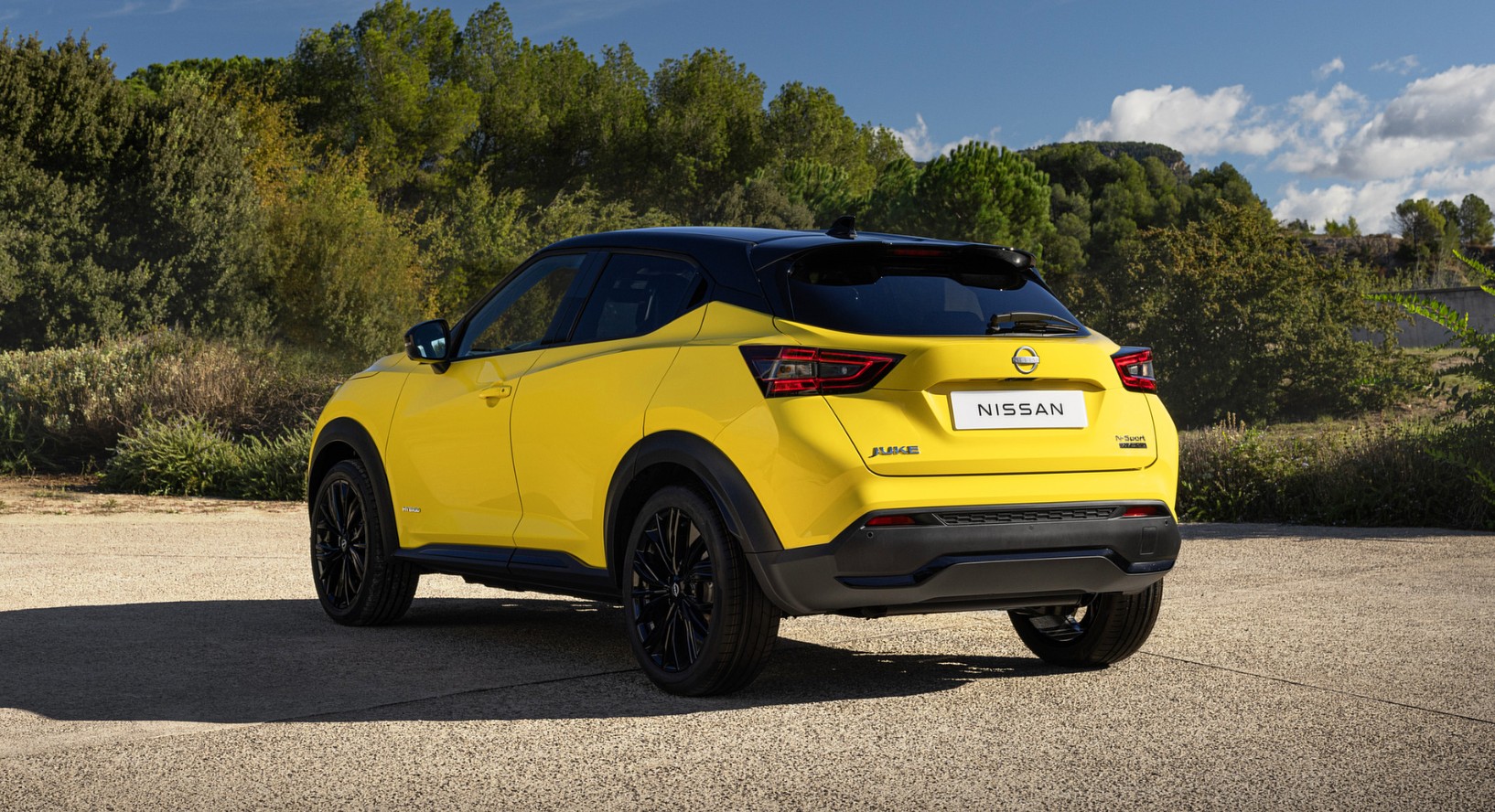
Pricing will depend on the battery size, electric motor configuration and Nissan’s European positioning. The current Juke begins at £24,485 in the UK for the Acenta Premium gasoline model, while Nissan lists a Pulse Edition Hybrid at £31,395 before optional paint, personalization and accessories. A new electric Juke would likely cost more than the current gasoline model because of battery costs and the newer EV architecture. A plausible projection could put an entry-level Juke EV somewhere around £30,000 to £35,000, with better-equipped versions potentially moving toward £40,000. These figures are estimates only and should not be treated as Nissan-confirmed pricing.
The release timeline is more concrete at the strategic level than at the specification level. Nissan has officially identified the Juke EV as a core European model, and its global electrification information lists the Juke as part of the company’s 2026-present EV development roadmap. However, Nissan has not published a definitive production specification sheet, official MSRP or precise dealership arrival date for a 2027 Juke EV. Nissan’s current UK site continues to sell the updated 2026 Juke with petrol and hybrid powertrains, meaning buyers should not confuse today’s Juke with the future electric model.
Infotainment could become another major advantage. A modern Juke should offer a large central touchscreen, wireless Apple CarPlay and Android Auto, cloud-connected navigation and over-the-air software updates. A digital key could allow owners to unlock and start the vehicle using a smartphone, while an associated mobile application could display battery state, charging schedules and cabin-preconditioning status. Nissan could also introduce a more sophisticated voice assistant and personalized driver profiles. The technology should remain intuitive rather than becoming a collection of screens. A compact crossover needs a simple interface that can be operated quickly while driving through busy urban environments.
Conclusion
The 2027 Nissan JUKE could represent one of Nissan’s most important small-crossover transformations. Rather than simply refreshing the current 1.0-liter petrol and 1.6-liter hybrid model, Nissan’s future strategy points toward a Juke EV designed specifically for Europe. The company has already classified Juke EV as a core European vehicle and has described it as a model intended to challenge conventional design.
If the production model follows that direction, the next Juke could retain its distinctive personality while gaining a cleaner electric powertrain, improved cabin packaging, stronger digital technology, faster charging and more advanced safety equipment. A lower battery-mounted center of gravity could also give the crossover a sharper driving character than its compact proportions might suggest.
The biggest unanswered questions remain battery capacity, driving range, motor output, charging speed, trim levels and price. Nissan has not yet published those final specifications, so projected numbers should be treated carefully. What is confirmed is the strategic direction: Juke EV is coming as a core European Nissan model, making the next generation of this unconventional crossover particularly important for the brand’s future.
Note: The details included in this blog post are derived from pre-release material that was accessible when the article was written. If you want the latest information, you should check official sources or call your nearest dealership.
Read Also:
- 2027 Nissan Z Heritage Edition Release Date, Specs, Dimensions
- 2027 Nissan Pathfinder Rock Creek Review, Specs, Interior
- 2027 Nissan Max-Out Redesign, Specs, Interior
- 2027 Nissan Kicks Release Date, Specs, Interior
- 2027 Nissan Armada Review, Specs, Interior
Frequently Asked Questions
2027 Nissan JUKE Release Date, Specs, Price - The 2027 Nissan JUKE could become one of the most intriguing small crossover stories in the European market as Nissan prepares to reinvent the name for the electric era. The important distinction is that Nissan has not announced a conventional…
The current Juke already occupies an unusual position in Nissan's European range. The latest version is a small crossover available with either a 1.0-liter turbocharged three-cylinder gasoline engine or a 1.6-liter hybrid system. In the UK, Nissan currently lists the Juke from £24,485, while the updated 2026 model…
For 2027, the most significant change could therefore be the transition from a familiar combustion-based formula to an electric architecture. Nissan has already shown that it wants the next Juke to remain visually unconventional rather than becoming another anonymous electric crossover. That approach is important because the original…
The redesign would also need to address practicality. Earlier Juke generations became known for dramatic styling, but buyers in the modern small-SUV market increasingly expect generous rear-seat space, useful cargo capacity, excellent infotainment and strong charging capability. A new electric platform could help Nissan improve interior packaging because…
2027 Nissan JUKE Redesign and Update Plan Exterior & Interior The exterior of the 2027 Nissan JUKE could become the model's most recognizable feature once again. Nissan has already described the upcoming Juke EV as a vehicle that will push design convention, strongly suggesting that the next generation…