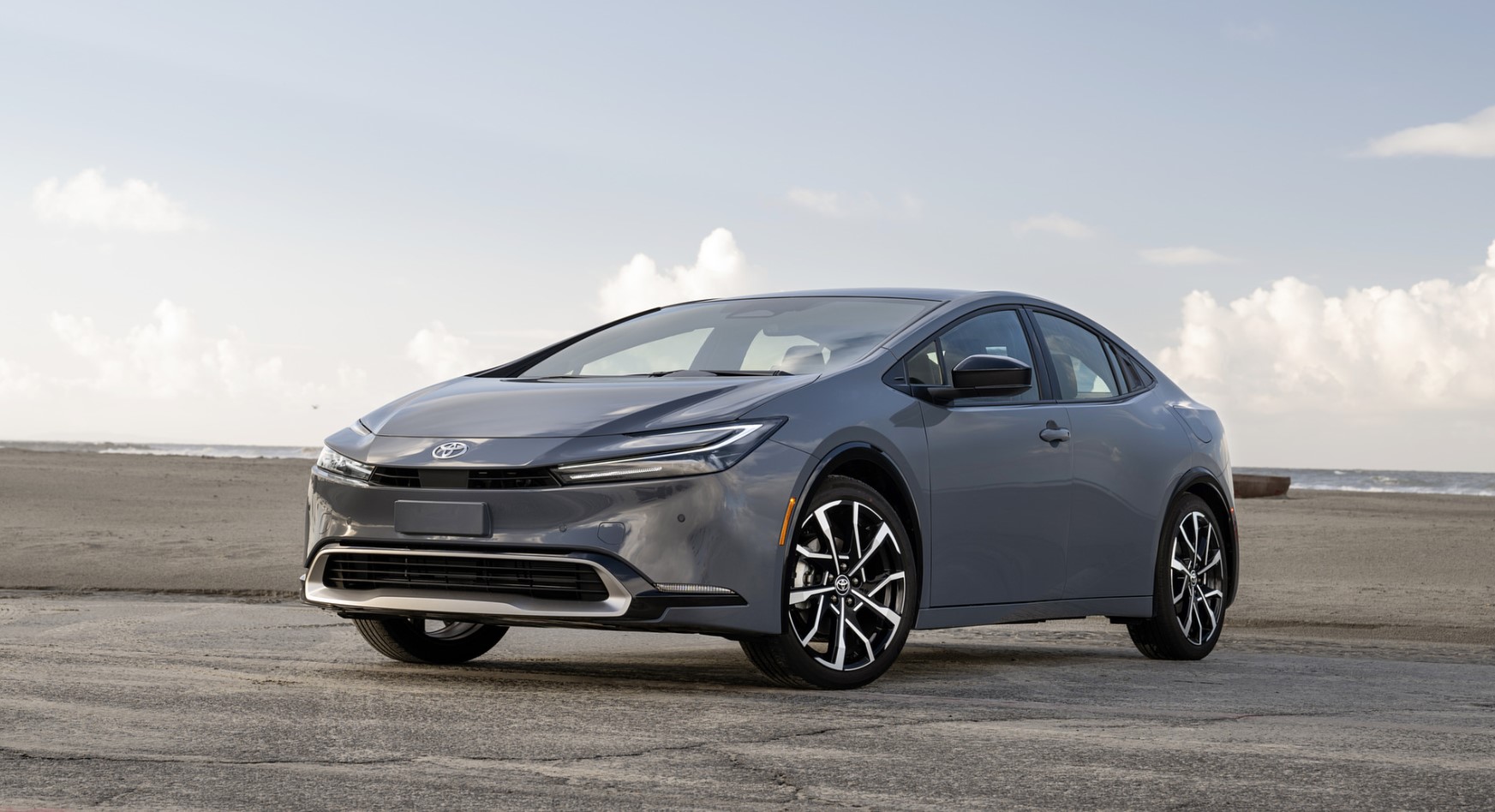
2028 Toyota Prius Prime Release Date, Specs, Interior – The 2028 Toyota Prius Prime could become one of the most interesting plug-in hybrid cars of the decade if Toyota continues developing the Prius around electrified performance rather than treating it purely as an economy car. There is one important naming detail, however: Toyota currently markets the U.S. model as the Prius Plug-in Hybrid, rather than Prius Prime. The previous fourth-generation plug-in model carried the Prius Prime name, while the current fifth-generation car uses Prius Plug-in Hybrid branding. For 2027, Toyota offers the plug-in model in SE, XSE, Nightshade and XSE Premium grades, powered by a 2.0-liter hybrid system producing 220 net-combined horsepower. Therefore, a “2028 Toyota Prius Prime” should currently be understood as a likely search name for a future Prius plug-in model rather than a confirmed 2028 Toyota product designation.
The latest Prius has already changed the conversation around what a fuel-efficient car can look and feel like. The fifth-generation Prius moved away from the tall, conventional hybrid silhouette of previous generations and adopted a much lower, more aerodynamic profile. The current plug-in model combines that design with a 13.6-kWh lithium-ion battery, 220 horsepower and up to 44 miles of EPA-estimated electric range in SE specification. Toyota quotes a 6.6-second 0-to-60-mph time, giving the Prius Plug-in Hybrid considerably more performance than its traditional economy-car reputation might suggest. A 2028 model could build on this foundation with improved battery density, faster charging, additional software intelligence and further refinements to the chassis and cabin.
A major redesign is not yet confirmed for 2028, and Toyota’s official 2027 information does not announce a separate 2028 Prius Prime. The current fifth-generation Prius remains relatively modern, so an immediate complete redesign would not necessarily be the most likely scenario. A more realistic possibility would be a substantial update focused on the plug-in system, infotainment, driver assistance, battery technology and interior refinement. Toyota has already demonstrated this approach for 2027, adding dual-zone HVAC and a new Inked black exterior color to the Prius Plug-in Hybrid. If the 2028 model continues the same architecture, Toyota could use the opportunity to make the Prius more comfortable and technologically sophisticated without losing its aerodynamic identity.
The biggest attraction of a future Prius Prime would remain its ability to bridge two worlds. Owners could use electricity for short daily trips and rely on the gasoline-electric hybrid system for longer journeys without needing to plan every trip around charging stations. The 2027 model can recharge in approximately 11 hours from a standard 120-volt household outlet or about four hours with Level 2 charging, according to Toyota. A future model could shorten those charging times while increasing electric range. That would make the Prius more competitive with plug-in hybrids that increasingly offer larger batteries and more substantial EV-only capability, while preserving the convenience of a gasoline engine for long-distance travel. 2028 Toyota Prius Prime Release Date
2028 Toyota Prius Prime Redesign and Update Plan
Exterior & Interior
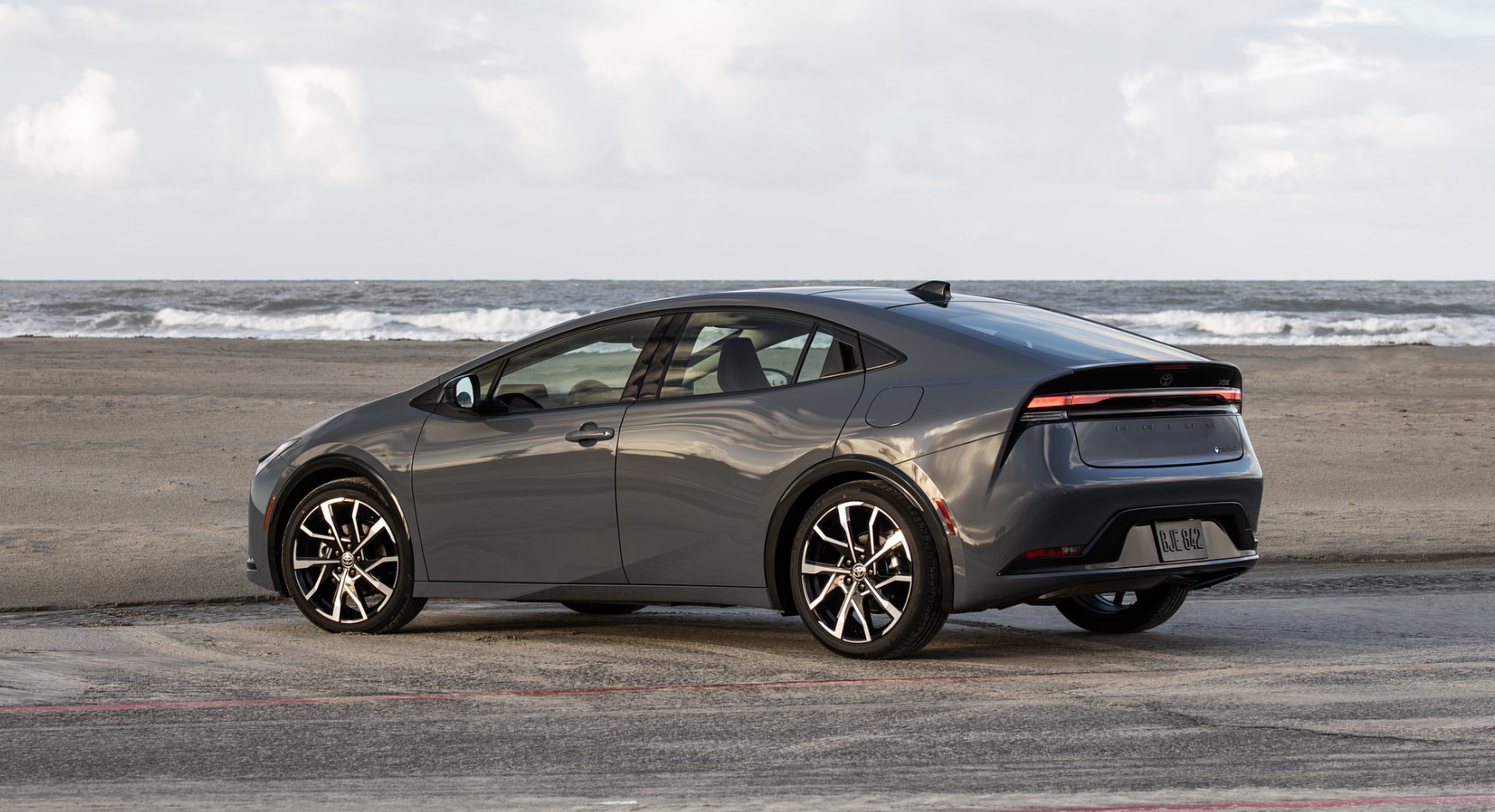
The exterior of a potential 2028 Toyota Prius Prime would probably preserve the fifth-generation Prius silhouette because its aerodynamic shape has become one of the car’s defining characteristics. The current Prius uses a dramatically sloped roofline, narrow lighting elements, flush-style door handles and smooth body surfaces to reduce visual and aerodynamic clutter. Toyota’s current Prius Plug-in Hybrid is positioned as a vehicle that combines electrified efficiency with a more expressive design, and the 2027 model adds Inked as a new black exterior color. A future update could sharpen the front fascia, revise the lighting signature and introduce new wheel designs designed specifically to improve aerodynamic efficiency.
Aerodynamics would remain a major engineering priority because every reduction in drag can help both electric range and gasoline efficiency. Toyota could make the underbody smoother, revise the rear spoiler, reshape the front air curtains and refine the wheel designs. The current Prius already uses a low-slung profile that gives it a substantially sportier appearance than earlier generations. A 2028 version could make the car look even more sophisticated without adding unnecessary bodywork. The possibility of new paint colors would also be strong, particularly if Toyota continues offering special colors for higher grades. The existing 2027 palette includes Cutting Edge, Guardian Gray, Reservoir Blue and Inked, while premium colors include Supersonic Red and Wind Chill Pearl.
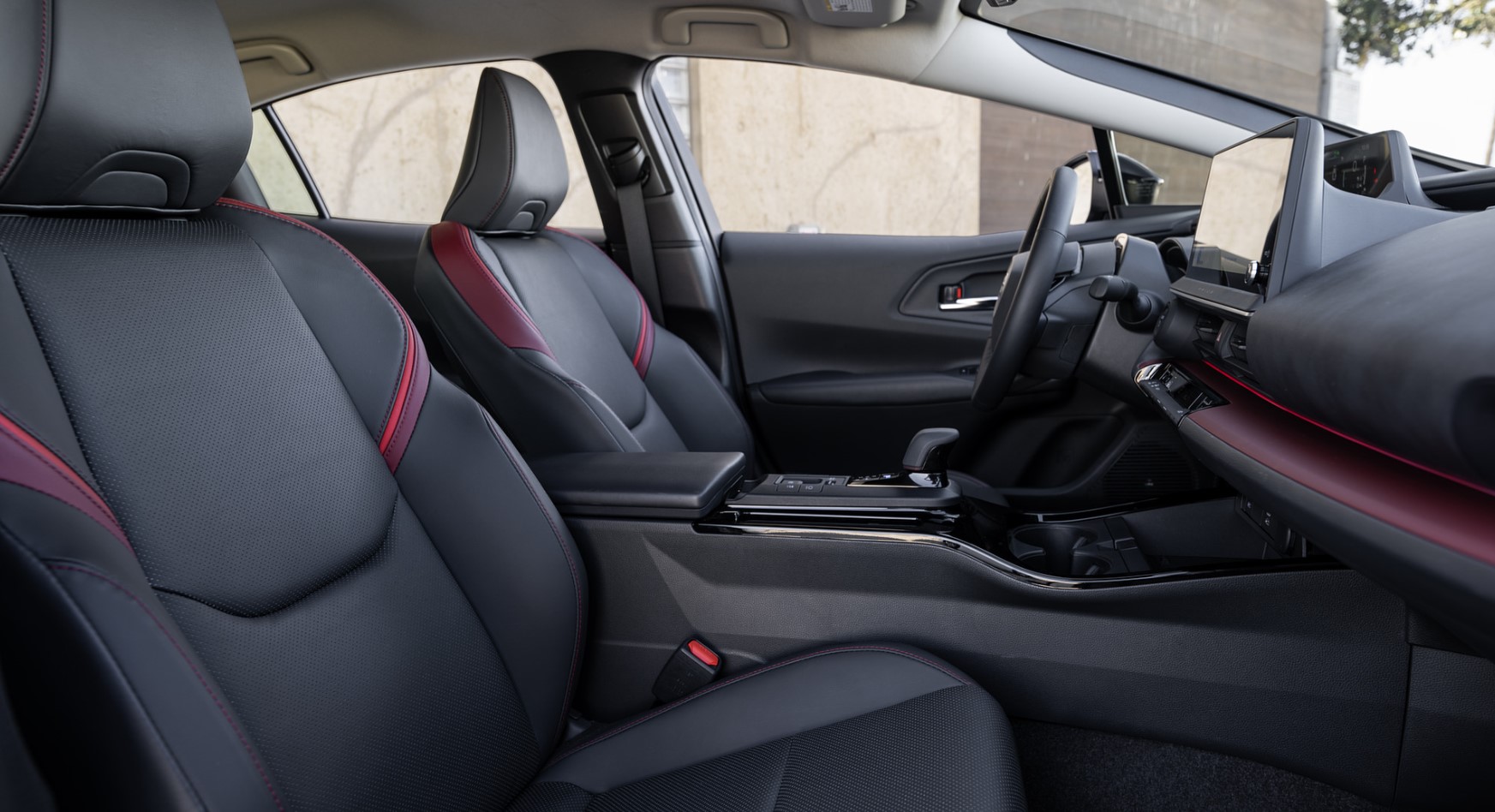
Inside, the Prius could receive a more noticeable upgrade. The fifth-generation interior already represents a major departure from older Prius cabins, with a driver-focused instrument arrangement, modern screens and a cleaner dashboard. For 2027, Toyota adds dual-zone HVAC, giving the driver and front passenger separate temperature controls. A 2028 update could expand this approach with improved materials, quieter insulation, redesigned door panels and more supportive front seats. Higher trims could feature upgraded SofTex upholstery, heated and ventilated seating, ambient lighting and additional soft-touch surfaces. The goal would be to make the Prius feel closer to a premium compact hatchback while retaining its practical layout.
The technology package could also become a major selling point. The current XSE Premium provides a 12.3-inch Toyota Audio Multimedia touchscreen and an eight-speaker JBL premium audio system, while other grades offer an 8-inch display. A 2028 model could standardize a larger display across more of the lineup and potentially introduce faster software, improved voice controls and more advanced connected services. A digital instrument display could also offer dedicated plug-in-hybrid information, including battery state, energy flow, EV range, regenerative-braking activity and charging status. Such information would be useful without requiring drivers to constantly switch between menus.
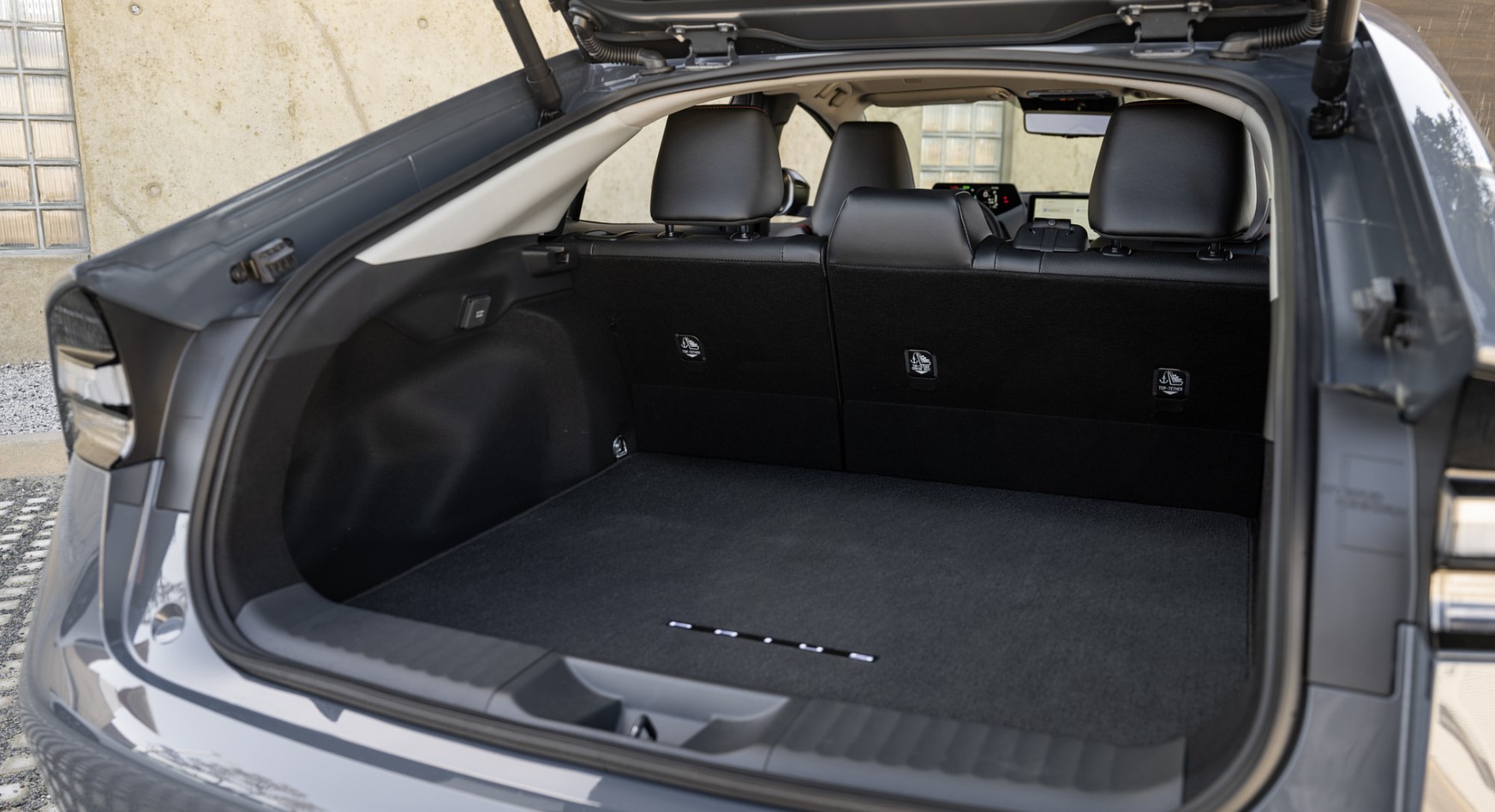
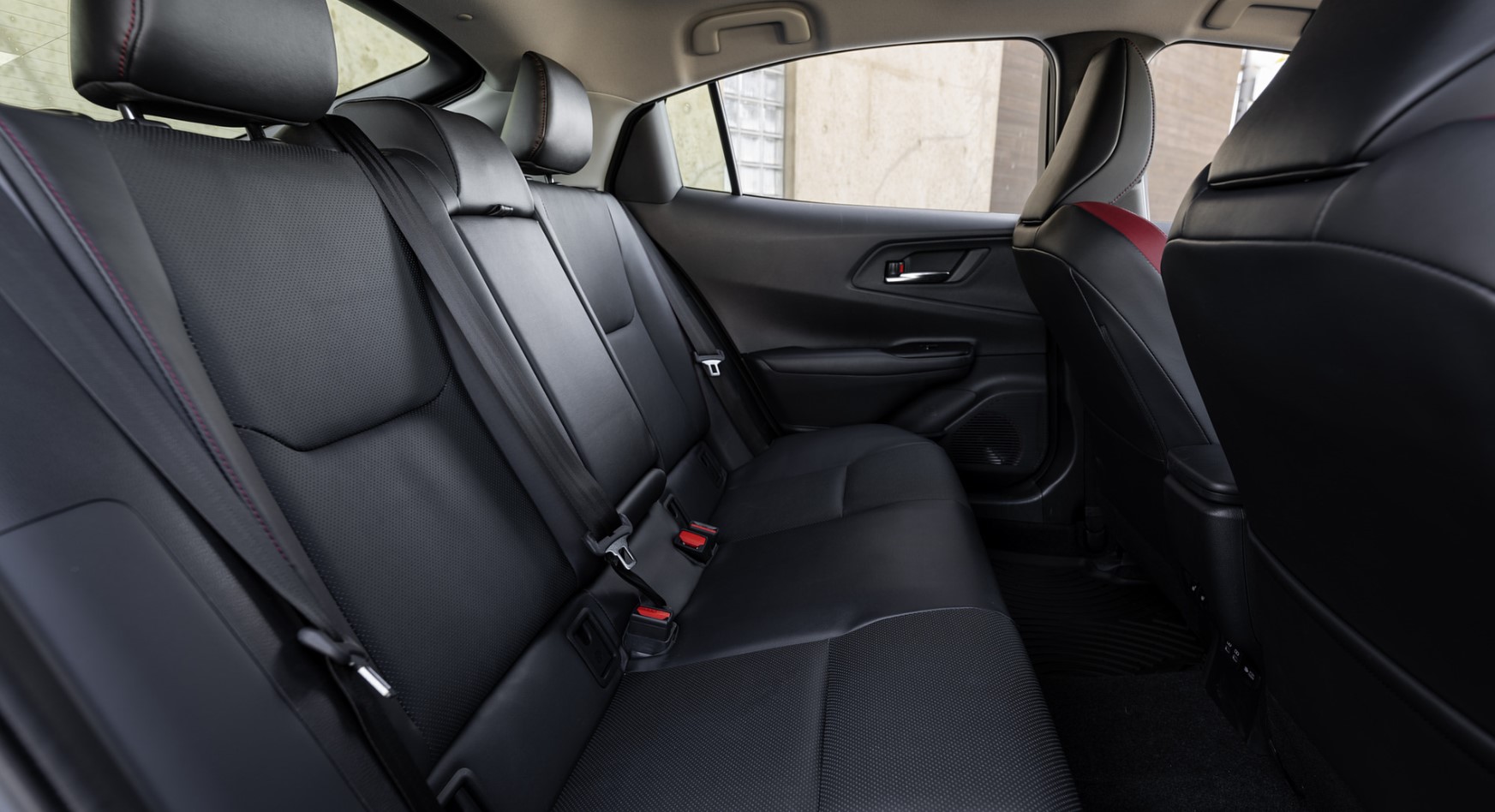
Practicality would remain essential because the Prius Plug-in Hybrid is still designed as an everyday five-seat vehicle. Toyota’s current model combines a sleek roofline with seating for five and a hatchback body, allowing it to serve as a commuter, family car and long-distance vehicle. A future model should preserve useful cargo space rather than allowing the larger battery to consume excessive interior volume. Better packaging could potentially create additional storage beneath the cargo floor or around the battery enclosure. Rear passenger comfort could also improve through revised seat cushioning and additional legroom. If Toyota can make the cabin quieter without adding excessive weight, the Prius could feel significantly more refined on highways.
2028 Toyota Prius Prime Specs
Engine & Performance
The current powertrain provides an impressive starting point for the 2028 Toyota Prius Prime. Toyota’s fifth-generation Hybrid System combines a 2.0-liter four-cylinder gasoline engine with two motor-generators and a lithium-ion battery through a planetary-type continuously variable transmission. The plug-in version develops 220 net-combined horsepower and can accelerate from 0 to 60 mph in an estimated 6.6 seconds. That output represents a significant improvement over earlier Prius Prime generations. For 2028, Toyota could concentrate on making the system more responsive rather than simply adding horsepower, especially if the company wants to maintain the Prius’s efficiency advantage.
Battery development will likely be more important than outright engine output. The current 13.6-kWh lithium-ion pack provides up to 44 miles of EPA-estimated all-electric range on the SE trim and up to 39 miles on XSE, Nightshade and XSE Premium versions. A future Prius could potentially achieve a longer electric range through higher energy density, improved thermal management and more efficient electric motors. A larger battery is another possibility, although Toyota would need to balance additional capacity against weight and cost. Even an improvement into the 50-mile range would substantially change the vehicle’s daily-use proposition, allowing many commuters to complete most trips without starting the gasoline engine.
Charging capability is another area where the 2028 model could become more competitive. Toyota currently estimates roughly 11 hours for a full charge from a standard 120-volt household outlet and approximately four hours with Level 2 charging. A next-generation system could potentially offer higher onboard charging power, allowing owners with suitable home equipment to recover the battery more quickly. Faster charging would be particularly valuable for drivers who use the Prius for multiple short trips during the day. Toyota could also improve charging scheduling through the infotainment system or smartphone application, allowing owners to set departure times, charging windows and cabin-preconditioning preferences more precisely.
Performance should remain surprisingly strong for a Prius. The current 220-hp system gives the plug-in model a 6.6-second 0-to-60-mph estimate, which places it well beyond the slow economy-car image associated with earlier Prius generations. A 2028 version could receive revised throttle calibration, stronger electric motor response and improved regenerative braking. The result would be a car that feels immediate in urban traffic while remaining smooth on highways. Toyota may also refine steering and suspension tuning to make the car more stable at speed. An aggressive performance setup is unlikely to be the main goal, but improved chassis response could make the Prius more enjoyable without compromising its efficiency mission.
2028 Toyota Prius Prime Fuel Economy
Fuel economy is where the Prius Plug-in Hybrid remains particularly compelling. Toyota rates the 2027 SE at 51 mpg combined in hybrid mode and up to 128 MPGe combined when evaluated using the EPA’s plug-in methodology. Toyota’s consumer site also lists 44 miles of EPA-estimated electric range for the SE. Higher grades with larger wheels and different equipment are rated lower, with Toyota listing 47 mpg/114 MPGe for XSE, Nightshade and XSE Premium on its current model page. A 2028 model could potentially improve these figures, but official EPA ratings will not exist until Toyota submits the vehicle for certification.
2028 Toyota Prius Prime Safety Features
Safety technology should receive equal attention. The 2027 Prius Plug-in Hybrid includes Toyota Safety Sense 3.0, with features including Pre-Collision System with Pedestrian Detection, Lane Departure Alert with Steering Assist, Lane Tracing Assist, Road Sign Assist, Automatic High Beams and Proactive Driving Assist. Toyota also lists Blind Spot Monitor with Rear Cross-Traffic Alert and Safe Exit Alert among the standard features. A 2028 Prius could improve these systems through updated sensors and software. Traffic Jam Assist and Advanced Park are also available within the current technology package, demonstrating that Toyota is already moving the Prius beyond basic driver assistance. 2028 Toyota Prius Prime Release Date
2028 Toyota Prius Prime Release Date & Price
The current 2027 Prius Plug-in Hybrid range provides the clearest reference for how a future 2028 model could be structured. Toyota currently offers four grades: SE, XSE, Nightshade and XSE Premium. The SE serves as the efficiency-focused entry point, while XSE adds larger 19-inch wheels and additional equipment. Nightshade brings black-finished wheels and exclusive styling elements, while XSE Premium adds features such as the fixed glass roof, 12.3-inch multimedia touchscreen and JBL premium audio. A 2028 Prius Prime could retain this four-grade structure with equipment revisions rather than introducing an entirely new hierarchy.
For 2028, Toyota could increase the price slightly across the range if the Prius receives a larger battery, more technology and upgraded interior materials. A reasonable projection would place an entry-level Prius Prime around $35,000-$36,500, with an XSE potentially approaching $39,000, a Nightshade around $40,000 and a premium XSE Premium potentially reaching $42,000-$44,000 before destination. These figures are estimates, not Toyota announcements. The current 2027 range starts at $33,980 and tops out at $40,675, so the projected 2028 pricing assumes moderate increases rather than a dramatic repositioning. Incentives, regional pricing, destination charges and federal or state tax-credit eligibility could also change the effective transaction cost.
The release date remains unconfirmed. Toyota announced the 2027 Prius Plug-in Hybrid on July 16, 2026, with the model expected to arrive at U.S. dealerships during summer 2026. If Toyota maintains a conventional annual model-year cycle, a 2028 Prius Plug-in Hybrid could potentially be introduced during 2027 and reach dealerships later that year or in early 2028. However, there is currently no official Toyota announcement confirming that timing. The more significant question is whether the 2028 model will be a carryover, a technology-focused refresh or a larger redesign. Until Toyota releases its 2028 product information, exact dates should not be treated as established facts.
The name itself also deserves attention. The U.S. Prius plug-in model was previously called Prius Prime, but Toyota now uses Prius Plug-in Hybrid for the fifth-generation car. The 2027 official model page consistently uses Prius Plug-in Hybrid rather than Prius Prime. Toyota could theoretically bring back the Prime name for 2028, but there is no evidence that it plans to do so. For search purposes, “2028 Toyota Prius Prime” remains a useful phrase because it reflects the historical name familiar to many shoppers. In an actual Toyota announcement, however, the official model name could continue to be Prius Plug-in Hybrid.
Conclusion
The 2028 Toyota Prius Prime has the potential to build on one of the strongest transformations in the Prius’s history. The current fifth-generation Prius already combines a much more attractive exterior with a 220-horsepower plug-in hybrid system, up to 44 miles of electric range and a 6.6-second 0-to-60-mph estimate. That combination has changed the Prius from a vehicle defined almost entirely by fuel economy into a genuinely modern electrified hatchback with meaningful performance. A future model does not need to abandon that formula; it needs to refine it.
The most valuable improvements for 2028 would likely center on battery technology, charging speed, interior refinement and software. A larger or denser battery could extend electric driving range, while faster charging would make the plug-in system easier to use for households with Level 2 equipment. Better cabin materials, a more advanced infotainment system and improved driver assistance could push the Prius further into premium territory without forcing it into an unnecessarily expensive segment.
The powertrain also gives Toyota considerable flexibility. The current 2.0-liter THS 5 system already provides 220 horsepower, while the plug-in battery allows the car to operate as an EV for short trips and then transition into conventional hybrid operation when additional range is required. That flexibility remains one of the Prius’s most important advantages. A future model with greater electric range and quicker charging could reduce gasoline use for daily commuters while maintaining the freedom to take long road trips without depending exclusively on public charging infrastructure.
For now, the 2028 Toyota Prius Prime is not an officially announced model, and the current U.S. product is called the Prius Plug-in Hybrid. Toyota’s latest confirmed version is the 2027 model, available in SE, XSE, Nightshade and XSE Premium grades, starting at $33,980. If Toyota carries the Prius plug-in formula into 2028, the next version could combine greater electric range, faster charging, improved technology and an even more polished driving experience. The Prius has already moved far beyond its old image; the next step could make it one of the most versatile plug-in hybrid hatchbacks available to buyers seeking low running costs without giving up everyday practicality.
Note: The details included in this blog post are derived from pre-release material that was accessible when the article was written. If you want the latest information, you should check official sources or call your nearest dealership.
Read Also:
- 2027 Toyota RAV4 GR Sport Review, Specs, Dimensions
- 2027 Toyota Land Cruiser 300 Series Review, Specs, Dimensions
- 2027 Toyota Land Cruiser Release Date, Specs, Interior
- 2027 Toyota Corolla Sedan Redesign, Specs, Configurations
- 2027 Toyota Avalon Hybrid Price, Specs, Features
Frequently Asked Questions
2028 Toyota Prius Prime Release Date, Specs, Interior - The 2028 Toyota Prius Prime could become one of the most interesting plug-in hybrid cars of the decade if Toyota continues developing the Prius around electrified performance rather than treating it purely as an economy car. There is one…
The latest Prius has already changed the conversation around what a fuel-efficient car can look and feel like. The fifth-generation Prius moved away from the tall, conventional hybrid silhouette of previous generations and adopted a much lower, more aerodynamic profile. The current plug-in model combines that design with…
A major redesign is not yet confirmed for 2028, and Toyota's official 2027 information does not announce a separate 2028 Prius Prime. The current fifth-generation Prius remains relatively modern, so an immediate complete redesign would not necessarily be the most likely scenario. A more realistic possibility would be…
The biggest attraction of a future Prius Prime would remain its ability to bridge two worlds. Owners could use electricity for short daily trips and rely on the gasoline-electric hybrid system for longer journeys without needing to plan every trip around charging stations. The 2027 model can recharge…
2028 Toyota Prius Prime Redesign and Update Plan Exterior & Interior The exterior of a potential 2028 Toyota Prius Prime would probably preserve the fifth-generation Prius silhouette because its aerodynamic shape has become one of the car's defining characteristics. The current Prius uses a dramatically sloped roofline, narrow…