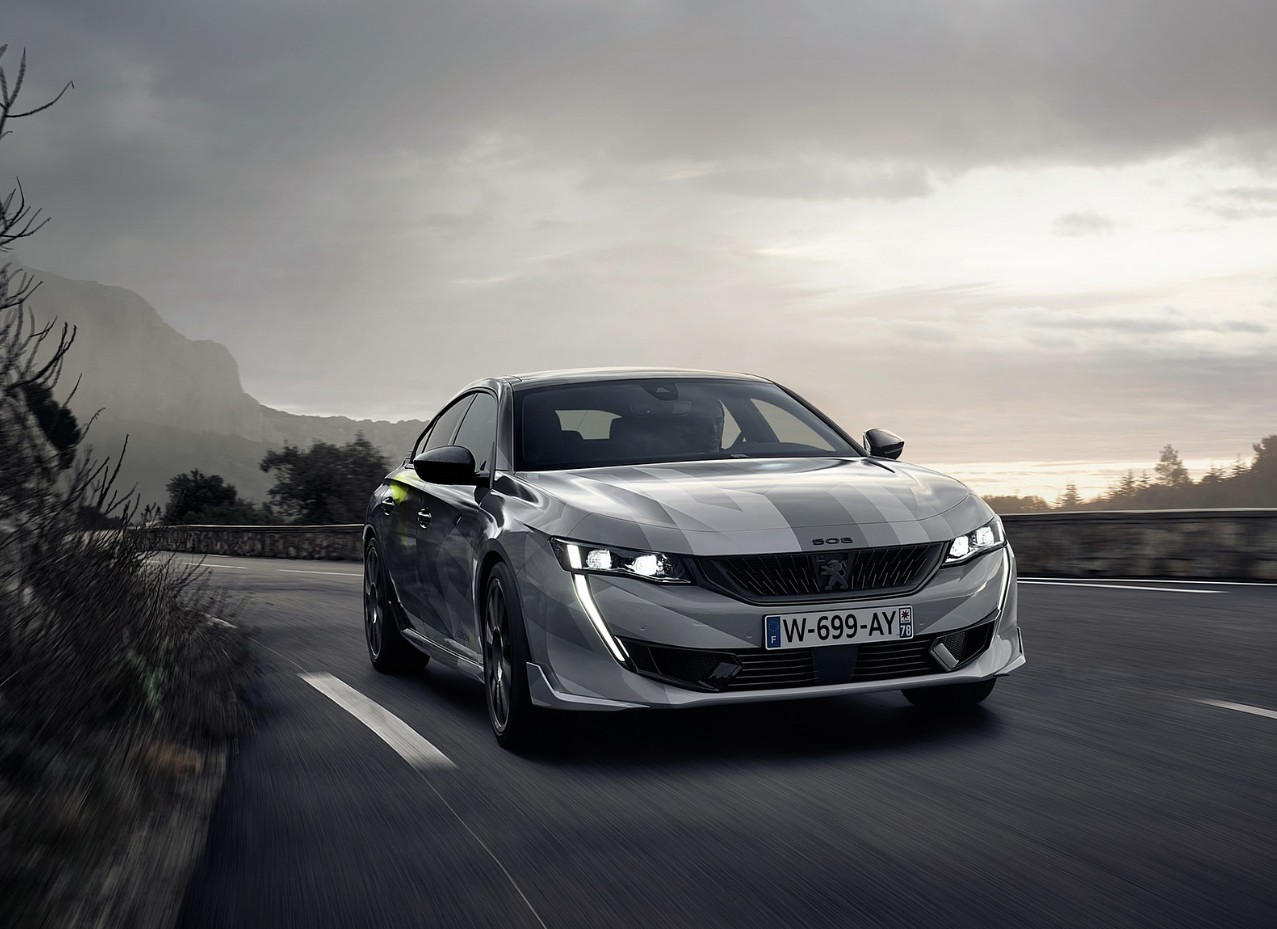
2028 Peugeot 508 PSE Redesign, Specs, Price – The 2028 Peugeot 508 PSE could become one of the most interesting performance-car revivals in Peugeot’s European lineup. The original 508 Peugeot Sport Engineered established a very different identity for the French brand, combining a turbocharged petrol engine with electric motors, all-wheel drive, aggressive chassis tuning, and a distinctive fastback design. Its 360-hp powertrain gave the 508 PSE genuine performance-car credentials while retaining the practicality of a five-door executive car. Although the 508 has subsequently disappeared from several markets and Peugeot has not confirmed a 2028 PSE revival, the name remains highly relevant as Stellantis continues expanding electrified performance technology.
The original production 508 PSE used a 1.6-liter PureTech turbocharged four-cylinder engine combined with electric assistance. Its total system output reached 360 hp and 520 Nm of torque, with power delivered through all four wheels. Peugeot quoted 0–100 km/h acceleration in approximately 5.2 seconds, while the car combined that performance with a plug-in hybrid electric range suitable for everyday urban driving. The concept was unusual in the European performance market because it did not attempt to compete purely through engine displacement. Instead, Peugeot used electrification to provide immediate torque, traction, and additional flexibility.
A hypothetical 2028 Peugeot 508 PSE would arrive in a completely different automotive environment. Battery technology, software, emissions regulations, charging infrastructure, and Stellantis’ electric platforms have all advanced considerably since the original 508 PSE appeared. A future PSE would therefore need more than a cosmetic update. It would likely require a new-generation electrical architecture, more efficient hybrid hardware, a substantially redesigned cabin, and a powertrain capable of meeting modern European efficiency standards while still delivering the character expected from a Peugeot Sport Engineered vehicle.
There is an important qualification surrounding the 2028 model. Peugeot has not officially announced a production 2028 508 PSE, so there are no confirmed specifications, prices, trims, battery capacity, electric range, or release date for such a vehicle. The figures discussed below therefore combine the documented specifications of the previous 508 PSE with reasonable projections based on Peugeot and Stellantis’ current electrification direction. A future PSE could use a different platform and powertrain entirely, meaning the final production car may differ substantially from these expectations. 2028 Peugeot 508 PSE Redesign
2028 Peugeot 508 PSE Redesign and Update Plan
Exterior & Interior
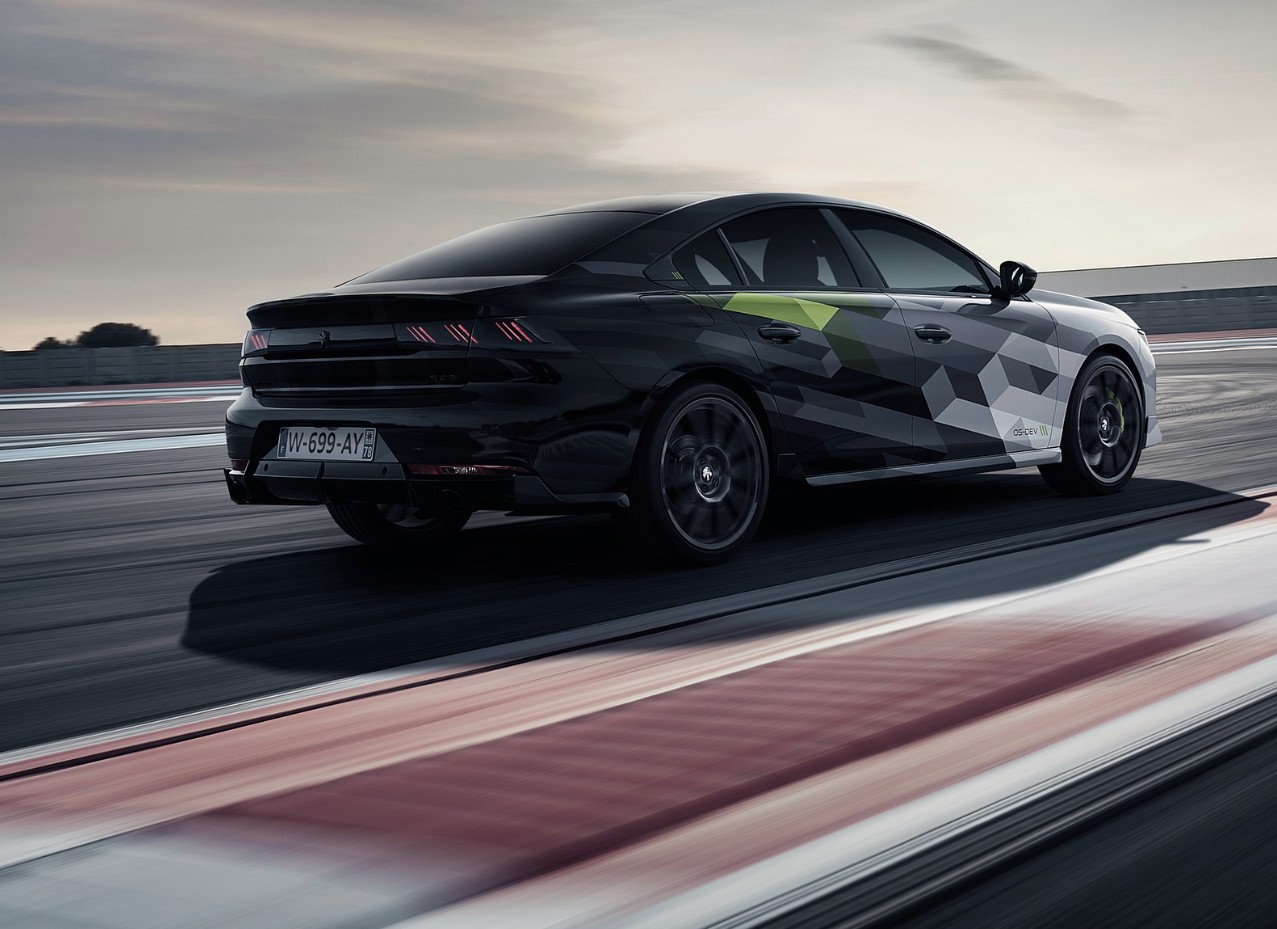
The 2028 Peugeot 508 PSE should have a visibly different appearance from a regular 508 or equivalent Peugeot fastback. A low, wide stance would be essential, particularly if the car is intended to carry the PSE badge as a genuine performance product. The front fascia could receive a deeper splitter, larger cooling openings, distinctive LED signatures, and aerodynamic surfaces integrated into the bumper. The rear could feature a sculpted diffuser, dual exhaust outlets if a combustion engine remains part of the drivetrain, and a subtle roof spoiler designed to increase stability rather than simply add visual drama.
Wheel design would likely become another major visual identifier. The original 508 PSE used 20-inch wheels with a distinctive aerodynamic design, and a future version could continue that approach with lightweight forged or flow-formed wheels. High-performance tires would be necessary to exploit the additional torque generated by electric motors. Peugeot could also use contrasting body elements around the wheel arches, side skirts, and rear diffuser to create a recognizable PSE theme. Selenium Grey and Kryptonite-style accents could return in an updated form, although Peugeot has not confirmed any future color palette for a 2028 model.
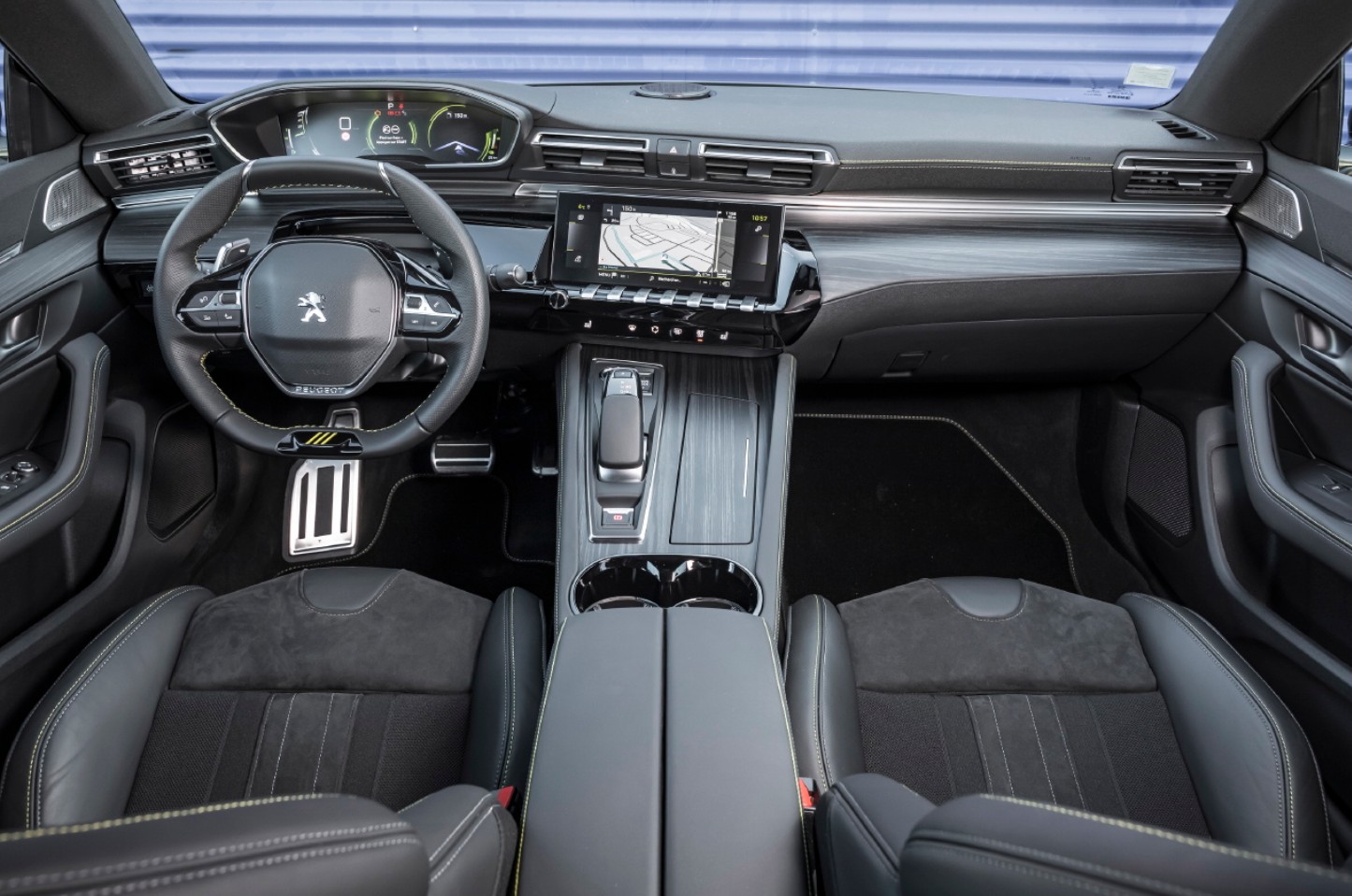
The interior should combine Peugeot’s distinctive cockpit layout with more serious performance equipment. A compact steering wheel would likely remain central to the i-Cockpit philosophy, although a future performance version could receive a PSE-specific steering wheel with perforated leather, Alcantara, contrast stitching, and dedicated drive-mode controls. Sport seats with stronger bolsters would help support the driver during hard cornering, while rear-seat comfort would remain important because the 508 has traditionally been positioned as a practical fastback rather than a two-seat sports car. Carbon-fiber-look surfaces and metal pedals could provide a sportier atmosphere without sacrificing everyday usability.
Technology should also become more deeply integrated into the cabin. A high-resolution digital instrument cluster could display conventional speed and navigation information in normal driving, then switch to a performance layout showing power output, torque distribution, battery state, temperatures, lap timing, and drive modes. A large central display could provide access to navigation, audio, vehicle settings, and hybrid-energy management. Premium versions might also feature a high-end Focal audio system, panoramic glass, ambient lighting, wireless smartphone connectivity, heated and ventilated front seats, and advanced parking assistance. The objective would be to create a cabin that feels appropriate for both long-distance travel and performance driving.
A future 2028 Peugeot 508 PSE would need a major redesign to justify its return. The previous 508 was built around Peugeot’s EMP2 architecture, but Stellantis has moved toward newer platforms capable of supporting increasingly sophisticated electric and hybrid drivetrains. A revived PSE could therefore be based on a substantially updated architecture or a successor platform rather than simply receiving another version of the old 508 body. That change would provide opportunities to improve battery integration, chassis stiffness, weight distribution, electronic control, and high-speed stability.
The exterior would likely adopt Peugeot’s newest design language. The current brand identity features slim LED lighting, three-claw daytime-running-light signatures, frameless or sharply defined grille treatments, and highly sculpted bodywork. A future PSE could push those characteristics further with a lower nose, wider stance, deeper aerodynamic elements, larger wheels, and a more technical interpretation of the Peugeot grille. Instead of using excessive decorative details, the PSE treatment should focus on functional airflow management, cooling, and underbody aerodynamics. The result could look considerably more aggressive than a standard Peugeot without losing the sophisticated character expected from a premium fastback.
Electrification would also influence the redesign. A plug-in hybrid performance car needs sufficient airflow for its combustion engine, transmission, brakes, battery cooling, and electric motors. Peugeot could therefore use active air shutters and carefully shaped intake channels to manage thermal requirements. A larger battery would also require revised floor packaging. If Peugeot pursued a next-generation PHEV architecture, engineers could position the battery lower within the chassis to improve the center of gravity. That would be particularly useful for a PSE model because battery placement affects cornering balance, braking behavior, and overall vehicle dynamics.
The technology update could be just as significant as the exterior transformation. Peugeot’s i-Cockpit concept would likely evolve with a larger digital instrument panel, a more advanced head-up display, faster infotainment hardware, improved voice interaction, and greater integration between navigation and the powertrain. A future PSE could automatically calculate electric-only zones, charging opportunities, and energy requirements along a route. Performance information could also be displayed more prominently, including battery temperature, power distribution, regenerative braking levels, and real-time electric assistance. This would give the driver greater control over the hybrid system without turning the cabin into an overly complicated collection of screens. 2028 Peugeot 508 PSE Redesign
2028 Peugeot 508 PSE Specs
Engine & Performance
The previous Peugeot 508 PSE provides the most useful reference point for understanding what a future version could deliver. Its 1.6-liter turbocharged four-cylinder engine produced 200 hp, while electric motors were mounted at the front and rear. Combined system output reached 360 hp and 520 Nm, creating an all-wheel-drive performance sedan with strong launch traction. The front electric motor contributed 110 hp and the rear unit 113 hp, although system output was electronically coordinated rather than simply added together. This architecture allowed the 508 PSE to combine electric torque with conventional petrol-engine performance.
A 2028 successor could potentially move beyond the 360-hp figure. Stellantis has continued developing electrified performance systems, and a future PSE could use a larger electric motor, a higher-capacity battery, or a more efficient turbocharged engine. A target somewhere around 400 hp would be technically plausible for a modern high-performance plug-in hybrid, although no such output has been confirmed for a future 508. Peugeot would also need to balance performance against vehicle weight. Simply increasing battery size and motor power could make the car heavier, reducing some of the benefits gained from higher horsepower.
Electric-only performance could become another defining feature. The previous 508 PSE was designed primarily as a hybrid performance car with useful electric capability, whereas a modern PSE could offer considerably greater EV driving capability. A larger battery might allow substantially more zero-emission driving in urban areas, while the combustion engine could provide long-distance range and sustained high-speed performance. A future system could also use predictive energy management, allowing the vehicle to reserve battery energy for city zones or performance sections of a route rather than consuming the entire charge early in a journey.
Chassis engineering would remain crucial. Peugeot Sport Engineered should not be defined by horsepower alone. A future 508 PSE could receive adaptive dampers, performance-oriented steering calibration, stronger brakes, torque-vectoring functionality, electronically controlled all-wheel drive, and Michelin or equivalent high-performance tires. Multiple drive modes could allow the driver to select Electric, Hybrid, Sport, and Individual settings. Sport mode could sharpen throttle response, steering weight, suspension behavior, and gearbox calibration while keeping the electric motors ready to provide maximum traction. If Peugeot wants the PSE badge to retain credibility, chassis balance and braking performance will matter as much as the headline power figure.
2028 Peugeot 508 PSE Fuel Economy
Fuel economy is difficult to predict because Peugeot has not announced a future 508 PSE. The previous model achieved its impressive official efficiency figures partly because of its plug-in hybrid capability and the testing methodology used for PHEVs. A future vehicle with a larger battery could significantly improve its official electric range and weighted fuel-consumption rating. Real-world consumption would depend heavily on charging frequency. A regularly charged PSE could complete many short daily journeys with minimal petrol use, while long motorway trips without frequent charging would naturally produce much higher fuel consumption. Electric range could therefore become a more meaningful metric than the headline combined MPG figure.
Peugeot has not confirmed 2028 PSE trim levels or pricing either. A future lineup would likely be simpler than a conventional Peugeot range because PSE models are performance flagships rather than volume products. A single highly equipped PSE specification could make more sense, with optional packages for carbon-style trim, premium audio, advanced assistance, panoramic glass, and upgraded wheels. If a new 508 PSE retained the positioning of the previous model while gaining more sophisticated hybrid hardware, a European starting price around €65,000–€75,000 would be conceivable. A higher-output version could move beyond €80,000, but these figures remain estimates rather than Peugeot-confirmed prices.
2028 Peugeot 508 PSE Safety Features
Safety technology would be a major area of development in a hypothetical 2028 Peugeot 508 PSE. Modern Peugeot vehicles already use a broad range of driver-assistance systems, and a future PSE could integrate even more advanced camera, radar, and computing capabilities. Expected equipment could include adaptive cruise control with stop-and-go capability, lane-position assistance, automatic emergency braking, blind-spot monitoring, rear cross-traffic alert, traffic-sign recognition, driver attention monitoring, and a 360-degree camera system. Higher-level systems could provide enhanced motorway assistance, although final functionality would depend on European regulations and Peugeot’s production hardware.
A performance version could also receive safety systems specifically suited to its higher capability. Larger brakes with high-temperature resistance would be important for repeated high-speed deceleration, while electronic stability control would need to work closely with the all-wheel-drive system and torque-vectoring functions. Tire-pressure monitoring could provide more detailed information, and the vehicle could use predictive stability control based on road conditions and sensor information. A future 508 PSE should also retain strong structural crash protection despite the additional mass and complexity associated with a plug-in hybrid system.
2028 Peugeot 508 PSE Release Date & Price
The release date remains the biggest question. Peugeot has not confirmed that a new 508 will return for 2028, much less that a PSE derivative is planned. The original 508 has faced major changes within Peugeot’s European product strategy, with SUVs and electric models becoming increasingly important. Consequently, a 2028 PSE revival should be treated as a potential future product rather than an announced vehicle. If Peugeot decides to revive the nameplate, an introduction during 2027 or 2028 would be the logical window for a vehicle marketed as a 2028 model, but there is no confirmed launch schedule at this stage.
The business case for such a car would depend heavily on Peugeot’s strategy for large passenger vehicles. The original PSE demonstrated that Peugeot could build a performance-oriented plug-in hybrid without relying on a large-displacement engine. A future model could use that same philosophy in a more technologically advanced form. However, the European market has changed significantly, and Peugeot must balance performance products against increasingly strict emissions targets and consumer demand for electric vehicles. A next-generation PSE might therefore become more electric-focused than the original, potentially using a smaller combustion engine primarily as a range and performance extender.
If Peugeot does bring back the 508 PSE, the most compelling version would not necessarily be the one with the highest horsepower. A well-integrated plug-in hybrid system, substantial electric range, low-speed EV refinement, strong highway efficiency, quick charging, sophisticated torque distribution, and a genuinely capable chassis would give the car a much broader appeal. The PSE badge already carries a performance identity, so the next generation would have to demonstrate that electrification can enhance rather than dilute Peugeot’s driving character.
The 2028 Peugeot 508 PSE would therefore occupy an unusual position in the market. It could sit between mainstream executive hybrids and more expensive European performance models, offering French design, five-door practicality, all-wheel-drive traction, and electrified performance in one package. Its success would ultimately depend on whether Peugeot chooses to revive the 508 nameplate and invest in a new PSE derivative. For now, the technical blueprint is best understood as a projection based on the original 508 PSE, Peugeot’s current technology direction, and Stellantis’ wider electrification strategy. 2028 Peugeot 508 PSE Redesign
Conclusion
The original 508 PSE proved that Peugeot could build a genuinely serious performance car without abandoning electrification. Its 360-hp plug-in hybrid system, all-wheel drive, sophisticated chassis, and distinctive styling gave the model an identity that was far removed from a conventional family sedan.
A potential 2028 successor would have the opportunity to take that formula much further. Modern battery technology could provide greater electric range, improved electric motors could deliver stronger acceleration, and newer electronic architecture could bring more sophisticated torque management and driver assistance. The cabin could also become substantially more advanced while preserving the distinctive Peugeot i-Cockpit layout.
The central issue is not whether Peugeot has the technology to build a new 508 PSE. The technology exists across the wider Stellantis ecosystem. The uncertainty is whether Peugeot intends to revive the 508 and create another PSE performance flagship.
Until Peugeot officially announces the vehicle, the projected power, range, price, trims, and release timing should remain estimates. If the company does proceed, however, a next-generation 508 PSE could become a very different kind of performance car: quieter in the city, more efficient on daily journeys, brutally quick when required, and significantly more sophisticated than the original.
Note: The details included in this blog post are derived from pre-release material that was accessible when the article was written. If you want the latest information, you should check official sources or call your nearest dealership.
Read Also:
- 2028 Peugeot e-208 EV Release Date, Specs, Interior
- 2028 Peugeot 5008 GT Review, Specs, Configurations
- 2028 Peugeot Instinct Redesign, Dimensions, Specs
- 2027 Peugeot e-Legend Release Date, Price, Specs
- 2027 Peugeot 3008 Release Date, Specs, Configurations
Frequently Asked Questions
2028 Peugeot 508 PSE Redesign, Specs, Price - The 2028 Peugeot 508 PSE could become one of the most interesting performance-car revivals in Peugeot’s European lineup. The original 508 Peugeot Sport Engineered established a very different identity for the French brand, combining a turbocharged petrol engine with electric…
The original production 508 PSE used a 1.6-liter PureTech turbocharged four-cylinder engine combined with electric assistance. Its total system output reached 360 hp and 520 Nm of torque, with power delivered through all four wheels. Peugeot quoted 0–100 km/h acceleration in approximately 5.2 seconds, while the car combined…
A hypothetical 2028 Peugeot 508 PSE would arrive in a completely different automotive environment. Battery technology, software, emissions regulations, charging infrastructure, and Stellantis’ electric platforms have all advanced considerably since the original 508 PSE appeared. A future PSE would therefore need more than a cosmetic update. It would…
There is an important qualification surrounding the 2028 model. Peugeot has not officially announced a production 2028 508 PSE, so there are no confirmed specifications, prices, trims, battery capacity, electric range, or release date for such a vehicle. The figures discussed below therefore combine the documented specifications of…
2028 Peugeot 508 PSE Redesign and Update Plan Exterior & Interior The 2028 Peugeot 508 PSE should have a visibly different appearance from a regular 508 or equivalent Peugeot fastback. A low, wide stance would be essential, particularly if the car is intended to carry the PSE badge…